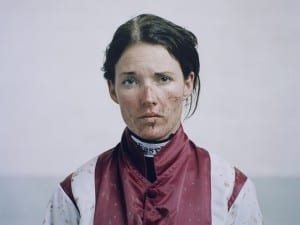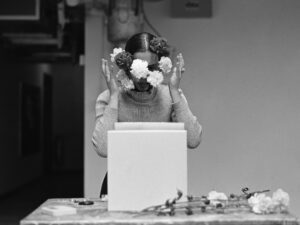
More than half of British people report feeling disconnected from society, with many describing themselves as “strangers in their own country.” Among younger generations, skepticism and mistrust continue to grow. This sense of social fragmentation extends far beyond the UK: the World Health Organisation estimates that one in six people globally experiences loneliness. Against this backdrop of disconnection, London-based artist Xinyi Liu explores the fragile relationship between inner experience and the external world, asking how intimacy erodes – and how it might be reimagined. Rooted in Buddhist philosophy and embodied inquiry, her practice employs photography and moving image as meditative acts of attention, opening space for vulnerability, transition and connection.
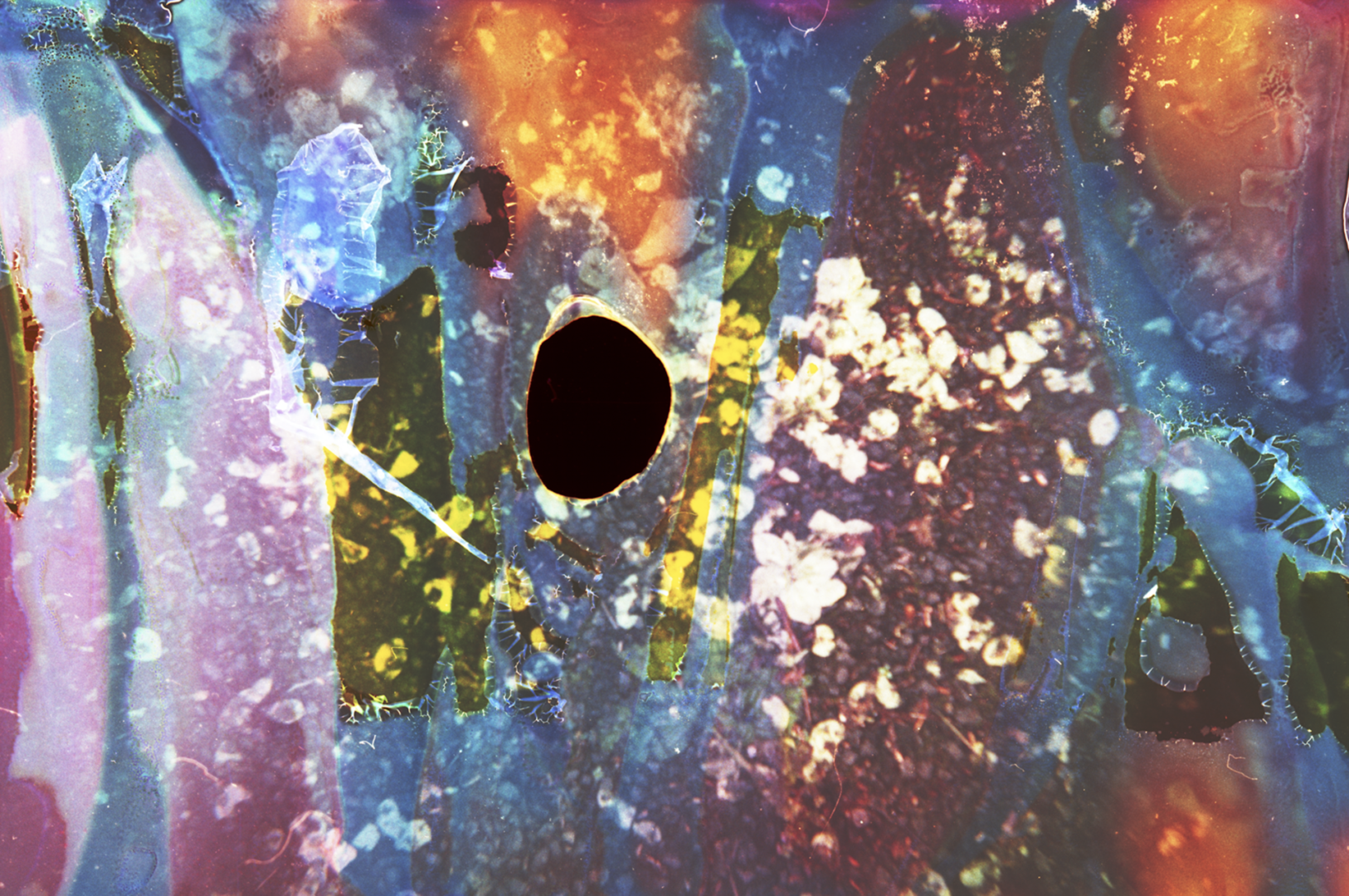
The artist’s work often engages with the erosion of bonds between individuals. A Detox Chronicle is a mixed-media series that visually manifests a fragmented society. The series draws from postmodern theories of identity and alienation, suggesting that contemporary intimacy often collapses under the press of self-preservation and the fear of dissolution. The layered surface sees paper peel away from the pieces beneath, mirroring the ways in which people detach and retreat as a form of psychological self-preservation. Elsewhere, Chronicle of a Death Foretold probes the illusion of control when entering into a relationship. Liu asks whether falling in love is an act of will, or whether it’s a response to something greater, like karma or destiny. The piece is inspired by personal experience and feels almost voyeuristic, allowing audiences to glimpse a moment between two romantic partners.
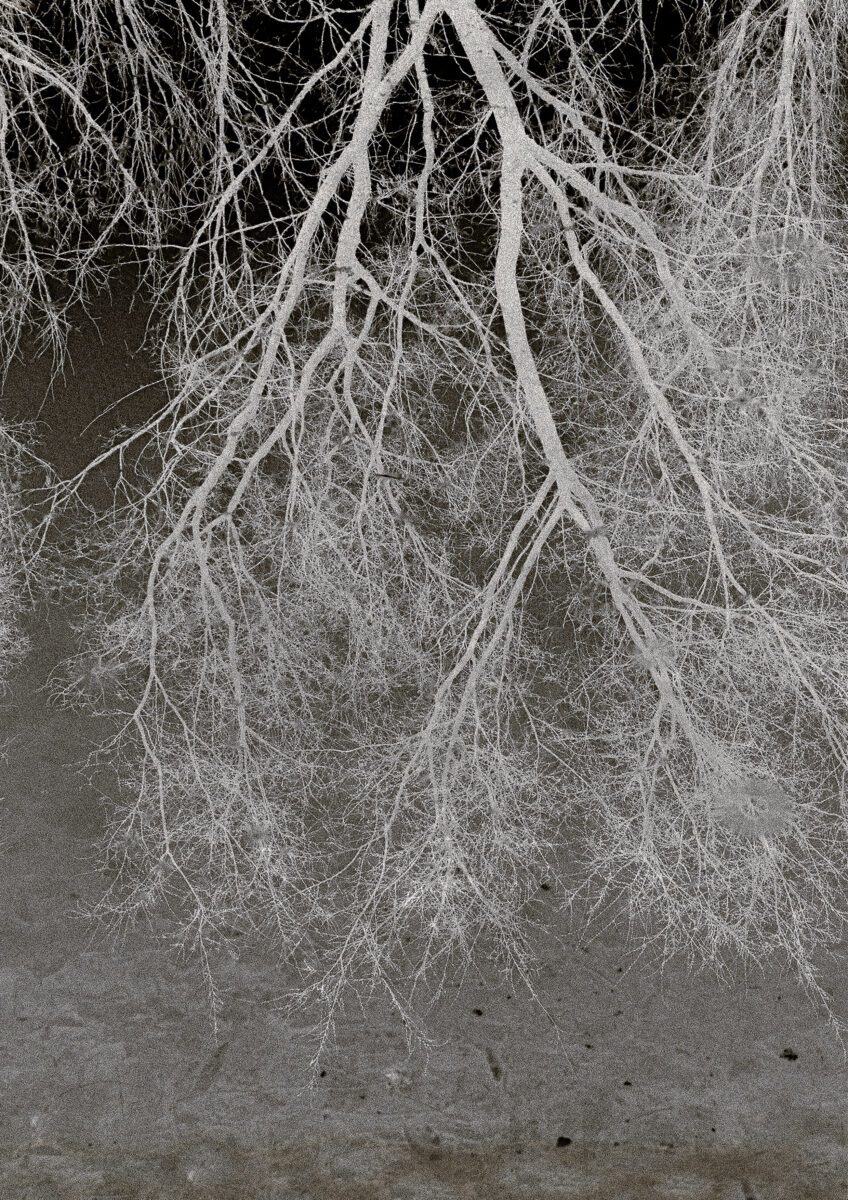
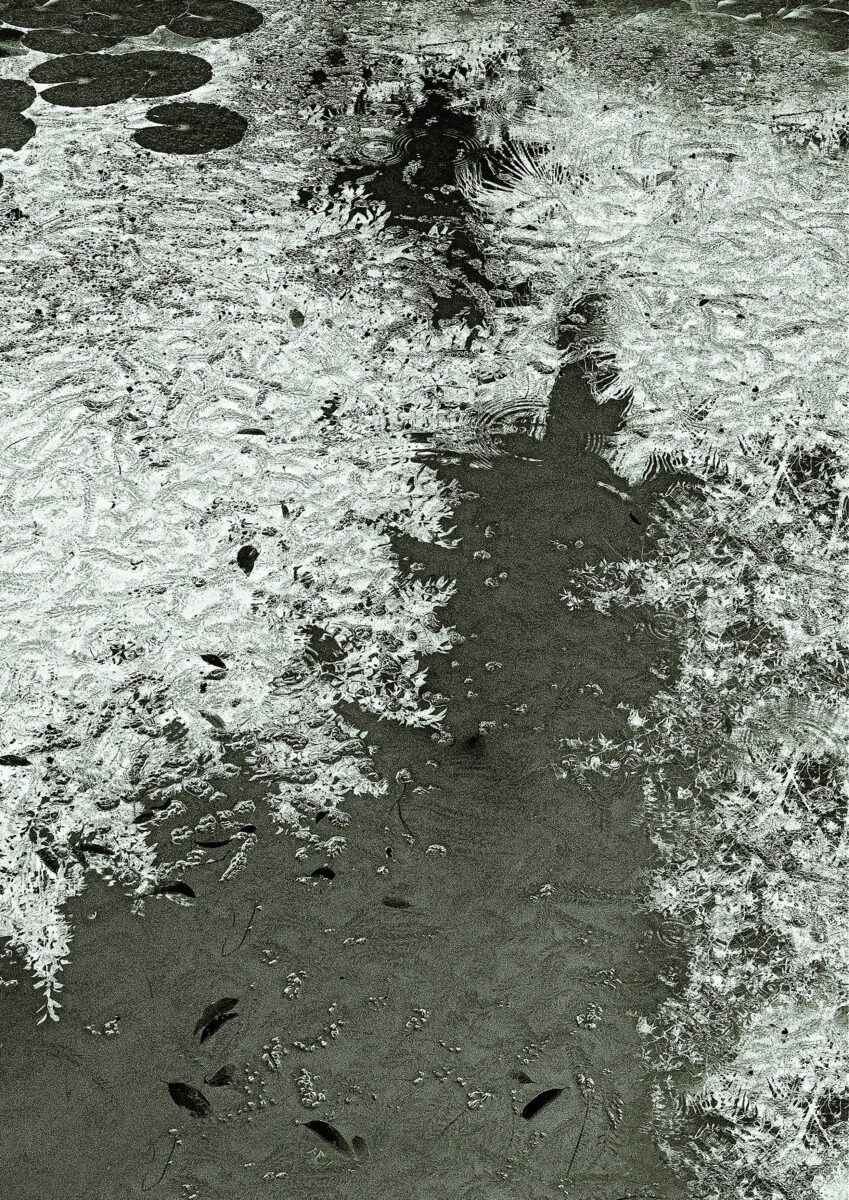
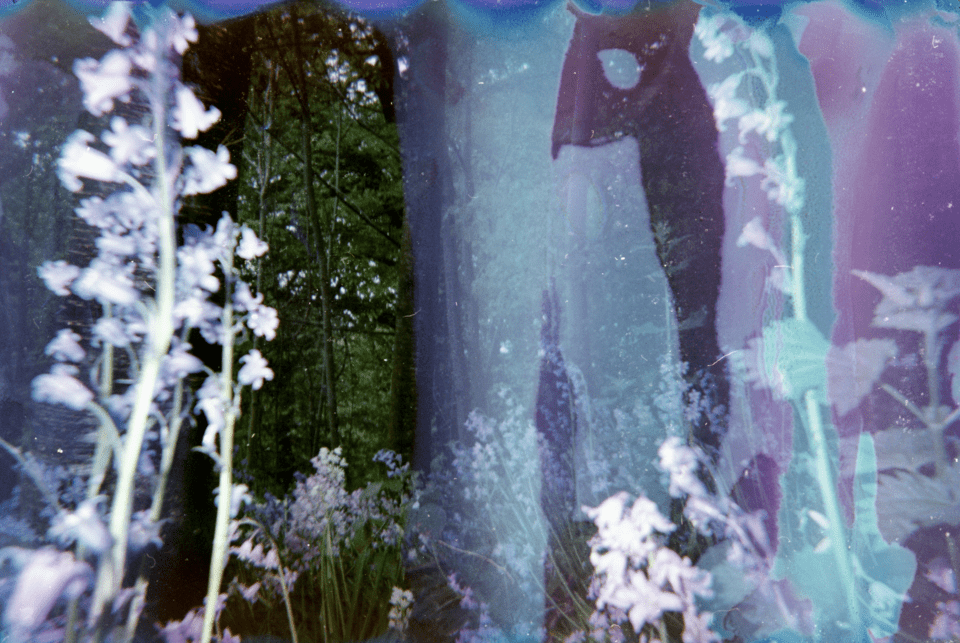
There’s a certain fatalism to much of Liu’s practice, whether that be in questioning whether two people are destined to fall in love, or in addressing the inevitability of dying. In Elegy, Liu explores the unspoken presence of death, a subject rarely addressed in Chinese households, where “loss is wrapped in taboo and quietly denied.” The artist draws from the natural world and traditional Chinese poetry to weave metaphor into images of fading flowers, dusk light and soft rainfall. Each work is photographed on silver plate and presented like classical scrolls, merging cultural memory with personal reflection. The suspended stillness of these scenes evokes both mourning and serenity, inviting the viewer into a space of quiet reckoning. In reclaiming the landscape as a site of remembrance, Elegy reveals grief as part of larger natural rhythm. The Alchemy II follows a similar thread, exploring the space between transformation and loss. Shot deep in the woods, Liu merges fragments of her own body with the natural world, creating scenes where skin, light and leaf blend into something timeless. The process was ritualistic, and after developing the 35mm negatives, she burned them, it’s a deliberate act of ruin that resulted in unexpected shapes. What emerges is a story of letting go, asking “whether we must sometimes destroy the image to see the truth.”
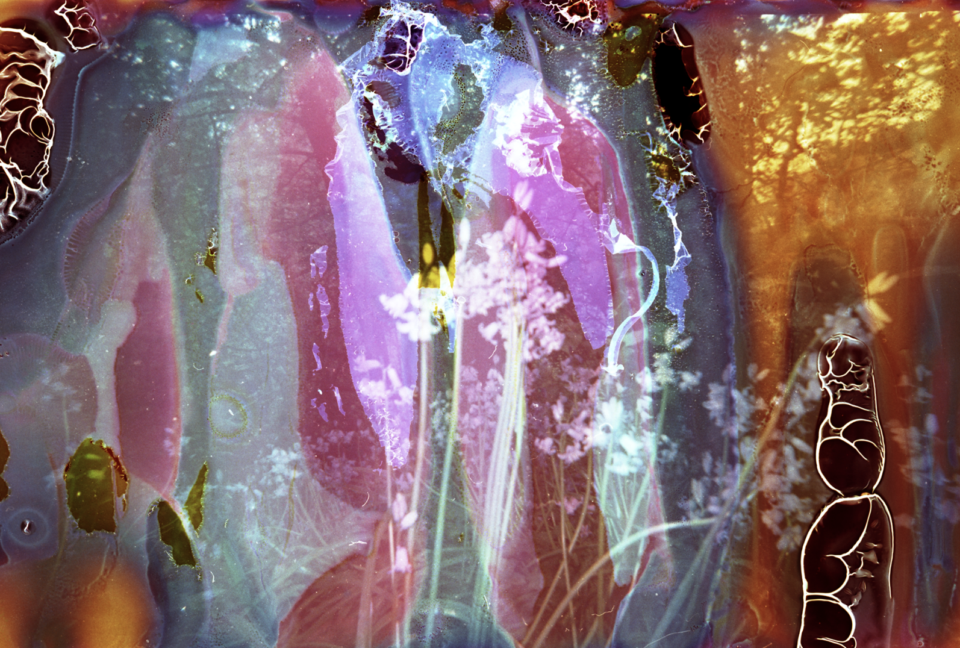
Chronicle of a Death Foretold, presented at SaltSpace, Glasgow, marks an important moment in Liu’s practice. The work approaches queer intimacy through a lens of emotional fatalism, tracing how desire, control and vulnerability unfold across spaces of nightlife and private encounters. The series functions as a psychological landscape, where intimacy is shown as precarious, negotiated and ultimately unstable. This presentation situates Liu’s work within a wider UK-based contemporary art context, in which questions of relational fragility and embodied experience are increasingly foregrounded.
Together, Liu’s art traces a sensitive, quiet inquiry into intimacy in an era of fragmentation. Her material experimentation renders visible the subtle exchanges between inner life and external form, suggesting the connection is something continually negotiated. We may be living in an era marked by withdrawal and disconnection, but Lui’s work suggests an alternative way of meaningful living.
Words: Emma Jacob
Image Credits:
All images courtesy Xinyi Liu.