On September 12, 1940, four teenagers came across a hole in the ground in the Dordogne region of south-west France. In some accounts, they discovered it after their dog, Robot, chased a rabbit into the entrance. They followed this mystery opening down 15 metres, before discovering that the walls were covered in more than 600 individual paintings, representing large animals and local fauna. The age of these decorations is now estimated to be between 17,000 and 22,000 years, and the site was inducted onto the UNESCO World Heritage List in 1979. The cave is a testament to humanity’s desire to tell stories and pass them onto the next generation. This deeply human instinct is now the driving force behind a first-of-its-kind institution, dedicated to showcasing the universal tradition of storytelling through images.
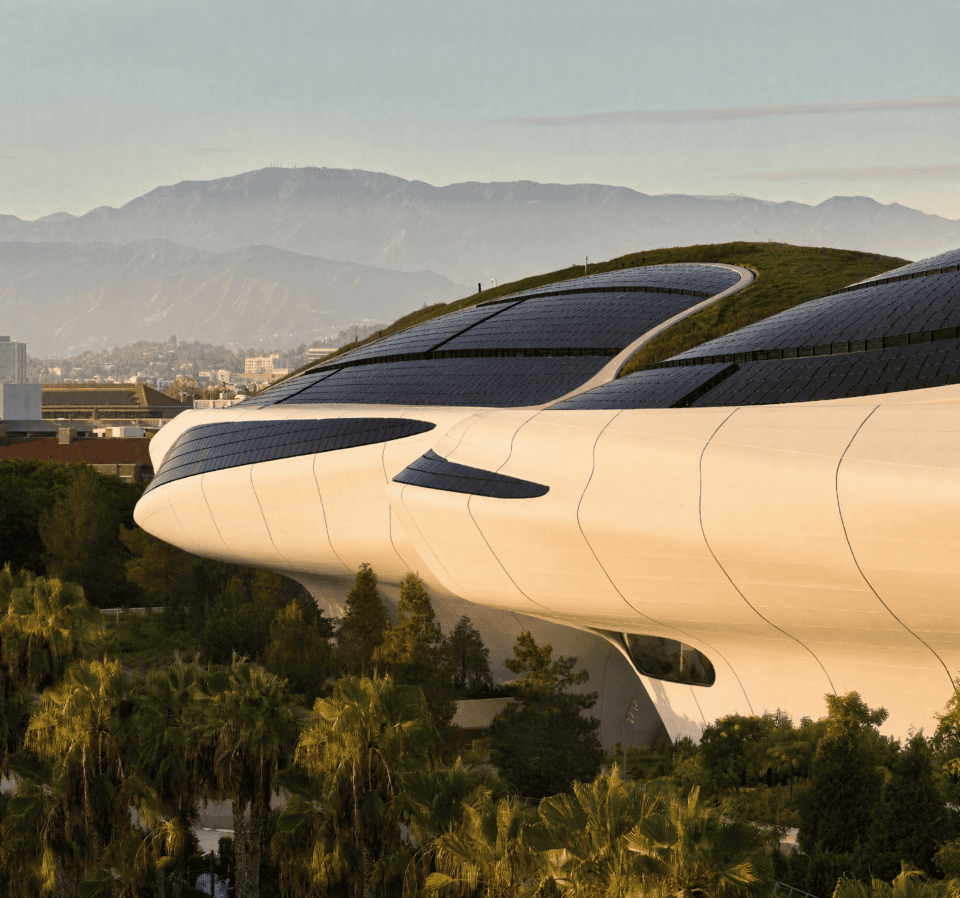
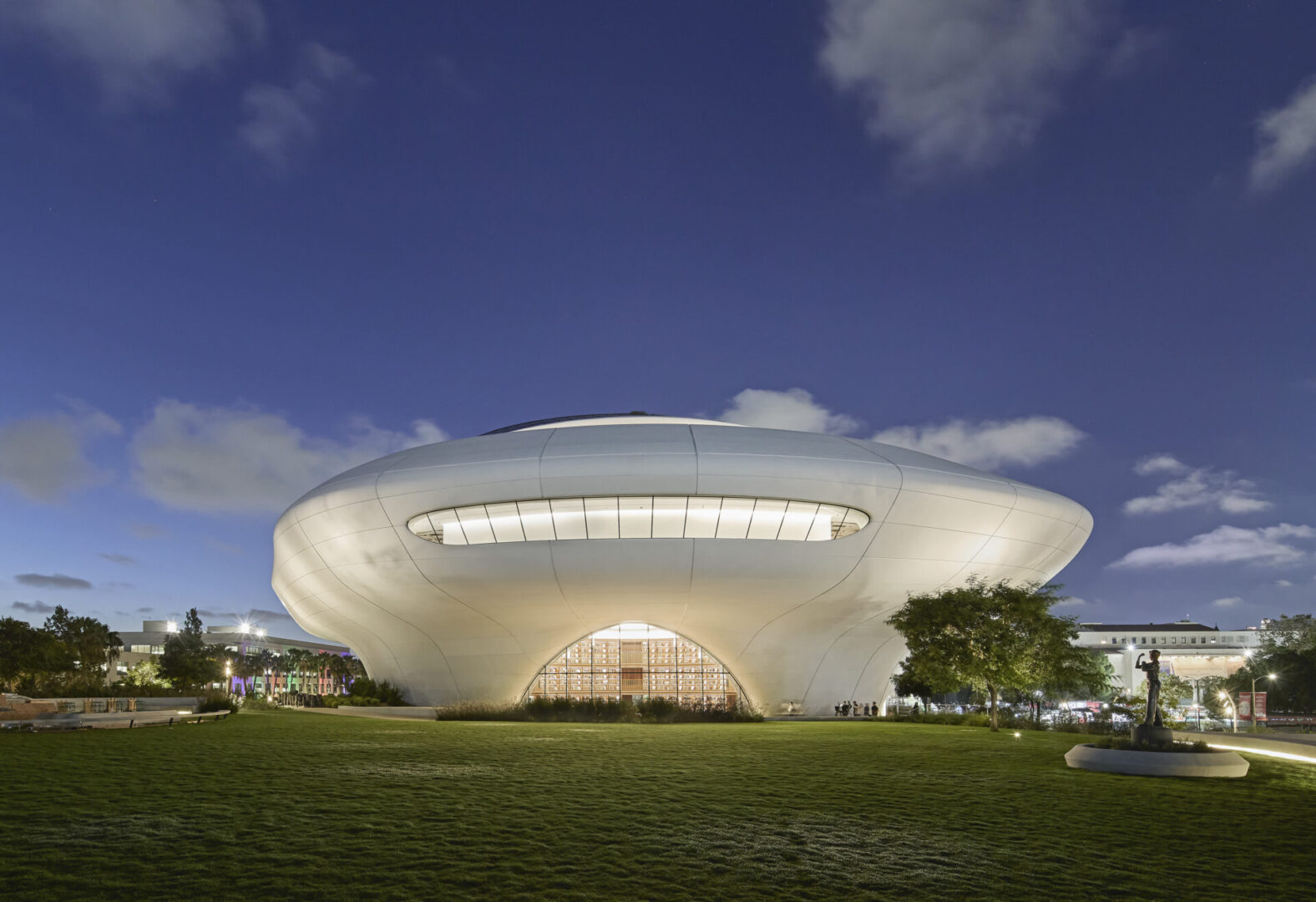
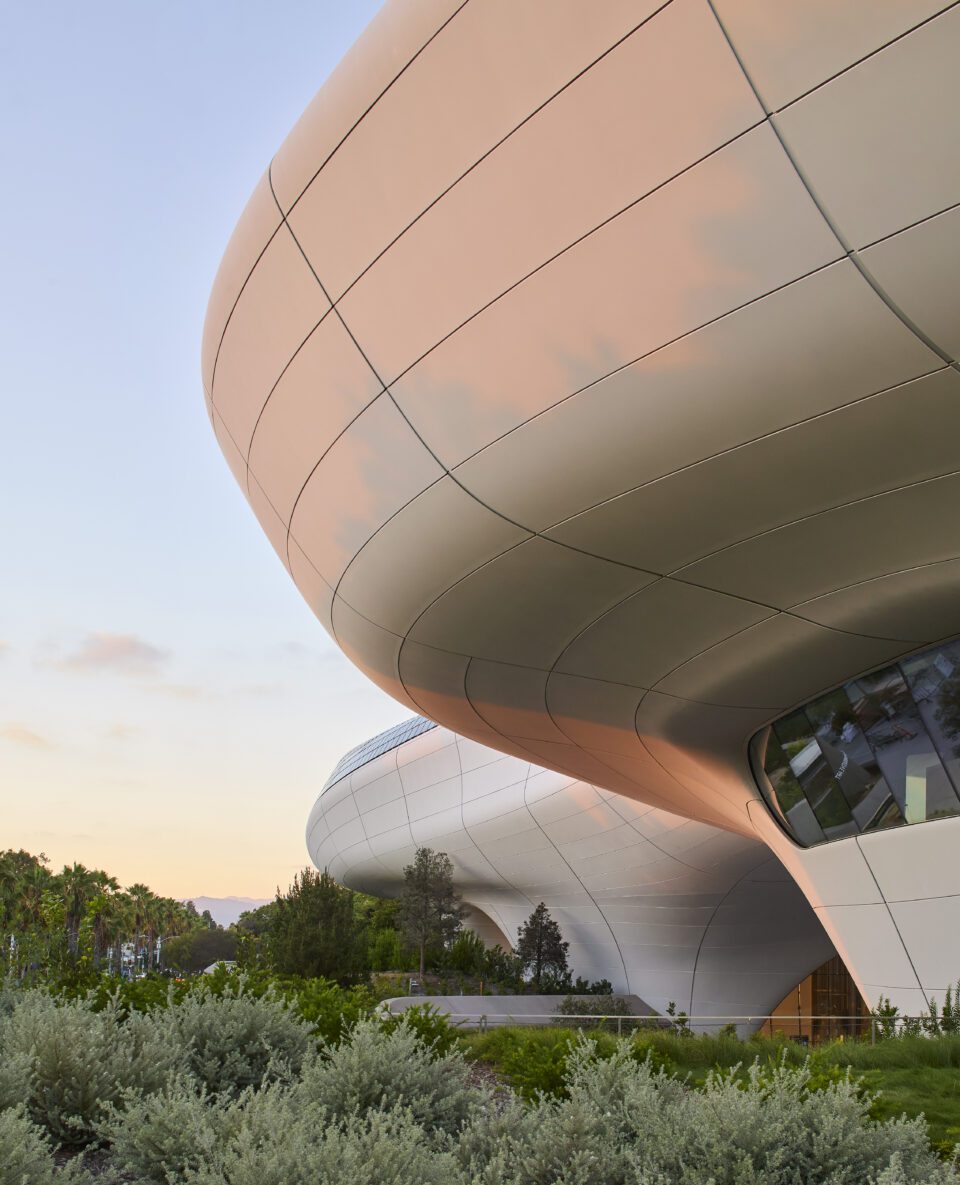
The Lucas Museum of Narrative Art, which opens its doors in Los Angeles on 22 September, is truly an innovative offering. Founded by legendary film director George Lucas and business tycoon Mellody Hobson, the Museum traces visual storytelling across cultures and centuries – from prehistoric cave paintings to illustrations, comics, cinema and murals – celebrating how stories connect us, shape belief and help us see ourselves in one another. The soaring, 300,000-square-foot building was designed by Ma Yansong of MAD and houses more than 30 individual galleries. Inside, there’s a wide range of eras and mediums, including Artemisia Gentileschi, Norman Rockwell, Frida Kahlo, Robert Colescott, Frank Frazetta and Robert Crumb, as well as film materials from the Lucas Archives. George Lucas says: “The artists in this collection didn’t just create images, they connected our modern imaginations with our ancient emotions – with common beliefs creating community. They deserve to be in a museum.”
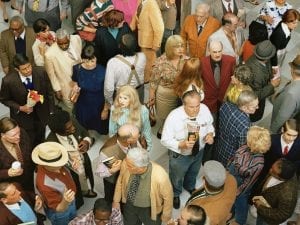
The inaugural exhibition takes visitors on a journey through the gallery’s newly acquired collection, which features more than 1,300 works. The Histories of Narrative Art: Heroes, Myths, The Sacred is an introductory exploration of how visual storytelling has produced mythologies that inspired devotion, forged communities and shaped societies. Sections devoted to specific genres of storytelling – fantasy, romance, adventure – feature works by artists including Georges Méliès, Boris Vallejo, Julie Bell and Ken Kelly. Elsewhere, more modern mediums come to the fore, with comic books, manga, graphic novels, photography and murals all driving the overarching narrative. Here, audiences can expect to see George Herriman, Charles Schulz, Jim Lee, Frank Miller, Takashi Murakami, Robert Capa and Gordon Parks.
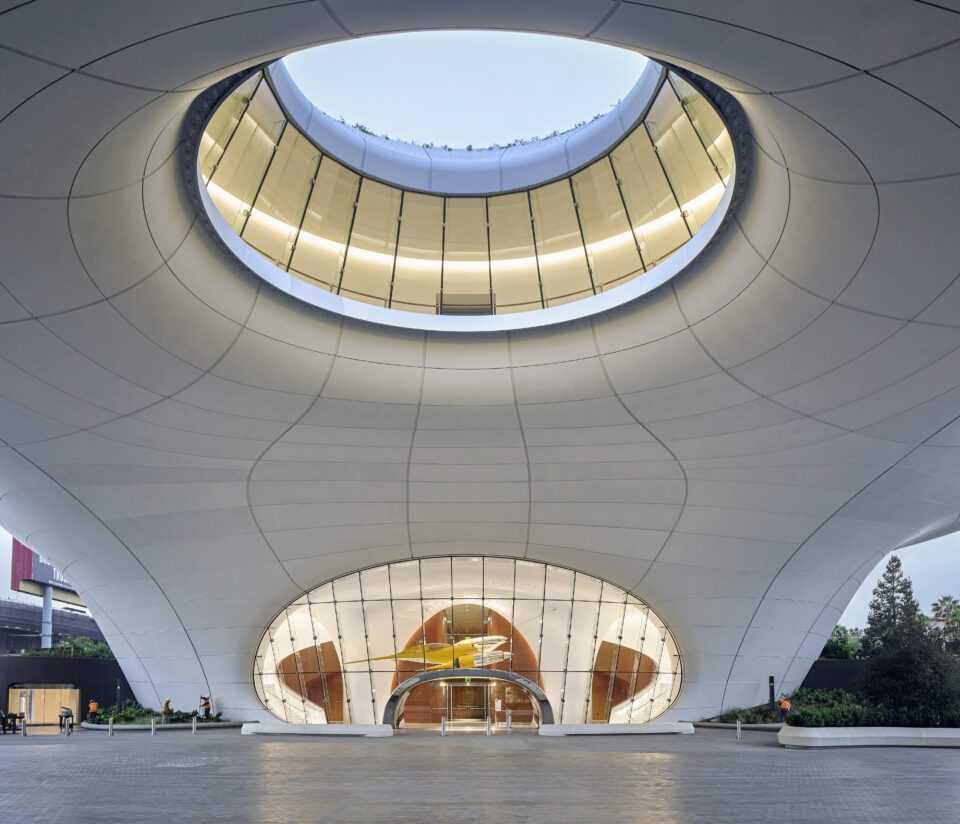
However, the gallery goes far beyond a traditional exhibition, opening with a major film programme, park and public gardens and a research library. The Lucas Museum celebrates cinema as both a powerful vehicle for narrative and a groundbreaking technology for creating moving visual experiences. This dual nature is brought to life across two dedicated, state-of-the-art theatres. Designed as continuous, drop-in gallery experiences, the programmes in each space allow visitors to come and go at their leisure, with films ranging from a few minutes to feature length. It’s a revolutionary way of viewing cinema, taking it from a shared, singular experience to something more open to interpretation and interaction. Meanwhile, the public gardens replace what was previously an asphalt car park, now including Indigenous and drought-tolerant planting, more than 300 trees, a hanging garden, a meadow, an amphitheatre and a fountain.
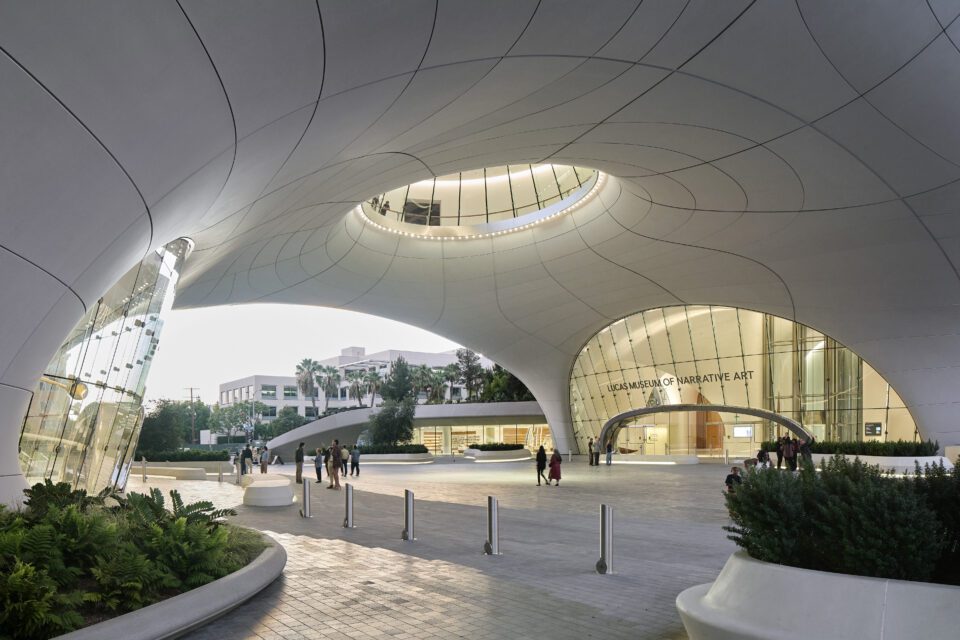
In every museum, gallery and cinema across the world, the human drive for storytelling keeps exhibitions alive and audiences engaged. It is the lifeblood of our creative ecosystems. It is perhaps long overdue, then, that we see the opening of a gallery dedicated to this specific phenomenon. The Lucas Museum of Narrative Art takes the hidden throughline and makes it the main event. The opening itself is an enormous moment, welcoming pioneers and industry leaders, but it is sure to be just the beginning for the institution dedicated to creating a sense of wonder, possibility and connection to something larger than ourselves.
The Lucas Museum of Narrative Art opens in Los Angeles on 22 September: lucasmuseum.org
Words: Emma Jacob
Image Credits:
1. Courtesy Lucas Museum of Narrative Art. Photo by Hufton+Crow.
2. Courtesy Lucas Museum of Narrative Art. Photo by Hufton+Crow.
3. Courtesy Lucas Museum of Narrative Art. Photo by Hufton+Crow.
4. Courtesy Lucas Museum of Narrative Art. Photo by Hufton+Crow.
5. Lucas Plaza. Courtesy Lucas Museum of Narrative Art. Photo by Hufton+Crow.