
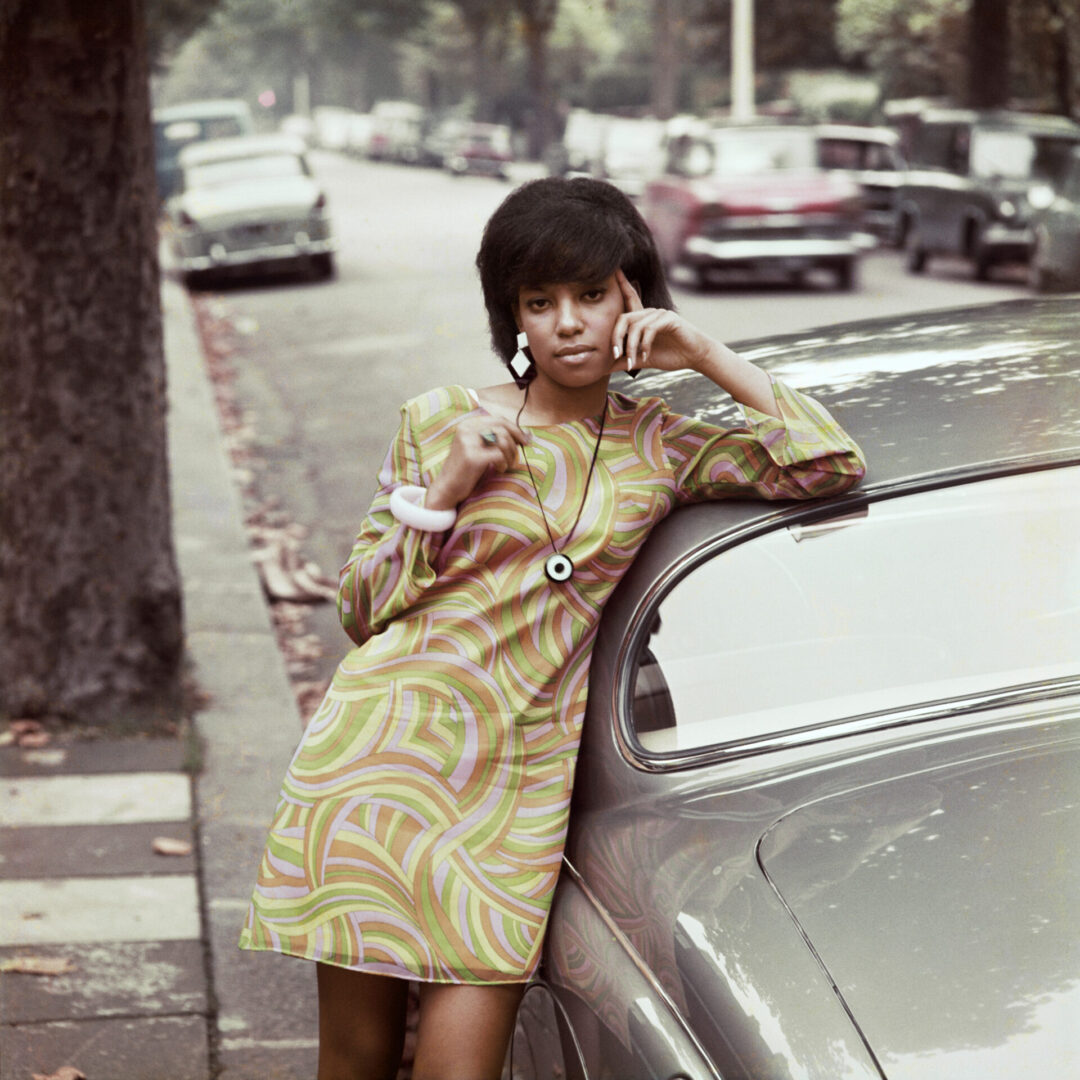
Photography shapes what can be seen, remembered and valued. A portrait holds more than a likeness: it records choices about dress, posture, setting and the terms on which a person enters public view. Across Ghana and Britain, James Barnor made those choices central to a practice spanning studio portraiture, photojournalism, fashion and colour processing. He was announced as recipient of the 2027 Outstanding Contribution to Photography Award, and recognised at the 20th Sony World Photography Awards. More than 50 works will be presented at Somerset House, London, from 16 April – 3 May 2027.
Barnor’s photographs resist the hierarchies through which history is usually pictured. Political figures appear alongside students, shop assistants, traffic officers and models; each is granted the attentiveness of a portrait. Instead of treating modernity as a style imported from elsewhere, the images catalogue it as a condition people actively made and inhabited. Clothing, expression and the choreography of a studio sitting become evidence of aspiration and social change. Their subjects are participants in shaping how that story would be seen, often with remarkable ease before the lens.
Accra in the years before independence gave this approach its urgent context. After training with his cousin, portrait photographer J. P. D. Dodoo, Barnor became the first staff photographer at the newly launched Daily Graphic in 1950. He documented rallies, street parades and Kwame Nkrumah’s declaration of independence in 1957, but the significance of this work extends beyond political milestones. Crowds, gestures and street-level encounters bring the national narrative down to human scale. Independence appears not only as an event announced from a platform, but as a social reality negotiated in everyday life.
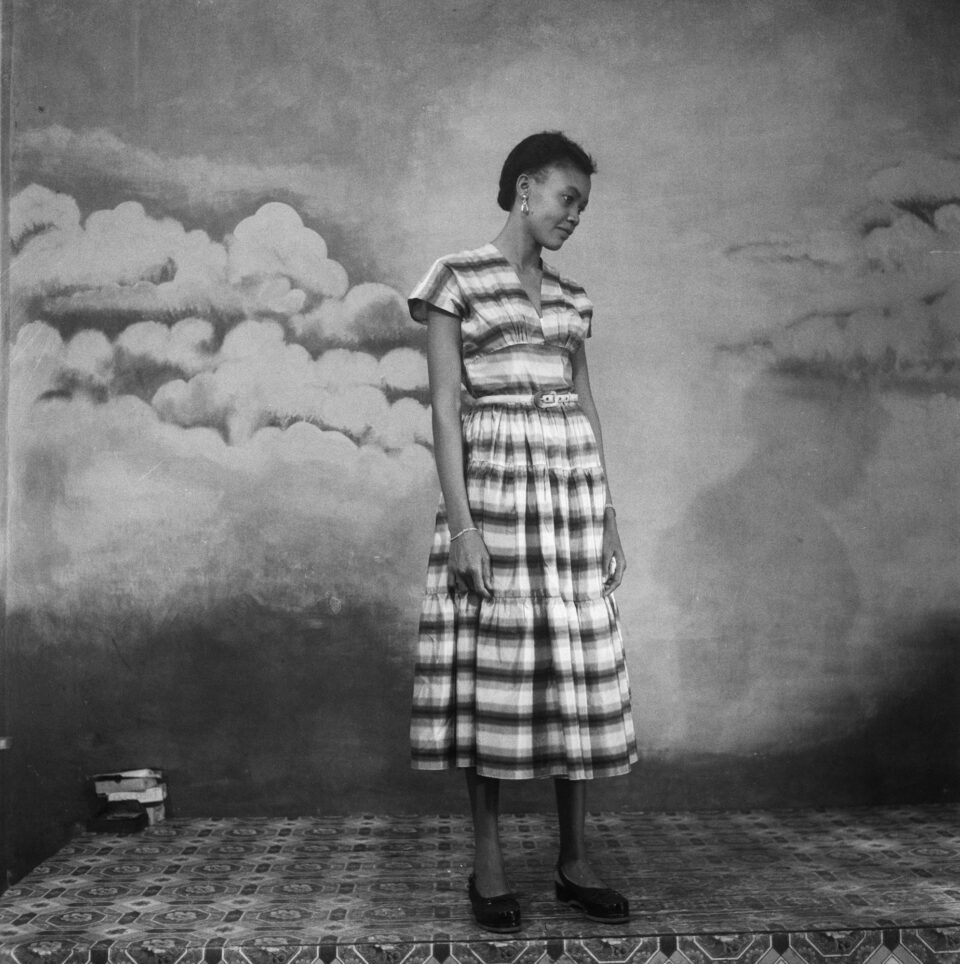
Ever Young, the studio Barnor opened in Accra’s Jamestown district in 1953, offered another arena for that negotiation. Judges and political figures sat alongside students, shop assistants and traffic officers, each sitter able to shape how they would be remembered. In portraits such as Selina Opong, Policewoman, the sitter’s direct gaze and composed bearing make professional identity visible at a moment of social transformation. Painted backdrops, retouching, clothing and pose form part of the image’s collaborative construction, not simply its surface. Barnor’s studio belongs to a wider West African culture of portraiture in which photography became a means of self-fashioning and expression.
In Bamako, Seydou Keïta used backdrops, clothing and negotiated poses to construct portraits of poise and cosmopolitan ambition, while Malick Sidibé followed young people into dance halls, streets and leisure spaces. Senegalese photographer Mama Casset brought glamour to Dakar’s studio culture; in Kinshasa, Jean Depara recorded the social energy of dance halls and swimming pools. Their practices are distinct, yet together they reveal photographers attentive to how African cities represented themselves during and after colonial rule. Barnor belongs within this connected history, while retaining the rhythms of Accra and its exchanges with London. The comparison shifts attention from belated discovery towards a modernity already being pictured across the continent, with local styles and audiences in view.
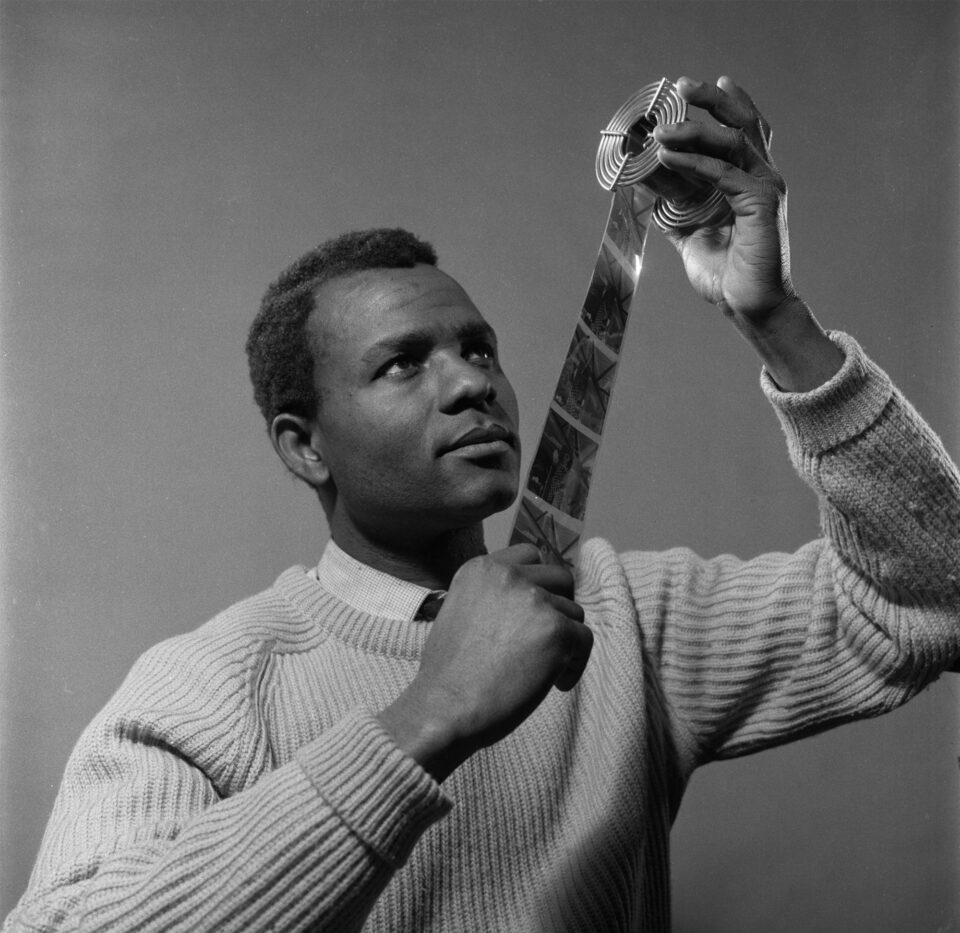
Barnor’s move to the UK in 1959 extended that history across the Black Atlantic. He studied at Medway College of Art in Kent and worked as a colour printer at Colour Processing Laboratories, while contributing photographs to Drum, the influential South African magazine. His portraits of Black models and public figures appeared on its covers and fashion pages, circulating images between London, Accra and the wider diaspora. Style is not a decorative interlude: clothing, gesture and pose become languages of confidence. The camera records a community not as an object of observation, but as an author of its own image.
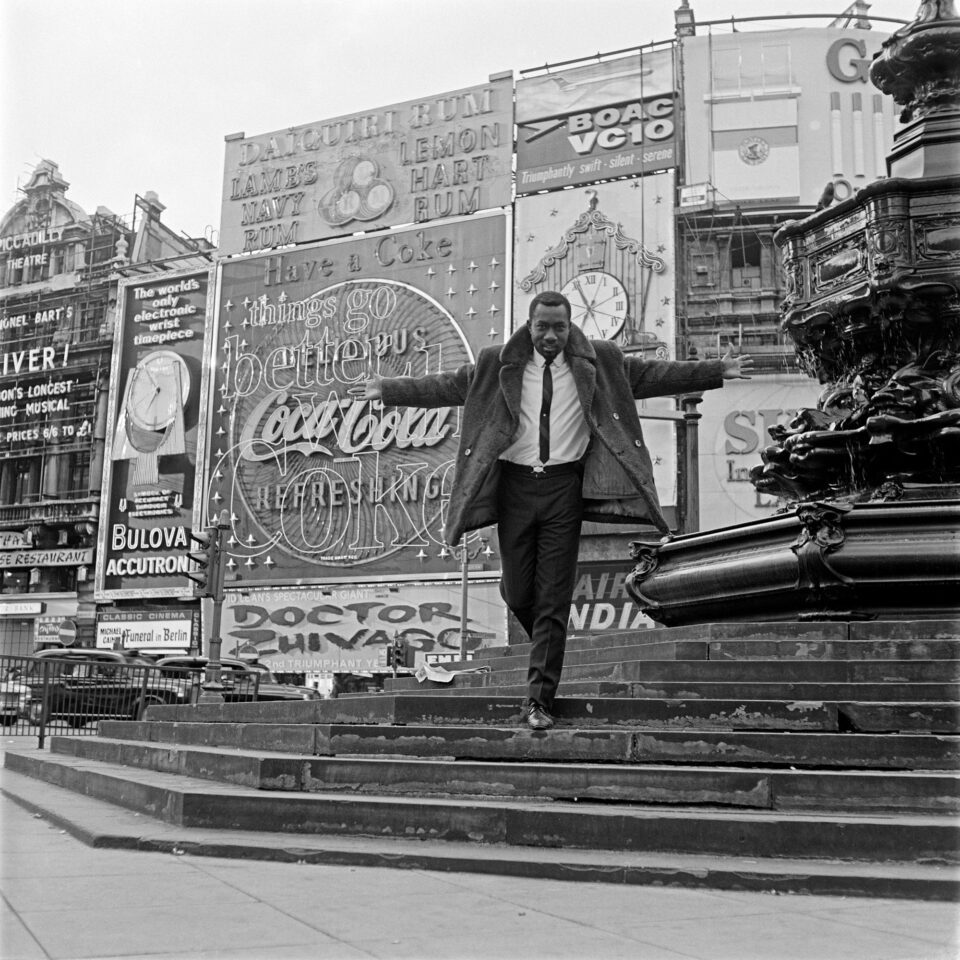
London’s familiar post-war story foregrounds Swinging Sixties fashion, music and youth culture, whilst leaving Black communities at the margins. Barnor’s photographs unsettle that division. In his 1967 portrait of BBC broadcaster Mike Eghan at Piccadilly Circus, Eghan’s open stance and the surrounding neon signs place a Black cultural figure within one of the capital’s defining public spaces. The image is both portrait and record of a changing city; its subject is neither peripheral nor an exception. Across the Atlantic, Kwame Brathwaite photographed Harlem and the Bronx, giving visual force to the “Black is Beautiful” movement. Though their contexts differ, both practices connect self-fashioning with cultural agency.
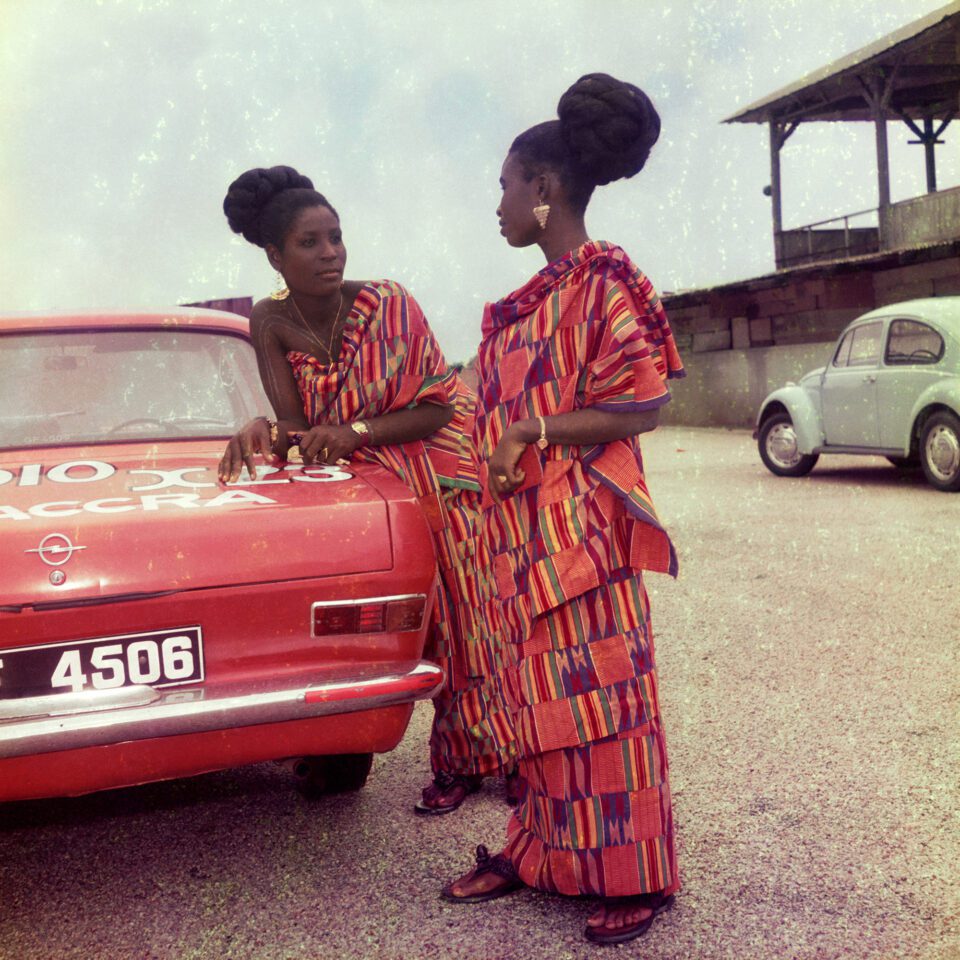
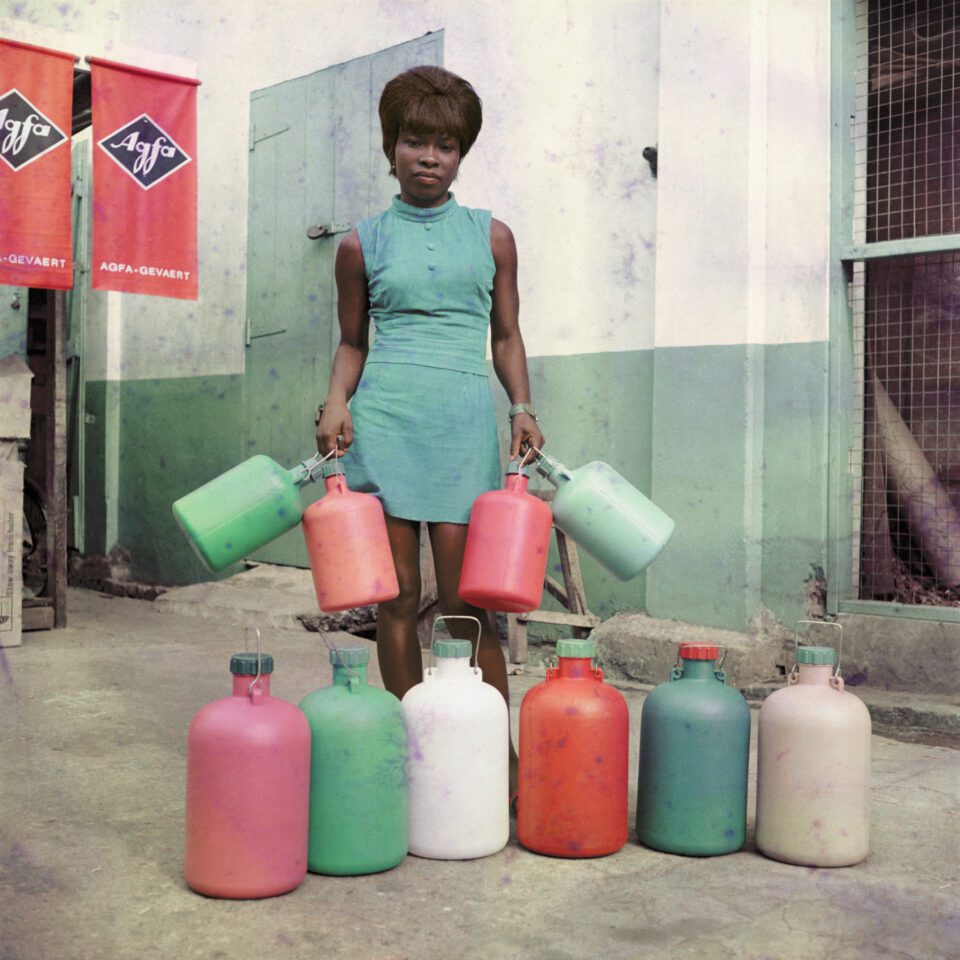
Colour brought another dimension to Barnor’s engagement with representation. After training with Agfa-Gevaert in Belgium and Germany, he returned to Ghana in the late 1960s as the company’s technical representative and established the country’s first colour processing laboratory. In images of shop assistants, friends and families, colour makes textiles, skin tones and everyday textures integral to the composition. Barnor observed that “Colour really changed people’s ideas about photography.” Access to colour altered what clients expected of a portrait and how contemporary Ghana appears in its own images.
This combination of image-making and technical knowledge complicates the distinction between artist and technician. Barnor worked across the studio, street, newspaper, magazine and laboratory, understanding how photographs were produced and circulated as well as how they looked. He continued as a photographer and journalist after returning to Ghana, later operating Studio X23. His career does not follow a simple route that travels from Accra to London and towards recognition in Europe; it moves through return, exchange and renewed work. The resulting archive is transnational without losing sight of the communities and audiences that sustained it on both sides of the Atlantic.
Exhibitions have increasingly shaped how Barnor’s archive is encountered. The Serpentine retrospective in 2021, curated by Lizzie Carey-Thomas and Awa Konaté, brought together work from Accra and London across three decades. At LUMA Arles in 2022, Matthieu Humery’s James Barnor: Stories, Pictures from the Archive (1947 – 1987) presented previously unseen images selected with the photographer from around 30,000 negatives, alongside documents and vintage prints. Its Living Archives approach made the circumstances of production part of the encounter. James Barnor, Studio of Life followed at FOMU Antwerp in 2023, extending the conversation around memory, circulation and photographic history.
Ephemera can make the systems visible through which photographs acquire meaning: the magazine page, studio commission, laboratory, family album and exhibition wall. Archives are never neutral storehouses; preservation, cataloguing and display determine which histories remain accessible. Barnor’s photographs are held in collections including MoMA, Tate, the Victoria and Albert Museum, the National Portrait Gallery and the Centre Pompidou, signalling institutional recognition. However, collection status cannot complete the work of historical repair, particularly when images are detached from the communities and circumstances that produced them, or the people who first encountered them. The Somerset House presentation offers an opportunity to keep those relationships in view.
The award places Barnor among Outstanding Contribution to Photography recipients including Martin Parr, Graciela Iturbide, Edward Burtynsky, Sebastião Salgado, Susan Meiselas and Joel Meyerowitz. Its significance, however, lies less in the company it confers than in the questions his practice brings to the medium. Documentary observation, portraiture, editorial work and technical innovation coexist. In accepting the award, Barnor said: “Wherever I went, I tried to learn so that I could share what I had learned.” The sentiment describes a practice grounded in curiosity and transmission, reflected in the James Barnor Prize, dedicated to African photographers. His photographs endure because they show not only how a changing world looked, but how people participated in making it visible.
James Barnor: Outstanding Contribution to Photography is at Somerset House, London from 16 April – 3 May 2027: sony.co.uk
Words: Shirley Stevenson
Image Credits:
1. James Barnor, Drum cover girl Erlin Ibreck, Kilburn, London, 1966. © James Barnor / Courtesy Galerie Clémentine de la Féronnière.
2. James Barnor, Selina Opong, one of the first policewomen in Ghana, caught in a pensive pose, Ever Young Studio, c. 1954–56. © James Barnor / Courtesy Galerie Clémentine de la Féronnière.
3. James Barnor, Untitled #2, Two friends dressed for a church celebration, Accra, 1970s. © James Barnor / Courtesy Galerie Clémentine de la Féronnière.
4. James Barnor, Medway College, Rochester, c. 1960-1963. © James Barnor / Courtesy Galerie Clémentine de la Féronnière.
5. James Barnor, Sick-Hagemeyer assistant, Accra, 1971. © James Barnor / Courtesy Galerie Clémentine de la Féronnière.
6. James Barnor, Mike Eghan at Piccadilly Circus, London, 1966. © James Barnor / Courtesy Galerie Clémentine de la Féronnière.


