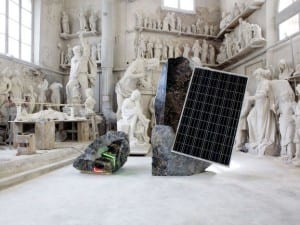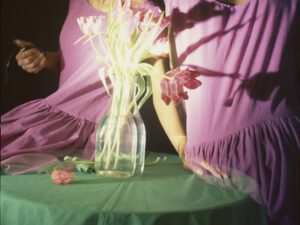
London’s cultural and economic power are inseparable. In 2024, the UK’s creative industries generated an estimated £145.8 billion in gross value added, accounting for 5.5 percent of the national economy. Their GVA grew by 4.6 per cent between 2023 and 2024, compared with 1 percent growth across the UK economy. Between 2010 and 2024, the creative industries grew by 60.3 per cent in real terms. These figures show an economic significance of culture that fails to capture its social or intellectual value.
That economic significance comes with a confident cultural identity. Time Out’s 2026 survey questioned 24,000 residents across more than 150 cities about the quality and affordability of their local cultural scenes, combining those responses with assessments from editors and cultural experts. London emerged at the top of its Best Cities for Culture ranking, with 99 per cent of London respondents approving of the capital’s arts and culture scene. Such metrics cannot establish an objective hierarchy of cultural cities, but they show how strongly cultural reputation has connected the way cities know and promote themselves.
The question proposed, then, is what happens when that cultural economy reaches its annual moment of maximum concentration. Art fairs have become particularly effective at producing such moments, with Basel, New York, Paris, Miami Beach, Hong Kong and Seoul demonstrating different versions of the model. A temporary commercial gathering can become a much larger proposition about place, visibility and belonging. The fair may occupy a defined physical site, but its effects extend through the city around it. Galleries make adjustments to their programmes, museums attract international audiences, restaurants and hotels benefit from increased amount of activity, and collectors, artists, curators and critics move between institutions that would normally operate as separate parts of the cultural landscape.
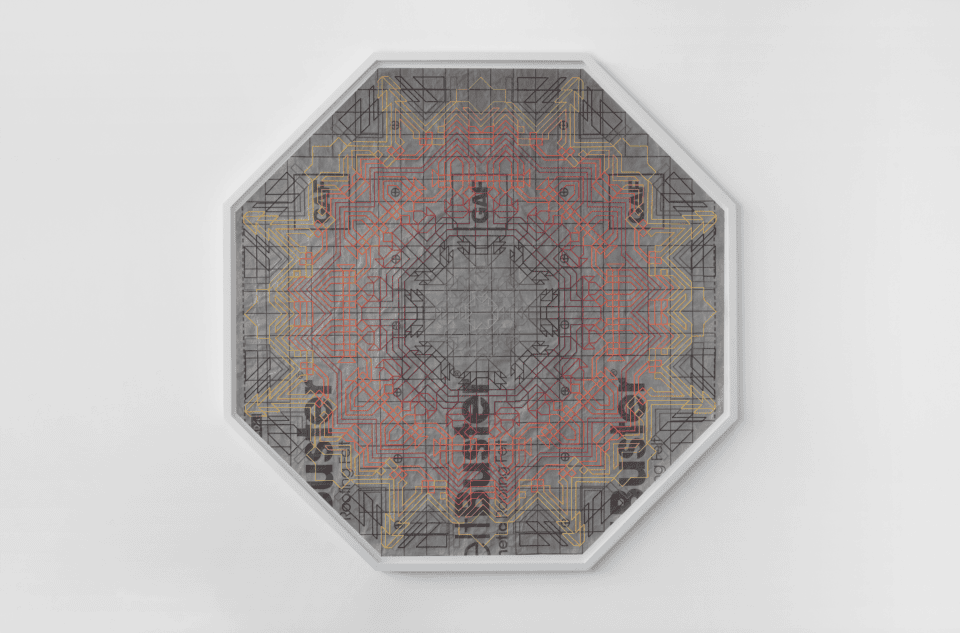
Frieze has consequently become more than an exhibition format. It is a temporary concentration of the people, money, institutions and ideas that sustain an art ecosystem throughout the rest of the year. London’s version is now sufficiently established that the fair has effectively lent its name to an entire season of cultural activity. Frieze Week extends beyond Regent’s Park into museums, galleries and other cultural spaces across the capital. Consequently, the result is not a single cultural event but a network of activity that becomes increasingly more visible and densely connected during the week.
For several days, London’s existing cultural infrastructure operates as a connected system. Mayfair becomes a destination for international collectors, commercial galleries coordinate openings around the influx of visitors, museums compete for attention alongside private exhibitions, and hospitality businesses become part of the infrastructure supporting the international art world. The influence of the fair is therefore measured not only by what happens inside its perimeter, but by the activity it generates beyond it. The city becomes both the setting for the fair and one of the things being presented through it.
That focus of attention is part of the fair’s cultural currency. A city does not host a global art fair; it presents itself through one. Its galleries, museums, architecture, restaurants, hotels and creative communities are met by an audience already primed to look. The same pattern can be seen elsewhere, from New York’s relationship with The Armory Show to Art Basel Miami Beach and Frieze Seoul. In Seoul, the relationship between the global fair, KiafSEOUL and the city’s wider gallery and institutional network shows how a commercial event has become embedded in existing cultural infrastructure.

These occasions function as temporary engines of cultural tourism, but they also serve to expose infrastructure that is normally considered difficult to see. The art fair depends upon networks of artists, galleries, curators, collectors, institutions, transport, hospitality and capital. For a few days, those networks become unusually visible. Across its two fairs, Frieze brings almost 300 galleries from 48 countries and regions to Regent’s Park in 2026. Frieze London alone accounts for 172 galleries from 42 countries and regions, while Frieze Masters brings nearly 140 galleries representing 30 countries and regions.
The scale matters not only because it demonstrates international reach, but because it temporarily places London within a much wider network of galleries, artists, collectors and institutions. The local and the international are brought into direct proximity, making the city both a destination for the global art market and a platform through which that market encounters London’s existing cultural infrastructure. However, scale also creates a problem. The larger the fair becomes, the more difficult it is to present its contents as a coherent cultural story. What connects such a range of artistic practices beyond their simultaneous appearance in the same marketplace becomes one of the central questions surrounding the event.
One answer lies in the fair’s curatorial programmes, which create different points of entry into questions of history, geography and space. Architecture provides one such entry point through Reflections, curated by Abby Bangser. Rather than concentrating solely on individual artworks, the programme considers the relationship between art and the environments in which it is experienced, drawing attention to architectural spaces including Casa Luis Barragán in Mexico City and The Cosmic House in London. This emphasis is particularly relevant during Frieze Week, when visitors move between exhibitions, institutions and buildings rather than experiencing the fair in isolation. Hence, architecture consequently becomes a significant part of the cultural infrastructure through which the week is experienced.
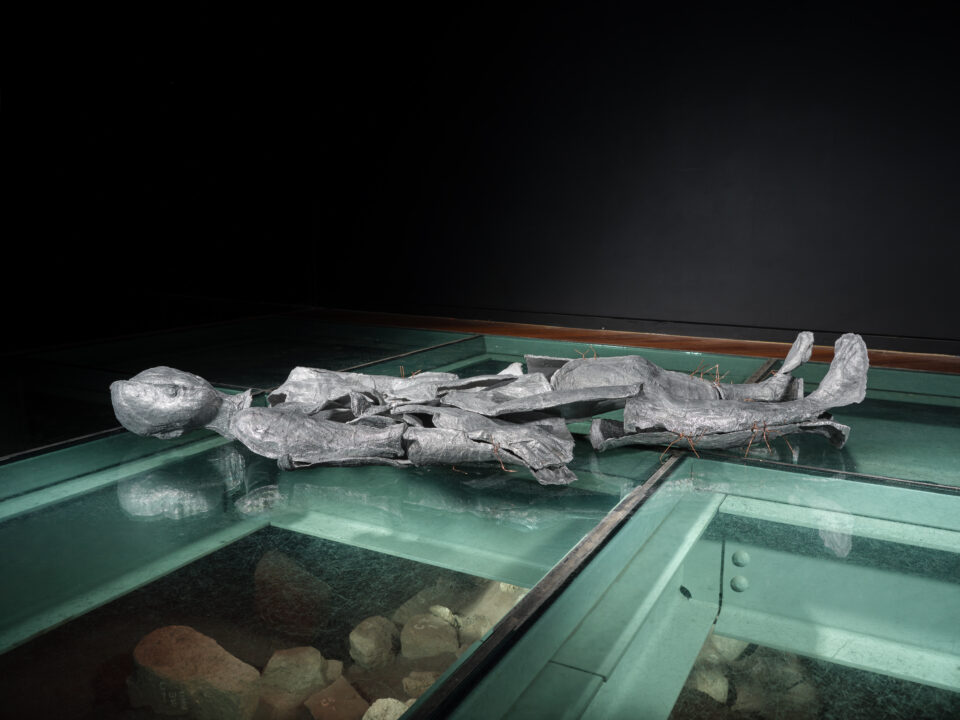
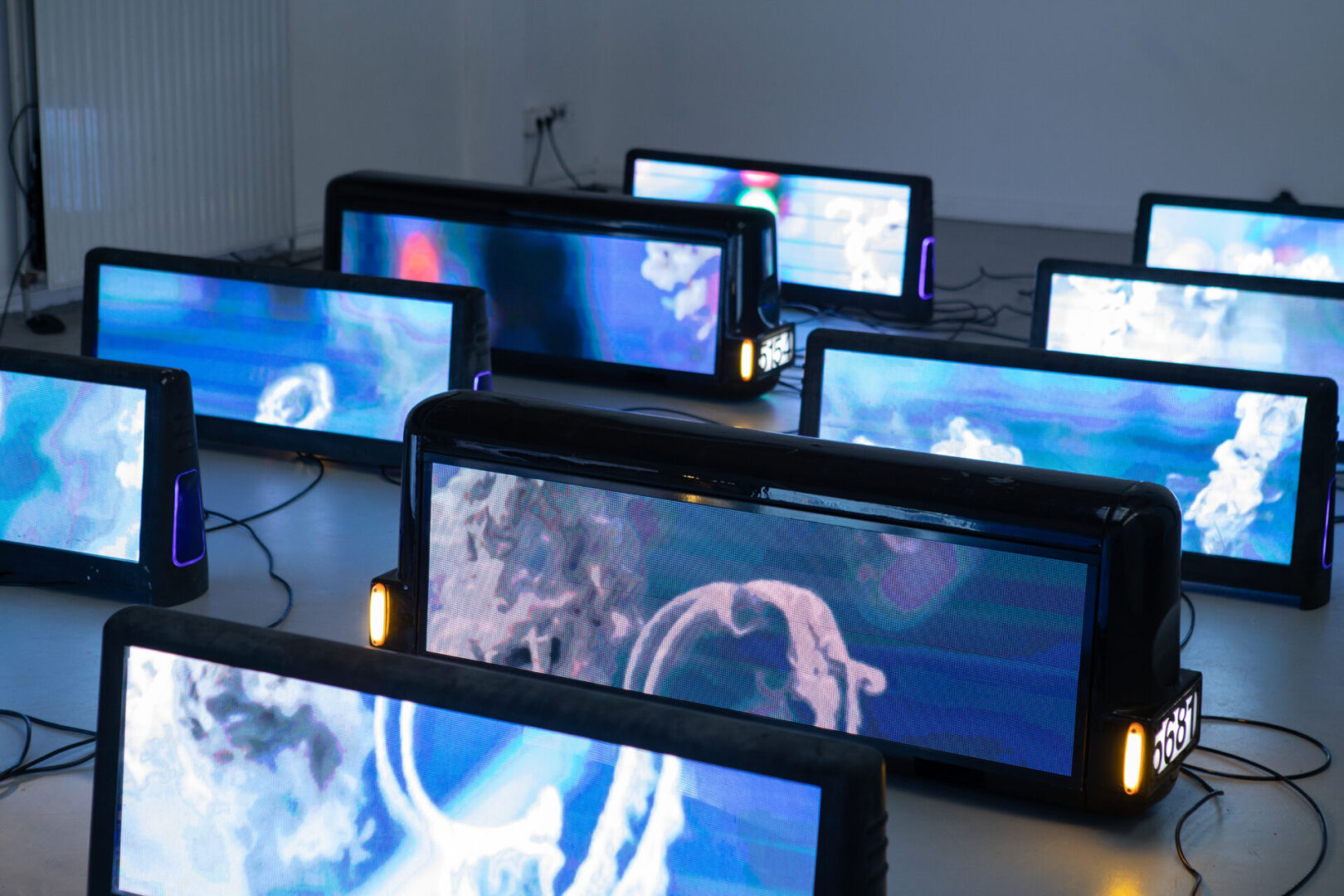
A different relationship between culture and infrastructure emerges in The Code Universe, curated by Carol Yinghua Lu. Its interest in popular culture, consumer objects, media and information turns attention towards the systems through which images and ideas circulate. That subject has an obvious resonance within an art fair because the fair is itself a circulation system. Artworks move through galleries, collectors, institutions, media and markets, acquiring different forms of meaning and value as they travel. To put into consideration the movement of information and popular culture within that environment is also to consider the conditions under which culture becomes visible and exchangeable.
Spotlight, curated by Devika Singh and Sofia Gotti, raises questions about where cultural histories have traditionally been located. Bringing together artistic practices from South Asia, South America, Europe, North and West Africa and East Asia, with particular attention to work produced between the 1950s and late 1970s, the programme challenges the assumption that modernism developed along one dominant Western trajectory. Within a global fair, this geographical expansion raises questions about whether difference is being genuinely explored or incorporated into an increasingly international marketplace.
These programmes show that the contemporary art fair does something more complicated than displaying objects for sale. It also builds frameworks through which visitors are encouraged to understand those objects. The commercial space as a result becomes a place where questions about cultural history and cultural value are negotiated beside the market itself. That creates an unavoidable tension. The fair’s commercial structure depends upon concentration, speed and visibility, while curatorial work often depends upon context, research, historical complexity and sustained attention. Bringing the two together does not eliminate the tension between them. Instead, it makes that tension part of the experience. A programme concerned with overlooked histories or alternative perspectives inevitably operates in a marketplace that assigns different levels of visibility and value to artists and galleries.
This is where Frieze becomes more interesting than the spectacle of the fair. Its importance cannot be measured only through visitor numbers, gallery participation or the sales that it generates. Its cultural influence also comes from the narratives that form around the objects it presents. A work becomes part of a broader conversation about modernism, identity, geography or architecture because curators, galleries and institutions provide frameworks through which it can be interpreted. The fair therefore is a participant in the production of cultural meaning as well as the exchange of cultural objects.
The fair occupies an unusual position between market and cultural institution. It does not replace the museum, nor does it operate simply as an enlarged commercial gallery. Its influence comes from the interaction between these different functions. Commercial activity provides the financial engine, galleries provide the objects and artists, curators provide frameworks of interpretation, and museums and institutions extend the conversation into the wider city. The result is a hybrid environment in which commercial and cultural forms of value constantly overlap without becoming identical.
London is well suited to this model because of its pre-existing infrastructure. Its museums, galleries, artists, collectors, universities, cultural organisations and creative businesses form a dense network that cannot be created by an annual event alone. Frieze focuses on that network, giving it a global audience. Hence, the city’s cultural strength does not come with the fair, but the fair makes that strength unusually visible.
This helps explain why the economic significance of London’s creative industries matters to the story. The cultural economy does not exist separately from the wider economy, and the £145.8 billion generated by the UK’s creative industries in 2024 illustrates the scale of the sector nationally. London’s concentration of cultural institutions and businesses gives the capital a particularly important position within that wider economy. The art fair becomes one point at which these cultural and economic networks intersect.
Time Out’s 2026 cultural ranking offers another, very different measure of the same phenomenon. Its methodology combines local opinion with expert assessment instead of measuring cultural output in economic terms. Here London’s position says less about an objective hierarchy of cities than about how cultural quality, accessibility and reputation are understood as components of urban identity. Frieze operates in the same wider space, although through a commercial instead of survey-based mechanism.
The art fair sits directly in this relationship between reputation and infrastructure. It benefits from London’s existing cultural density while at once amplifying it. International visitors arrive because of the fair, but they discover a city whose cultural offering extends far beyond it. Museums, galleries, exhibitions and neighbourhoods become part of the same temporary network. Here, the fair functions as both an event within London and a mechanism through which London is presented to an international audience. However, focus also creates exclusion. Every act of selection decides what becomes visible, and every system of visibility inevitably leaves something outside its frame. The global fair can widen access to artists and histories while remaining dependent upon the economic structures that determine which galleries can participate, which artists receive attention, and which forms of cultural knowledge are easiest to circulate. Hence, its internationalism can expand visibility without removing the inequalities that structure that visibility. Cultural openness and commercial selectivity exist beside another.
That discrepancy is one of the defining characteristics of the contemporary art fair. The same mechanism that creates sweeping visibility can also compress complex histories into a short period of intense attention. The same network that enables audiences to meet unfamiliar practices can place those practices inside a commercial space governed by scarcity, prestige and exchange. Hence, understanding the fair, requires attention to what it makes visible and the structures through which that visibility is produced.
Frieze Week makes this relationship unusually visible. The fair arrives as a concentrated commercial event, but London responds by becoming something larger: a network of exhibitions, encounters, transactions and conversations extending far beyond Regent’s Park. Its significance lies less in the number of booths than in what happens when those booths connect with the city around them. London provides the infrastructure, while Frieze provides a moment of extraordinary concentration and international attention.
The contemporary art fair is therefore no longer merely somewhere art is bought. It is one of the places where cultural visibility is organised, histories are reframed, and cities construct their international identities. In London, that process is clear because the fair does not arrive in an empty cultural landscape. It enters a city already dense with institutions, markets and creative communities. What Frieze creates is not London’s cultural identity itself, but a temporary intensification of the networks through which that identity is negotiated. The fair is a lens where the cultural economy of the city can briefly see itself.
Frieze London is at The Regents’ Park from 14 – 18 October: frieze.com
Words: Anna Müller
Image Credits:
1&7. Jessica Wilson, Sweet Nothing, (2025 – 2026). Image courtesy of artist and Diez Gallery.
2. Caroline Monnet, Gratitude 02, 2026. Roof underlayment, polyester thread 47 x 47 in, 119.4 x 119.4 cm. Courtesy of the artist and Blouin Division.
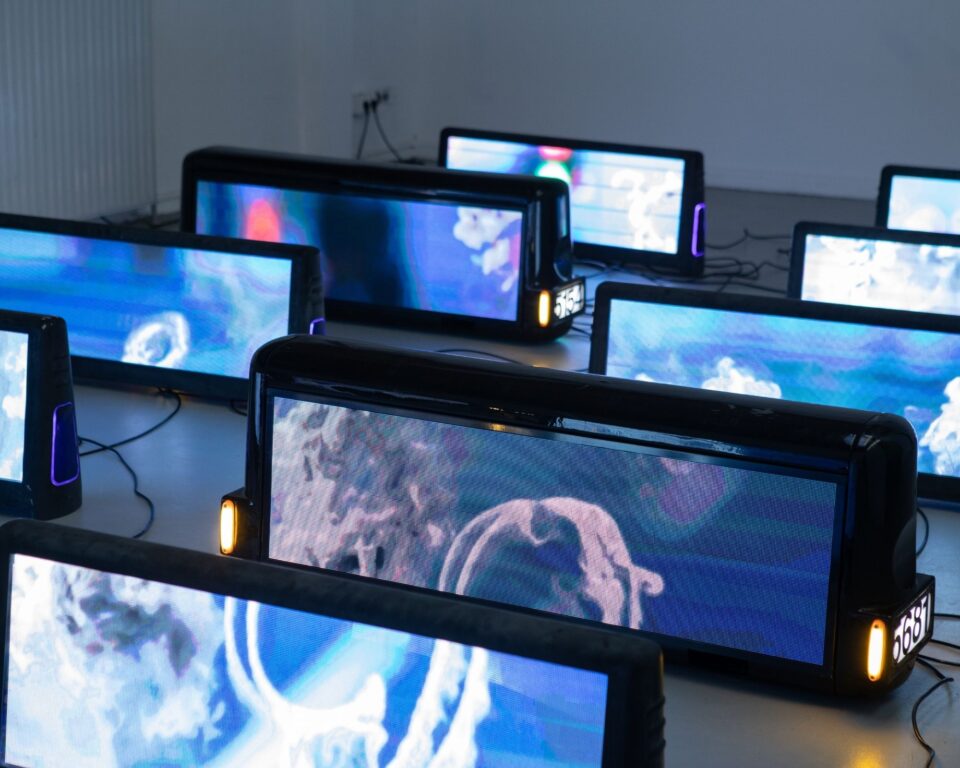
3. Cao Fei, Dash 15, Image courtesy of artist and Spruth Magers.
4. Eusung Lee, Eggshell, 2023. Photo by Janghwal Lim, Image Courtesy of the Artist.
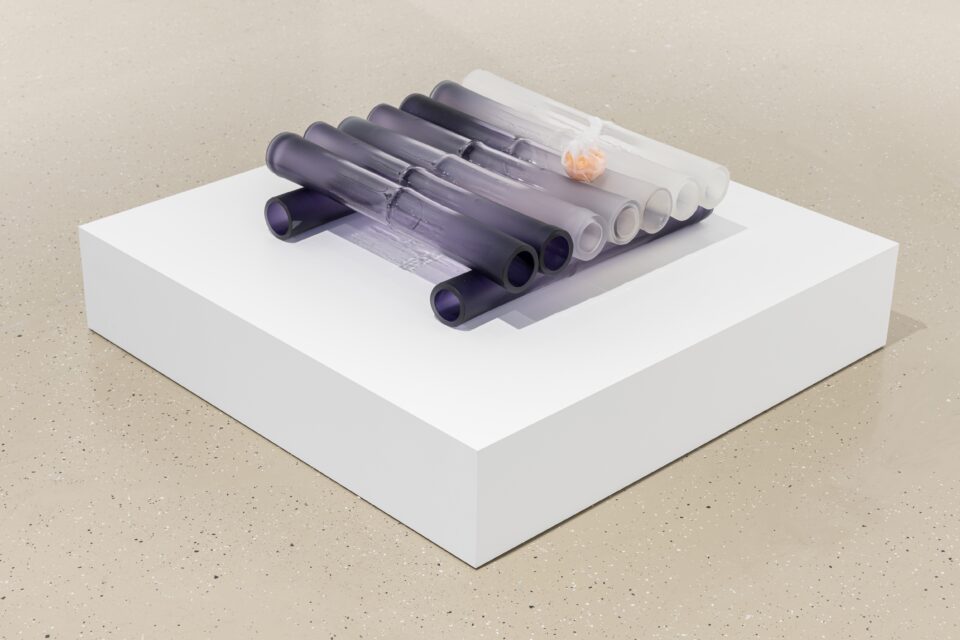
5. Lap-See Lam, Raft, Mandarin (III), 2026, handblown glass raft. Copyright the artist. Courtesy of the artist and Galerie Nordenhake Berlin, Stockholm, Mexico City. Photo by Nicola Morittu.
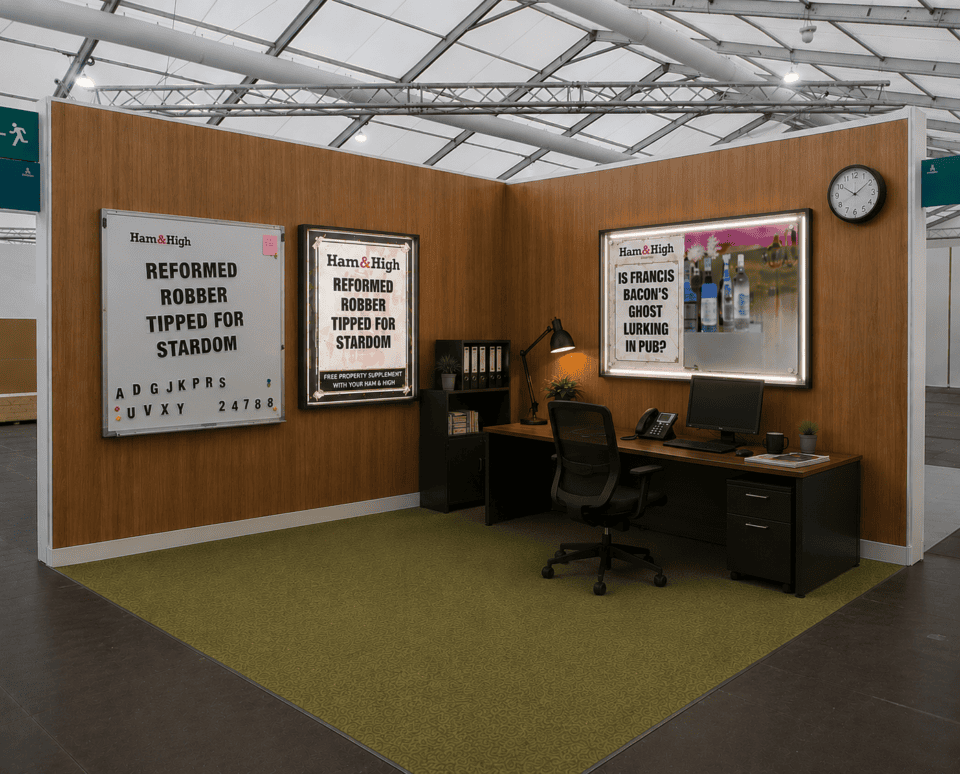
6. Marcus Jefferson, Harlesden High Street, Concept image of booth (2026).