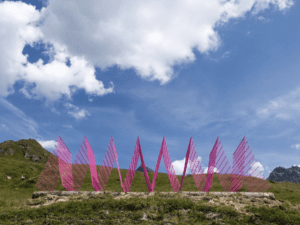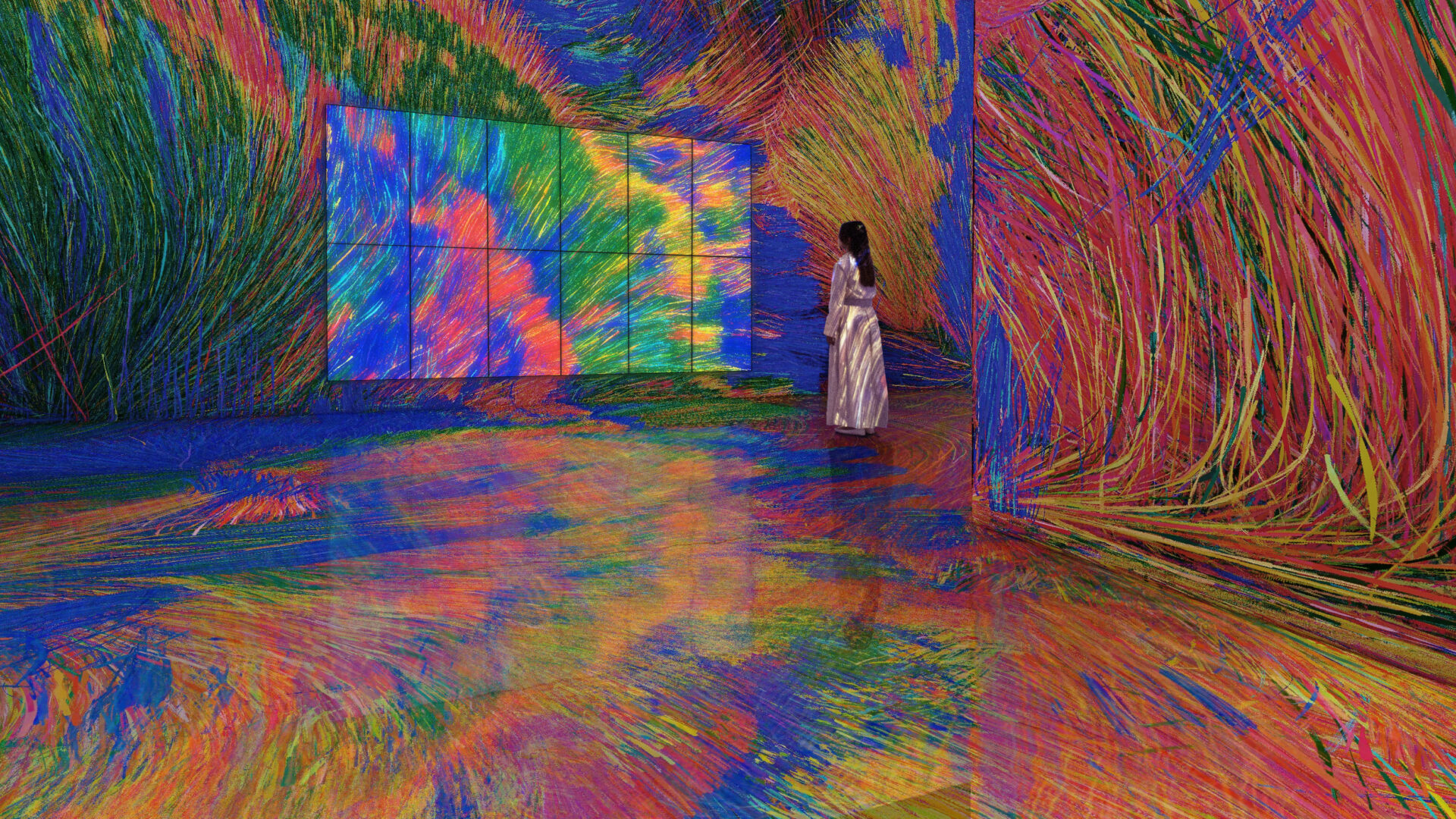
Few contemporary art collectives have transformed the relationship between audiences and museums as profoundly as teamLab. Over the past two decades, the Tokyo-based collective has become synonymous with immersive environments that dissolve the traditional boundaries separating artwork, architecture and viewer. Their vast digital landscapes of light, movement and sound have attracted millions across the globe, helping to redefine what contemporary art can be in an era shaped by screens, networks and virtual experience. However, teamLab’s significance extends beyond spectacle. At a moment when technological innovation is increasingly accompanied by questions about attention, perception and human connection, the collective’s work offers a framework for understanding how we inhabit a world that feels simultaneously more connected and more fragmented than ever before.
The rise of immersive art has been one of the defining cultural phenomena of the 21st century. Museums, galleries and public institutions have increasingly embraced environments that invite participation rather than passive observation. In many respects, teamLab anticipated this shift before it became widespread. Their installations emerged at a moment when digital technology was beginning to permeate everyday life in unprecedented ways, yet their work consistently resisted treating technology as an end in itself. Instead, digital systems became tools for examining larger philosophical questions: how do we understand our place within the world? Where do the boundaries of the self begin and end?
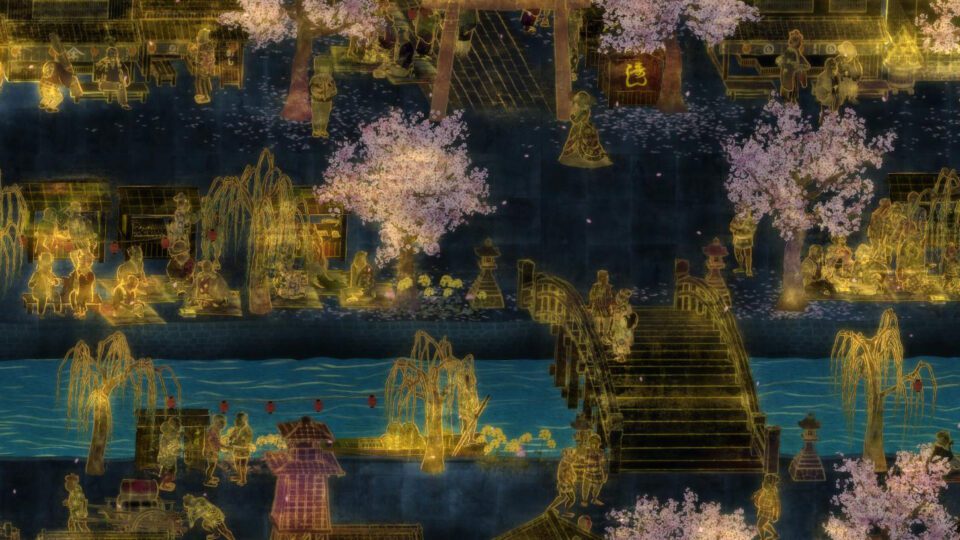
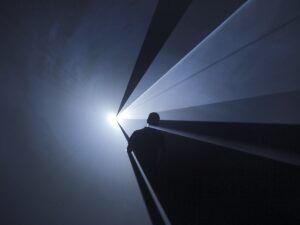
These concerns position teamLab within a much longer history of artistic experimentation. While the collective’s works are often discussed in relation to technological innovation, they also share affinities with movements that sought to transform perception through immersive experience. The environments of the Light and Space movement, the participatory ambitions of installation art in the late 20th century and the investigations of artists such as James Turrell all sought to shift attention away from the object and towards the act of seeing itself. teamLab extends these trajectories into the digital realm, creating spaces that respond to human presence and challenge fixed distinctions between observer and observed.
Their influence can also be understood alongside a generation of artists exploring technology as both material and subject. Olafur Eliasson has long examined how perception is shaped through encounters with light, atmosphere and environment, encouraging audiences to become conscious of the mechanisms through which they experience the world. Refik Anadol similarly transforms data into immersive visual landscapes, revealing how information can be translated into sensory experience. Meanwhile, the collective Random International has explored responsive environments that react directly to human movement, creating situations in which visitors become active participants in the formation of the artwork. What connects these practices is an interest in systems rather than objects, relationships rather than singular forms. teamLab occupies a distinctive place within this field because its works often operate less as installations than as ecosystems, continuously evolving through interaction.
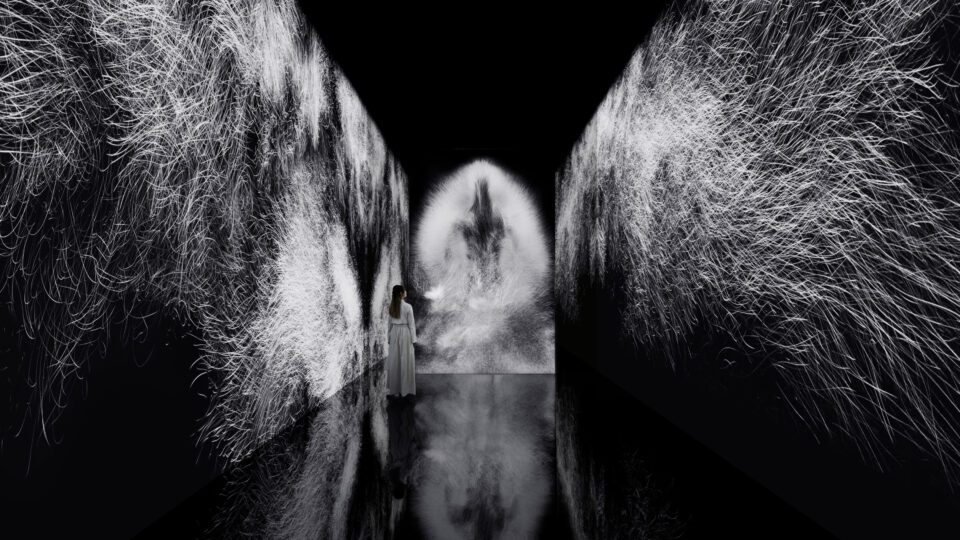
This emphasis on interconnectedness feels particularly resonant today. Contemporary life is increasingly characterised by networks – social, technological, ecological and economic – that are often difficult to visualise despite their profound influence. teamLab’s installations make these invisible systems tangible. Visitors encounter environments in which actions ripple outward, affecting digital organisms, landscapes or fields of light. Individual gestures generate collective consequences. In this sense, the work reflects broader cultural concerns surrounding climate, artificial intelligence and global connectivity, reminding audiences that existence is rarely isolated and that every system is shaped by relationships.
It is perhaps this ability to visualise interdependence that has allowed teamLab’s work to resonate across such diverse audiences. The collective’s environments are often celebrated for their accessibility, yet beneath their immediate visual appeal lies a sustained philosophical inquiry. Rather than presenting technology as a mechanism of control, teamLab explores it as a means of understanding complexity. Their installations frequently resist fixed narratives, unfolding instead through continuous transformation. Visitors encounter living systems that respond, evolve and disappear. Such experiences offer a compelling counterpoint to the static modes of representation that have historically dominated museum culture.
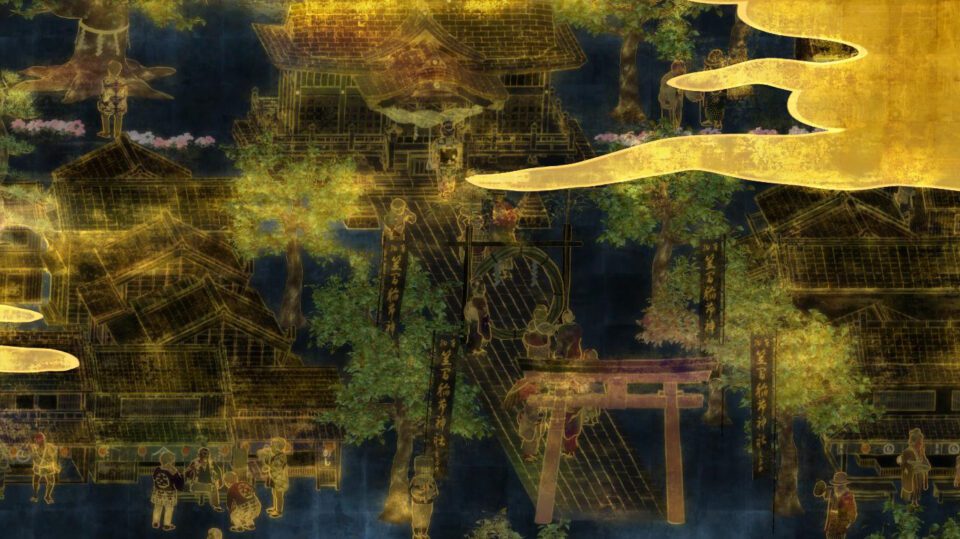
Against this backdrop, teamLab: Everything Exists in Infinite Continuity at the Smart Museum of Art, University of Chicago, arrives as more than a survey exhibition. Opening on 22 September and remaining on view until February 2027, the presentation offers an opportunity to reconsider the collective’s contribution at a pivotal moment in discussions surrounding art and technology. Organised by Dana Feitler Director Vanja V. Malloy and curator Allison Martino, the exhibition turns attention towards the intellectual and artistic foundations underpinning a practice that is often discussed in terms of spectacle.
Rather than focusing on the immersive environments that have made teamLab internationally recognised, the exhibition traces a broader trajectory through the collective’s development. Early computer-generated works appear alongside interactive installations and recent projects that investigate perception with increasing sophistication. This historical perspective is particularly valuable because it reveals the consistency of ideas running throughout the practice. Long before immersive art became a dominant cultural trend, teamLab was exploring how digital technologies reshape the ways we encounter images.
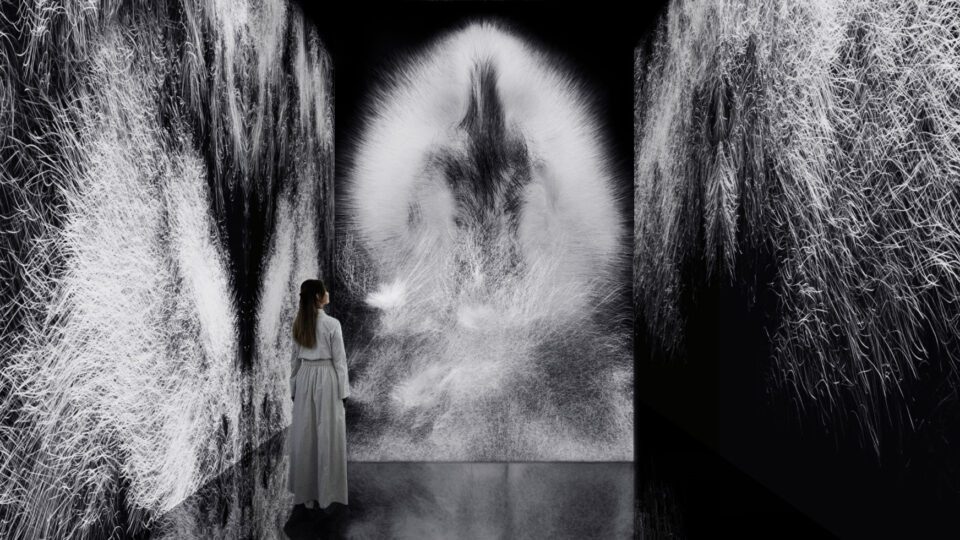
The exhibition’s title, Everything Exists in Infinite Continuity, points towards a concept that has become central to the collective’s thinking. As founder Toshiyuki Inoko explains: “Existence arises not only as self-containing objects, but within an environment, and formed by perception. We are not looking at the world from the outside but as part of a continuity, and from within that continuity, we perceive existence.” The statement reflects a worldview that challenges the notion of autonomous, isolated objects. Instead, reality emerges through relationships, interactions and contexts. Such ideas resonate strongly with contemporary ecological thinking, which increasingly emphasises systems and entanglements over individual entities.
The Smart Museum’s presentation also highlights the collaborative structure that makes teamLab unique within contemporary art. The collective’s projects emerge through the combined efforts of artists, programmers, engineers, mathematicians, CG animators and architects. In an art world that often continues to privilege singular authorship, teamLab offers a model rooted in interdisciplinarity. The collective’s working methods mirror the conceptual concerns embedded within the work itself, demonstrating how creativity can emerge through networks of expertise rather than individual genius.
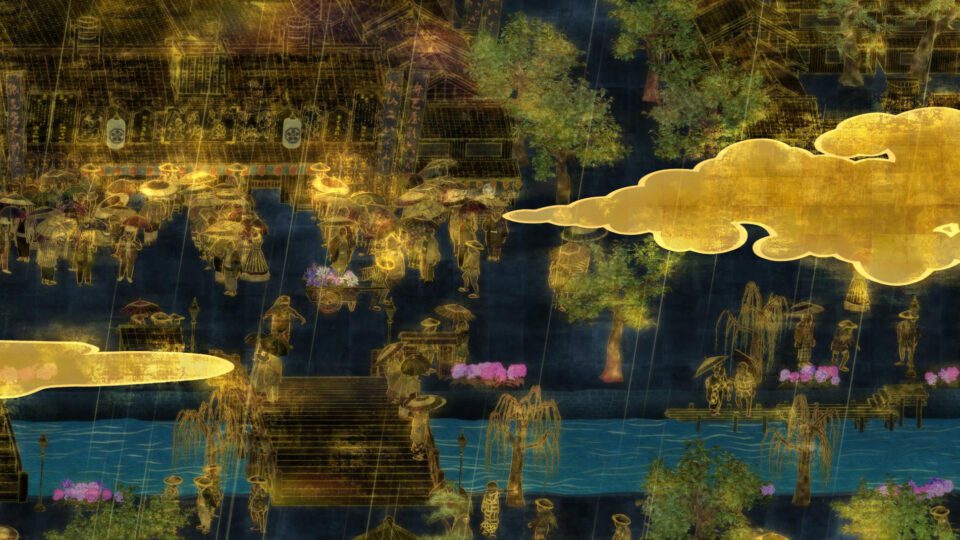
Malloy’s observation that teamLab realises forms of immersive artistic vision that creators a century ago could only imagine is particularly revealing. While the technologies employed are undeniably contemporary, the desire to create environments that envelop viewers has a far longer history. From panoramic painting and early cinema to multimedia installation and virtual reality, artists have repeatedly sought to expand the limits of perception. What distinguishes teamLab is its ability to connect these historical ambitions with contemporary questions about consciousness, participation and experience.
As museums continue to grapple with the implications of digital culture, exhibitions such as Everything Exists in Infinite Continuity offer an opportunity to move beyond simplistic narratives of technological progress. The most compelling aspect of teamLab’s work is not that it uses advanced tools, but that it asks what those tools reveal about being human. In an age increasingly mediated by algorithms, networks and artificial intelligence, the collective’s installations encourage reflection on the relationships that bind individuals to larger systems. They remind us that perception is never neutral, that existence is always relational and that the boundaries separating self from world may be far more porous than we imagine. It is this enduring exploration of continuity – rather than technological novelty alone – that continues to make teamLab one of the most influential artistic voices of our time.
teamLab: Everything Exists in Infinite Continuity is at Smart Museum of Art, Chicago until 21 February 2027: smartmuseum.uchicago.edu
Words: Anna Müller
Image Credits:
1. teamLab, Order in Chaos © teamLab *Reference Image (Made with CG).
2. teamLab, Dissipative Figures – Human © teamLab *Reference Image
3. teamLab, The World of Irreversible Change © teamLab
4. teamLab, Dissipative Figures – Human © teamLab *Reference Image
5. teamLab, The World of Irreversible Change © teamLab