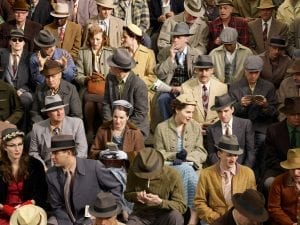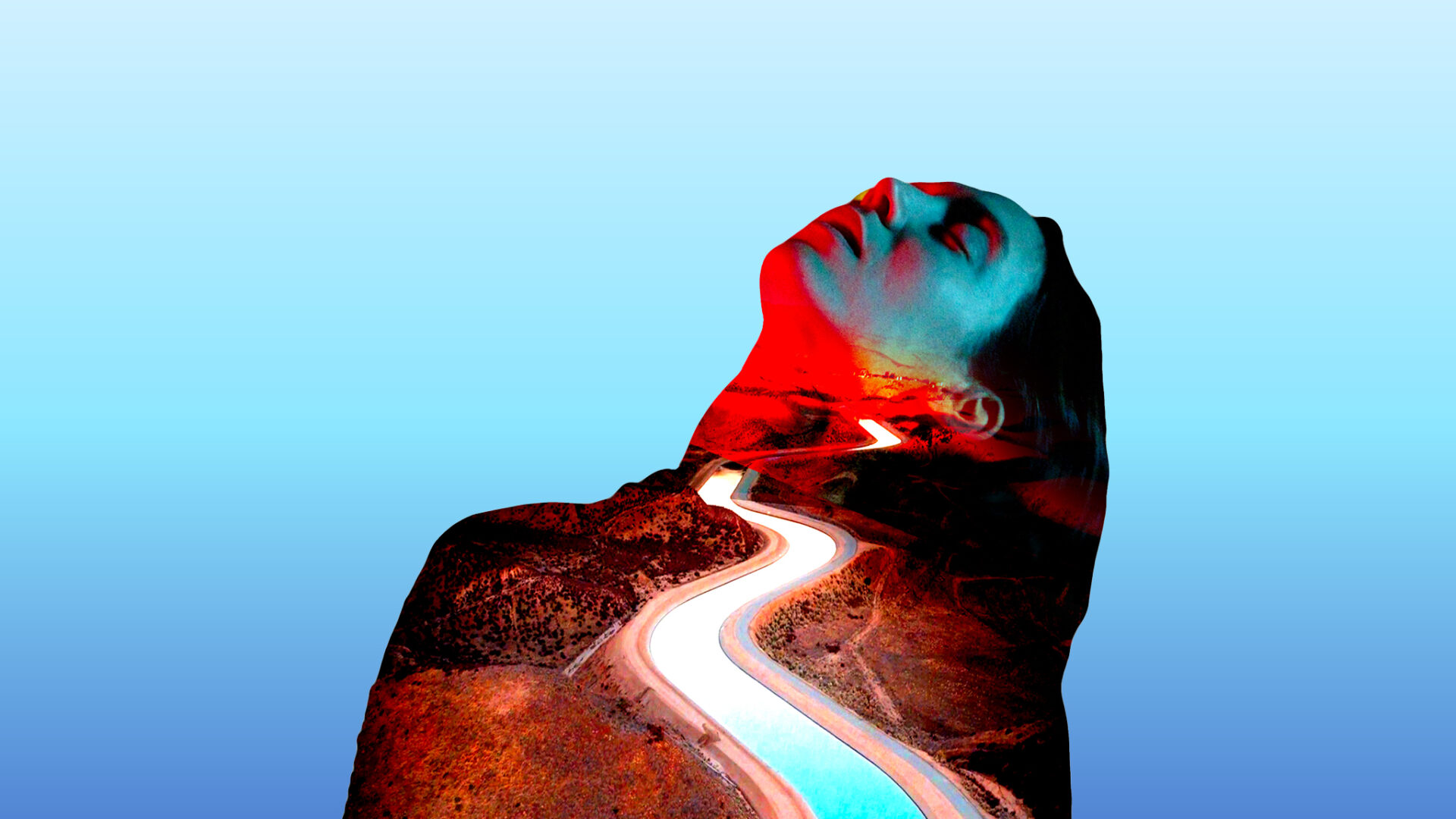
Immersive art has become one of the defining responses to a culture shaped by acceleration, fragmentation and the constant circulation of images. As digital systems increasingly mediate how people understand place, memory and identity, artists have turned towards environments that ask audiences to experience rather than simply observe. However, immersion also presents a critical question: when does sensory intensity become a spectacle, and how can artists embark on creating meaningful encounters rather than overwhelming experiences? Doug Aitken’s Lightscape, premiering at The Shed in New York, approaches this tension through a cinematic environment where film, architecture, sound and performance examine the ways in which individuals can navigate an increasingly complex world.
The desire to construct total environments is far from new. From expanded cinema and experimental installation to contemporary digital landscapes, artists have long questioned the limits of the image and the boundaries appearing to separate the viewer from artwork. These practices emerged from a recognition that perception is not merely passive; it is shaped by physical surroundings, social conditions and technological systems. Immersive works therefore operate not simply as visual experiences, but as spaces where wider cultural anxieties can be under examined. Lightscape continues this lineage, considering how identity is formed when physical and virtual realities become increasingly intertwined.
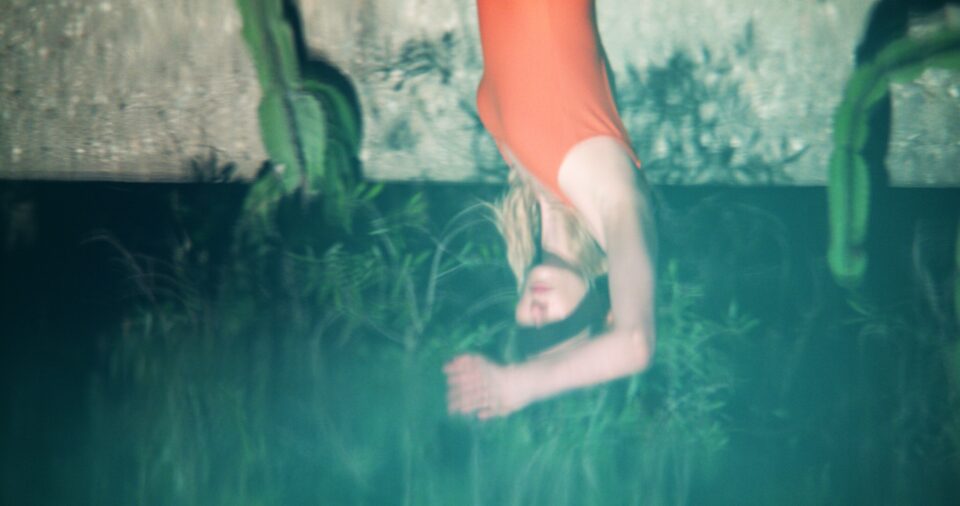
A defining characteristic of contemporary installation is its ability to reflect the contradictions of the present moment. Immersive environments create connection and collective experience, yet they exist in a culture dominated by distraction, consumption and accelerated attention. Artists working in this field must negotiate the relationship between technological possibility and critical purpose, using scale and sensory engagement without allowing spectacle to replace meaning. Through its combination of moving image, sound and spatial design, Lightscape transforms the gallery into a place of reflection rather than escape.
Created specifically for The Shed’s 12,000 square-foot gallery, the project reflects the institution’s wider commitment to interdisciplinary experimentation. Under the leadership of CEO Meredith “Max” Hodges and Artistic Director Alex Poots, The Shed has developed a programme focused on artists who challenge conventional categories, bringing together visual art, music, theatre, dance and technology. Its approach positions the institution as an active site of production rather than simply a venue for presentation. Within this framework, Lightscape becomes a constantly shifting encounter, activated further through live musical performances that introduce new relationships between artwork, performer and audience.
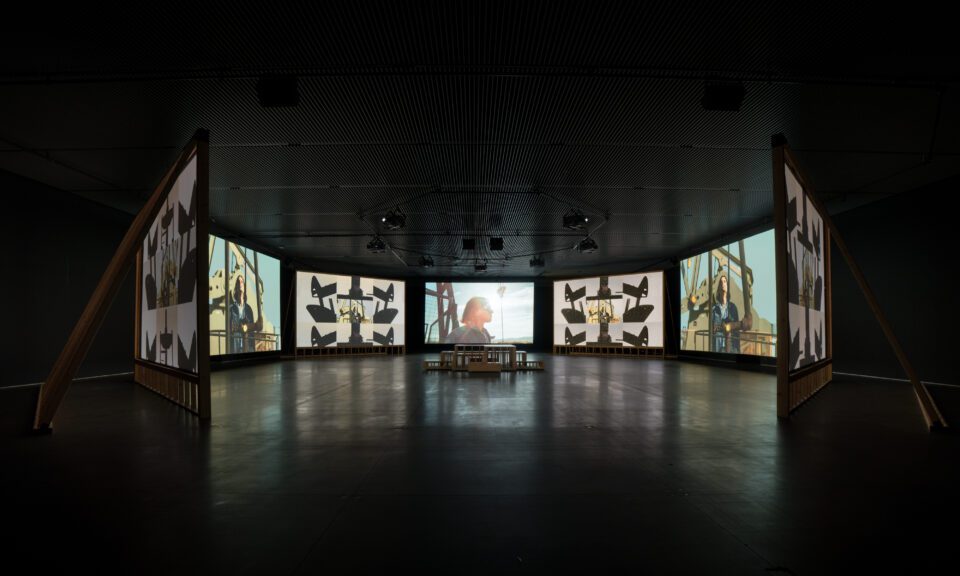
Aitken’s role within this conversation is significant, although Lightscape extends beyond an individual artistic statement. Throughout his career, he has explored how images occupy public space and how environments influence human behaviour. Works including electric earth (1999), sleepwalkers (2007), SONG 1 (2012) and Mirage (2017 – ongoing) demonstrate a sustained interest in the relationship between cinema, architecture and collective experience. Instead of treating the moving image as a contained object, these projects examine how visual culture shapes the emotional and social landscapes of everyday life.
Within Lightscape, multiple narratives unfold across a series of interconnected environments. The structure recalls Robert Altman’s ensemble filmmaking, moving between different characters and locations rather than following a single protagonist. Deserts, remote mountain landscapes, automated factories and digital spaces become more than cinematic settings; representing different conditions of contemporary existence. Each landscape reveals a relationship between humanity, technology and the natural world, suggesting that identity is inseparable from the environments through which people move.
The figures found within the installation embody broader questions around belonging, labour and adaptation. Natasha Lyonne appears within a nocturnal high-rise setting, capturing the isolation that can exist within highly connected urban environments. Elsewhere, urban crump dancers move through industrial spaces, their bodies responding to mechanical rhythms and systems of production. A migrant worker travelling through the desert introduces themes of displacement and survival, linking individual experience with wider global movements. These encounters avoid simple resolution, instead they reflect the fragmented realities through which contemporary identities are constructed.
Much of the work’s tension emerges from the relationship between human agency and technological systems. Automation and artificial intelligence continue to reshape labour, communication and social interaction, prompting artists to question what remains distinctive about embodied human experience. Lightscape addresses these concerns through movement, performance and physical presence, positioning the body as both vulnerable and adaptable. Rather than depicting technology as an external force, the installation explores how it has become embedded within everyday forms of existence.
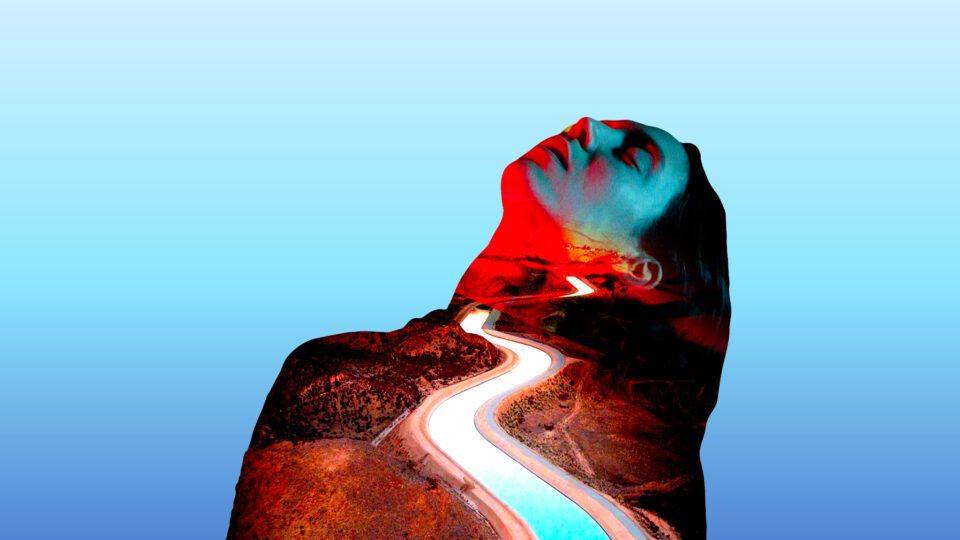
Sound plays an equally important role in shaping this environment. A collaboration with the Los Angeles Philharmonic features recordings conducted by Gustavo Dudamel, incorporating compositions by Philip Glass, Steve Reich and Meredith Monk alongside original contributions from Beck, LA LOM and Aitken. The resulting soundscape moves between minimalist composition, electronic intensity and experimental structures, creating a shifting emotional architecture. Music does not function as accompaniment but as an active component of the installation, influencing how audiences move through and interpret the space. This emphasis on sound reflects a broader transformation within contemporary art, where disciplines increasingly overlap and traditional categories become less fixed. Galleries are no longer defined solely by objects displayed on walls or placed within rooms; they have become environments shaped by duration, participation and sensory experience. Artists working across visual culture, performance and technology are exploring new forms of narrative that respond to the complexity of contemporary life. Lightscape contributes to this wider movement by treating image, sound and space as inseparable elements.
Such projects also reveal changing expectations of cultural institutions. Large-scale immersive works require new approaches to commissioning, collaboration and audience engagement, challenging traditional models of exhibition-making. Spaces such as The Shed are increasingly functioning as laboratories where artistic ideas can develop through experimentation and exchange. By allowing performances to continually activate the installation, Lightscape resists the idea of the artwork as a fixed object and instead embraces a more fluid understanding of cultural experience.
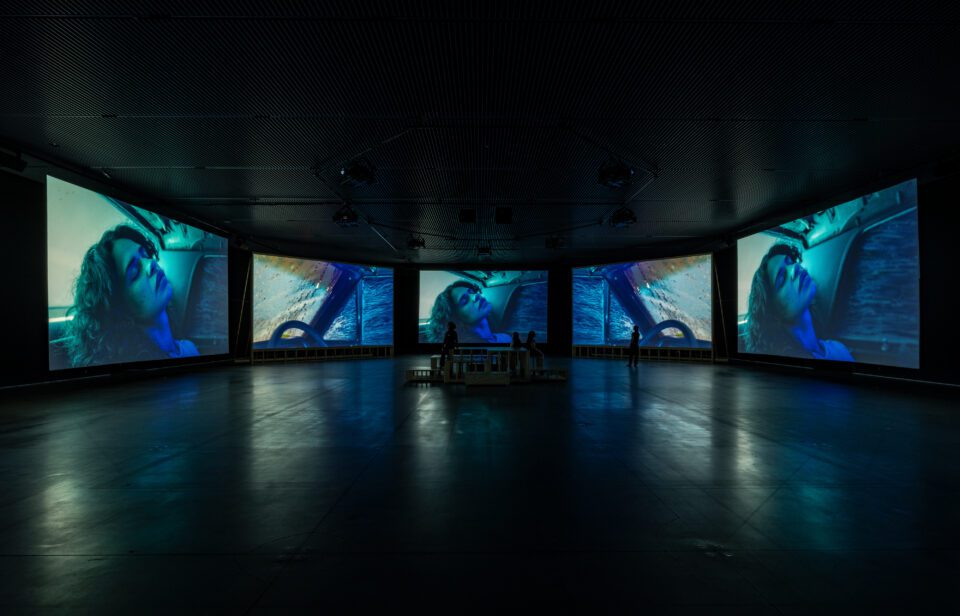
Environmental concerns further expand the work’s significance. The movement between deserts, industrial environments and digital landscapes reflects a world in which natural and technological systems are deeply connected. Contemporary artists have increasingly addressed ecological crisis not only through representations of nature, but by examining the structures, behaviours and technologies that shape human relationships with the planet. Lightscape‘s participation in this discourse by exploring how landscapes – both physical and imagined – become reflections of collective responsibility. This installation offers a meditation on how people construct meaning within a world defined by shifting conditions. Rather than presenting a clear narrative of progress or decline, Lightscape creates the space for ambiguity, allowing viewers to consider the relationship between personal experience and larger social forces. Its importance lies not simply in its immersive scale, but in its ability to transform abstract concerns around technology, ecology and identity into a shared sensory encounter. The work becomes an insightful reflection on contemporary life itself – fragmented, interconnected and constantly being rewritten.
Immersive art remains significant because it creates opportunities for attention in a culture increasingly shaped by speed and digital mediation. At its most effective, the form does not overwhelm the viewer but encourages a deeper engagement with the conditions of the present. Through its convergence of film, architecture, music and performance, Lightscape demonstrates how contemporary art can become a space for questioning rather than simply seeing. Thus, it moves beyond spectacle to consider a more fundamental issue: how individuals find connection, meaning and a sense of place within a rapidly evolving world.
Doug Aitken: Lightscape is at The Shed, New York until 13 September: theshed.org
Words: Simon Cartwright
Image Credits:
1. Stills from Lightscape © Doug Aitken.
2. Installation images of Lightscape: Photo by Brica Wilcox
3. Stills from Lightscape © Doug Aitken.
4. Trailer: Lightscape.
5. Installation images of Lightscape: Photo by Brica Wilcox
6. Stills from Lightscape © Doug Aitken.