Global agriculture is at a tipping point. Countries worldwide face mounting pressures: extreme weather driven by climate change, increasing water scarcity, and a growing agricultural labour shortage as people move from rural areas. It’s a serious concern, heightened by projections that the global population will increase by two billion by 2050, requiring food production to rise by 70%. In response, many are turning to technological innovation. A 2024 McKinsey survey found that 57% of North American farmers are likely to adopt yield-enhancing technologies within the next two years. By 2021, an estimated 87% of businesses in the US agricultural sector were already utilising artificial intelligence.
Artist Cao Fei spent three years immersed in farmlands across southern and northwestern China, as well as Southeast Asia, observing and interpreting the emergence of “smart agriculture.” The project invites audiences to reflect on pressing contemporary questions: how do we redefine the value of labour in an AI age? What possibilities exist for society, technology and nature to coexist? How might humanity repair its bond with the land on a global scale? The artist draws on multiple visual languages – from photography and video installation to virtual reality and documentary footage – to trace a complex portrait of the global agricultural technological revolution and its inherent contradictions.
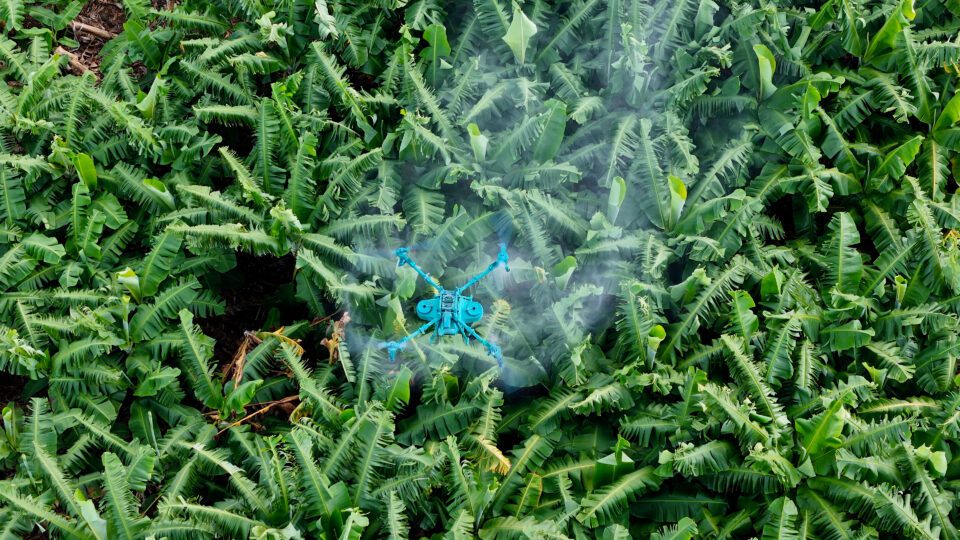
Fei’s survey, which is due to open at Fondazione Prada, Milan, on 9 April, captures a rapidly changing landscape. The exhibition extends the artist’s two-decade inquiry into the human condition amid technological transformation. Dash shifts focus from the industrial and logistical spaces of earlier works, such as Whose Utopia (2006) and Asia One (2018), to agriculture, the bedrock of human civilisation. The show unfolds over two floors of the Podium – Fondazione Prada’s central exhibition space – as a multi-layered narrative interweaving the virtual and real. Fei creates an immersive environment comprising a grain warehouse, a new farmer station, a temple, and a banana plantation, surrounded by smart agricultural equipment and screens. The structures also host video and virtual reality installations.
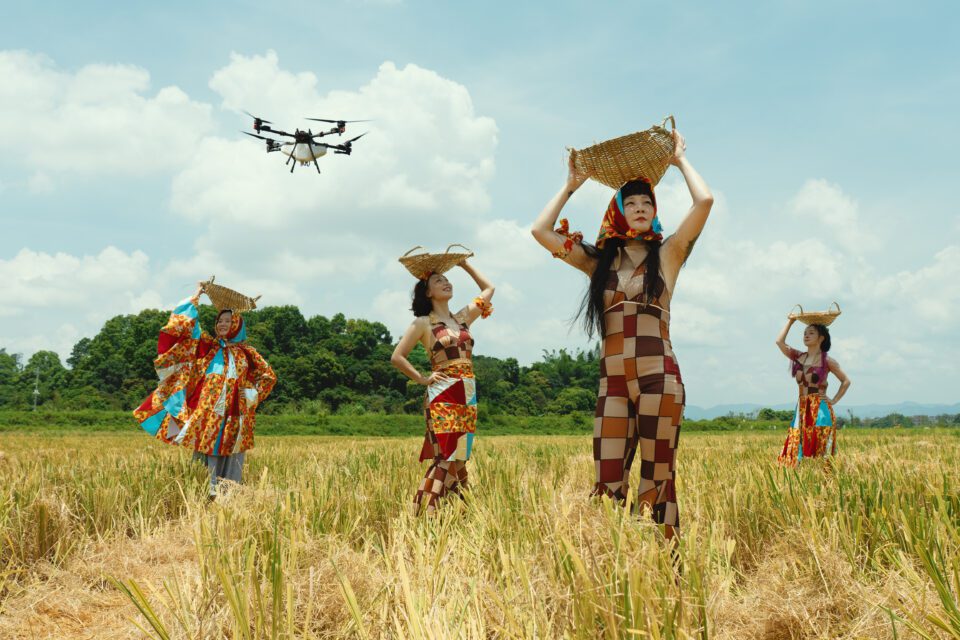
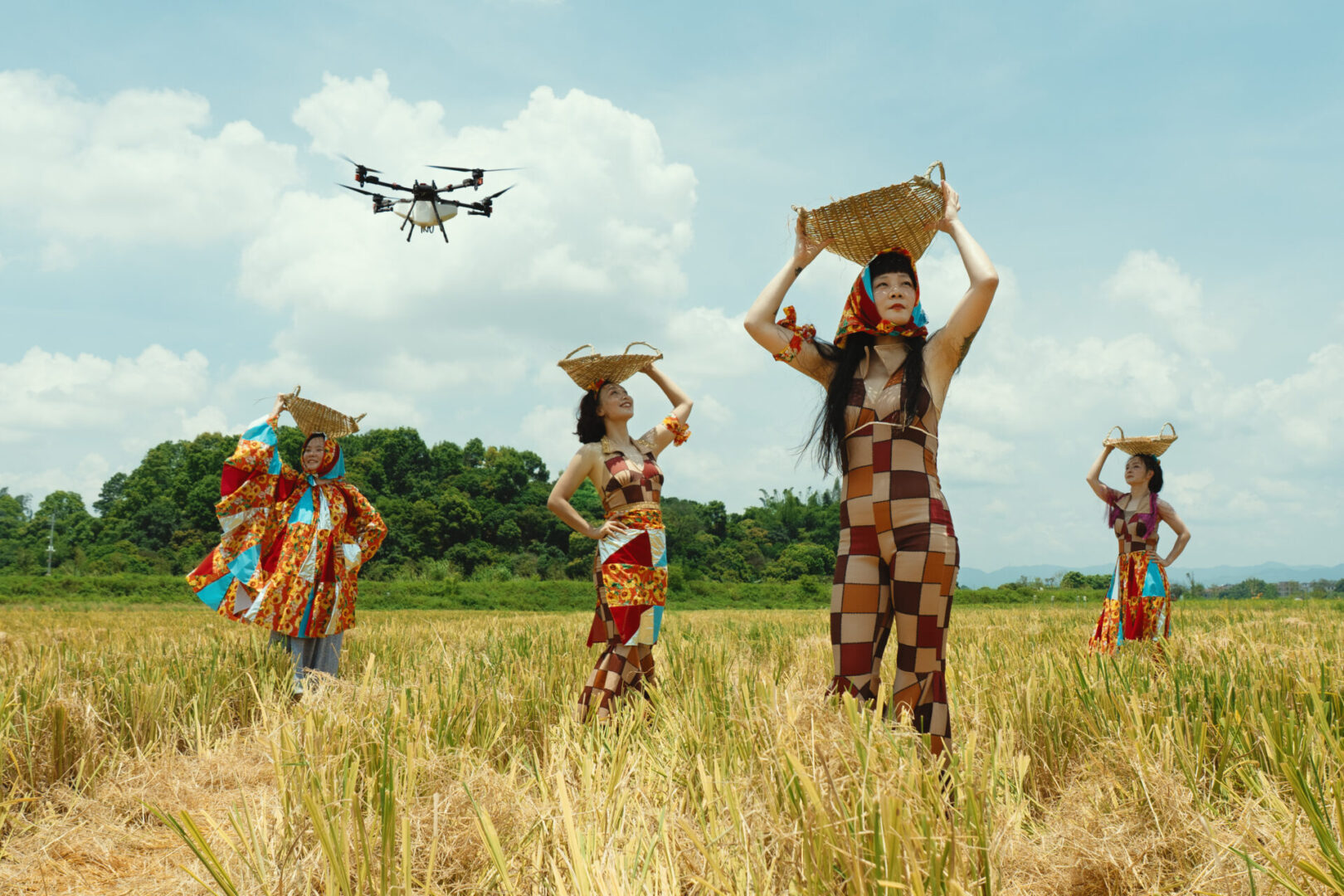
The eponymous piece, Dash, is displayed across two screens. As art critic Yang Beichen writes in the exhibition catalogue: “In Dash, we can clearly sense the artist’s attempt to register the distinctive rhythms of machines, their energy transformations and feedback mechanisms. Across the split screens, the same dynamic keeps surfacing over and over again: people operate the machines, and in doing so, hand over parts of their own physiological and cognitive rhythms, resulting in a kind of mutual tuning.” The piece shows farmers interacting with machines through interfaces, remote controls and data flows, but as the film progresses, they slowly hand over their thinking in a form of “cognitive offloading.”
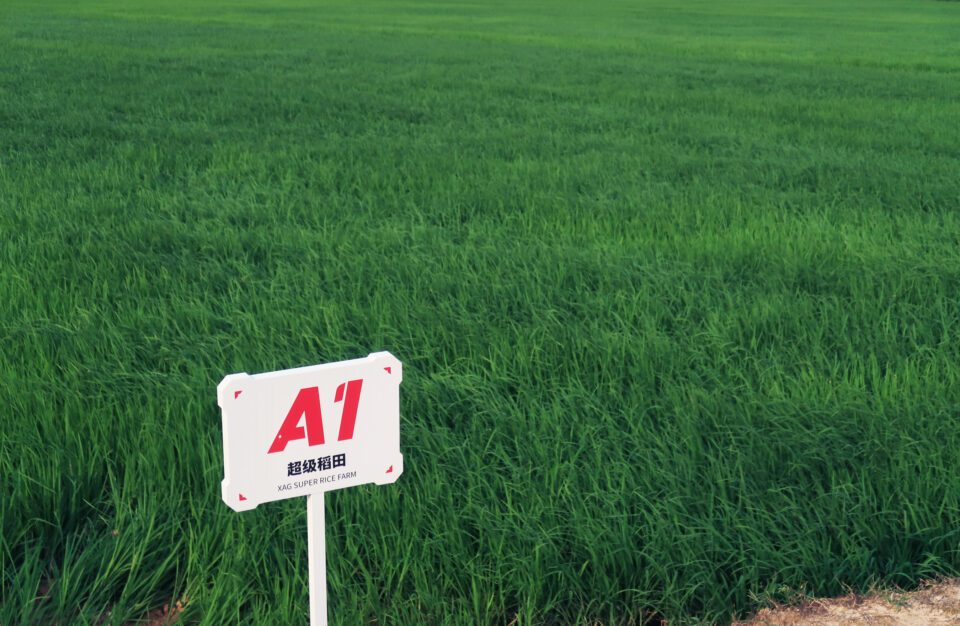
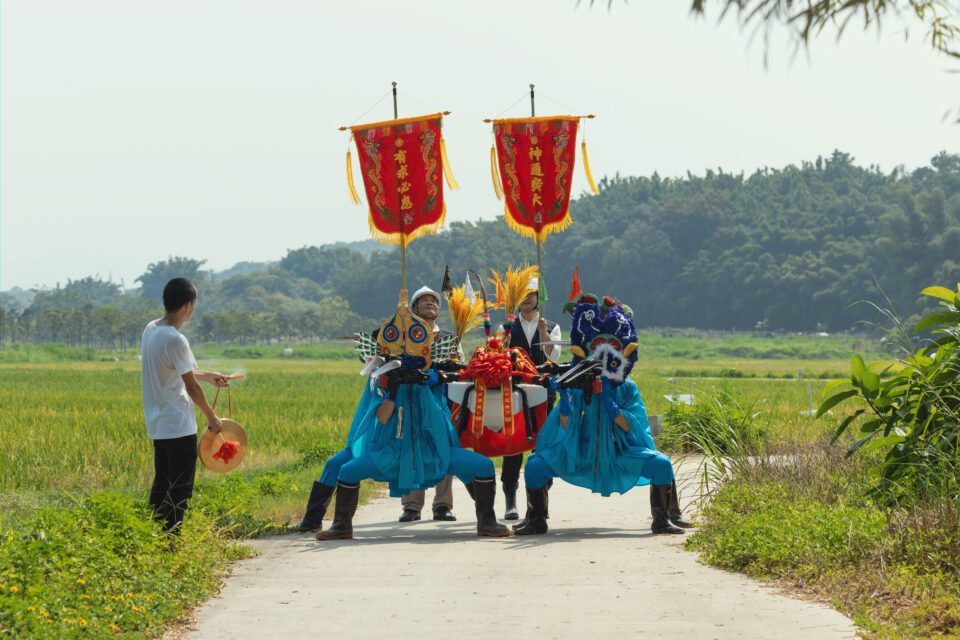
Dash is a prime example of Fei’s ability to capture the nuance of this current situation. She does not shy away from the reality of this new technology. We are in uncharted territory: while such systems may offer stability in an uncertain future, they also threaten traditional ways of life. Her work frequently explores how algorithms are displacing knowledge, reshaping human-land relationships and changing rural-urban dynamics, raising concerns about ecology, employment and cultural continuity. Multimedia installation, The Birth, references the everyday practice of local farmers offering and worshipping drones, highlighting how the introduction of new methods has not altered people’s prayers for a bountiful harvest.
Ultimately, this exhibition is a poignant reminder that progress and loss can coexist. The emergence of “smart technologies” sees the hard work of agriculture increasingly passed over to machines, helping to tackle the repercussions of the climate crisis. Yet, this means the loss of Indigenous and traditional knowledge and, often, the devaluation of human labour. Cao Fei holds these contradictions in clear focus, asking viewers to reckon with this new and uncertain reality, and what it means for us all.
Cao Fei: Dash is at Fondazione Prada, Milan from 9 April – 28 September: fondazioneprada.org
Words: Emma Jacob
Image Credits:
1&4. Cao Fei, Dash (still), 2026. Dual-channel video, colour, sound, 47 min. Courtesy the artist, Vitamin Creative Space, and Sprüth Magers. Work produced by Fondazione Prada for the exhibition Dash.
2. Cao Fei, Dash (still), 2026. Dual-channel video, colour, sound, 47 min. Courtesy the artist, Vitamin Creative Space, and Sprüth Magers. Work produced by Fondazione Prada for the exhibition Dash.
3. Cao Fei, Southward Journey (still), 2026. Dual-channel video, colour, sound, 47 min. Courtesy the artist, Vitamin Creative Space, and Sprüth Magers. Work produced by Fondazione Prada for the exhibition Dash.
5. Cao Fei, Super Farms (still), 2026. Dual-channel video, colour, sound, 47 min. Courtesy the artist, Vitamin Creative Space, and Sprüth Magers. Work produced by Fondazione Prada for the exhibition Dash.