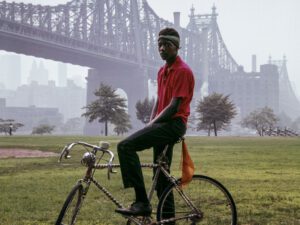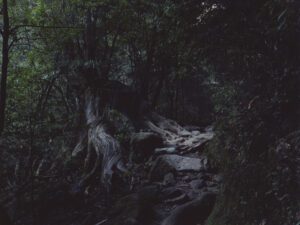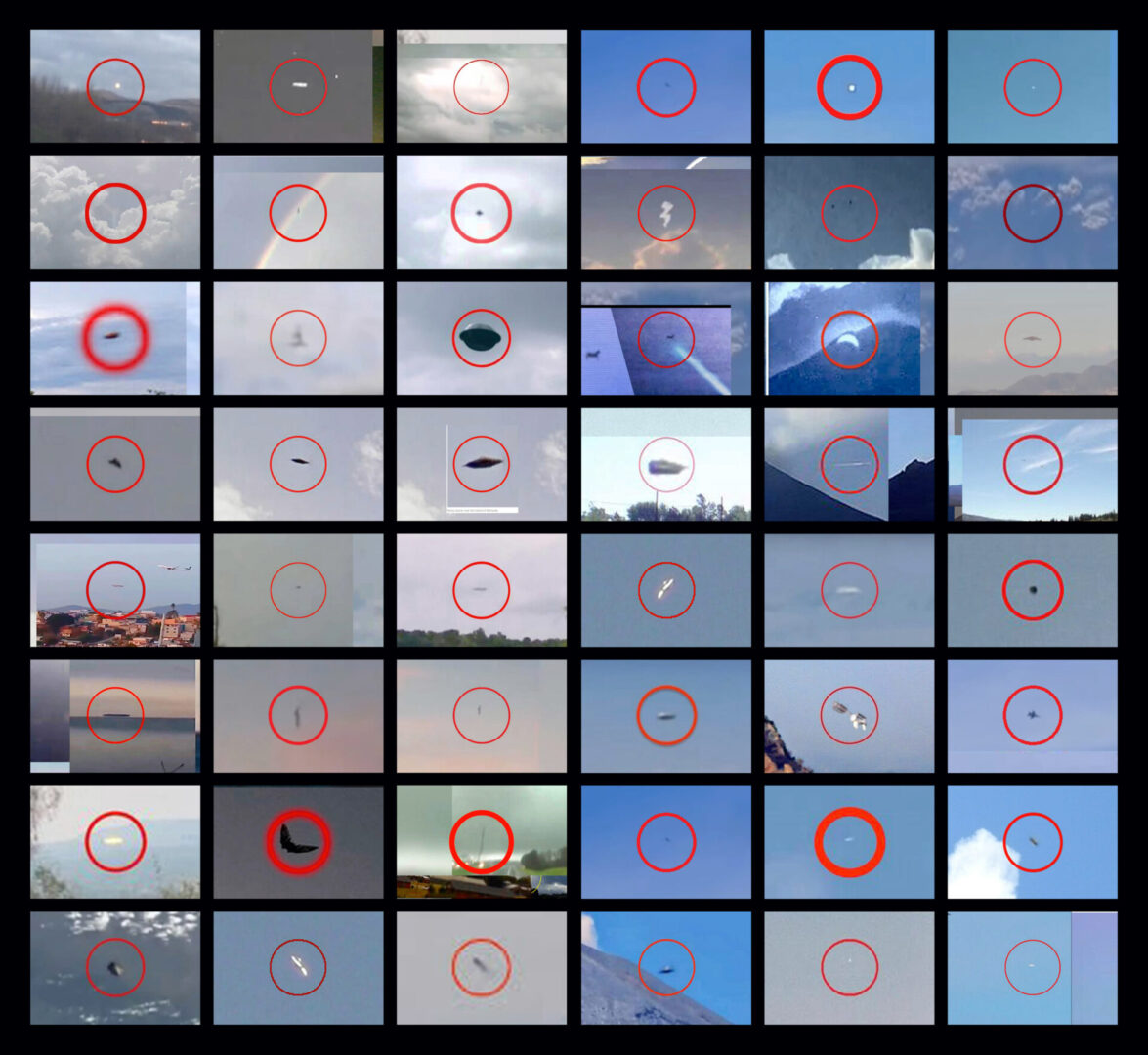
What does it mean to photograph the unknowable? Images of distant galaxies, unidentified flying objects and imagined extraterrestrial life occupy an uncertain territory between scientific evidence and cultural mythology. Their authority rests not just on what they depict, but on the technologies and belief systems through which they are interpreted. From blurred photographs of unidentified objects to immaculate artificial intelligence renderings, representations of the cosmos expose a persistent desire to give form to what lies beyond human perception. However, as image-making technologies become increasingly sophisticated, the relationship between photography and truth grows more precarious. These tensions underpin a new research project by artist Ellie Wyatt, selected for the 2027 residency organised by The Photographers’ Gallery in partnership with The Ampersand Foundation.
The residency coincides with the 50th anniversary of the Golden Record, the collection of sounds, images and texts launched into space aboard the Voyager spacecraft in 1977 as a message to potential extraterrestrial recipients. Conceived as an introduction to humanity, the record attempted to distil life on Earth into a carefully selected cultural portrait. Its contents were shaped by decisions about which histories, achievements and forms of knowledge deserved representation, exposing the difficulty of communicating a universal identity through necessarily selective means. Half a century later, this ambitious exercise in interplanetary communication raises questions that extend beyond its original scientific purpose. Who has the authority to represent humanity, whose knowledge is preserved, and what happens when images must communicate across radically different systems of understanding?
These questions inform Wyatt’s investigation into the visual history of extraterrestrial life. Through archival research and digital image-making, she will trace representations of the interplanetary ‘other’, moving between speculative depictions of space, early astronomical photography, contemporary UFO images, AI-generated pictures and online conspiracy theories. Rather than treating these materials as separate categories, her research examines the visual conventions that connect them, particularly the ways in which images acquire credibility. Blur and pixelation can suggest the authenticity of an elusive encounter, while the technical precision of AI-generated imagery lends authority to fabricated scenes. The distinction between photographic evidence and visual persuasion becomes difficult to maintain.
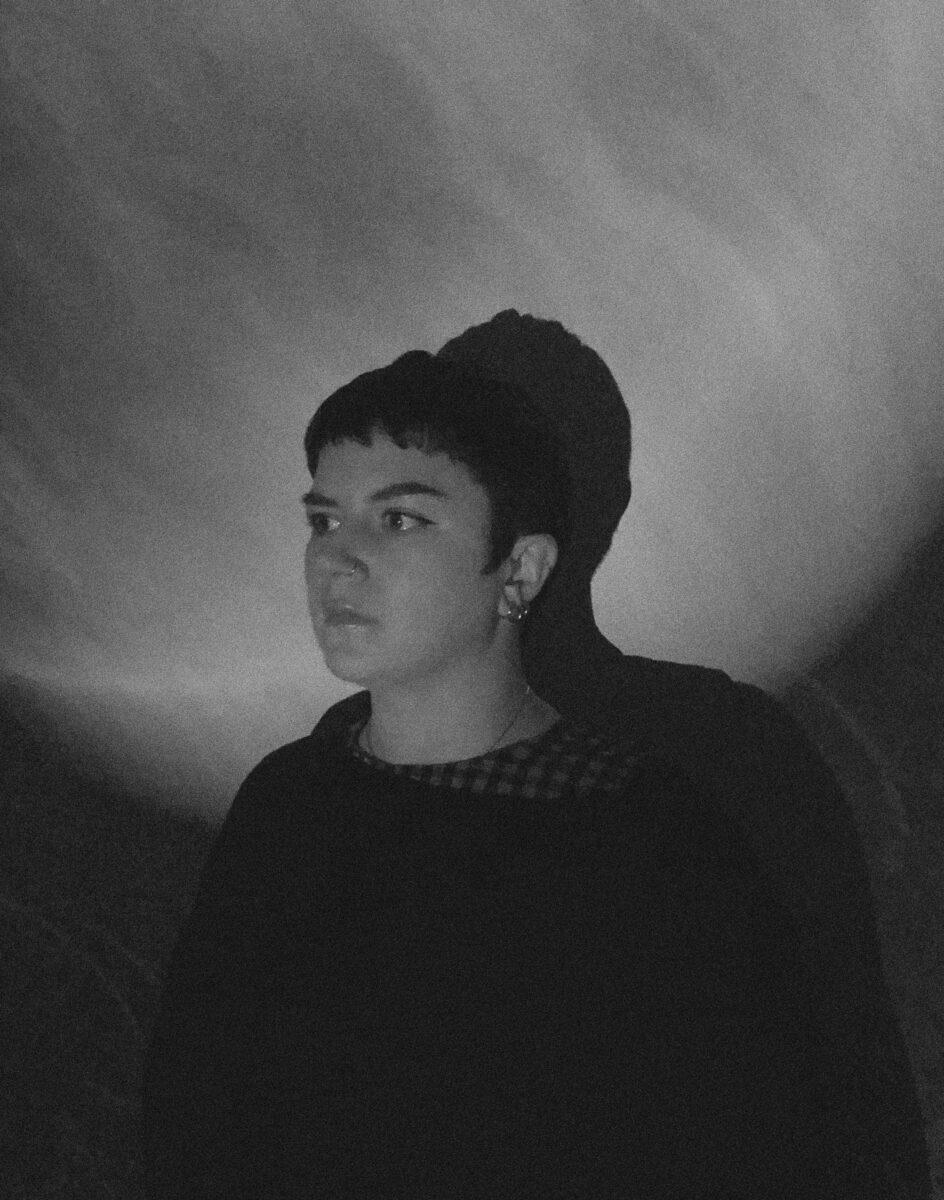
Photography’s historical association with mechanical recording has established its authority as a means of documenting reality. Scientific image-making has been particularly influential, rendering otherwise inaccessible phenomena visible, from microscopic structures to distant astronomical bodies. Yet, the technologies that extend human perception also determine how the world is represented: lenses, sensors and processing techniques shape what can be seen, while systems of classification influence how visual information is interpreted. Artificial intelligence introduces another complication, producing convincing representations of events, places and beings that have never existed. As the boundary between documentation and fabrication becomes less stable, photography’s evidential status demands renewed scrutiny. Wyatt’s engagement with post-photographic practice addresses precisely this uncertainty, examining how technological authority shapes contemporary understandings of truth.
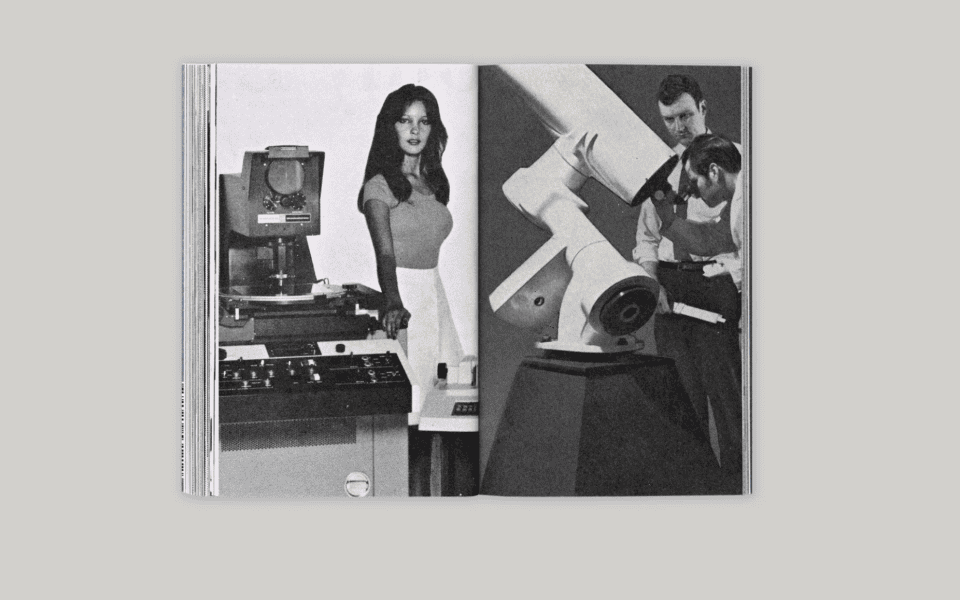
Her earlier work provides an important foundation for this enquiry. Published in 2026 by Foolscap Editions, Caress Your Vision: Observations on Gender, Representation and Power at the Final Frontier examines the politics of representation within the history of space exploration. The publication considers how narratives of scientific progress are shaped by visual languages that reproduce established hierarchies, particularly around gender, expertise and technological power. Its concerns extend beyond the representation of space to the cultural structures determining who participates in its exploration and how that participation is recorded. Similar questions inform Wyatt’s investigations into scientific image-making and conspiracy theories, where photographic detail can establish competing claims to knowledge. Her practice challenges the assumption that images offer transparent access to reality.
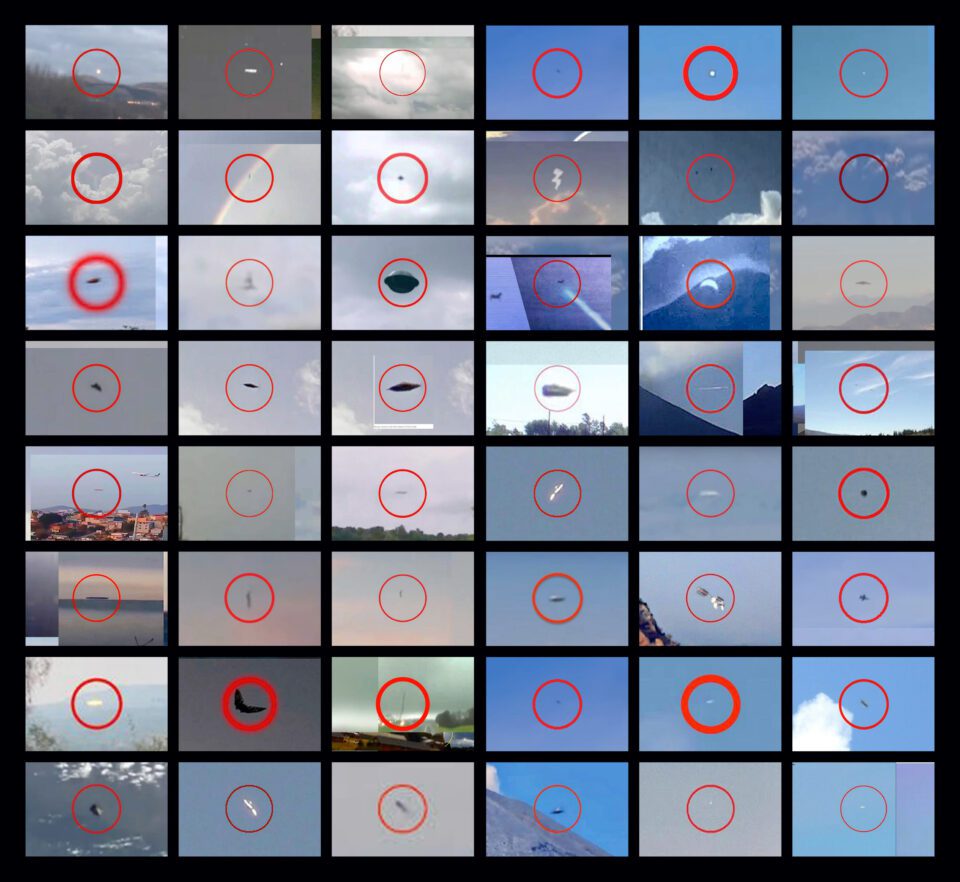
Space exploration itself provides an increasingly complex political context for these ideas. Once imagined primarily as a frontier for scientific discovery, outer space has become a contested arena shaped by national ambition, commercial interests and geopolitical competition. The expansion of private-sector involvement has complicated questions of ownership, access and technological authority, while unidentified aerial phenomena occupy an uneasy position between official investigation, popular entertainment and conspiracy culture. Images circulate between these contexts, detached from their original sources and invested with competing meanings. A photograph may be interpreted as evidence of technological advancement, an unexplained anomaly or deliberate fabrication. By bringing these visual histories together, Wyatt considers how representations of the cosmos reflect terrestrial anxieties.
Her constellation-based methodology also speaks to wider developments in contemporary photography, where artists increasingly move beyond the autonomous image to incorporate archival documents, moving image, text and digital processes. Such approaches challenge distinctions between documentary and fiction, asking how meaning changes when images are removed from their original contexts and placed in new relationships. Here, curation becomes more than the arrangement of visual material: juxtaposing scientific records with speculative imagery can expose the assumptions underpinning both. Rather than constructing a linear history of extraterrestrial representation, Wyatt will assemble found materials across different media, allowing connections to emerge between historical observation, contemporary fabrication and popular mythology. This approach positions photography as a means of examining how knowledge is constructed, rather than simply illustrating what is already known.
The project will extend beyond archival research through an engagement with the local community in Wirksworth, Derbyshire. On the Spring Equinox, 20 March 2027, Wyatt will invite residents and stargazers to exchange perspectives, ideas and stories about photographic representations of space. This gathering recognises that knowledge of the cosmos is not produced exclusively within scientific institutions. Stargazing involves observation, interpretation and collective imagination, bringing people together through an encounter with something that remains largely beyond human comprehension. Personal experience and cultural belief influence how the night sky is understood, creating different interpretations of the same visual phenomena. By incorporating these perspectives, Wyatt will consider how photographic images shape everyday relationships with the unknown.
The Foundation’s wider support for photographic practice provides another context for the residency. Its biennial Ampersand/Photoworks Fellowship, launched in 2021, has supported artists whose projects bring photographic practice into dialogue with wider social and technological questions. Johny Pitts, the inaugural recipient, developed Home Is Not a Place, a photographic exploration of Black British culture, identity and belonging, which subsequently toured to Graves Gallery in Sheffield, Stills in Edinburgh and The Photographers’ Gallery in London. Felicity Hammond’s fellowship produced Variations, an evolving installation examining geological extraction, data mining and machine learning, presented across four UK venues. Matthew Arthur Williams has developed an interdisciplinary practice spanning photography, moving image and sound, while Nicholas J. R. White’s 2025 fellowship has supported research into landscape, community and the nuclear submarine industry in Barrow-in-Furness. Felix Loftus, selected for the 2026 residency with The Photographers’ Gallery, explored the creative reuse of mobile devices through Waste as Resource, considering permacomputing and alternative technological infrastructures.
Wyatt’s practice is particularly resonant at a moment when the boundaries between photographic evidence and digital fabrication are becoming increasingly difficult to define. Her sustained interest in representation, scientific authority and visual belief brings a critical perspective to the ways images shape our understanding of the world, challenging assumptions about what photography can reveal and whose version of reality it supports. Alongside Caress Your Vision, her work has been presented at Soup Gallery in London, Westlicht Photo Museum in Vienna, the Finnish Museum of Photography in Helsinki, C/O Berlin and Fotomuseum Winterthur. The residency will allow her to develop these enquiries through archival research, digital experimentation and an exchange of perspectives on the cosmos. As artificial intelligence continues to complicate the relationship between images and evidence, Wyatt’s investigation takes on particular urgency. Her work invites us to look beyond what an image appears to show, and consider how it comes to mean something, and why we believe what we see.
Find out more about The Ampersand Foundation 2027 Residency: thephotographersgallery.org.uk
Words: Simon Cartwright
Image Credits:
1&3. cherrypicker, selection of stills printed in Parallax, published by Foolscap Editions, 2023.
2. © Ellie Whyatt.
4. Did You Miss Me, 2021, Ellie Wyatt.