Photography has never been entirely comfortable with the truth. Eileen Cowin has spent more than five decades exploiting that discomfort, making photographs and videos in which memory, performance, intimacy and invention continually overlap with each other. Her first major museum survey, Eileen Cowin: Between Panic and Paradise, arrives at LACMA at a moment when the distinction between lived experience and constructed photography feels increasingly unstable. More than 50 works, dating from 1967 to 2025, trace an artist who has consistently veered towards treating photography less as evidence than as a space for questioning how evidence is made. This is not simply a retrospective of an influential Los Angeles artist, but a diligently sustained examination of why photographs can become believable in their initial standing.
Cowin’s earliest experiments already disrupt the expectation that a photograph should provide a complete account of what is in front of the camera. Transparency overlays from the late 1960s and early 1970s combine photographs of friends and domestic interiors with imagery drawn from mass media, allowing private experience and public representation to occupy the same visual field. Chicago (1971), for example, becomes less a document of a place than a meditation on how personal identity can be assembled from competing images. Such works establish a strategy that becomes reoccurring throughout Cowin’s career: information is offered, but never quite enough to produce a sense of certainty within. The viewer is consequently made aware of the gap that lies between seeing something and knowing what it means.
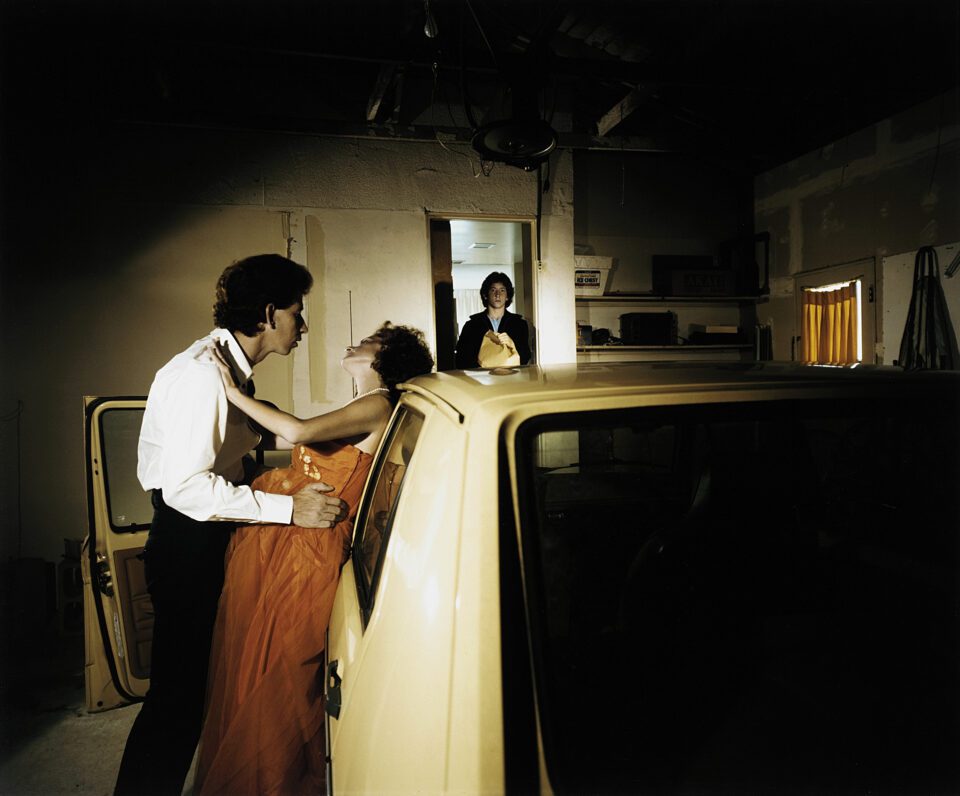
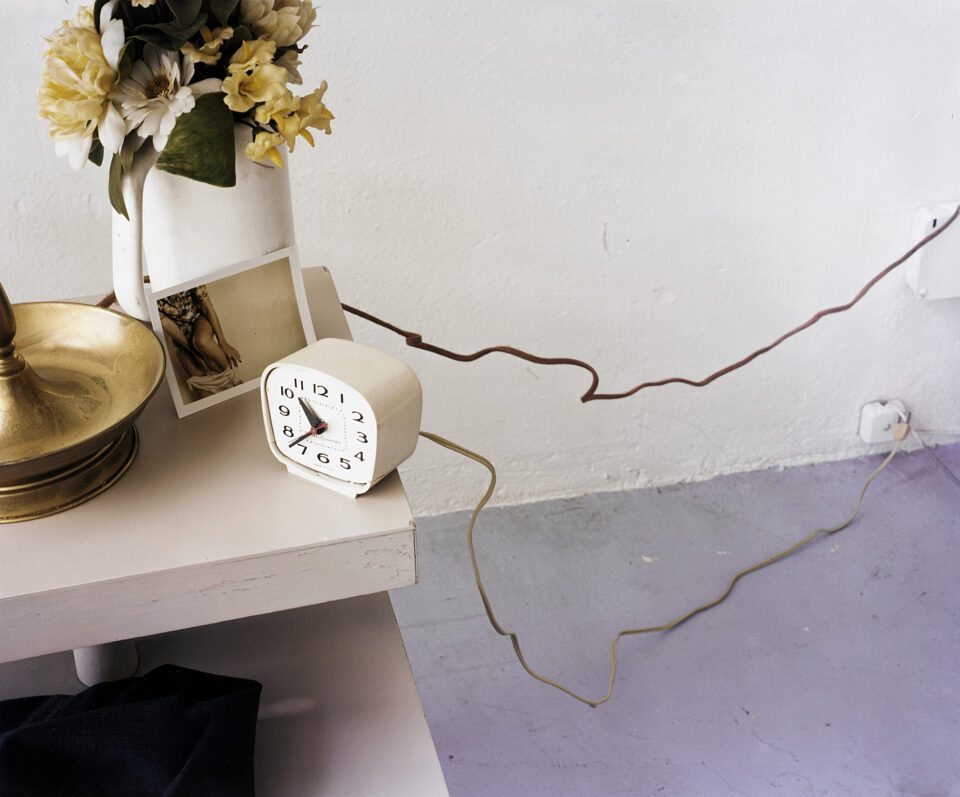
Language soon becomes another mechanism through which that gap can be enlarged. In Dive (1977), two Polaroids are accompanied by definitions that distinguish the word according to its grammatical function, turning a seemingly modest image into a negotiation between text, meaning and interpretation. Cowin’s photographs do not merely illustrate language; language alters what the photographs are capable of saying. That tension develops through One Night Stand and reaches a particularly sophisticated form in Family Docudrama, where the visual conventions of television melodrama are brought into the domestic sphere. Couples appear to inhabit familiar interiors, yet their gestures and relationships feel deliberately staged, leaving emotion suspended somewhere between confession and performance.
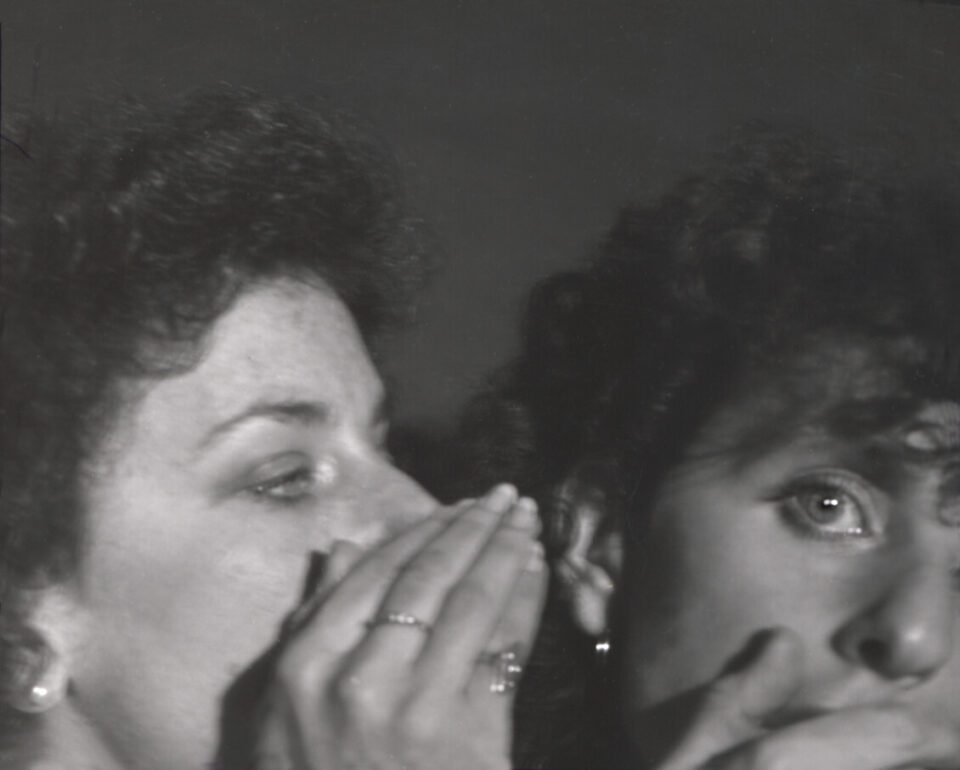
Domestic life becomes, in Cowin’s work, a kind of theatre without a stable script. The strategy is particularly revealing because the artist does not use artificiality to dismiss emotional experience; instead, she suggests that performance may be inseparable from it. Romance, confrontation, marriage and family life are all shaped by expectations about how people should behave and how relationships should look from the outside. That makes Family Docudrama more than an exercise in appropriation, since its television-inspired surfaces become a way of examining the means through which ordinary life is grasped. Cowin’s fictional hence does not lead away from reality, but towards the mechanisms producing our sense of it.
Contemporary photography has taken that problem into an environment far more saturated with constructed identity than the one Cowin encountered in the 1970s. Talia Chetrit’s photographs, for instance, frequently turn the camera towards intimate relationships, the body and the family while making the conditions of photographic production part of the subject. Her practice shares Cowin’s interest in the tension between private experience and public image, although Chetrit operates within a culture in which self-presentation has become an everyday activity rather than an exceptional artistic strategy. The difference is revealing: what once appeared theatrically artificial in Cowin can now resemble the ordinary visual behaviour of contemporary life. Her staged domestic worlds thus acquires a strange prescience.
Deana Lawson extends the conversation around constructed intimacy through portraits that deliberately blur the boundaries between documentary appearance and elaborate staging. Her photographs often draw upon the visual authority of family portraiture while using carefully composed environments to challenge assumptions about identity, desire and representation. Cowin’s domestic scenes and Lawson’s constructed interiors are separated by their distinct historical and cultural contexts, yet both demonstrate that the home is never simply neutral territory. Rooms carry expectations, memories and social codes, while the people within them perform versions of themselves for the camera. Staging, in both regards, becomes a way of asking what an image can reveal precisely because it does not pretend to be an unmediated record.
The politics of representation become still broader when photography moves from individual identity towards collective memory. Carmen Winant’s image-based installations consider how archives are formed, and which experiences receive sustained visual attention, often assembling large bodies of photographs into accumulations that resist the singular, decisive image. Her approach differs markedly from Cowin’s intimate tableaux, yet the connection lies in their shared distrust of photographic completeness. A single image cannot contain an entire experience, just as one version of a personal story cannot necessarily account for another person’s memory. Both artists use accumulation, whether through repeated images, objects, texts or perspectives, to suggest that meaning emerges through relationships between fragments.
That logic of fragmentation becomes central to Cowin’s later work with video. I Give You My Word (2002) recounts the artist’s first meeting with her husband through two accounts that overlap in some details and diverge in others. Rather than resolving the discrepancies, Cowin allows them to remain visible, transforming disagreement into evidence of how memory operates. The work suggests that two people can share an event without possessing an identical version of it. Memory here is not a defective archive waiting to be corrected, but a living process shaped by perspective, emotion and time.
Objects provide another route into that unstable territory. Something Out of the Ordinary (2006) brings together 352 photographs of personal possessions, including report cards, datebooks, identification cards, keys, maps, gloves and cosmetics. Photographing these items against white grounds gives them an unusually clinical appearance, as though biography might be examined through forensic evidence. Yet the emotional significance of such things cannot be read from their surfaces alone. Cowin turns the personal archive into a paradox: the more precisely an object is recorded, the more apparent it becomes that its meaning belongs to a life that the photograph cannot fully explain in its entirety.
Contemporary image culture has made this problem increasingly familiar. Digital photographs now accumulate at a scale that makes the personal archive almost impossible to separate from everyday existence, while objects and photographs are routinely used to construct versions of identity online. Cowin’s work predates this condition, but it anticipates its central contradiction: having more images does not necessarily produce greater knowledge. Instead, abundance can create further uncertainty about which fragments matter and who has the authority to interpret them. Her photographs therefore feel relevant not because they predicted social media, but because they understood much earlier in their conceptualisation that documentation and understanding are fundamentally different things.
Fear introduces a more explicitly psychological dimension to the exhibition. Fear Itself (2014) brings together five monitors showing performers responding physically or emotionally to their greatest fears, while four composers interpret the same prompt through music. The work turns an internal sensation into a series of outward performances, making visible the difficulty of representing something that exists primarily as feeling. Each response becomes both genuine and theatrical, because the performers must communicate an experience while at once knowing that they are being watched. Cowin again occupies the uncertain territory between emotion as lived reality and as something that must be performed to be seen.
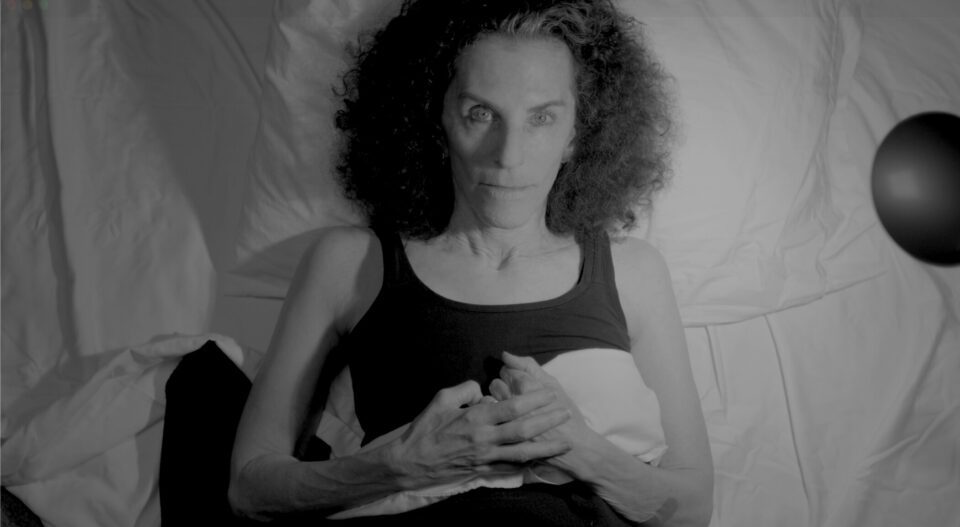
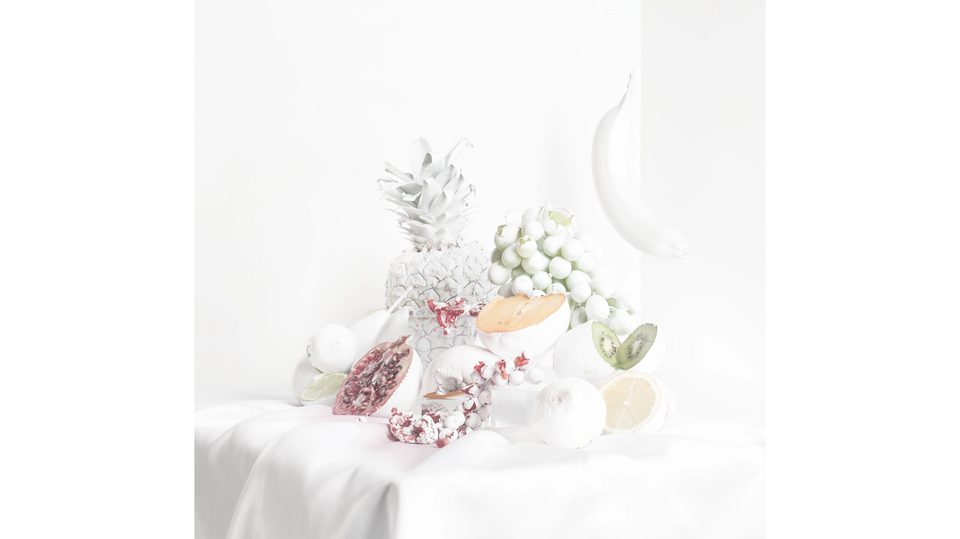
Ageing gives that uncertainty a different weight in The Uninvited Visitor (2025–2026). Cowin turns towards mortality, memory and the changing relationship between the body and the stories we tell about ourselves, while continuing to employ wordplay and personal anecdote. Animation enters the vocabulary of the work alongside techniques that have occupied her practice for decades. The result is not a departure from her earlier concerns so much as their intensification, with time itself becoming an integral part of the subject. What once appeared as an inquiry into the construction of identity becomes, later in further stages of life, an deeper inquiry into what happens when identity is continually revised by memory.
LACMA’s history with Cowin adds an institutional dimension to that trajectory. Her Family Docudrama series appeared in the museum’s 1985 exhibition New American Photography, shortly after the formation of its Photography Department. That early encounter connected Cowin to a wider southern Californian culture of experimentation in which photography was increasingly treated as a medium capable of borrowing from cinema, performance, television and conceptual art. The current exhibition now looks backwards while revealing how far those once-radical strategies have travelled. Appearing experimental in the 1970s and 1980s it now belongs to a wider contemporary language of constructed photography.
Curators Rebecca Morse and Britt Salvesen describe the exhibition as an opportunity to celebrate an artist who “paved the way for experimental narrative photography in Los Angeles,” a phrase that places Cowin within a history rather than presenting her practice as an isolated achievement. They also suggest that the survey is arriving at an “ideal moment in our culture and world”, a claim that gains force when considered alongside the contemporary artists whose practices similarly question photographic authority. Chetrit examines constructed intimacy, Lawson rethinks the relationship between staging and representation, and Winant considers how images accumulate into alternative histories. None of these artists simply repeats Cowin’s methods, but each demonstrates the continuing relevance of her fundamental proposition: photography can produce uncertainty as productively as it produces knowledge.
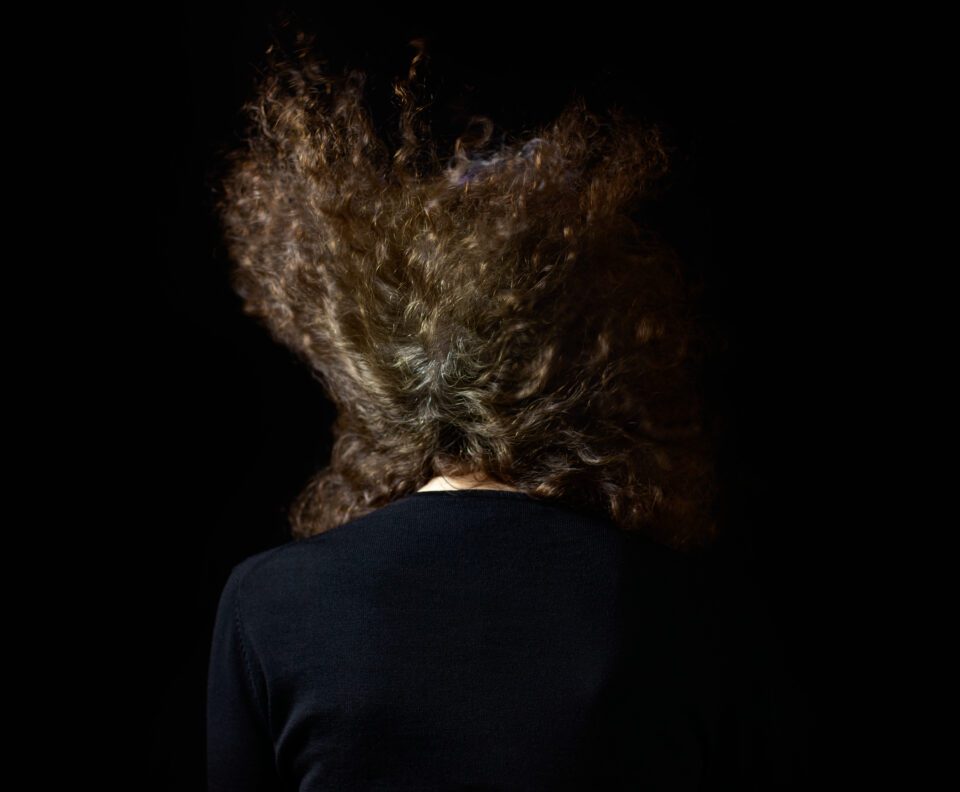
That proposition also explains why the exhibition resists being understood as a conventional career survey. Cowin’s photographs move between Polaroid, multiple exposure, inkjet printing, video, text and staged imagery, but the materials are less important than the questions connecting them. Across different decades, she returns to the same unstable territories: intimacy and distance, memory and evidence, fiction and experience, fear and performance. Her practice has a remarkable consistency without becoming stylistically repetitive because the questions themselves change as the artist ages and the surrounding image culture shifts. Each new medium becomes another way of testing what cannot quite be captured.
LACMA CEO Michael Govan describes Cowin as an artist who has “expanded the possibilities of photography to engage lived experience with clarity, complexity, and imagination.” Those three qualities are particularly useful for understanding the exhibition because Cowin does not treat ambiguity as the opposite of clarity. Her images can be precise in their construction while remaining deliberately unresolved in their meaning. Complexity emerges not from obscurity but from allowing contradictory readings to coexist. Imagination, meanwhile, becomes a method for getting closer to experience not an escape from it.
Between Panic and Paradise asks what photography can hold when experience itself refuses to stay fixed. Cowin’s work has never depended on choosing between fact and fiction; instead, it occupies the unstable territory where memory, performance and invention begin to overlap. Seen alongside the practices of Chetrit, Lawson and Winant, her work feels less like a historical precursor than an active contribution to a conversation that continues to change. Cowin is distinguished by her willingness to leave uncertainty unresolved, allowing contradiction to remain part of the image rather than something the viewer must overcome. Five decades on, that refusal gives her work its force, and that looking is an act of interpretation.
Eileen Cowin: Between Panic and Paradise is at LACMA, Los Angeles from 23 August – 3 January 2027: lacma.org
Words: Anna Müller
Image Credits:
1. Eileen Cowin, Untitled, 1980–83, printed 1999, from the Family Docudrama series, Los Angeles County Museum of Art, gift of Norman Starr, © Eileen Cowin, digital image courtesy Museum Associates/LACMA
2. Eileen Cowin, Secrets, 1984, from the Family Docudrama series, © Eileen Cowin, courtesy of the artist
3. Eileen Cowin, Untitled, from the One Night Stand series, 1977–78, printed 1999, Los Angeles County Museum of Art, gift of Norman Starr, © Eileen Cowin, digital image courtesy Museum Associates/LACMA
4. Eileen Cowin, still from Another Year Closer to Death, 2025, © Eileen Cowin, courtesy of the artist
5. Eileen Cowin, The Uninvited Visitor, 2025, printed 2026, © Eileen Cowin, courtesy of the artist