Archives have become one of the defining sites of contemporary artistic enquiry. No longer understood as neutral repositories of information, they are contested territories where absence, memory and power are negotiated. Edinburgh Art Festival 2026 enters this conversation through a programme shaped by alternative archives, queer histories, community-held narratives and forms of knowledge that exist beyond official records. The festival considers how histories are inherited, challenged and rewritten, bringing together photography, sound, performance, sculpture and moving image as tools for examining the relationship between personal testimony and collective memory. At its centre is a question increasingly shaping contemporary cultural discourse: who is remembered, who is overlooked and how might archives become places of possibility rather than simply records of the past?
This emphasis on living histories underpins the curatorial thinking behind EAF26. Describing the programme as a gathering around “alternative archives, queer histories, community-held stories, and living sound collections”, Director Kim McAleese points towards a broader rethinking of what an archive can contain and who it can serve. The phrase signals a movement away from archives as fixed repositories towards more fluid structures shaped by experience, participation and acts of preservation. Across the city, artists examine the ways memories are collected, circulated and transformed, revealing how cultural histories are often formed through fragments, omissions and acts of resistance. Curator Eleanor Taylor’s description of the festival as “a political space” that is “responsive, grounded, and open to change” reflects this wider ambition – one that places collaboration and dialogue at the heart of the programme.
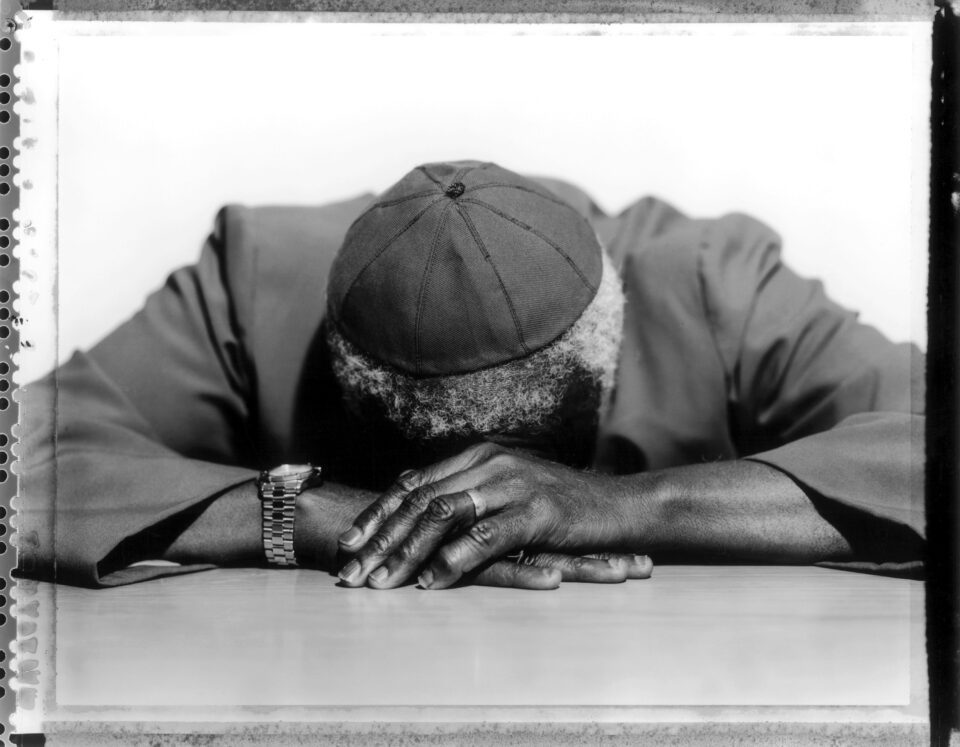
The politics of visibility runs throughout EAF26, particularly through the practices that return to histories frequently excluded from the dominant narratives. At the festival’s new permanent space at 92 Constitution Street, Del LaGrace Volcano’s Love Bites Back revisits photographs made in the UK between 1982 and 1995 through the Queer Archive of Resistance. Emerging from queer activism, leather dyke culture and embodied politics, these images refuse the distance often associated with documentary photography. They operate as records of community, but also as declarations of presence, capturing the moments when identity itself underwent a change into a form of political expression. Volcano’s work speaks to a broader contemporary movement towards reclaiming marginalised histories, where archives become active spaces for questioning whose experiences enter public consciousness.
Questions of belonging and self-representation remain in Ellis Jackson Kroese’s History is a Home, presented at Custom Lane through Trans Masc Studies. Bringing together publications, artefacts and research material, challenging conventional archival structures by presenting trans history as shared and evolving rather than a closed collection. The title suggests a different relationship to the past – rooted in connection, familiarity and community rather than distance. A related act of recovery emerges in Carnal Desires, introducing the work of Sadao Hasegawa to wider audiences. Paintings, shaped by eroticism, Japanese folklore, science fiction and popular culture, complicate narrow portrayals of masculinity and desire, revealing a complex practice that has remained inaccessible outside specialist circles.
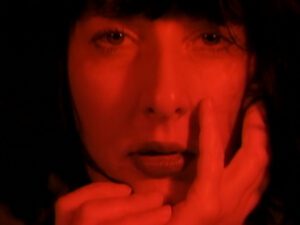
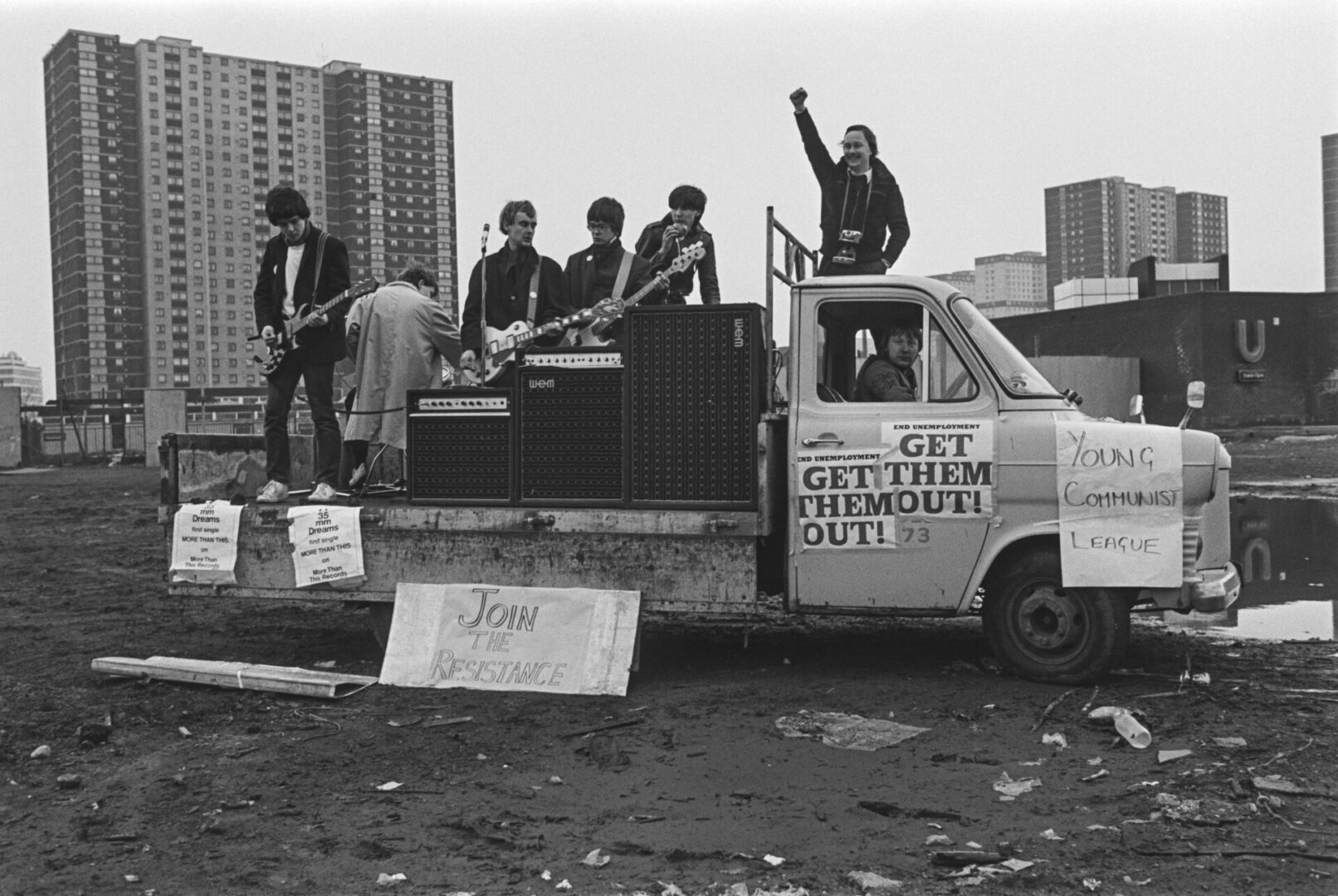
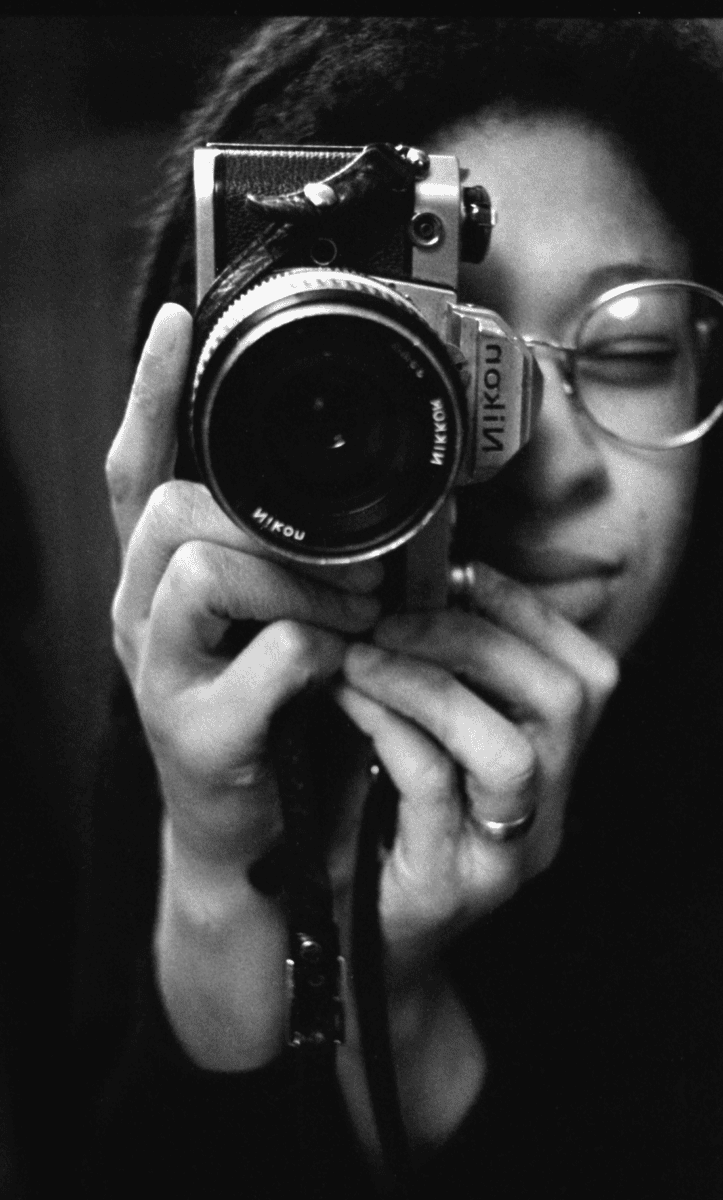
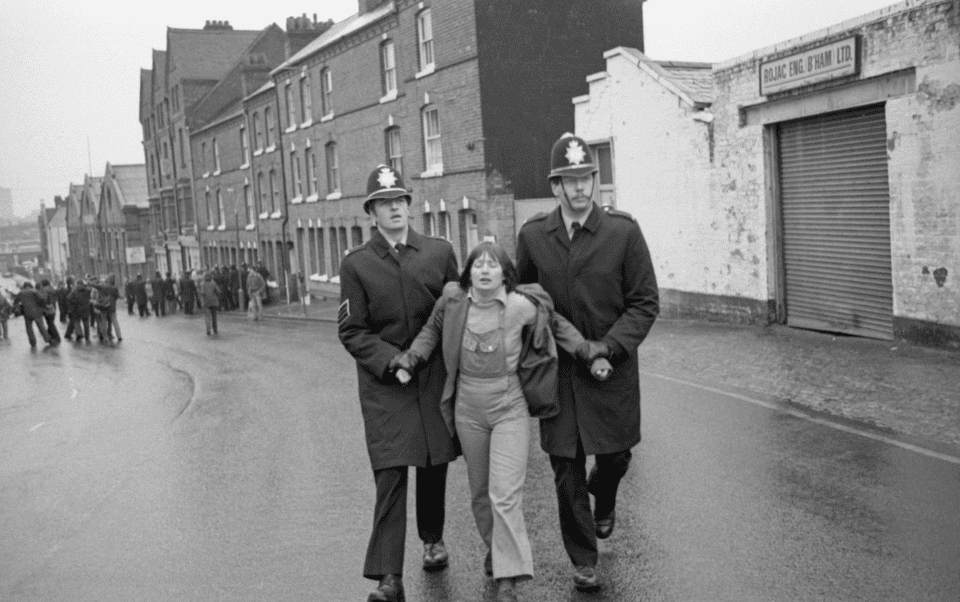
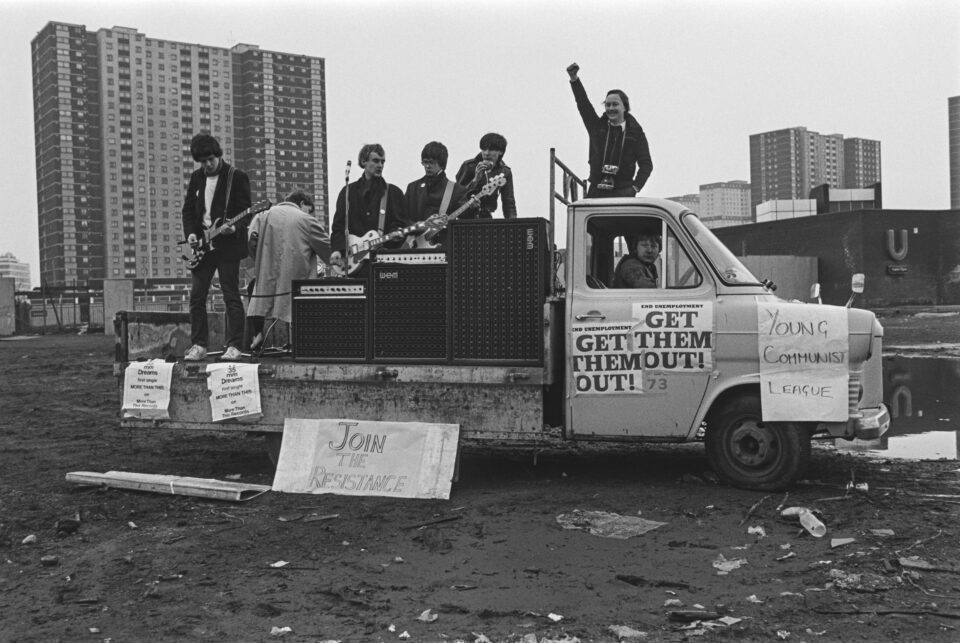
Photography provides another central thread within the festival, particularly through artists who have used the medium to examine social histories and the construction of identity. Sandra George’s Start from the Level at City Art Centre brings together more than 200 photographs created through over three decades of engagement with communities across Edinburgh. Her work extends beyond documentary observation, developing through relationships and shared experiences with the people and places she photographed. The resulting archive is both historical record and collective testimony, preserving moments of social transformation from the 1980s onwards. George’s approach enters into dialogue with Catherine Opie’s To Be Seen at the Royal Scottish Academy, the first major museum exhibition of Opie’s work in Scotland, where portraits of queer communities, children, political groups and collaborators are placed alongside works from Scotland’s national collection to question how visibility is constructed.
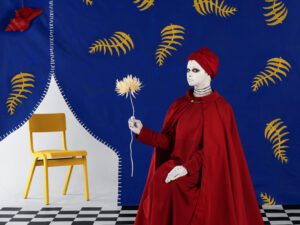
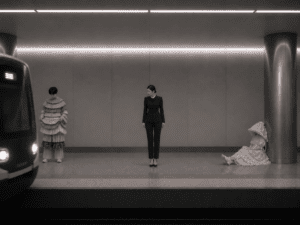
The relationship between image-making and technology emerges throughout Wendy McMurdo’s The Digital Mirror at National Galleries Scotland: Portrait. Across two decades, McMurdo has explored childhood, imagination and the changing relationship between physical and digital worlds, anticipating contemporary concerns around artificial intelligence, online identity and the instability of images. Her work raises encourages the viewer to question how technology alters not only the production of images, but also the ways in which memory is formed and experienced. Similar tensions appear in Bard’s The Archive, developed with Simon Foxton, where craft, storytelling and AI intersect. The project considers the archive as something increasingly shaped by digital processes, asking what happens when technologies begin to participate in acts of remembering, invention and cultural interpretation.
Sound and performance expand these conversations beyond the visual, considering how histories are carried through voice, movement and listening. Lawrence Abu Hamdan’s Zifzafa investigates the relationship between sound, testimony and justice, revealing listening as a political act. His practice draws attention to the ways sonic evidence can preserve experiences that remain absent from official records, particularly where memory, migration and conflict intersect. This understanding of sound as cultural memory continues through the Majazz Project / Palestinian Sound Archive, led by artist Mo’min Swaitat, presented through a festival-long installation at the Palestine Museum. Bringing together recordings, spoken word, album artwork and music from historic Palestine, the project positions sound as a living archive shaped by displacement, resistance and collective identity.
Performance across EAF26 considers the body as both a site of expression and a record of experience. Magnus Westwell’s Caught Hold of Nothing uses violin, movement and physical endurance to explore emotional release, while Davi Pontes’ new commission develops connections between Scotland and Brazil through questions of ecology, embodiment and human relationships with the natural world. These works reflect a wider interest in contemporary performance as a space where individual experience meets collective encounter. The body becomes a form of archive in itself – carrying histories, emotions and social conditions that cannot always be contained within traditional forms of documentation. Such practices reinforce the festival’s wider exploration of how knowledge is transmitted through physical presence.
Material practices in EAF26 turns to landscapes, objects and ecological systems, examining how physical matter carries histories of its own. On Calton Hill, Emii Alrai’s fragmented sculptural forms draw upon archaeological language to question how societies construct narratives around ruins and remnants of the past. At Talbot Rice Gallery, Anne Hardy transforms the Georgian Gallery into an immersive environment of found materials, sound, light and scenography, creating a landscape that exists between human and post-human worlds. Eva Rothschild’s presentation at Fruitmarket also considers sculpture as a language shaped by urban experience, while Katie Paterson’s commission at Collective connects endangered environments with deep time through almost 200 amulets created from materials of fragile ecosystems.
Environmental concerns continue through Earth Matters at the Royal Botanic Garden Edinburgh, where artists including Wilhelmina Barns-Graham, Joan Eardley, Sekai Machache and Alberta Whittle consider soil as both material and archive. The exhibition connects geological histories with contemporary ecological pressures, recognising the ground beneath us as a record of transformation. Elsewhere, Jamie Fitzpatrick’s Sausage Politics examines debates around post-colonial public statuary, exploring how monuments become contested sites where memory, identity and power collide. Across these projects, material culture becomes a way of examining the relationships between human intervention, environmental change and the narratives societies choose to preserve.
Beyond individual exhibitions, Edinburgh Art Festival 2026 presents the city as a network of conversations rather than a collection of isolated events. Major institutions, independent spaces and community-led initiatives come together around shared questions of history, representation and change. The programme’s strength lies in the relationships it creates between international practices and locally rooted stories, established artists and emerging voices. From queer archives and documentary photography to sound collections and ecological enquiry, EAF examines how culture is continually shaped through acts of remembering, challenging and reimagining. In doing so, the festival suggests that archives are not only records of what has been – they are tools for considering what might still be possible.
Edinburgh Arts Festival opens on 14 August: edinburghartfestival.com
Words: Shirley Stevenson
Image Credits:
1&5. Sandra George, Unemployment Demo – Glasgow, 1981. Courtesy Craig/millar Now © Sandra George Estate.jpg
2. Stills, Jillian Edelstein, Desmond Tutu, Truth and Reconciliation Commission series 1996-2001.jpg
3. Sandra George, Self-Portrait – Bread Street, 1994. Courtesy Craigmillar Now © Sandra George Estate
4. Sandra George, Birmingham Anti-National Front Demo, 1981. Courtesy Craigmillar Now © Sandra George Estate