Landscape has never been a neutral subject. From the idealised vistas of a painting to the radical interventions of Land Art, artists have used terrain as a means of examining power, belonging and humanity’s position within the wider world. Yet the contemporary landscape is no longer simply a scene to be observed; it has become a contested space shaped by climate change, extraction and competing visions of the future. Edge: Where the Land Meets the Sea approaches the coastline as a shifting threshold rather than a fixed boundary, revealing the shoreline as a place where geological time, human histories and non-human processes converge. The exhibition asks how art can respond to environments that are no longer stable, and how new ways of seeing might emerge from a landscape in transition.
The coastline has long occupied an ambiguous position within artistic imagination – both a place of beauty and a site of uncertainty, where borders dissolve and histories accumulate. Curated by Hastings Contemporary in collaboration with The Land Gardeners – Henrietta Courtauld and Bridget Elworthy – Edge extends a wider investigation into the materials and processes that sustain life, following their earlier exhibition SOIL: The World at Our Feet at Somerset House. Here, attention shifts from the ground beneath our feet towards the meeting point between land and ocean, tracing the movement of matter, memory and human intervention across environments. The curatorial approach resists the traditional separation of landscape into distinct categories, instead considering the coast as a place of continual negotiation.
Land Art has always been shaped by changing ideas about possession and perspective. The pastoral traditions of painting often transformed nature into an idealised scene, a cultivated vision of harmony that obscured questions of ownership, labour and ecological change. The emergence of Land Art in the late 1960s and 1970s challenged this inherited relationship by moving artistic practice beyond the gallery and into direct engagement with the earth itself. Robert Smithson’s Spiral Jetty (1970), Michael Heizer’s monumental earthworks, Walter De Maria’s The Lightning Field (1977) and Nancy Holt’s Sun Tunnels (1973–1976) redefined the artwork as something rooted in place, duration and geological scale. Alongside these monumental gestures, practices by Richard Long and Agnes Denes introduced more reflective approaches, using walking, cultivation and ecological intervention to question how humans occupy and alter spaces.
The legacy of Land Art remains complex. Its rejection of the gallery system and emphasis on natural materials transformed ideas of what an artwork could be, yet later criticism has questioned whether some large-scale earthworks continued the very forms of domination over landscape that they sought to challenge. Contemporary environmental practices have increasingly moved away from the idea of reshaping terrain towards approaches based on observation, reciprocity and attentiveness. Edge occupies this expanded field, connecting the ambitions of earlier earthworks with a generation of artists who consider landscape less as a surface to transform and more as a living archive of geological, cultural and political histories. The exhibition reflects a broader shift in contemporary art, where environmental thinking has become inseparable from questions of ethics, materiality and social responsibility.
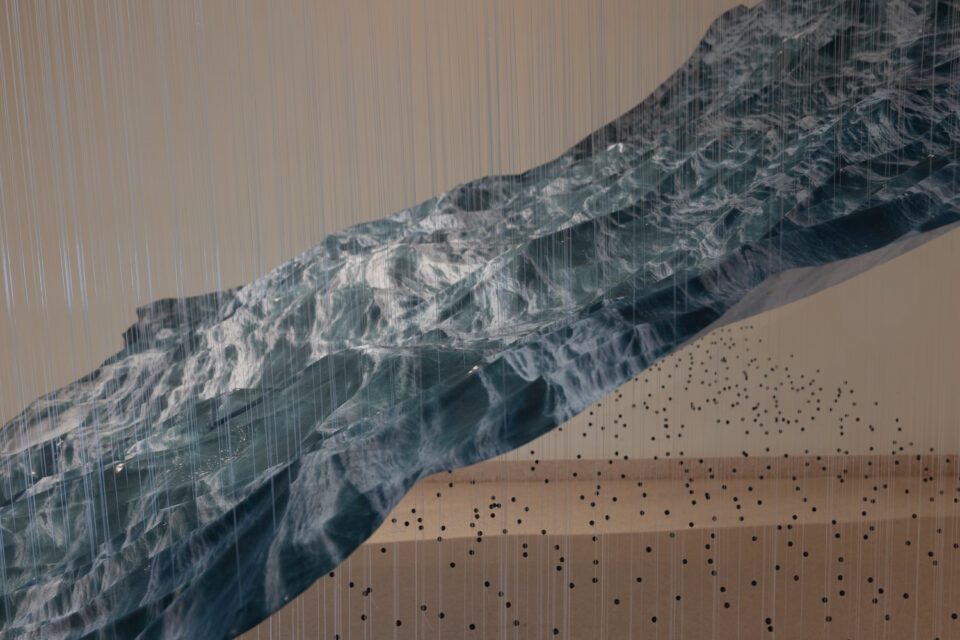
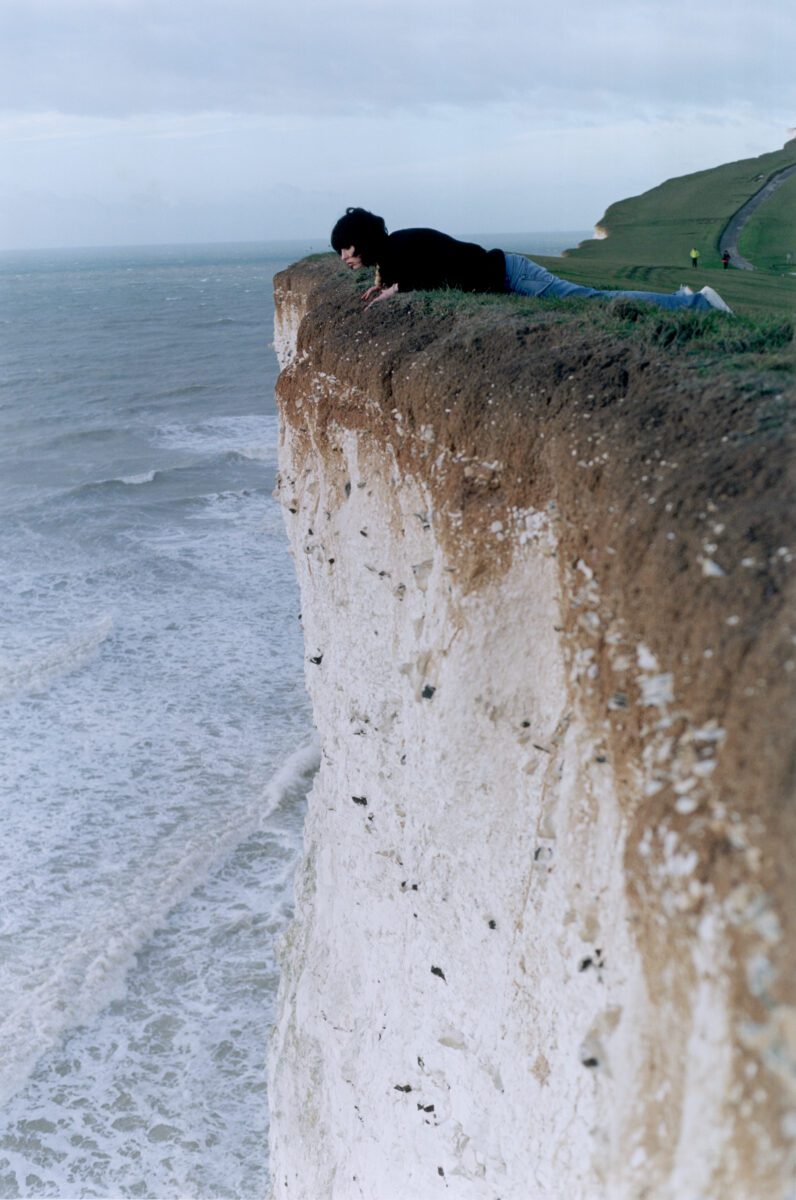
Across more than 40 works by artists including Wolfgang Tillmans, Cornelia Parker, Gillian Wearing, David Nash, Charmaine Watkiss, Maggi Hambling, Andy Goldsworthy, Anya Gallaccio and Otobong Nkanga, the exhibition traces a movement from soil through waterways and towards the ocean. These works consider how environments are experienced through touch, memory, movement and time. The exhibition’s overwhelming strength lies in its refusal to define ecological practice through a single visual language. Abstraction, photography, sculpture and installation become different ways of approaching landscapes that are constantly changing, revealing what is hidden beneath familiar perceptions of place.
Materiality is central to Anya Gallaccio’s reimagined installation The Look of Things, where soil collected from a local farm occupies the gallery space. Arranged into a grid of drying earth, the work recalls the formal precision of Minimalism while transforming its emphasis on permanence into an encounter with gradual change. The material cracks, shifts and deteriorates over time, making decay part of the artwork. Gallaccio’s practice has often explored impermanence through organic materials, questioning the expectation that art must endure unchanged. Here, soil becomes both subject and substance – a reminder that the foundations of life are always fragile, active and transforming.
The relationship between artistic intervention and natural agency emerges through David Nash’s Wooden Boulder series, begun in 1978. While connected to the history of Land Art through its engagement with landscape beyond the gallery, Nash’s approach offers a quieter alternative to the movement’s monumental ambitions. Following the journey of a carved wooden sphere as it moves along the River Dwyryd in Wales, the work allows water, gravity and terrain to determine its trajectory. The river becomes a collaborator rather than a backdrop, shifting attention away from the artist’s control towards the unpredictable forces that shape environments. Nash’s practice suggests that working with landscape is not necessarily about leaving a mark upon it, but about recognising the processes already taking place.
A similar sensitivity to impermanence defines Andy Goldsworthy’s Rockweed (2023), in which the artist records himself becoming submerged beneath coastal vegetation as the tide rises around him. Goldsworthy’s practice has long been associated with temporary interventions made from leaves, stones, ice and branches – materials chosen precisely because they carry their own cycles of growth and disappearance. Unlike some earlier approaches to Land Art, where scale and permanence were central concerns, his works often exist through their eventual absence. The body in Rockweed becomes part of the landscape rather than separate from it, suggesting a relationship based on vulnerability rather than mastery. The image captures a moment of surrender to the rhythms of the shoreline, where human presence becomes one element within a much larger process.
The ocean’s ecological and political dimensions are brought into focus through Otobong Nkanga’s tapestry Tied to the Other Side (2021). Its woven landscape of plants, coral forms and fragmented bodies reflects the movement of resources across borders while addressing histories of extraction, migration and colonial power. Nkanga’s practice challenges the idea of the environment as a neutral space, revealing how landscapes are shaped by economic systems and historical inequalities. Within Edge, her work expands the exhibition’s concerns beyond conservation towards questions of ownership and justice. The sea appears not as an untouched wilderness but as a contested territory carrying multiple histories.
Painting and photography further complicate ideas of landscape by examining atmosphere, memory and perception. Wolfgang Tillmans’ investigations into light, matter and planetary conditions sit alongside artists such as Thérèse Oulton and Maggi Hambling, whose approaches to landscape move between abstraction and emotional intensity. These works demonstrate that landscape practice is not defined solely by environmental crisis or documentary observation. Instead, artists explore how places are imagined, remembered and transformed through human experience. Landscape remains both physical territory and psychological space – something encountered through the senses as much as through knowledge.
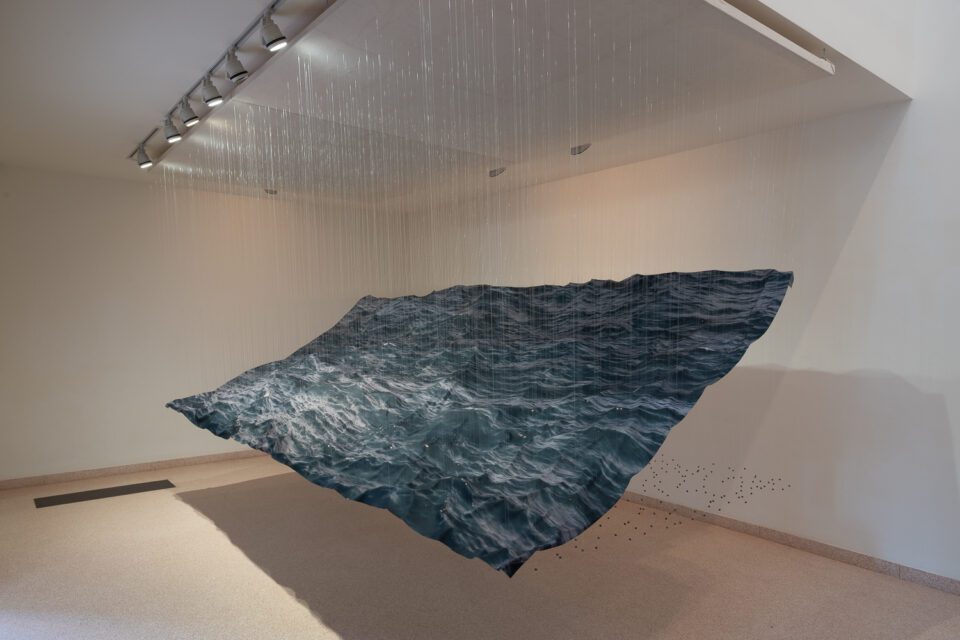
The exhibition belongs to a wider cultural moment in which artists are reconsidering the assumptions that have shaped modern relationships with land and resources. The environmental turn in contemporary art is not simply a matter of representing climate change; it involves questioning the materials, structures and narratives through which societies understand the planet. From Indigenous practices that foreground ancestral relationships with place to interdisciplinary projects engaging with scientific research, artists are developing new forms of attention towards the conditions that make life possible. Edge contributes to this conversation by suggesting that art’s role is not to provide solutions, but to alter perception.
The collaboration with The Land Gardeners places particular emphasis on the continuity between soil and sea, challenging divisions that have historically separated different environments. Their approach reflects broader debates around the Anthropocene and the consequences of human activity on planetary processes, while maintaining a focus on repair and renewal. By concentrating on the shoreline, a place defined by movement and uncertainty, the exhibition considers change not only as a threat but as an ongoing condition of existence. The edge becomes a space where different forms of knowledge meet – scientific, artistic and cultural – allowing new understandings of landscape to emerge.
Hastings Contemporary’s coastal setting gives these questions an immediate physical presence. Situated beside the fishing beach of Hastings Old Town, the gallery exists within the very landscape it examines, creating a dialogue between artworks and their surroundings. Director Kathleen Soriano’s wider vision for the institution’s programme around ocean futures positions the gallery as a place where artistic enquiry intersects with environmental research and public conversation. The forthcoming exhibition Horizon: Where the Sea Meets the Sky will extend this exploration beyond the shoreline towards the atmosphere and wider planetary systems. Together, the projects establish a sustained engagement with how art can respond to changing relationships between humans and the environments they inhabit.
Edge: Where the Land Meets the Sea offers a reconsideration of landscape at a moment when inherited distinctions between nature and culture are becoming increasingly unstable. Its artists reveal places as layered formations shaped by geological forces, political histories and acts of imagination. The coastline emerges not as a dividing line but as a meeting point – a place where different temporalities and perspectives converge. By bringing together the legacies of Land Art with contemporary approaches to ecology and material practice, the exhibition proposes that learning how to see landscapes differently may be essential to imagining more thoughtful ways of living within them.
Edge: Where the Land Meets the Sea is at Hastings Contemporary from 26 September – 3 January: hastingscontemporary.org
Words: Shirley Stevenson
Image Credits:
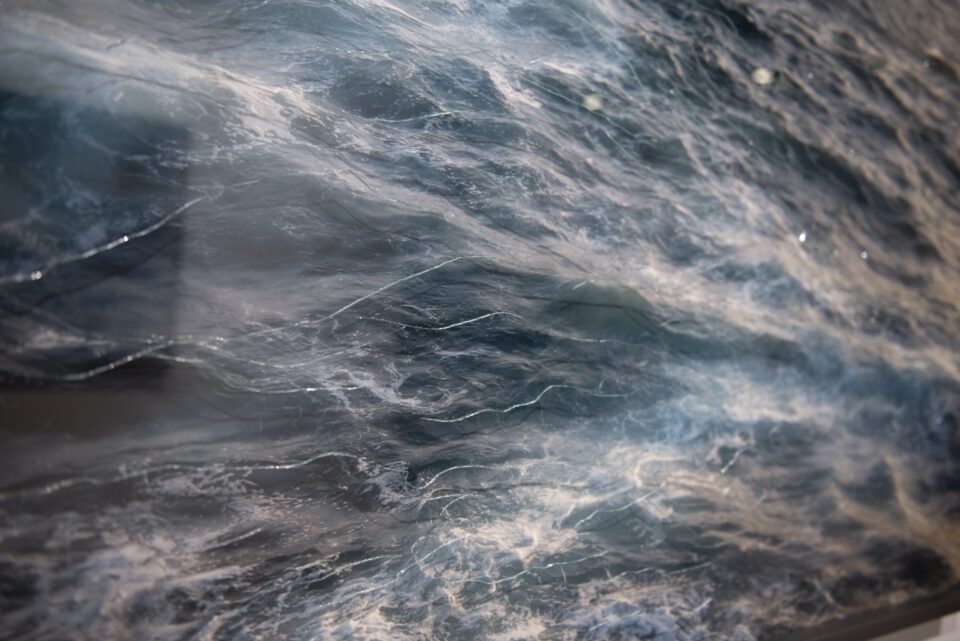
1&4. Wolfgang Tillmans, End of Land 1, 2002 © Wolfgang Tillmans, courtesy Maureen Paley, London. Towner Eastbourne.
2. Miguel Rothschild, Mar de Ausencias (detail) 2017.
3. Image courtesy of Rob Harris.
5. Image courtesy of Rob Harris.
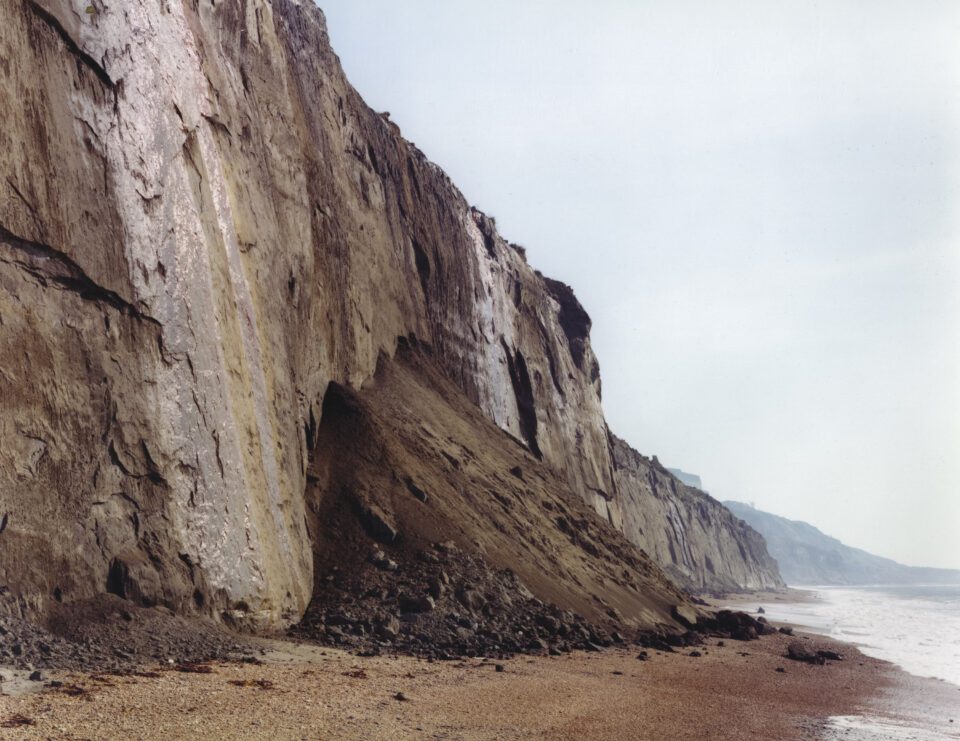
6. Jem Southam, Whale Chine, October 1994.
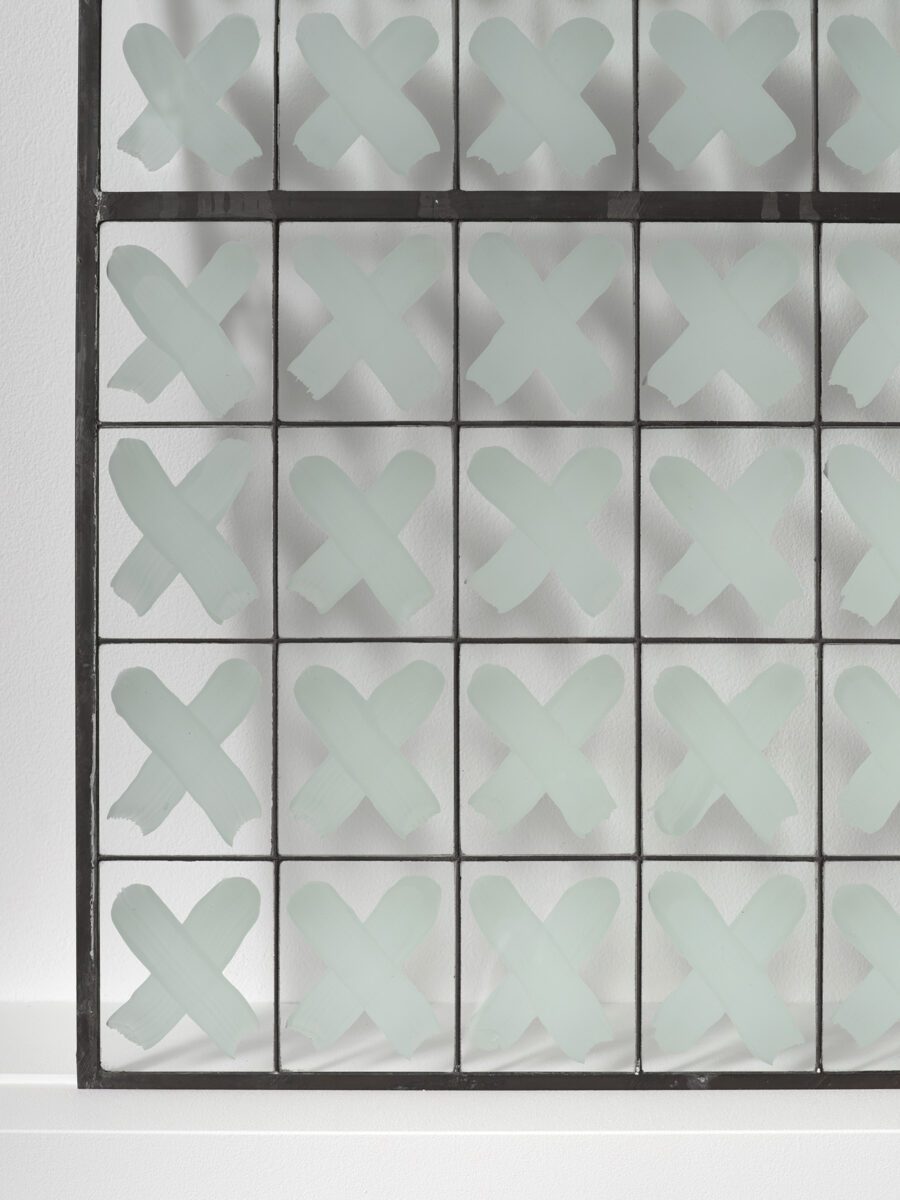
7. Cornelia Parker, White Cliff Crossings (detail), 2024. Courtesy the artist and Frith Street Gallery, London. Photo: Ben Westoby Fine Art Documentation © Cornelia Parker.