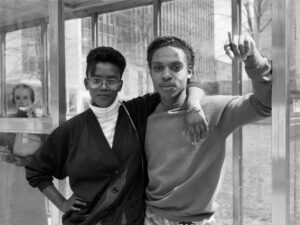
“How can one reimagine and visualise African American history and make that history resonate in the contemporary moment?” This question, posed by American artist and educator Dawoud Bey (b. 1953), underpins Material Histories, Living Landscapes, his latest exhibition of photography and film at the Art Gallery of Ontario (AGO). Bey began his career as an image-maker in 1975 with the series Harlem, U.S.A, which took viewers on a journey through the historic New York neighbourhood. It was exhibited to critical acclaim, and Bey’s work has since been the subject of numerous major museum and gallery presentations throughout the US and Europe. The artist, who is a MacArthur Fellow, grew up in Queens during the Civil Rights Era. Today, he is focused on bringing the past into the present, and that is the crux of AGO’s show.
Material Histories, Living Landscapes is presented in partnership with the 2026 Toronto Biennial of Art (26 September – 20 December), and its focus is on “the tenuous relationships between North American landscapes and Black diasporic experiences.” The first artwork encountered in the gallery is Untitled #25 (Lake Erie and the Sky) (2017), a large-scale shot from the Night Coming Tenderly, Black (2016-2017) series. In this body of work, Bey reimagines rural Ohio landscapes as they would have appeared to enslaved people moving along the Underground Railroad – a network of people, routes and safe houses, which helped enslaved people escape to the North – in the dark. The image is all water and sky, absent of figures. Audiences are encouraged to pause and consider the unspoken narratives that still live in these locations.
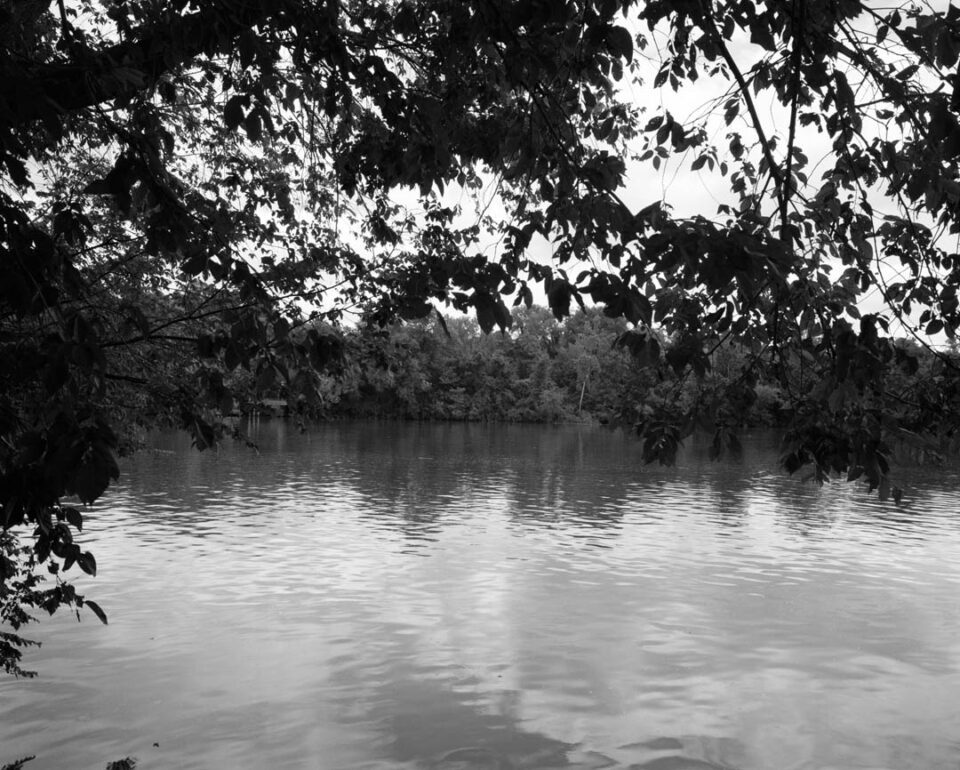
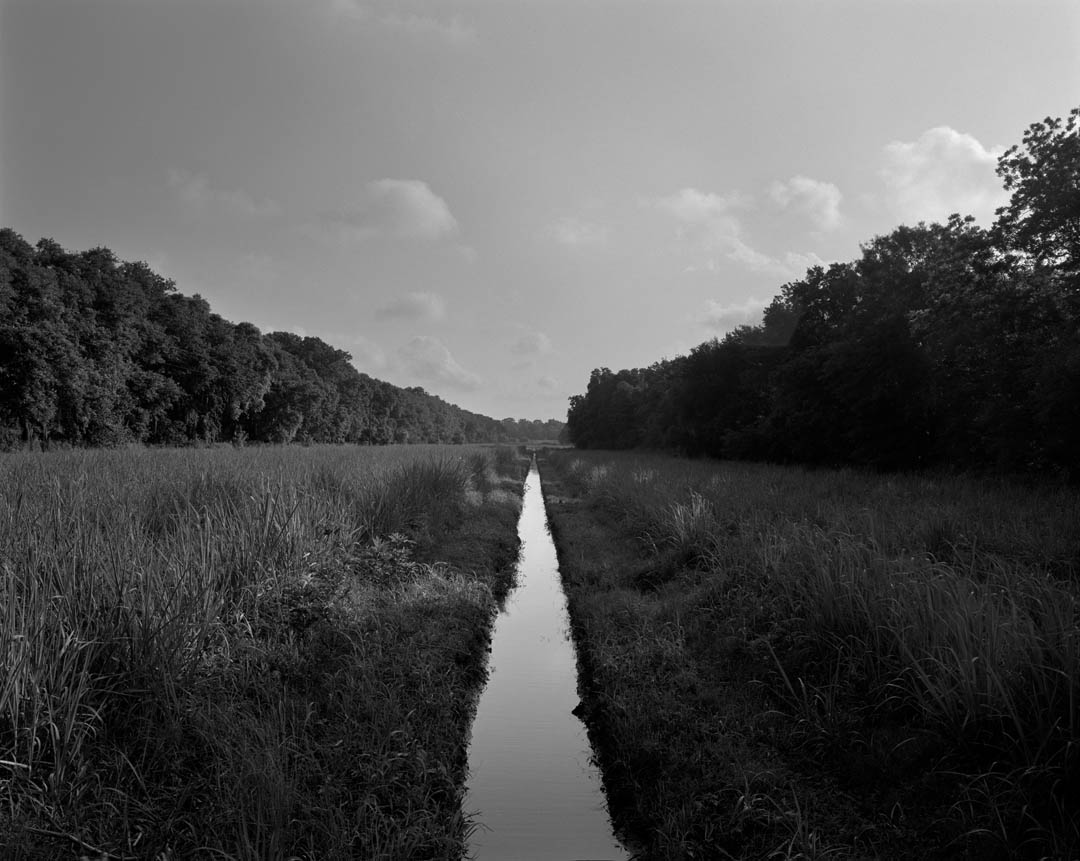
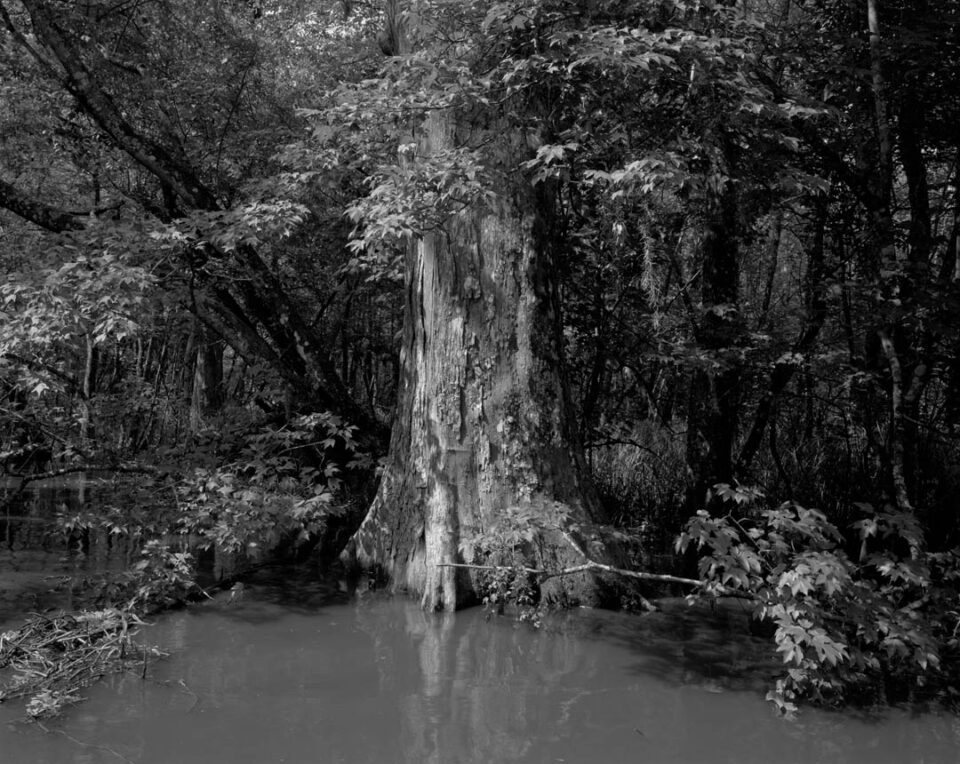
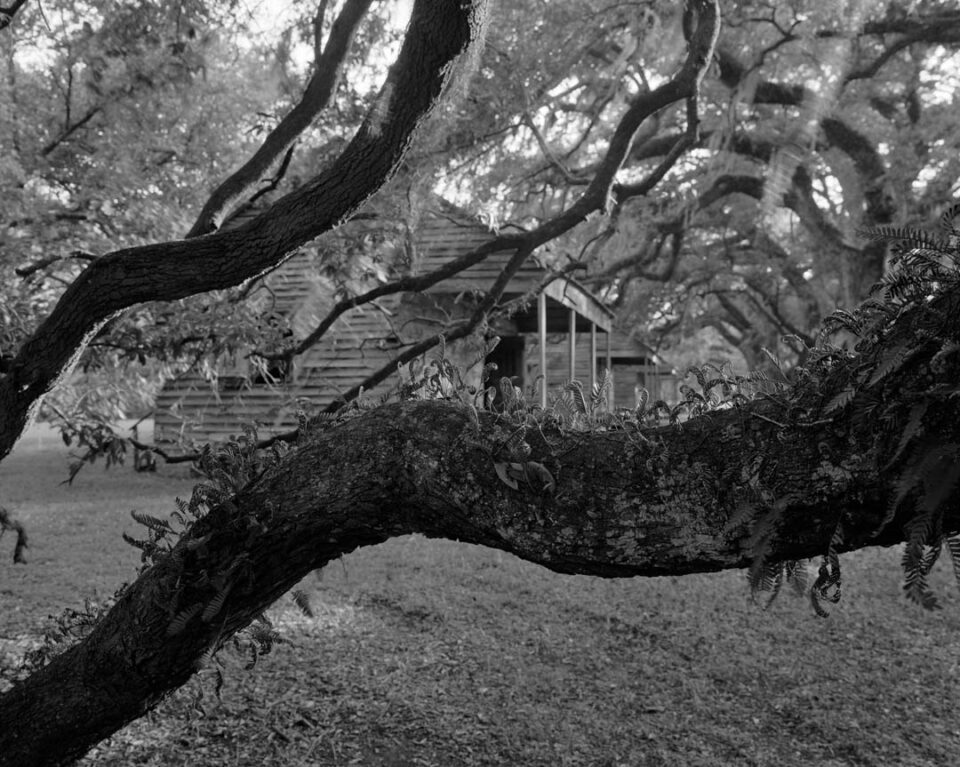
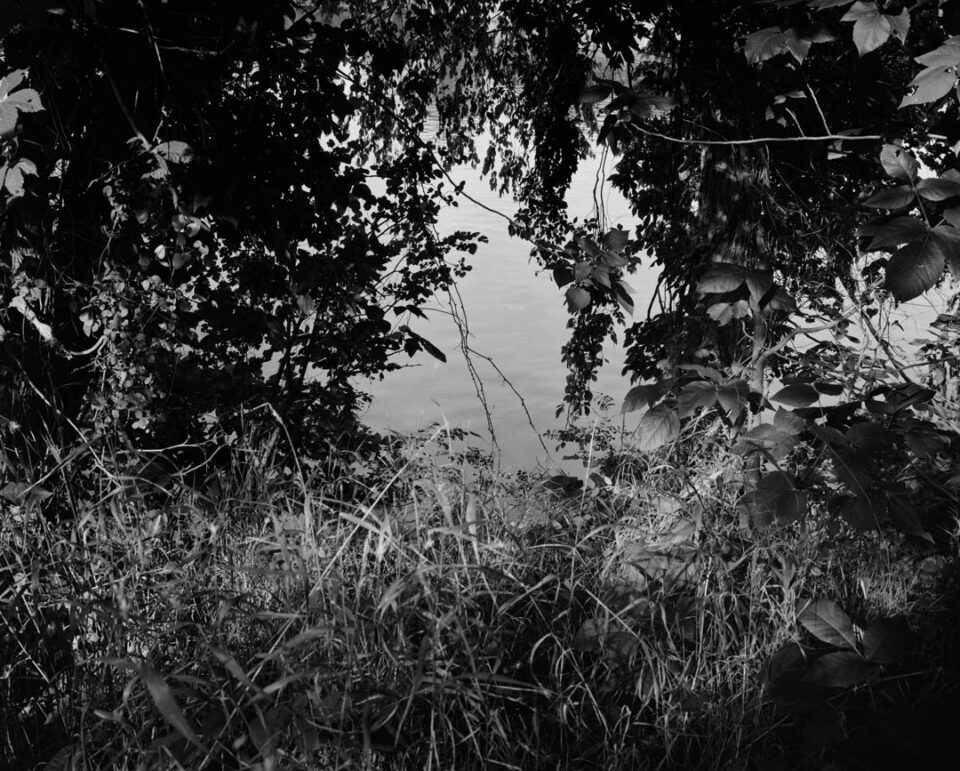
The exhibition features further photographs from Bey’s equally powerful series In This Here Place (2019) and Stony the Road (2023). Both are set within historical sites and landscapes through which enslaved Black people were forcibly moved during the transatlantic slave trade. The former comprises images made in Louisiana, along the west banks of the Mississippi River and at the Evergreen, Destrehan, Laura, Oak Alley and Whitney Plantations. The latter follows the Richmond Slave Trail, which begins at Manchester Docks, a major port that made the city the largest hub for the trafficking of enslaved Africans on the east coast of America between 1830 and 1860. Today, it is a pedestrian route that traces the harrowing journey thousands were made to march to auction houses. On view are the haunting gelatin silver prints Branches in the Bayou (2020) and Untitled (Tangles Branches) (2020), which immerse observers in lush vegetation and a sense of unease. It’s an unshakable feeling as you move through the space, where images are hung tightly to “magnify constraint.” Bey says: “I hope that viewers will come to a deeper consideration of history and realise that it does not stay in the past, it very much informs and shapes the present as well.”
At the centre of this installation is the black-and-white two-channel video 350,000 (2023). It also takes the Richmond Slave Trail as its starting point, reimagining the journey made by 350,000 enslaved Africans during the 19th century. Cinematographer Bron Moyi immerses viewers in dense foliage, creating further tension which is only amplified by a soundtrack of staccato breaths and body percussion, made in collaboration with choreographer and Virginia Commonwealth University Professor E. Gaynell Sherrod. By combining lens-based art with sound, as well as African sculptures from the wider AGO collection, Material Histories, Living Landscapes becomes a truly multidisciplinary exhibition that engages the senses.
The show is curated by Allison Glenn, who is also Curator of the 2026 Toronto Biennial of Art. “What Bey’s monumental photographs, presented in situ at the AGO, enable us to do, is to visually represent the enduring dialogues between North America and Africa, and to consider the importance of global waterways to those dialogues,” she says. “A call and response between West African histories in the United States and Canada, seen from the shores of the Great Lakes, this exhibition highlights the historical rupture made manifest by the Middle Passage.” Material Histories, Living Landscapes feels like required viewing. Its power lies in what it doesn’t say. Instead, it encourages us to sit with these landscapes, demonstrating how they can hold, evoke and transmit uncomfortable histories. Here, Bey does not simply look back at the past; he asks audiences to consider how its traces remain embedded in place.
Dawoud Bey: Material Histories, Living Landscapes is at Art Gallery of Ontario until 4 July.
Words: Eleanor Sutherland
Image Credits:
1. Dawoud Bey, Irrigation Ditch, From the series In This Here Place, 2020. Gelatin silver print, Framed: 124.8 × 152.4 × 5.1 cm. Rennie Collection, Vancouver. © Dawoud Bey.
2. Dawoud Bey, Swamp, From the series In This Here Place, 2020. Gelatin silver print, Framed: 124.8 × 152.4 × 5.1 cm. Rennie Collection, Vancouver. © Dawoud Bey.
3. Dawoud Bey, Untitled (James River), From the series Stony the Road, 2023. Gelatin silver print mounted to Dibond, Framed: 122.6 × 150.5 × 5.1 cm. Rennie Collection, Vancouver. © Dawoud Bey.
4. Dawoud Bey, Branches, Leaves, and Cabins, From the series In This Here Place, 2020. Gelatin silver print, Framed: 124.8 × 152.4 × 5.1 cm.Rennie Collection, Vancouver. © Dawoud Bey.
5. Dawoud Bey. Untitled (James River Through the Opening), From Stony the Road, 2023. Gelatin silver print mounted to Dibond, Framed: 122.6 × 150.5 × 5.1 cm. Rennie Collection, Vancouver. © Dawoud Bey.