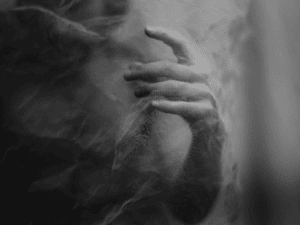
The term “collage” was first coined by Cubist Georges Braque (1882-1963) and Pablo Picasso (1881-1973), from the French word “coller” or “to glue.” From here, a movement emerged – one based upon avant-garde assemblages, fractured forms and deconstructed subject matter. Since then, many practitioners across the globe have been inspired to dismantle visuals, literally “piecing” new pictures together whilst drawing attention to the fragile materiality of images. In this article, we feature the work of five artists previously featured in print editions of Aesthetica Magazine. Collectively, these creatives challenge visual conventions, utilising paper construction and staged photography to investigate the materiality of images. Through the manipulation of shapes, shadows and vibrant colours, they deconstruct subject matter and redefine space, creating geometric compositions that challenge our perception of the physical and digital world.


In the baking Berlin summer, German-American photographer Jessica Backhaus (b. 1970) arranged a number of transparent paper cut outs. In the direct sunlight, the shapes began to rise from the surface, bending and curling into one another while casting block shadows. She captured their dance-like forms as pink, blue, green and yellow sections began to intersect like abstracted Venn diagrams. Beyond the visual appeal of tessellating colour, Backhaus invented a “photography of chance” as each sample began to bend according to its own will, wilting as moisture evaporated. After the initial layering, she became an observer – documenting an aesthetic experiment – with little control over the final composition.
@jessica_backhaus | jessicabackhaus.com


“This is more than just a display of objects,” writes Jooeun Bae (b. 1994), an artist based in Seoul who specialises in collage and photography. The Mono-series, which is shown here, is inspired by 30 of the artist’s immediate family, friends and work colleagues. Each object is matched up to a person, and, after photographing the item, a handmade collage is crafted from the prints. Coffee cups, mirrors, water jugs and headphones are folded and distorted into geometric shapes against bright backgrounds. Bae is passionate about cutting, pasting and combining disparate elements together, which she believes comes in part from her experiences living between the USA and South Korea.
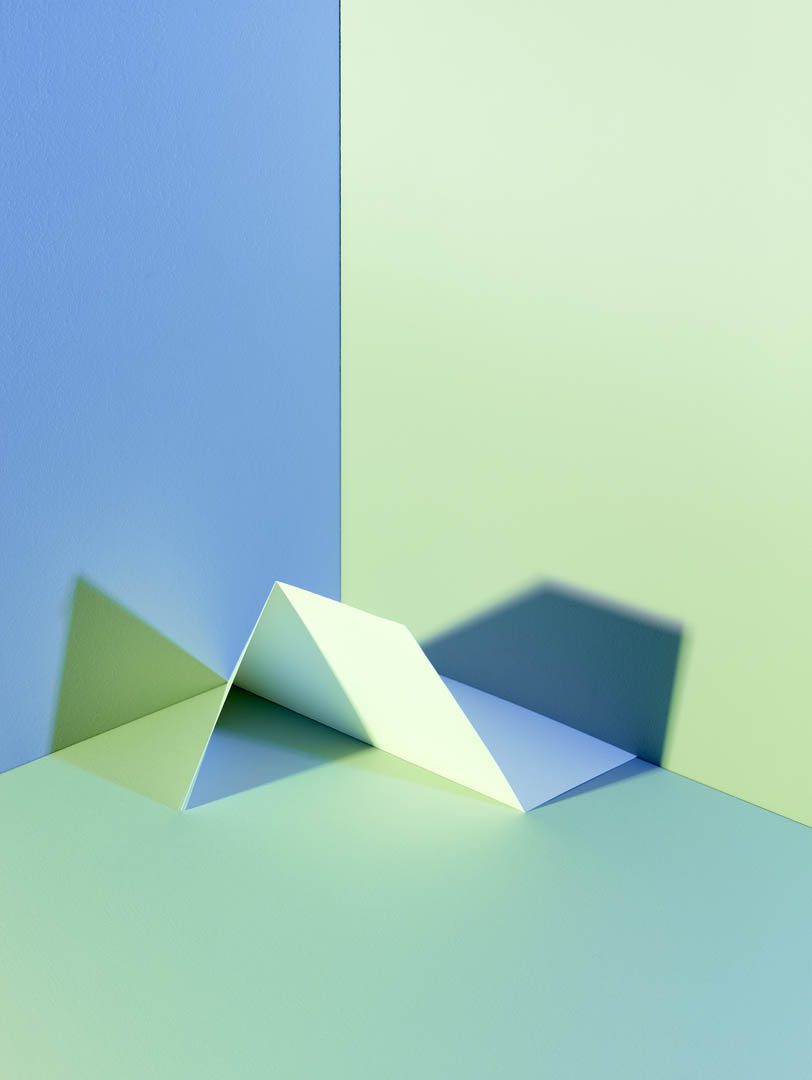

Sebastiaan Knot (b. 1970) draws inspiration from the Bauhaus movement and the pioneering work of László Moholy-Nagy, who championed abstract photograms to extend human vision. Knot’s practice is strictly analogue. Crafted from grey or white card stock, his compositions are brought to life through light alone. By placing simple, folded shapes in the studio and illuminating them with filtered lamps, Knot blends bold colours in real time. The resulting imagery is defined by a precise, geometric aesthetic, characterised by scattered shadows and unique, captured interactions of light and form.
@sebastiaanknot | sebastiaanknot.nl

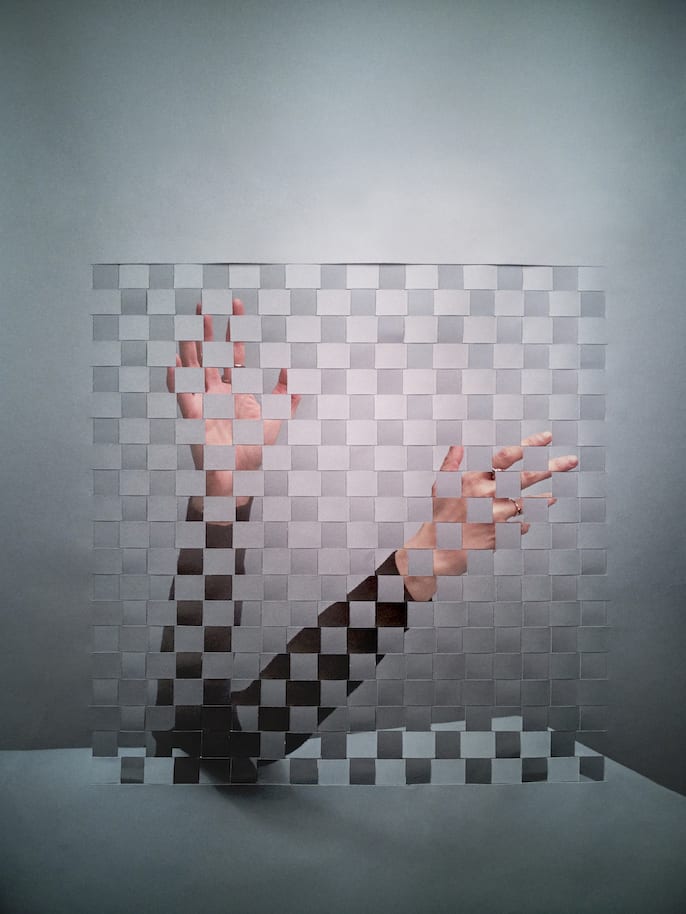
Alma Haser (b. 1989) is a German artist known for producing complex and meticulously constructed portraiture, influenced by a background in fine art. Expanding the dimensions of traditional photography, Haser uses inventive paper-folding techniques, collage and mixed media, blurring the distinctions between two-dimensional and three-dimensional imagery. Haser’s puzzle-piece portraits negotiate the boundaries between the real and the manufactured. By capturing intimate depictions of identical twins, the photographer examines notions of identity, self-awareness and beauty, combining the two individuals to create one, multi-layered duel-picture. In an age of hyper-self-awareness, increased video connectivity and social media profiles, these photographs reflect upon the shape-shifting nature of identity today.
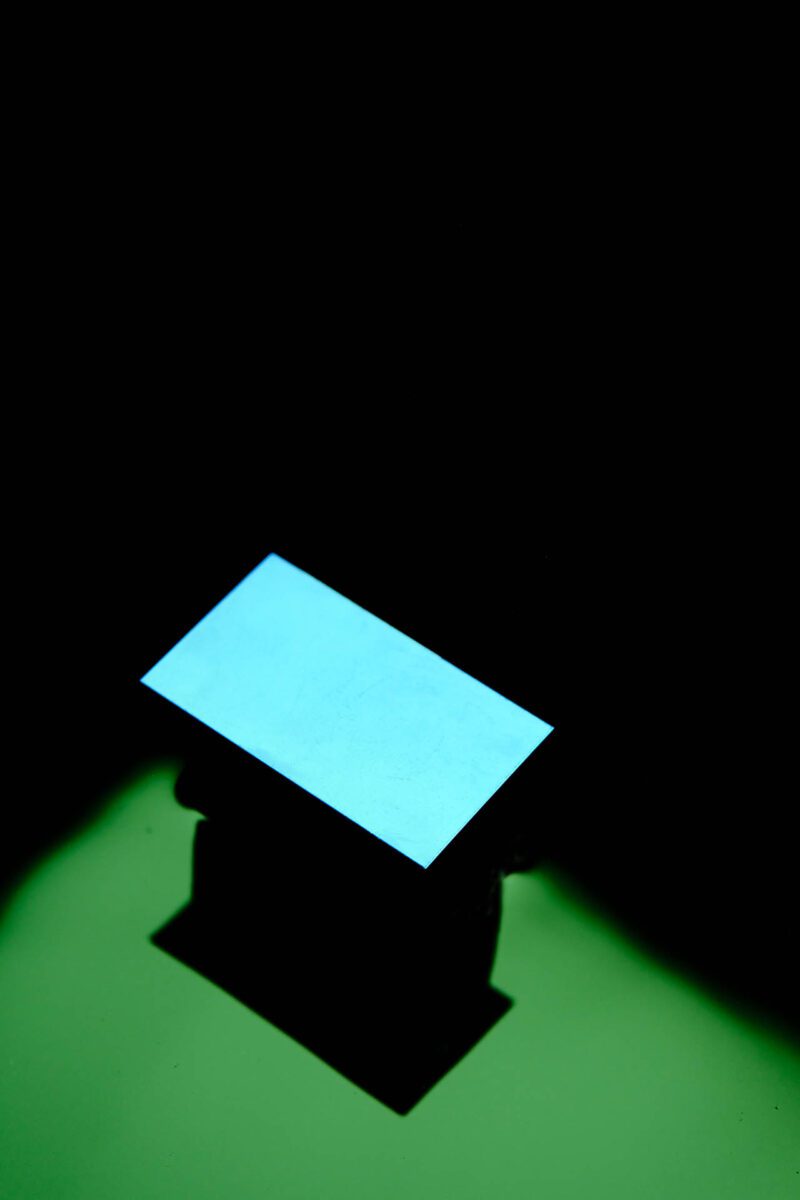
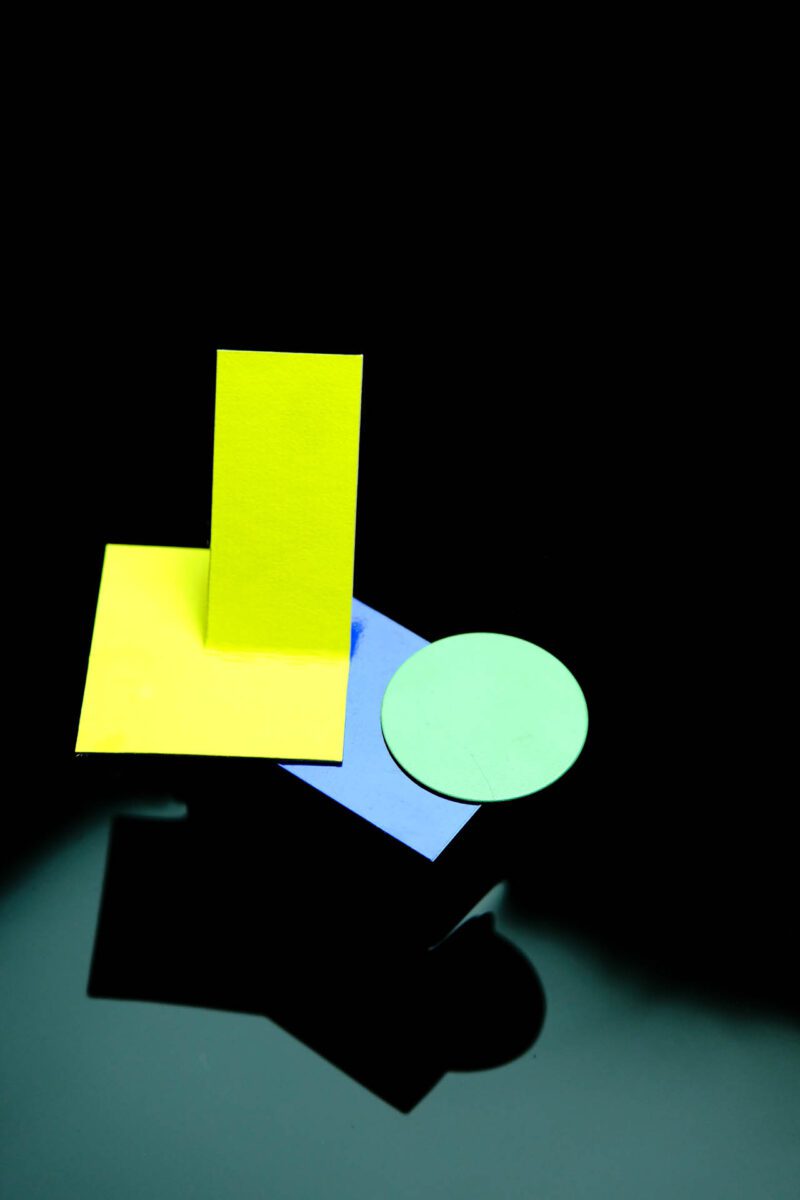
Martin Levêque (b. 1987) is a French-born creative living in Mexico City. His practice involves carefully balancing and folding shapes, where circles and rectangles pop against stark backdrops. Levêque is influenced by 20th-century modernist photography icons, citing Lászlo Moholy-Nagy and Man Ray, known for cameraless photograms and “rayographs” respectively as key inspirations. Their prints were made by placing objects onto objects on photosensitive paper. Levêque, who is colourblind, continues this legacy. He plays with geometry, shadows and textures to create satisfying, mesmerising compositions that explore the “expressive properties of light,” evoking Bauhaus sculptures that prioritise shape, form and material.
@martinleveque | martinleveque.com
Subscribe to Aesthetica & Save 70% in November: 12 Months for £12 | Click Here to Shop All Issues
Words: Sophie Bullivant
Image Credits:
1. Alma Haser, Blue, from I always have to repeat myself. Courtesy of the artist.
2. Jessica Backhaus, Cut Outs (2020). Fine Art Pigment Print. Copyright Jessica Backhaus, Courtesy Robert Morat Gallery.
3. Jessica Backhaus, Cut Outs (2020). Fine Art Pigment Print. Copyright Jessica Backhaus, Courtesy Robert Morat Gallery.
4. Jooeun Bae, Mono Massage Ball, from Mono- (2022).
5. Jooeun Bae, Mono Hanger, from Mono- (2021).
6. Sebastiaan Knot, from Colliding Colours.
7. Sebastiaan Knot, from Colliding Colours.
8. Alma Haser, Alina, commissioned by Infringe magazine. Courtesy of the artist.
9. Alma Haser, Hands Pixelated, from the series I Always Have To Repeat Myself . Courtesy of the artist.
10. Martin Levêque, Archipel (2019). Images courtesy of the artist. Made in collaboration with Fernando Etulain.
11. Martin Levêque, Archipel (2019). Images courtesy of the artist. Made in collaboration with Fernando Etulain.