

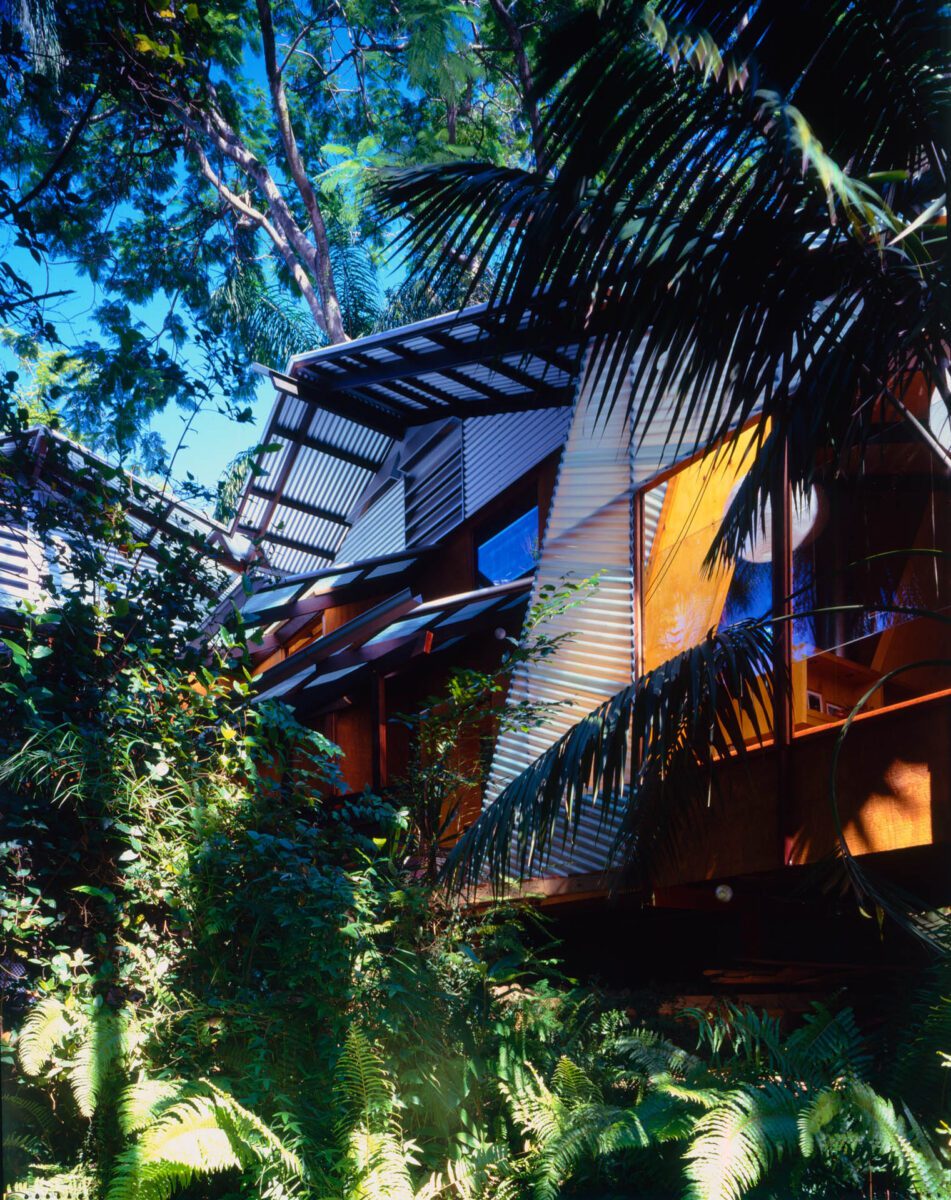
Tropical is a word that evokes distinct imagery: sun-drenched beaches, swaying palms, lush foliage, fruity cocktails and brightly patterned shirts. Yet, the tropics are not a monolith. The vast region, roughly stretching between the Tropic of Cancer and the Tropic of Capricorn, encompasses 125 countries and territories, and a variety of different ecosystems. It covers 40% of the Earth’s total surface area, and hosts approximately 80% of its biodiversity. Beyond the stereotypical holiday vision is a huge tapestry of histories, cultures – and, notably, a rich architectural legacy receiving new attention.
Tropical Modernism emerged in the mid-20th century, combining modernist architectural principles with vernacular traditions. In 2024, the movement was surveyed in a major show at the V&A in London; it focused on how Ghana and India, following independence, adopted the style as a symbol of progressiveness, distinct from colonial culture. Now, The Iconic Tropical House by Patrick Bingham-Hall presents 45 houses across northern Australia, Bangladesh, India, Indonesia, Malaysia, Singapore, Sri Lanka, Thailand and Vietnam
The book reflects on five decades of architecture, situating these homes within their wider context. It argues that climate, colonisation, modernism, geopolitical shifts, rising prosperity – and even the advent of air-conditioning after World War II – have together shaped a specific architectural language. Bingham-Hall is based in Sydney, Australia, and has published extensively on architecture, design, landscape and urban planning. His titles include WOHA: New Forms of Sustainable Architecture, offering insight into one of Singapore’s most dynamic studios. We sat down to discuss the new book.
A: What do we mean when we talk about a “tropical house”? Has the meaning of the term evolved over time?
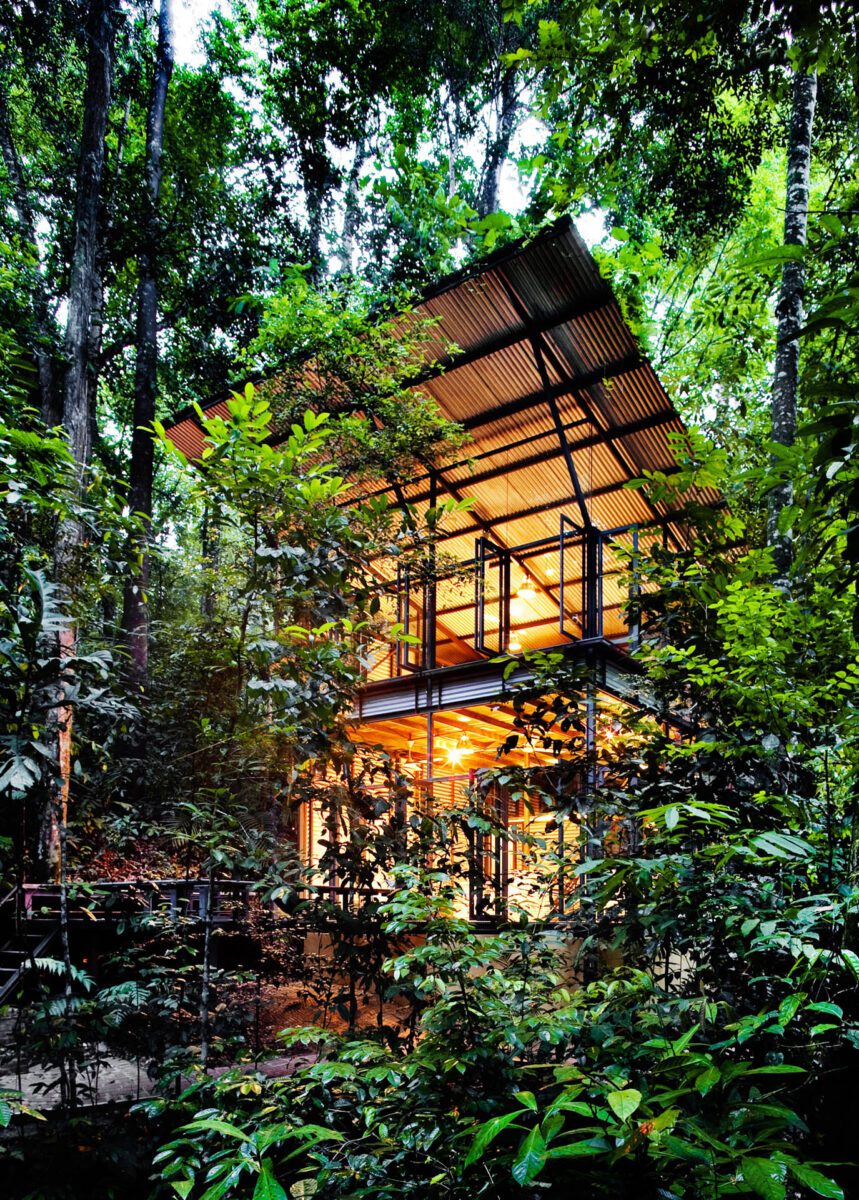
PBH: The image of the tropical house has always been something of a romantic notion: of a languorous life on the veranda beneath slowly twirling fans. But the architecture has always been derived from the need for optimal environmental performance. The tropics can be overwhelmingly hot and very wet. A badly designed house will be extremely uncomfortable. The changes have been technological rather than structural – steel and concrete are more durable than timber and mudbrick – and the architecture has become increasingly focused on the urban condition, not the tropical idyll.
A: This publication surveys 45 examples, spanning five decades. How did you approach the process of curation?
PBH: I wanted to feature house designs that had been genuinely influential – innovative and pioneering – rather than flashy or opulent. The intention of the book, my historical thesis if you like, was that a path of cross-fertilisation could be tracked from the 1970s, when the shackles of Euro-modernism were first loosened by a handful of architects. They were mainly Australians, some of whom gravitated to Bali and met up with Geoffrey Bawa, a Sri Lankan architect often referred to as the leader of the Tropical Modernist movement. A process of architectural evolution then spread across the region. I tried to be as objective as possible with the selections and not be swayed by rhetoric: I had already visited and photographed many of the houses over the years, and I then took time out to fill the gaps and cover the most recent work
A: Are there recurring principles that unite the buildings?
PBH: I wrote in my introduction to this book that, “in the tropics, there is nothing new under the sun.” Singapore-based architect Guz Wilkinson points out: “You just need cross ventilation, overhangs, plants and water bodies. You can attribute that to learning from the vernacular, but really … it’s just common sense.” His house designs are most conspicuously distinguished by their expansive roof-forms, and by the absence of enclosure: tenets which are echoed across the region. C Anjalendran in Sri Lanka describes his spacious courtyard houses as art galleries with gardens, whilst Ernesto Bedmar, an Argentinian émigré to Singapore, confessed: “I stumbled upon a profound architectural precept – only the roof and columns are essential. We can live without the rest.”
A: What are some of the cultural, historical or social conditions that gave rise to these architectural approaches?
PBH: I needed to take many factors into account when covering such a demographically diverse part of the world, particularly with regards to the last 50 years. There is an appreciable architectural unity to the houses of the region, stretching from western India to Indonesia and northern Australia, but in historical and cultural terms, the differences were quite emphatic. The architecture, no matter how it was financed or aestheticised, was always subservient to the climate: the environmentally friendly attributes of the bungalow (as formally prescribed by the East India Company in the 17th century) were both broadly colonial and specifically localised in their origins, as were the elevated Malay houses, the Thai teak houses, and even the timber-and-tin structures of outback Australia. Geopolitics has dictated the recent emergence and evolution of domestic architecture across the region – some houses were not designed until the clientele (an affluent middle-class) had the wherewithal to pay for them.
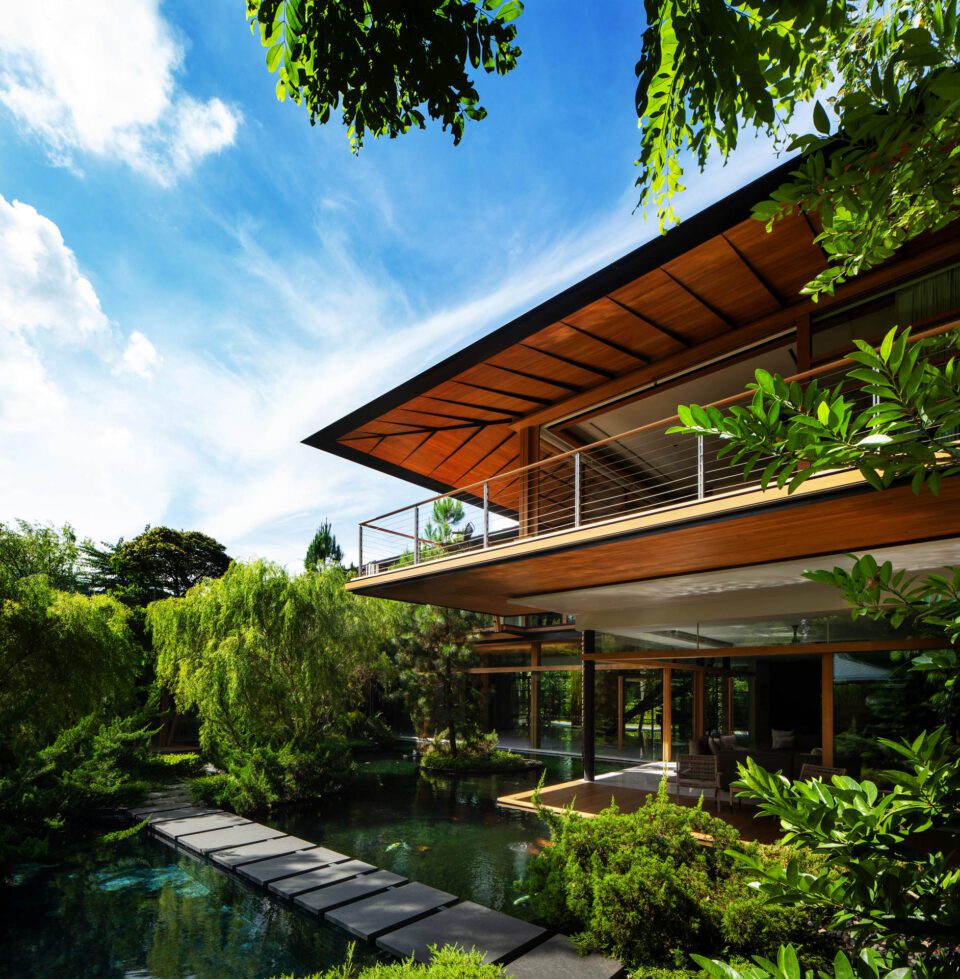
A: Close relationships with surrounding nature seem to be central, especially in Singapore’s Water Courtyard House by Guz Architects, or Touching Eden House by Wallflower Architecture + Design. Why is this the case?
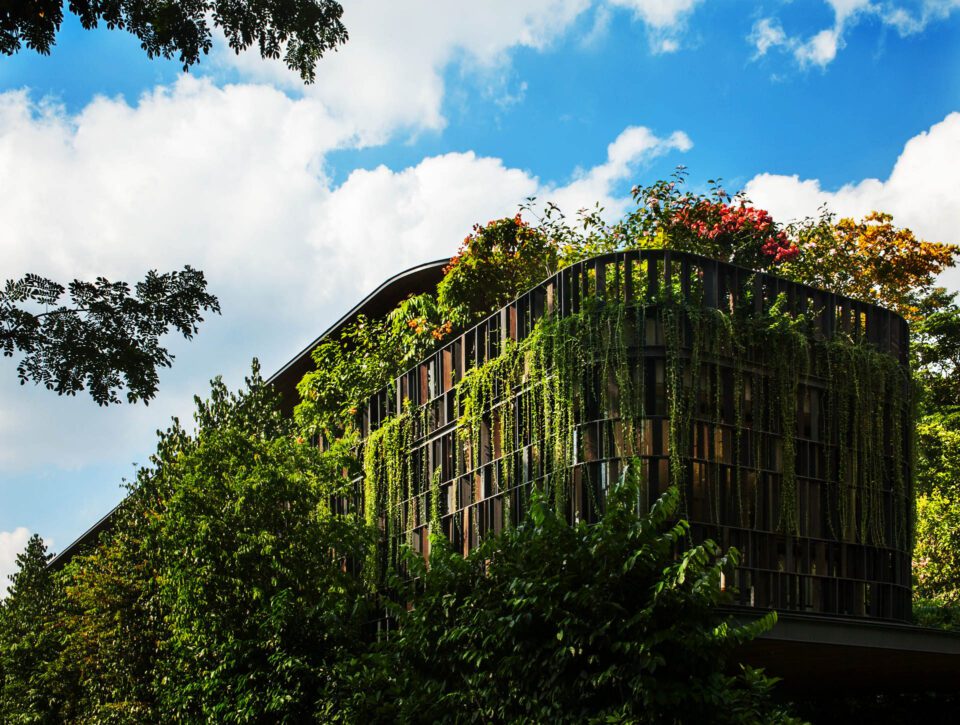
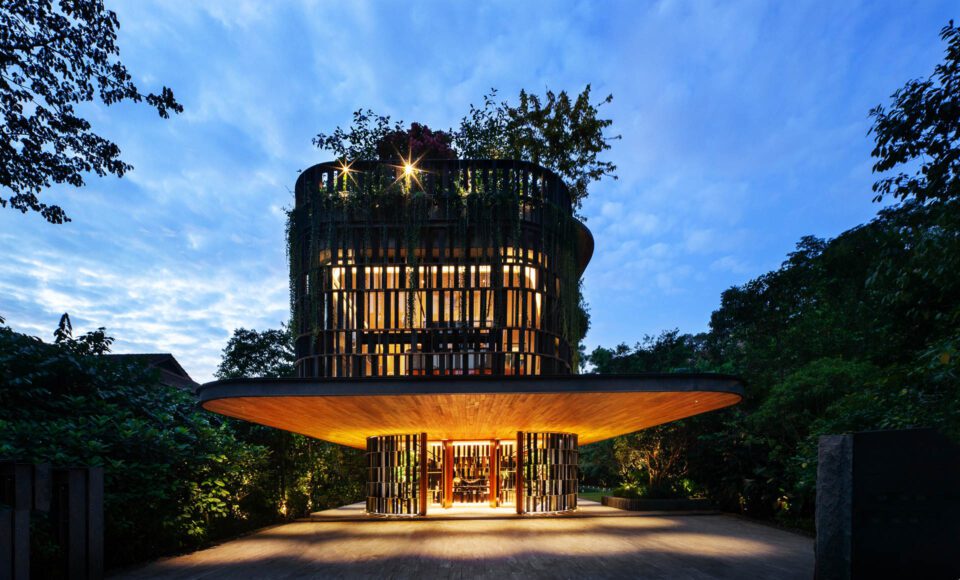
PBH: You can hardly avoid it: things grow so fast in the tropics. The virtue of the indoor / outdoor relationship was codified in the mid-20th century, with specific reference to the likes of Richard Neutra, and its modernist stylings were enthusiastically adopted by local architects from the 1980s onward. However, with those more recent Singapore houses by Guz Architects and Wallflower, the demarcation between inside and out – the estrangement – had been effectively abandoned, and the architecture is not much more than a climbing-frame for the landscape. As Ng Sek San, the much-venerated landscape architect, observes: “Softscape is all that matters in architecture these days, the forms and the beauty are in the trees and nature. The hardscape and the new buildings, they’re not the architecture anymore.”
A: What sustainable strategies do these projects employ?
PBH: I tried to include houses directed by passive design principles – comprehensive shading and cross-ventilation – and I have been increasingly intrigued by the efforts made to reduce the amount of embodied carbon, and to minimise the greenhouse emissions from construction materials. As part of his Sekeping project in Malaysia, Ng Sek San reconfigures generic, rundown housing by recycling discarded bits and pieces in a judicious and joyful fashion; Boonserm Premthada’s house in Bangkok was built with bricks made from the residue found in coal-fired power plants; and the Nisarga house by Wallmakers in Kerala, India, was constructed from locally salvaged debris mixed with soil found across the site.
A: You also documented the book’s buildings. What’s the story behind your dual role as author and image-maker?
PBH: I had always been a writer, but it didn’t really appeal as a career choice, so in my early 20s I drifted into photography. I quickly became fascinated by architecture, about which I had known absolutely nothing. I achieved a degree of success – my work was being used in magazines and books – but I got fed up with the “glass ceiling” of my involvement: I had spent days on site, taking photos of every aspect of a building, but somebody else would take over the critical commentary. So, I decided to write. That has gone pretty well. I’ve written something like 30 books. As an architectural photographer, writer and publisher: I need to illustrate the text and explain the building, whilst always remembering that the architecture is more important than the imagery.
A: Which houses stood out the most during your travels?
PBH: To be honest, the most memorable visits were to those far-flung places that lived up to the romantic ideal. The Telegraph Pole House, sited on the top of a hill in Langkawi, looking west over the mountains and the sea; the isolated Stamp House, surrounded by the ranges of the Daintree rainforest in Far North Queensland; and, of course, Geoffrey Bawa’s sublime Lunuganga estate in Sri Lanka. In a more prosaic sense, I was profoundly inspired by little gems in overcrowded cities, such as: Studi-o Cahaya, by Adi Purnomo in Jakarta; Aurapin House, by Boonlert Hemvijitraphan, and Back of the House, by Boonserm Premthada, both in Bangkok; and Labri House, by Nguyen Khai in Hué, Vietnam.
A: What challenges are designers facing at the moment?
PBH: The future of architecture, never mind the design of tropical houses, is over-ridden by the great existential dilemma of climate change. Vinu Daniel from Wallmakers Architects, based in the southern Indian city of Trivandrum, states that: “In place of questions like ‘What should we build?’, we need to be asking, ‘Should we build?’” Truly sustainable architecture cannot be facilitated by the continued construction of houses, but we all know that it’s going to happen. Ethically enlightened architecture is increasingly becoming standard, and one consequence may well be the aesthetic reconsideration of the urban environment. For all the rosetinged wondrousness of the arcadian idyll, tropical Asia is consummately urbanised, and, in most of its manifestations, depressingly so: in their chaotic and overheated dysfunction, the Asian mega-cities are quite unlike anything seen before.
A: Looking to the future, which studios should we watch?
PBH: The green shoots of resilience and renewal are sprouting, and we should perhaps look most instructively to the younger architects of Vietnam and Thailand, who are tangibly producing new forms of beauty. Nguyen Khai, architect of the glass Labri House in Hué – which is protected by trees, creepers, vines and shrubs – says: “The core value is ‘close to nature’. There are other creatures living inside this shelter, not just humans.” And it’s hard to argue with that.
The Iconic Tropical House ,Thames & Hudson
Published September 2025
Words: Eleanor Sutherland
Image credits:
1. Rex Addison, Addison House, Brisbane, Australia, (1999). © Patrick Bingham-Hall.
2. Seksan Design, Three Sekeping Houses, Kuala Lumpur, Malaysia, (2016). © Patrick Bingham-Hall.
3. Wallflower Architecture + Design, Touching Eden House, Singapore. (2023) © Patrick Bingham-Hall.
4. Wallflower Architecture + Design, Touching Eden House, Singapore. (2023) © Patrick Bingham-Hall.
5. Guz Architects, Water Courtyard House, Singapore, (2022). © Patrick Bingham-Hall.


