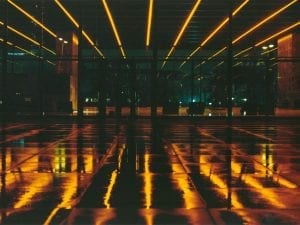
Museums are entering a period of profound transformation. Across contemporary culture, audiences increasingly seek encounters that are participatory, immersive and responsive, challenging institutions built around the traditional separation between viewer and artwork. Digital practice has accelerated this shift, introducing environments where images move, spaces adapt and meaning emerges through interaction. Yet the expansion of immersive art has also raised difficult questions: does technology deepen artistic experience, or does it simply create more elaborate forms of spectacle? The evolution of teamLab Borderless over time offers a compelling response, proposing a museum model where perception, architecture and human presence remain in constant negotiation with each other.
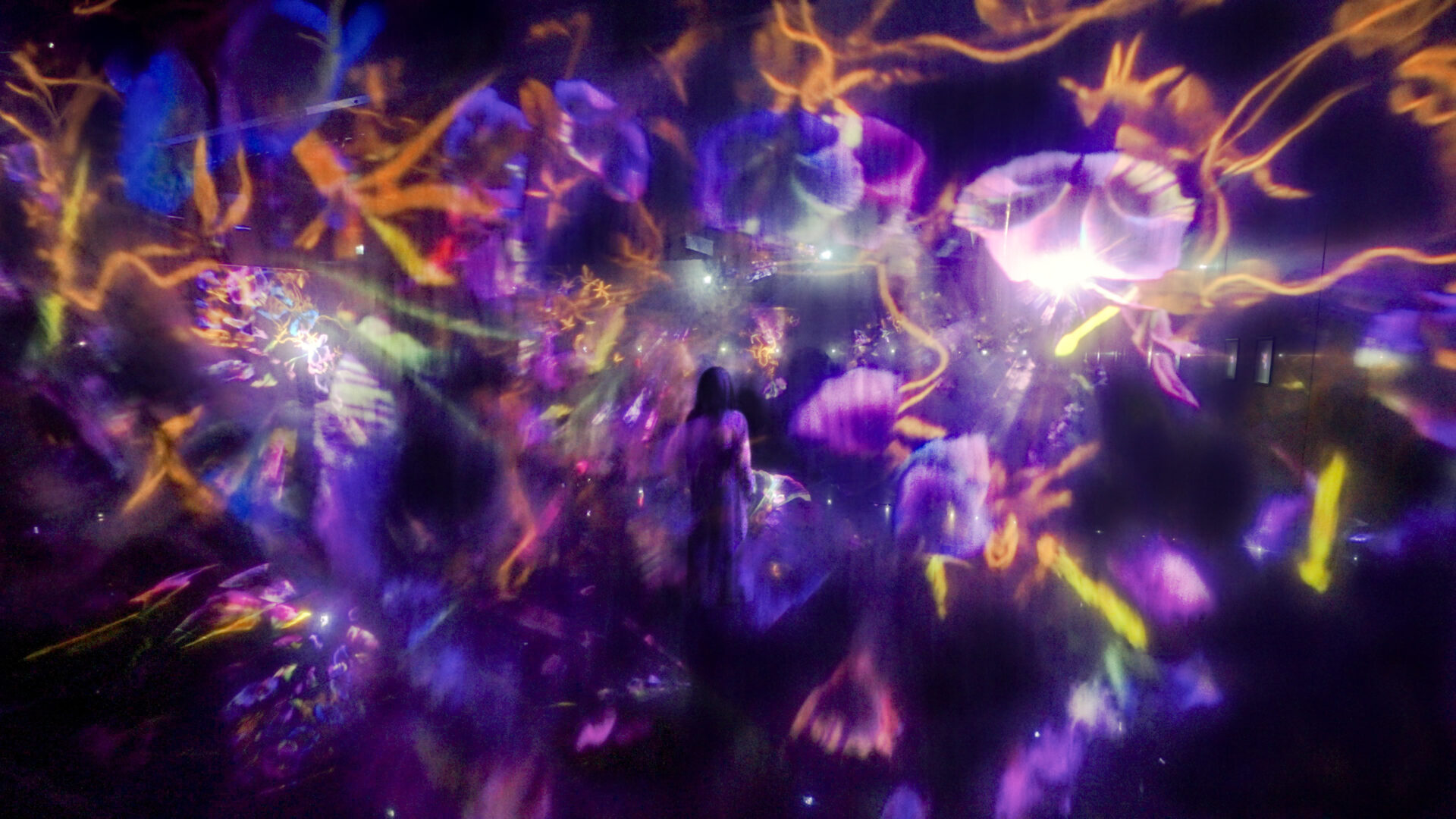
A field of illuminated flowers provides one of the first encounters inside Borderless. Projected petals spread across walls and floors before dissolving into waves of colour, while waterfalls change direction when visitors interrupt their digital flow. Birds migrate across architectural surfaces, disappearing through doorways before reappearing elsewhere, and rooms appear to establish communicate with one another through shifting visual narratives. The experience itself refuses the stability associated with traditional exhibition formats. Visitors do not stand outside the artwork looking in; they become an integral part of a constantly changing environment shaped by movement, proximity and collective presence.
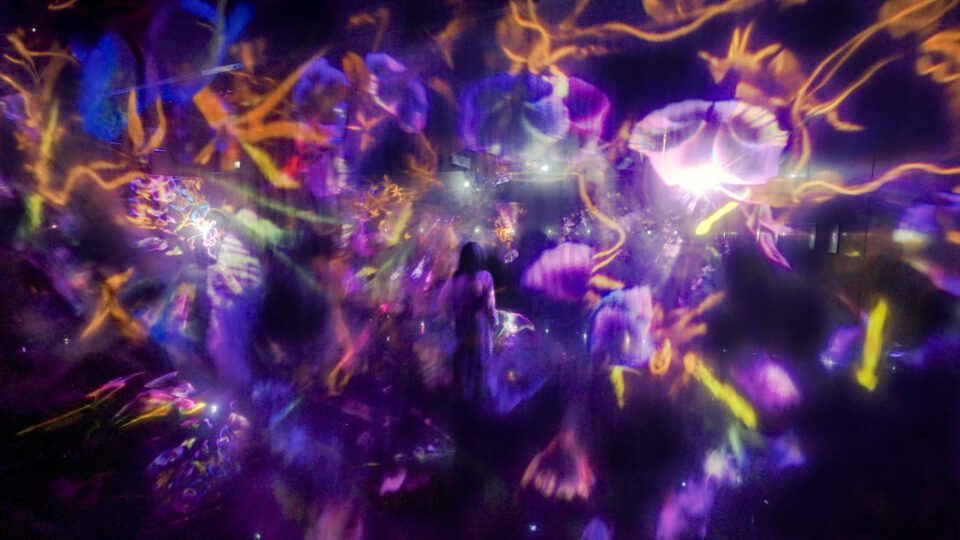
Few contemporary practices have explored the instability of perception as persistently as artists working with light, technology and spatial experience. James Turrell transformed architectural environments into investigations of seeing itself, using light to reveal the relationship between consciousness and physical space. Olafur Eliasson’s installations similarly examine how atmosphere, colour and scale influence human awareness, encouraging viewers to recognise their own role in constructing experience. teamLab extends this lineage into a computational landscape where images are not fixed compositions but evolving systems. The result, an environment in which perception becomes an active process instead of a passive response.
Immersive art now occupies one of the most debated positions within contemporary practice. Large-scale digital exhibitions are often criticised for prioritising immediate visual impact and encouraging audiences to consume artworks through photographs and online circulation. However, the strongest examples challenge that assumption by using technology to examine how people relate to one another and to their surroundings. Nicolas Bourriaud’s theory of relational aesthetics remains relevant here, particularly through its focus on social encounters as artistic material. Borderless develops this idea through a digital framework, where interaction does not simply accompany the artwork but determines how it unfolds.
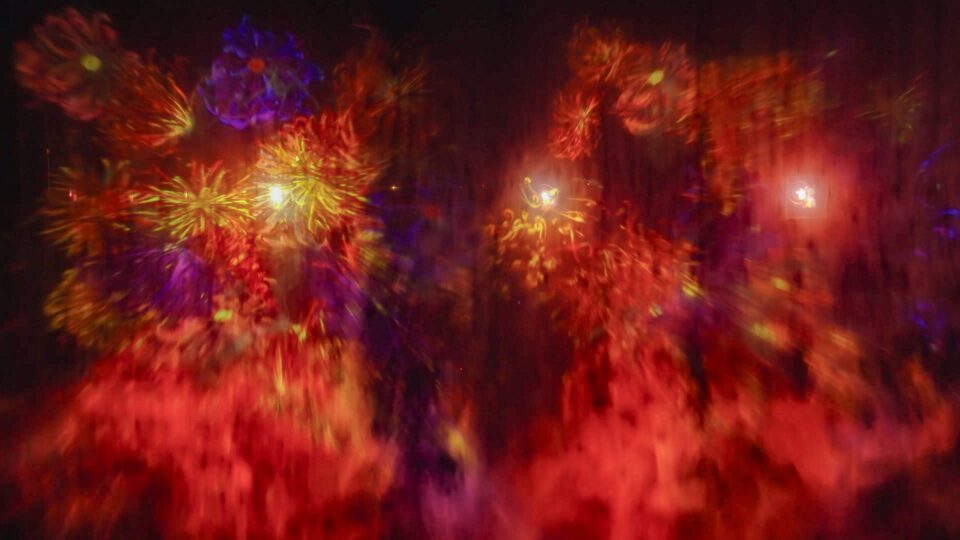
The absence of a conventional exhibition route is one of Borderless’ most significant curatorial decisions. Visitors are not guided through a sequence of separate works with fixed interpretations; instead, installations overlap, extend beyond their designated spaces and create unexpected connections. This transforms navigation into a creative act, allowing discovery to replace instruction. Curators become choreographers of experience, shaping movement and atmosphere without imposing a single narrative. The museum operates as a living system, where spatial relationships are altered by those who enter it.
Human presence has become a central concern for many artists exploring the possibilities of digital technology. Rafael Lozano-Hemmer’s responsive installations translate physical actions into changing patterns of light, sound and data, revealing the invisible connections between bodies and technological systems. Similar questions emerge within Borderless, where individual visitors influence environments that are simultaneously shaped by hundreds of others. A person’s movement may trigger a visual transformation, yet the larger experience depends upon a collective choreography. Participation becomes less about personal control and more about recognising one’s place within a shared network.
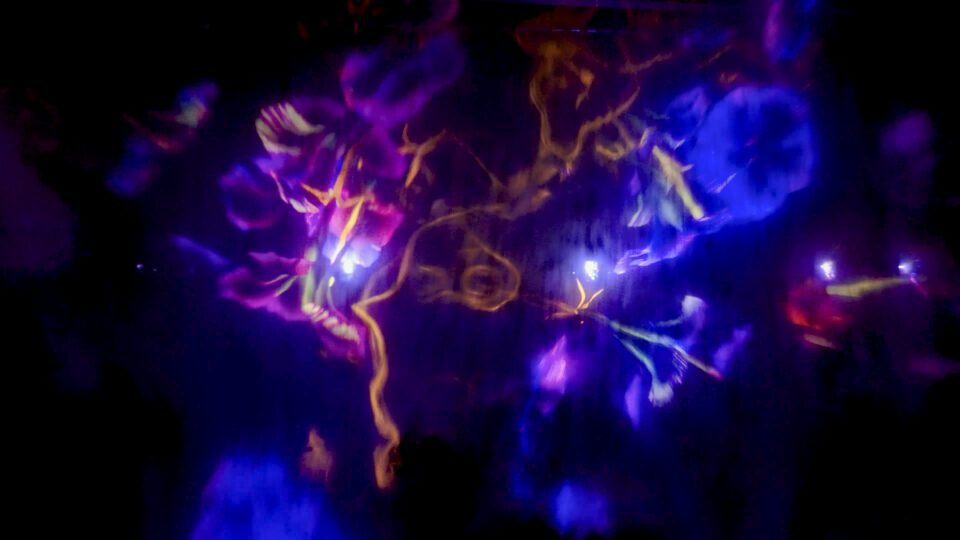
At a moment when everyday life is increasingly organised through screens, Borderless returns attention to the physical body. The museum’s digital environments may appear weightless, but they depend entirely upon physical movement, spatial awareness and encounters between strangers. Visitors slow down, change direction, follow unfamiliar paths and become aware of how their actions affect the environment around them. Technology here does not remove the body from experience; it makes the body more visible. The digital becomes a means of reconsidering physical presence rather than escaping it.
The relocation of Borderless from Tokyo’s Odaiba district to the Toranomon-Azabudai development introduces another layer to its evolving identity. Situated within one of the city’s most ambitious urban regeneration projects, the museum becomes part of a wider conversation about how cultural spaces shape contemporary cities. Museums are increasingly expected to function as active environments within urban life, encouraging connection, exchange and unexpected encounters. This new context reinforces teamLab’s interest in dissolving boundaries between art, architecture and everyday experience. The building itself becomes part of the conceptual framework, extending the question of borderlessness beyond the gallery.
Millions of visitors have experienced Borderless since its initial opening, establishing teamLab as one of the most influential forces within immersive art today. Its international expansion demonstrates the global appetite for digital environments that offer forms of engagement beyond the typical conventional viewing. Yet the significance of the project lies beyond its popularity or technological ambition. The challenge facing immersive practice is maintaining its valued artistic complexity as it reaches increasingly broad audiences. Borderless remains compelling because its appeal is firmly rooted not only in visual wonder but in deeper the questions surrounding perception, connection and collective experience.
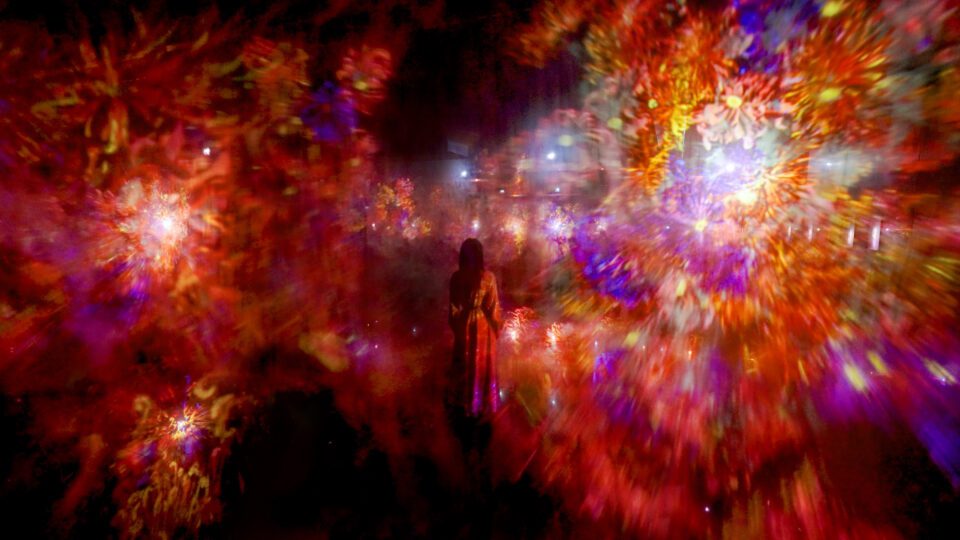
Contemporary debates around digital culture often focus on speed, automation and virtual communication, yet Borderless offers a different relationship with technology. Its systems are complex, but their purpose is simple: to encourage attention. A visitor encountering a field of digital flowers is not witnessing a static image rendered through advanced software; they are entering a moment that exists because of their presence and disappears as circumstances change. Meaning emerges through human and machine exchange, individual, group, image and environment. This instability becomes the defining quality.
The museum of the future may not be defined by larger screens or increasingly sophisticated technical effects. Its importance will depend on how successfully it creates spaces for reflection, interaction and shared experience within an increasingly fragmented culture. teamLab Borderless suggests that digital art can offer more than visual immersion; it can reshape how audiences understand their relationship with space and with one another. The project ultimately returns the museum to one of its oldest purposes – creating encounters that alter perception. In doing so, it proposes that the most radical use of technology may be its ability to make people more aware of the world they already inhabit.
Find out more about teamLab Borderless: MORI Building DIGITAL ART MUSEUM: teamlab.art
Words: Simon Cartwright
Image Credits:
1&3. A Hundred Chrysanthemums Scattering, Returning to the Flow_Azabudai
2. Main_Morning Glories on Vines of Light Scattering, Returning to the Flow_Azabudai
4. Morning Glories on Vines of Light Scattering, Returning to the Flow_Azabudai
5. Main_A Hundred Chrysanthemums Scattering, Returning to the Flow_Azabudai