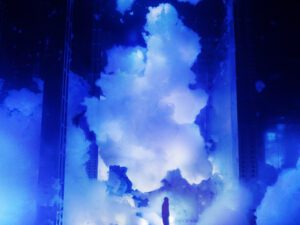
This winter, Tate St Ives presents a major new exhibition from Lithuanian-born artist Emilija Škarnulytė, best-known for moving-image works that blur the boundaries between documentary and the imaginary. The show features films and immersive installations that explore the fluidity of time and the invisible systems shaping contemporary life. The building’s size allows Škarnulytė’s work to unfold as a fully immersive environment. Architectural structures in the gallery will invite visitors to view a single film from a series of different perspectives and scales, from the macro to the micro. Here, Škarnulytė foregrounds the ways mythology and technology can intertwine as a transcendental force. Each piece explores climate change, nuclear energy, fantasy and folklore, traversing the poetic, personal and political.
Škarnulytė takes the perspective of a “future archaeologist,” navigating spaces that we do not readily see, such as Cold War military bases, mining sites, decommissioned power plants and deep-sea data storage units. She reveals them as relics of a lost human culture, in which technological advancements have brought about a future laden with environmental harm and human losses. The artist takes on the role of the protagonist in her films, positioning herself as a hybrid, almost mythical creature, swimming effortlessly through various bodies of water. Other works reflect on notorious oceanic “dead zones,” caused by a lack of oxygen, whether from industrial processes or climate change.
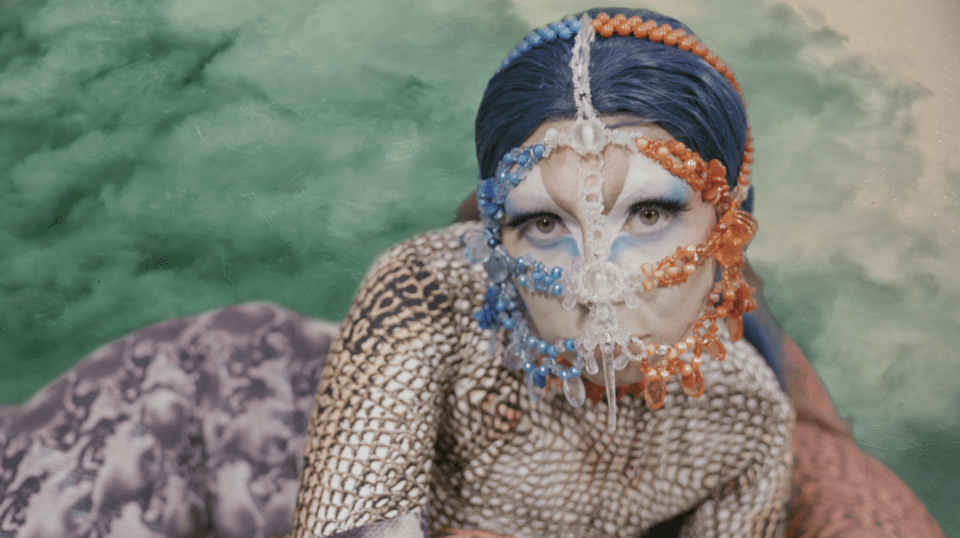
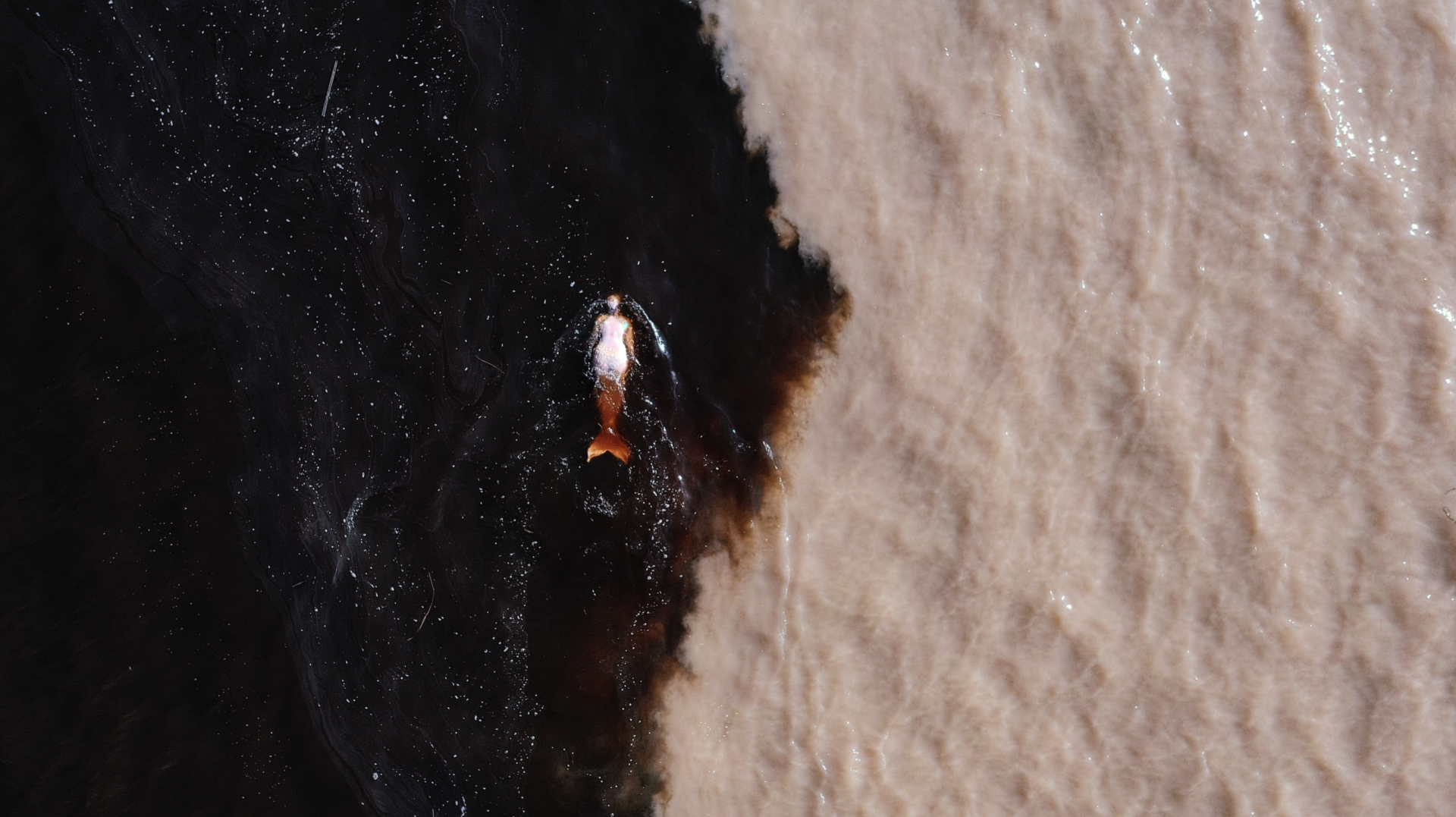
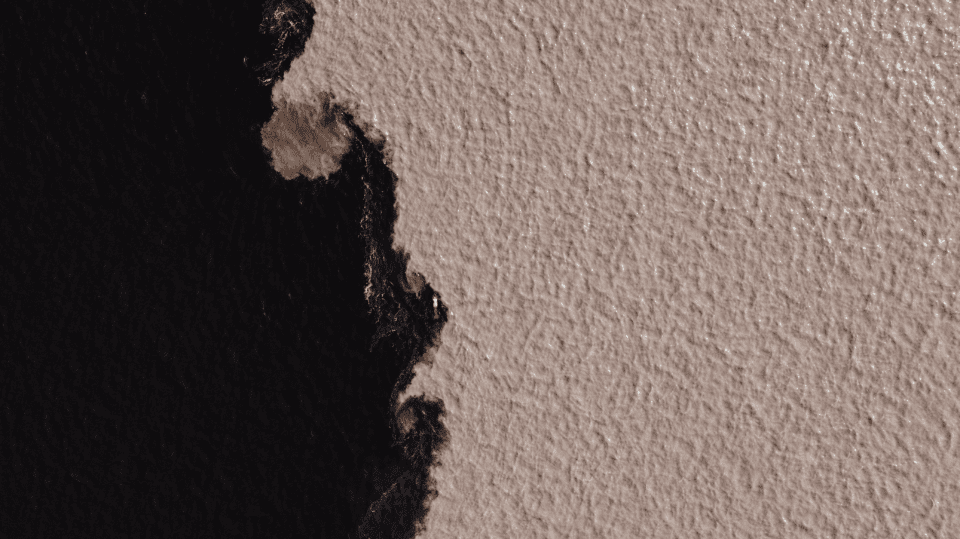
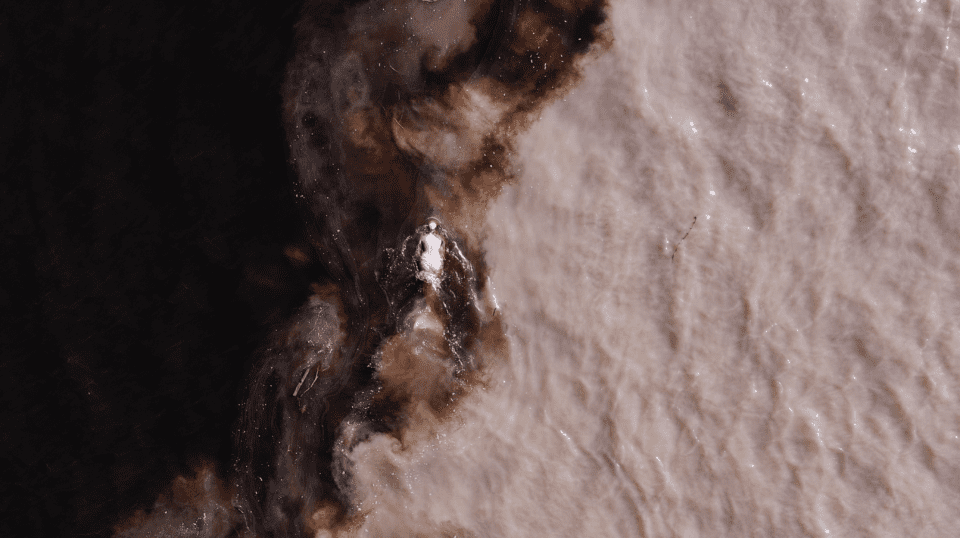
Æqualia (2023) is the third in a trilogy of films featuring an imagined pantheon of feminine deities. The piece was filmed in various confluences of rivers, sites historically used as centres for extraction. In it, the artist embodies a vision of a post-human chimera – part pink-river dolphin, part siren – swimming through the waters of the Amazon Basin. She glides through the six-kilometre confluence where the milk-white Rio Solimões, thick with silts and clays from the high Andes, meets the Rio Negro, darkened by the decay of lowland forests. The sight of the two waters colliding infers the complexity of our reality. It hints at the blending of past, present and future, as well as the destructive forces of capital on the region’s ecology.
Also on display at Tate is Aldona, a film that returns to the personal. Visitors follow Škarnulytė’s grandmother, Aldona, on her daily walk through Grūtas Park, a sculpture garden of Soviet-era statues in Southwest Lithuania. In the spring of 1986, Aldona lost her vision and became permanently blind. Doctors claimed that the nerves in her eyes had been damaged, most likely due to the explosion of the Chernobyl nuclear power plant. Audiences are allowed into her world, as she traces the faces and bodies of former Soviet leaders, scoping out their features to orient herself in the world without sight. The project exemplifies what Škarnulytė does best: reframing a wider political story through the intimate experiences of a single person. Her work reminds us that behind every major historical moment stand real lives.

Together, Škarnulytė’s works move effortlessly from the huge, existential issue of our times to the personal ramifications of these changes. Her films encourage us to look more closely at the infrastructures, ecologies and systems that shape our world, revealing the traces we leave behind. The artist uses immersive imagery and embodied performance to remind audiences that we are not removed from the world, we are deeply engrained in the histories, realities and imagined futures we all share.
Emilija Škarnulytė is at Tate St Ives until 12 April 2026: tate.org.uk
Words: Emma Jacob
Image Credits:
1. Emilija Škarnulytė, Æqualia 2023. Courtesy of the artist. Commissioned by Canal Projects and the 14th Gwangju Biennale.
2. Emilija Škarnulytė, still from Æqualia 2023. Courtesy of the artist.
3. Emilija Škarnulytė, Riparia 2023. Courtesy of the artist. Co-produced with Ferme-Asile and Taurus Foundation for Art and Science.
4. Emilija Škarnulytė, still from Æqualia 2023. Courtesy of the artist.
5. Emilija Škarnulytė, Rakhne 2023. Courtesy of the artist. Co-produced with HenieOnstad Triennial.