Art has the capacity to challenge how society understands itself. Climate instability, contested histories, cultural identity and technological change demand new ways of seeing the world. ARoS Aarhus Art Museum’s 2027 exhibition programme brings these concerns together through ambitious installations, historical retrospectives and international commissions. Its exhibitions consider how artistic practice can expose social structures, question established narratives and imagine alternative futures. The programme proposes a model of the museum as a space for critical thought and cultural exchange.
This ambition builds on the 2026 opening of James Turrell’s As Seen Below, a significant development in the museum’s engagement with installation art. Concerned with light, perception and spatial experience, Turrell’s work challenges the assumption that vision provides a stable account of reality. His installations make audiences conscious of the relationship between seeing and experiencing, revealing how perception is shaped by its surroundings. Such questions resonate within a culture increasingly mediated by digital imagery, screens and artificial intelligence. At ARoS, immersive art is an opportunity to reconsider how we interpret the world and the assumptions underpinning our understanding of it.
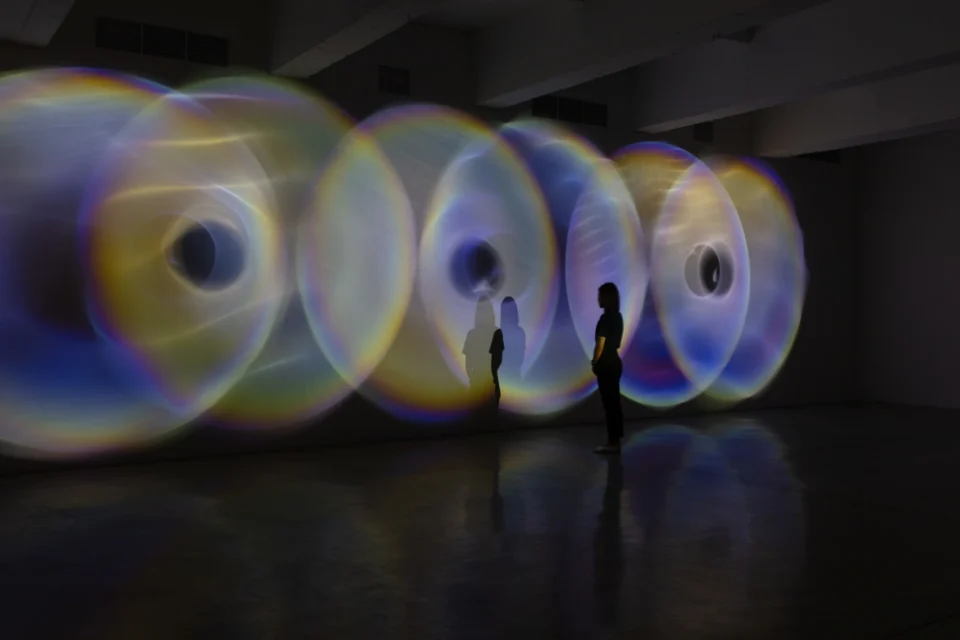
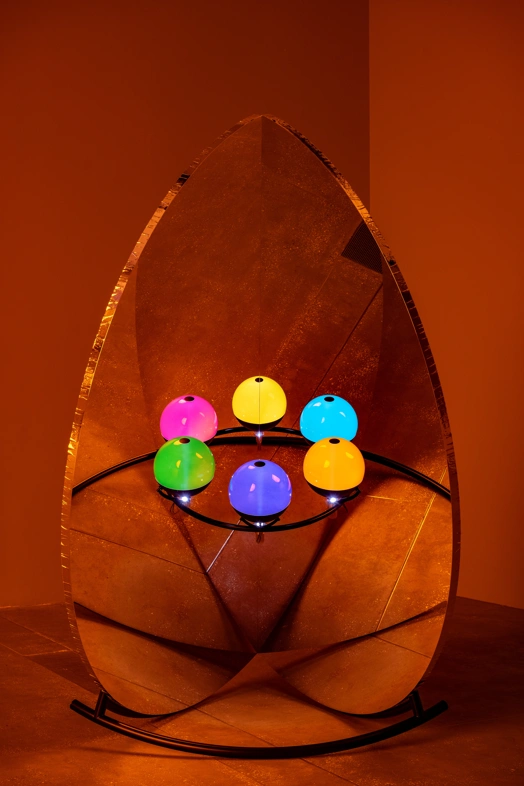
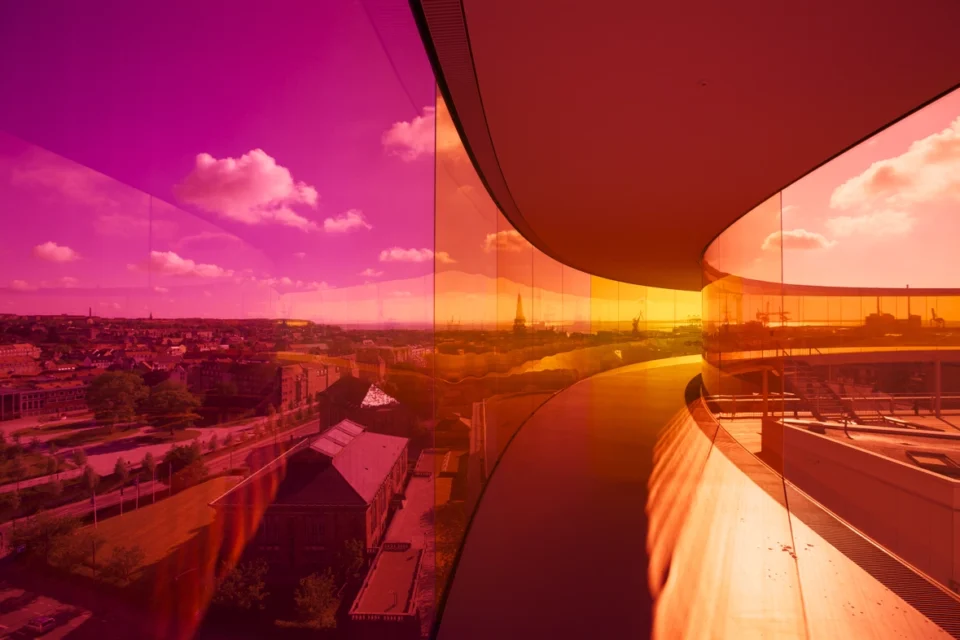
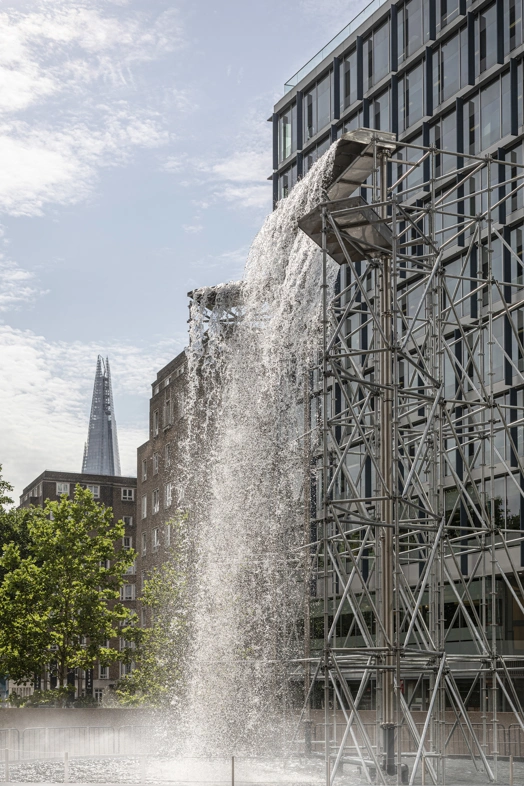
Environmental instability provides one of the programme’s most urgent themes. Opening in autumn 2027, Thin Ice will be a major solo exhibition by Danish-Icelandic artist Olafur Eliasson. A new work, also titled Thin Ice, will premiere as part of the presentation, extending his longstanding engagement with climate and ecology. Eliasson frequently translates complex environmental questions into physical experiences, encouraging audiences to recognise their position within larger natural systems. His practice makes ecological concerns tangible, moving beyond statistics and political rhetoric to consider the emotional and perceptual dimensions of environmental change.
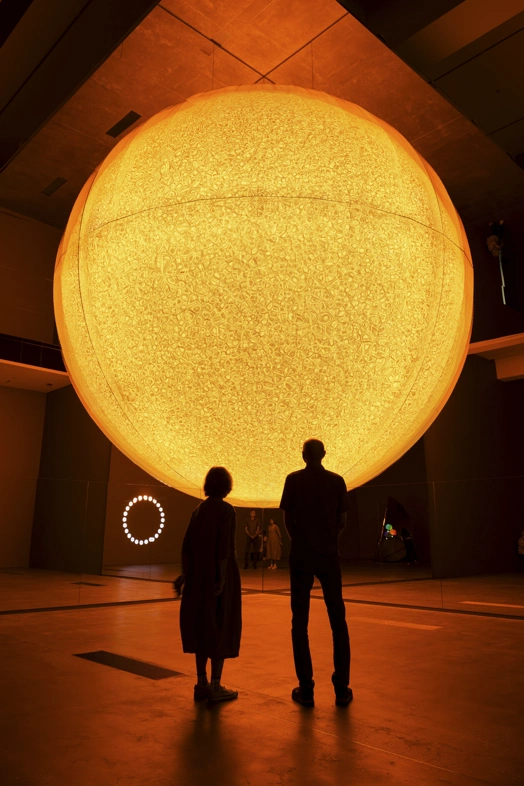
The exhibition also inaugurates Olafur Eliasson × ARoS – Shared Futures, a long-term collaboration between Studio Olafur Eliasson and the museum. ARoS already holds one of Europe’s largest collections of the artist’s work, providing a significant foundation for this relationship. Rather than concentrating on individual exhibitions, the partnership suggests an ongoing exchange between artistic practice and institutional thinking. Long-term collaborations can create valuable conditions for experimentation, particularly when they support new commissions. Here, the idea of shared futures connects the museum’s ambitions with wider questions of sustainability and collective responsibility.
Cultural identity and historical memory provide another important strand. New site-specific commissions by Lap-See Lam and Julien Creuzet will explore the relationship between personal narratives and collective histories. Both artists represented their respective countries at the 2024 Venice Biennale – Lam for the Nordic countries and Creuzet for France. Their practices examine how migration, displacement and cultural exchange shape experiences of belonging. Through layered, sensory environments, they challenge the idea that identity is fixed, presenting it as something negotiated through memory and movement.
These concerns take different forms within the work of each artist. Lam explores Chinese diasporic experience, examining how stories and cultural identities are preserved, transformed and transmitted across generations. Her practice draws attention to the relationship between memory and representation. Creuzet, meanwhile, draws on Caribbean histories and postcolonial experience, working across sculpture, sound, moving image and installation. Together, their commissions invite audiences to consider whose histories are represented within cultural institutions and how those narratives might be reconsidered.
The politics of representation become pronounced in the first solo exhibition in Denmark dedicated to Paula Rego (1935 – 2022). One of the most influential figurative artists of her generation, Rego developed a visual language addressing gender, authority and social convention. Her paintings and pastels draw on fairy tales, folklore and domestic narratives, transforming familiar situations into explorations of power. Female figures occupy complex positions within these compositions, moving between vulnerability, resistance and control. Following major retrospectives at Tate Britain and MUNCH in Oslo, ARoS brings renewed attention to an artist whose examination of patriarchal structures remains deeply relevant.
Rego’s presentation also raises important questions about the continuing significance of figuration within contemporary art. While immersive technologies and installation increasingly dominate discussions of artistic innovation, painting and drawing retain considerable political and psychological force. In Rego’s work, the human body becomes a site upon which social expectations and unequal relationships are inscribed. Her practice connects with the programme’s wider interest in identity and agency, although her visual language differs considerably from Eliasson’s environmental installations. Such contrasts are essential to a programme that values intellectual connections without imposing a single aesthetic.
Historical reassessment continues through a major retrospective of Danish artist Lene Adler Petersen. Spanning more than six decades, the exhibition examines a practice positioned at the intersection of personal experience and political engagement. Petersen’s work addresses gender, social structures and the possibilities of artistic resistance. The presentation also marks the first major collaboration between ARoS and the National Gallery of Denmark (SMK). Bringing together two institutions to reconsider an important figure in Danish art, the exhibition highlights the importance of revisiting established narratives.
Feminist and experimental practices have frequently occupied complicated positions within conventional art-historical accounts. Institutional retrospectives therefore carry a responsibility beyond recognition, creating opportunities to reconsider how artistic histories are constructed. Petersen’s inclusion places earlier debates about gender and political action alongside contemporary investigations of identity and power. Her work demonstrates how artistic resistance can develop across different generations and cultural contexts. The retrospective consequently contributes to a broader programme concerned with the relationship between historical experience and present-day social questions.
Speculation provides a further perspective through Future Worlds, an exhibition exploring the intersection of science fiction and contemporary art. Technology, climate change and alternative realities form its conceptual framework. Science fiction has long offered artists a means of examining technological power, political organisation and the limits of human knowledge. Its relevance has intensified as AI and ecological instability challenge established narratives of progress. Within the gallery, imagined futures can become critical instruments for questioning the assumptions that underpin contemporary society.
The exhibition also creates an important connection with Eliasson’s environmental concerns and the programme’s wider interest in collective responsibility. Speculative art can expose the political and social structures that determine which futures are considered possible. Alternative worlds allow audiences to examine the consequences of existing systems from unfamiliar perspectives. This capacity to combine imagination with critical enquiry is increasingly important within contemporary cultural discourse. At ARoS, the future becomes a subject for artistic investigation rather than a distant or abstract proposition.
The connections between these exhibitions reveal a curatorial approach built around dialogue. Rebecca Matthews, Director of ARoS, identifies the opening of Turrell’s As Seen Below as an important step in establishing the museum as an international destination for installation art. The 2027 programme extends this ambition through Eliasson and a wider range of artists. Chief Curator Stinna Toft describes the curatorial vision as an attempt to build bridges between past, present and future. Both perspectives suggest an institution interested in creating encounters that extend beyond conventional exhibitions.
This approach is reflected in the balance between international commissions, significant historical presentations and institutional collaborations. The relationship with Studio Olafur Eliasson creates opportunities for sustained artistic exchange, while the partnership with SMK brings renewed attention to Danish art history. Meanwhile, the commissions by Lam and Creuzet introduce perspectives shaped by diasporic experience. These different strands are not treated as isolated curatorial interests. Instead, they contribute to a wider examination of how art engages with the conditions shaping contemporary life.
Museums today face responsibilities that extend well beyond preserving collections and presenting important artworks. Questions of representation, sustainability, institutional authority and public engagement have become central to discussions about their cultural relevance. ARoS’s 2027 programme suggests that these concerns can be addressed through ambitious exhibition-making. Its artists examine the relationship between individual experience and larger social, environmental and political structures. The resulting programme positions the museum as a participant in contemporary debate.
What makes this vision particularly compelling is its refusal to separate artistic innovation from historical and social responsibility. Rego and Petersen bring the politics of earlier generations into dialogue with contemporary debates, while Eliasson, Lam and Creuzet examine the cultural and environmental conditions shaping the present. Turrell’s exploration of perception and Future Worlds’ speculative possibilities further expand the terms of this discussion. Together, these practices demonstrate how exhibitions can create connections between aesthetic experience and critical thought. ARoS offers a persuasive model for cultural institutions: not just places that reflect the world, but spaces that question its structures and consider how different futures might be imagined.
Explore the full ARoS 2027 Programme: aros.dk
Words: Anna Müller
Image Credits:
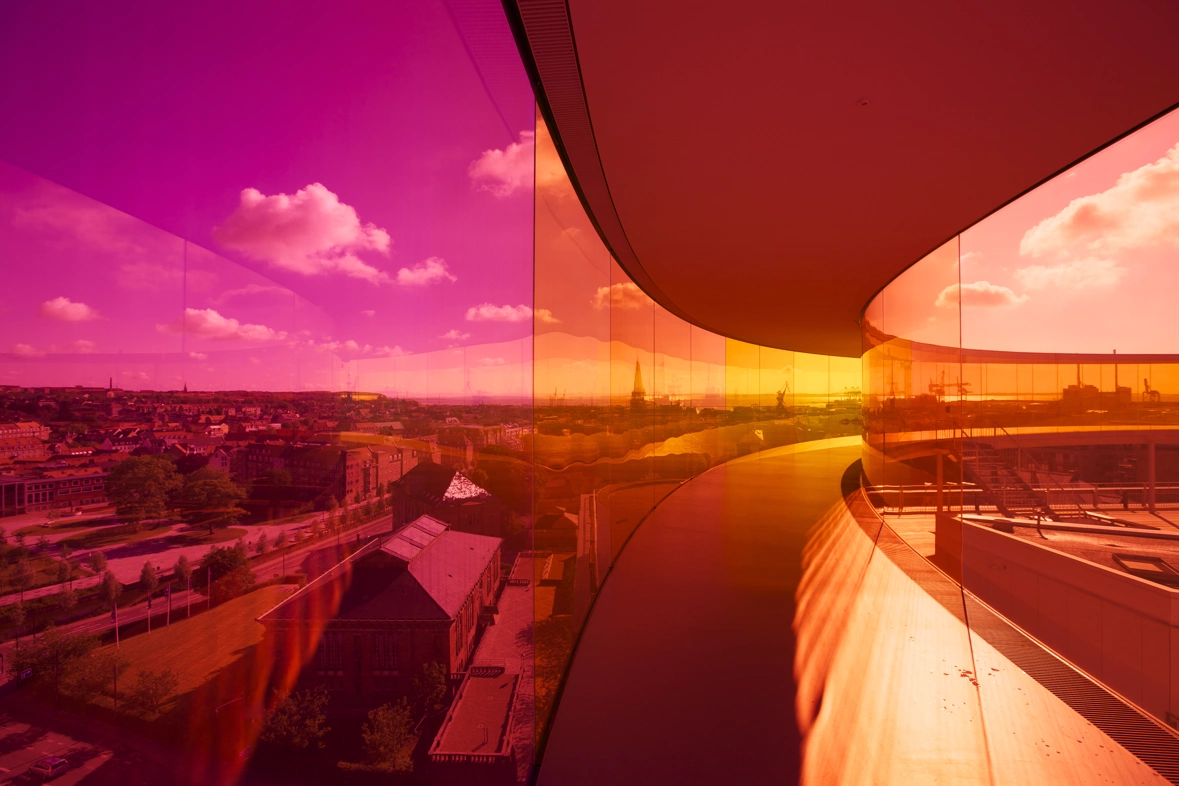
1&5. Olafur Eliasson, 2011. Your rainbow panorama.
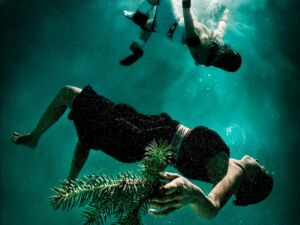
2. Olafur Eliasson, Presence, 2025.
3. Olafur Eliasson, Your Psychoacoustic light ensemble, 2024. Installation view: Your psychoacoustic ensemble, Tanya Bonakdar Gallery, New York, 2024. Photo: Pierre Le Hors. Courtesy of the artist: Tanya Bonakdar Gallery, New York © 2024 Olafur Eliasson.
4. Olafur Eliasson, There are no bad parts 2025. Installation view: Studoi Eliasson, Oberschöneweide, Berlin. Photo: Jens Ziehe.
6. Olafur Eliasson, Waterfall, 2019. Foto: Anders Sune Berg.