
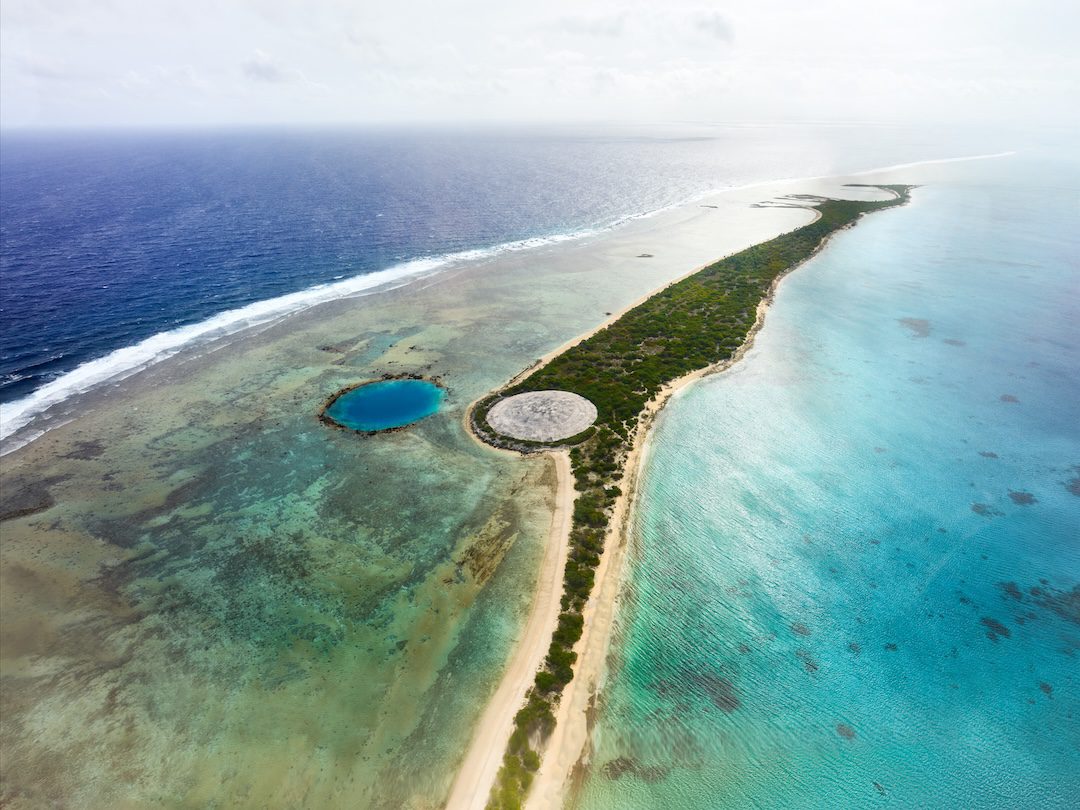
The Atomic Age began on 16 July 1945 in the New Mexico desert, when the USA detonated the world’s first nuclear weapon. Things would never be the same again. But the scientific breakthroughs that made this moment possible had been unfolding for decades. A new exhibition at Centre de Cultura Contemporània de Barcelona traces the atomic era back to the late 19th century, when discoveries about radioactivity began to revolutionise science. It argues that this new understanding of the atom – as a symbol of scientific progress, but also as a weapon of mass destruction – has had a profound effect on art, politics and thinking, whilst exploring how visual artists have responded to nuclear energy and its effects on the planet.
The first section of the exhibition, titled The Atom, begins in the 1890s, when scientists established that the atom “was not the ultimate element of matter, revealing a less solid and impenetrable reality than hitherto believed.” Radioactivity was discovered in 1896 by Henri Becquerel, whose findings were subsequently developed by Marie and Pierre Curie. This new understanding of reality is reflected in works by Hilma af Klint, who explored the existence of invisible dimensions by reconciling science, spirituality and mysticism. Meanwhile, radioactive substances were increasingly used in medicine, agriculture and consumer products, as shown in advertisements loaned to the CCCB by Musée Curie. They provide historical context for the Radium Girls, female workers poisoned in American clock factories in the 1910s and 1920s.
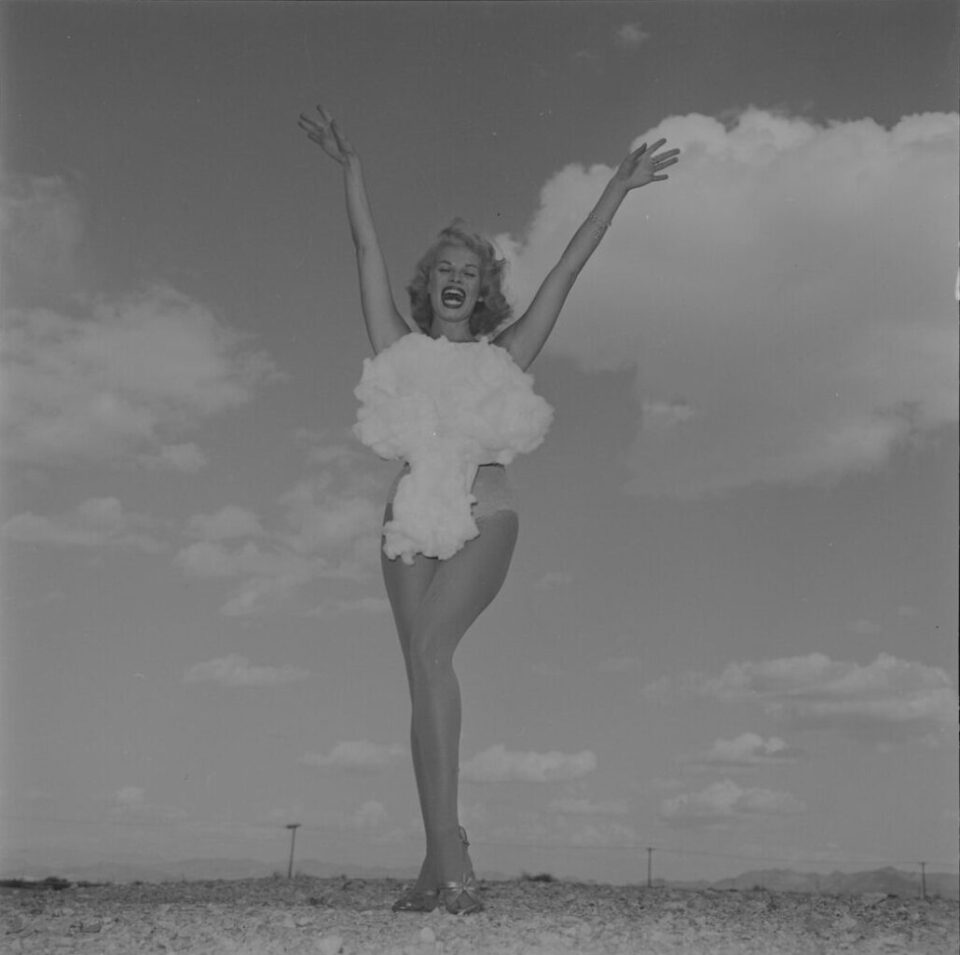
The devastating use of the atomic bomb against Japan by the USA in August 1945 marked a turning point in modern history. The Bomb features photographs of the Manhattan Project (the secret research programme that produced the first nuclear weapons) alongside images of testing that were used as propaganda. These are juxtaposed with works that remind us of the human consequences of Hiroshima and Nagasaki, including images captured on the ground by Yoshito Matsushige and drawings produced by victims. There are also paintings by iconic surrealist Salvador Dalí, as well as various interpretations of the omnipresent image of the “mushroom cloud.” These include a jarring depiction of “Miss Atomic Bomb”, pictured in the Las Vegas desert as part of a campaign for the Sands Hotel and Casino in 1957.
On 26 April 1986, reactor 4 of the Chernobyl Nuclear Power Plant exploded, causing the largest uncontrolled release of radioactivity in history. The final portion of the display, The Nuclearization of the World, examines changing perceptions of nuclear technology from the 1960s onwards. The disasters at Chernobyl – and more recently at Fukushima in 2011 – reinforced public opposition to nuclear energy, bringing renewed attention to the environmental and human costs of these technologies. At CCCB, works by Yayoi Kusama and Nancy Spero reflect feminist, environmentalist and anti-militarist struggles of the 1960s and 1980s. This spirit of activism continues in Keith Haring’s famous posters advocating disarmament. Elsewhere, visitors are introduced to the world’s richest uranium deposits, found in the mines of Shinkolobwe, Democratic Republic of the Congo, through contemporary works by Sammy Baloji.
From scientific breakthrough to instrument of destruction, the atom has come to embody some of the greatest contradictions of modern history. The Atomic Age traces this complex legacy from the earliest discoveries about radioactivity to the nuclear disasters and political tensions that continue to shape the world today. Through the work of artists who have sought to understand, challenge and document its impact, the exhibition offers a timely reflection on one of the defining forces of modern history.
The Atomic Age is at Centre de Cultura Contemporània de Barcelona until 11 May.
Words: Eleanor Sutherland
Image Credits:
1. The Runit Dome.
2. Jack Pepper (Las Vegas News Bureau). “Miss Atomic Bomb in the Las Vegas desert”, 1957. Courtesy of the archives of the Las Vegas Convention and Visitors Authority.
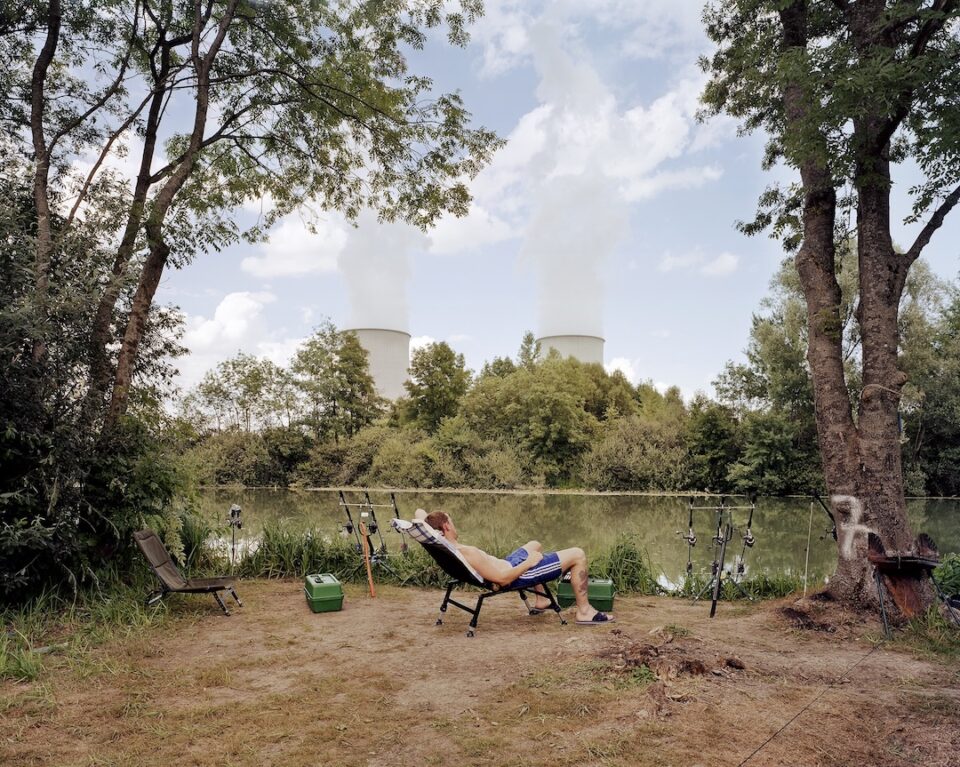
3. Jürgen Nefzger, “Nogent-sur-Seine, France” from the series Fluffy Clouds, 2003. Pigment print mounted on aluminium. Courtesy of the artist.
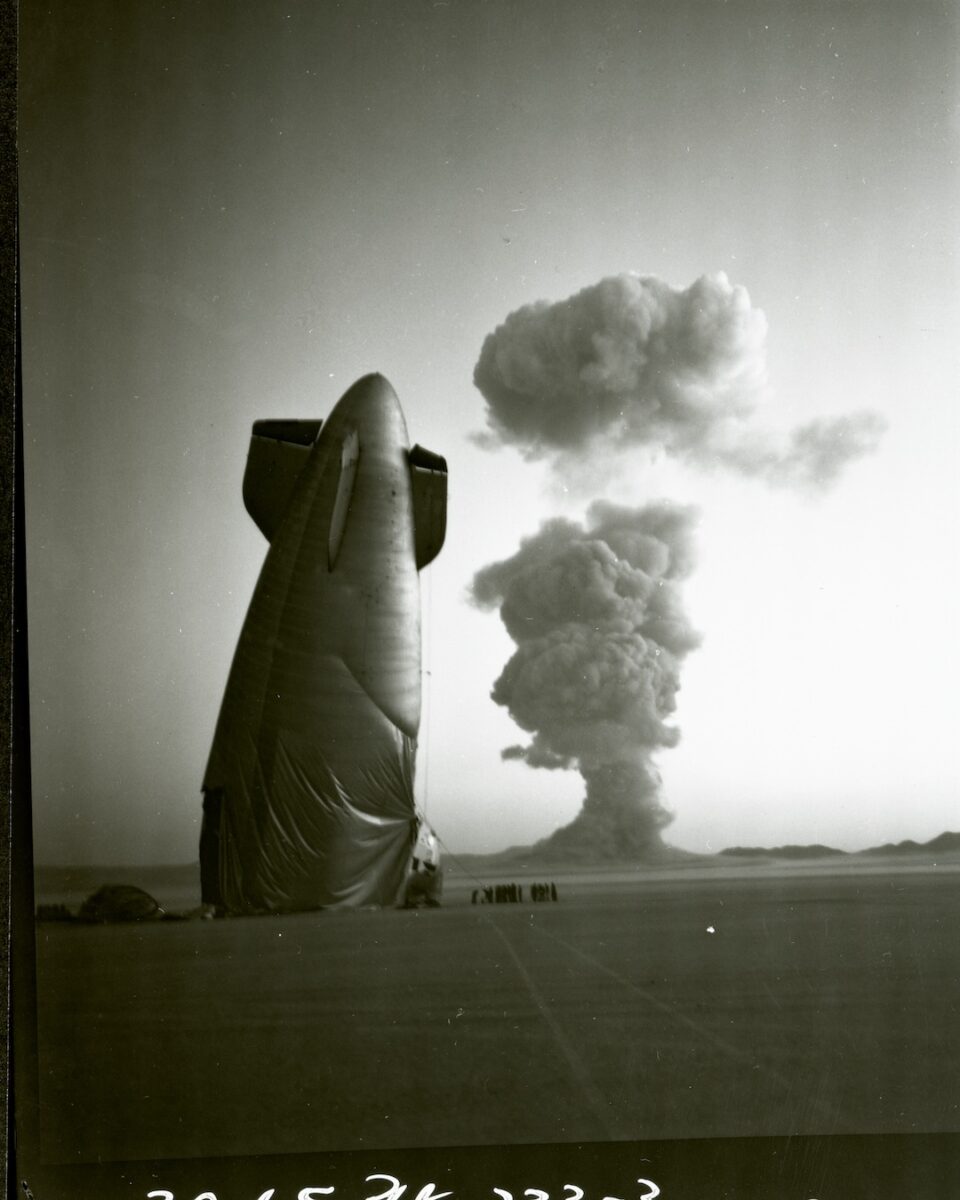
4. Anonymous, Operation Plumbob (Nevada Test Site) Detonation, 1957. Black-and-white photograph. U.S. National Archives and Records Administration.


