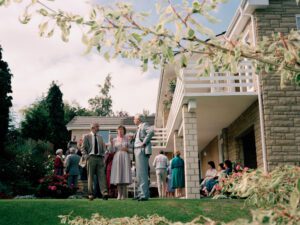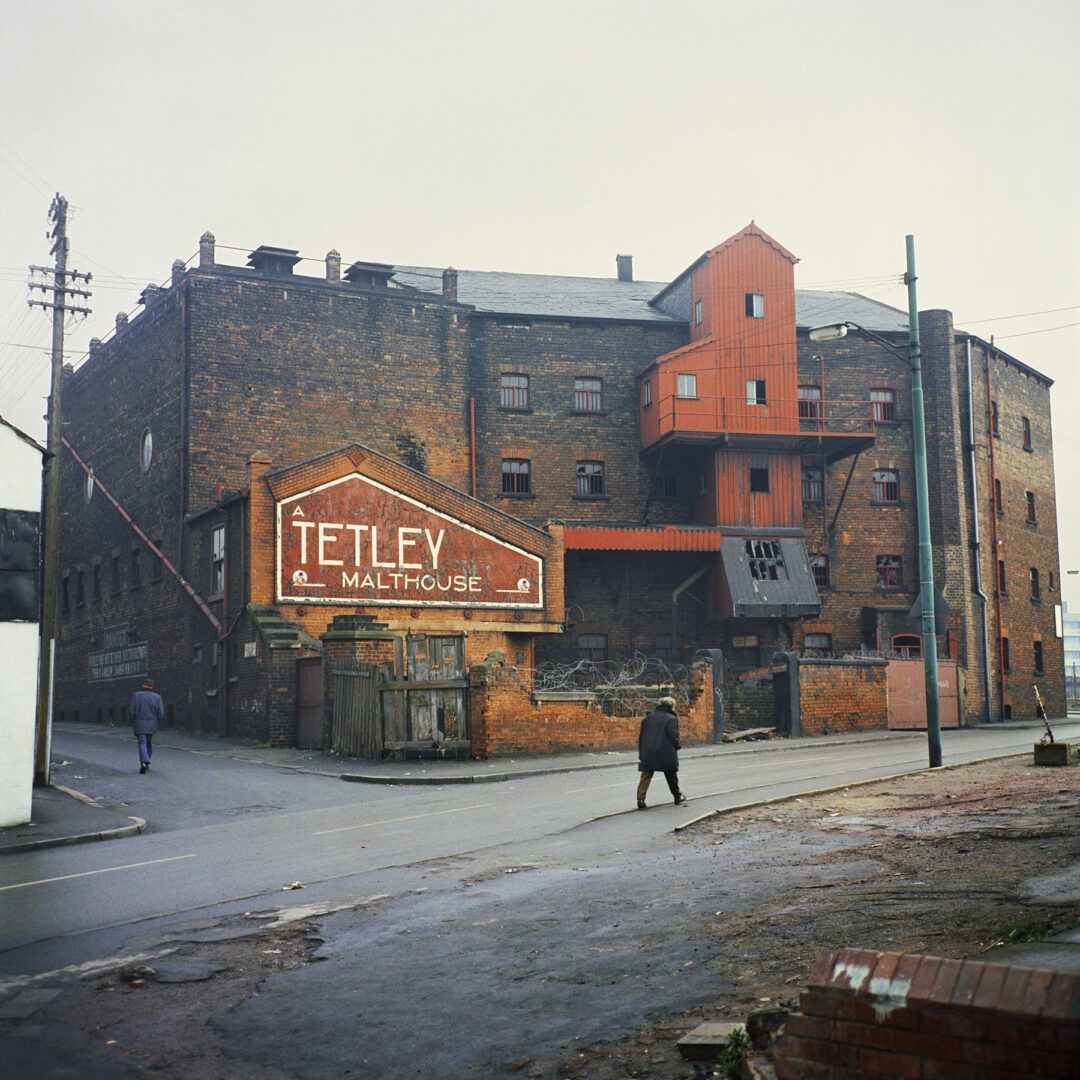
“When the history of colour photography in the UK is written about, [Peter] Mitchell’s name is often omitted.” These are the words of Martin Parr, who in 2013 wrote about the enduring impact of Peter Mitchell’s practice. He explained how his colour photography was “so far ahead of its time that no-one knew exactly what to say or how to react, apart from with total bewilderment.” Parr was writing about the landmark figure for the introduction of Strangely Familiar, a book that would bring Mitchell newfound recognition in the 21st century. The artist was known for capturing snapshots of working-class Leeds, documenting the city as it rapidly modernised during the 1970s and 1980s. Now, RRB Books reissues the long-out-of-print photobook, as On Strange and Familiar Ground remasters and expands the original work.
Mitchell began photographing the Northern city of Leeds at a turbulent moment. An estimated 500,000 homes across the country had been damaged during WII, with another half a million badly damaged. Many surviving homes were privately rented slums, left over from 19th century “back-to-back” houses, in desperate need of modernisation. The government’s “Homes for All” scheme sought to rectify this, providing safe accommodation for returning soldiers and families displaced during the war. Between 1946 and 1951, 800,000 homes had been built, for out of five of which were council houses. But this rapid progress began to slow in 1980, when Margaret Thatcher implemented new restrictions on local authorities and introduced the “right to buy,” which allowed those living in council owned properties to buy it. By 1983, the number of social houses being built had halved to 44,000 and many of the temporary solutions brought in by the post-war government began to show signs of deterioration. Throughout the 1970s, Mitchell drove a delivery truck around Leeds and photographed the city between drops, often documenting a shop front or two of houses one week, only for them to disappear the next.
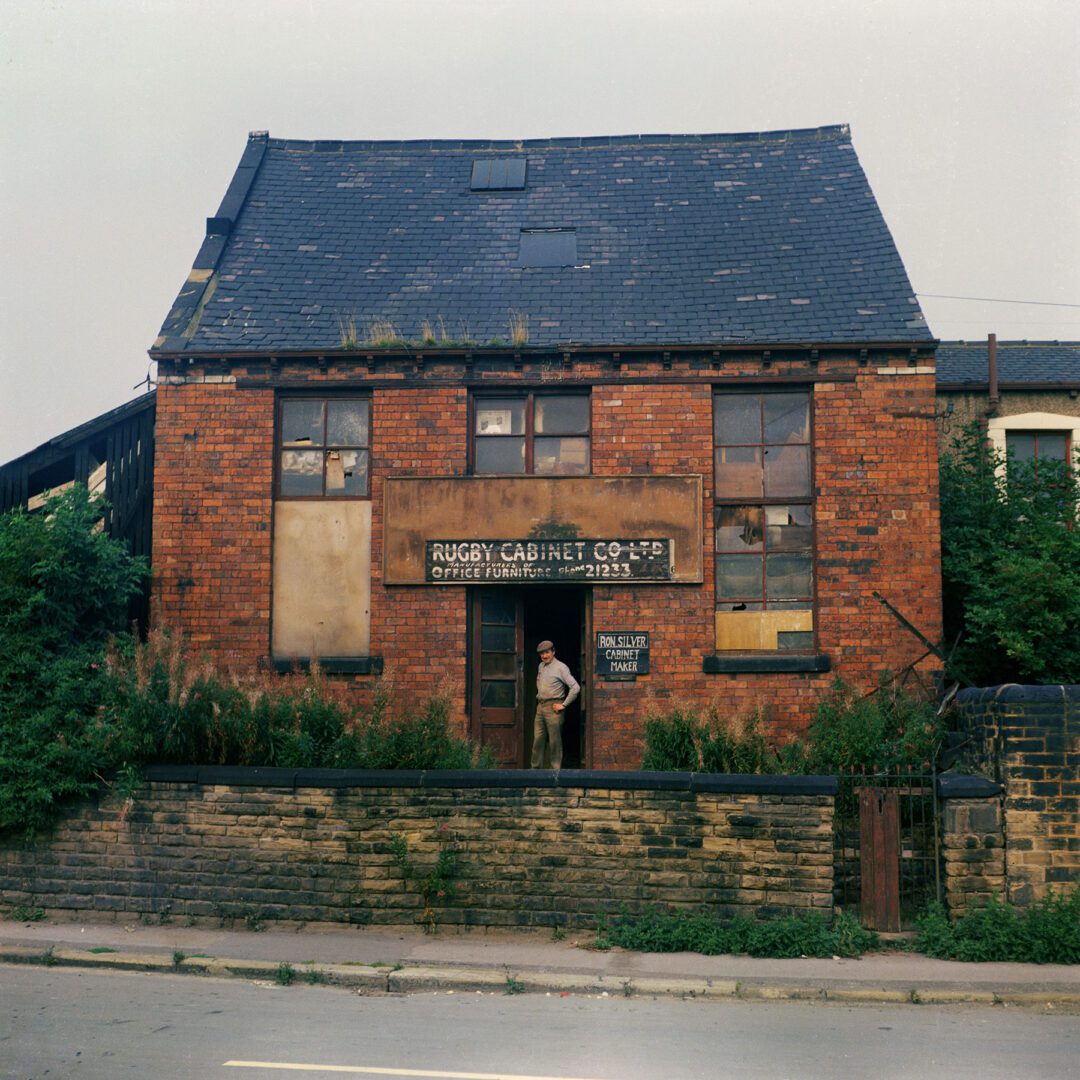
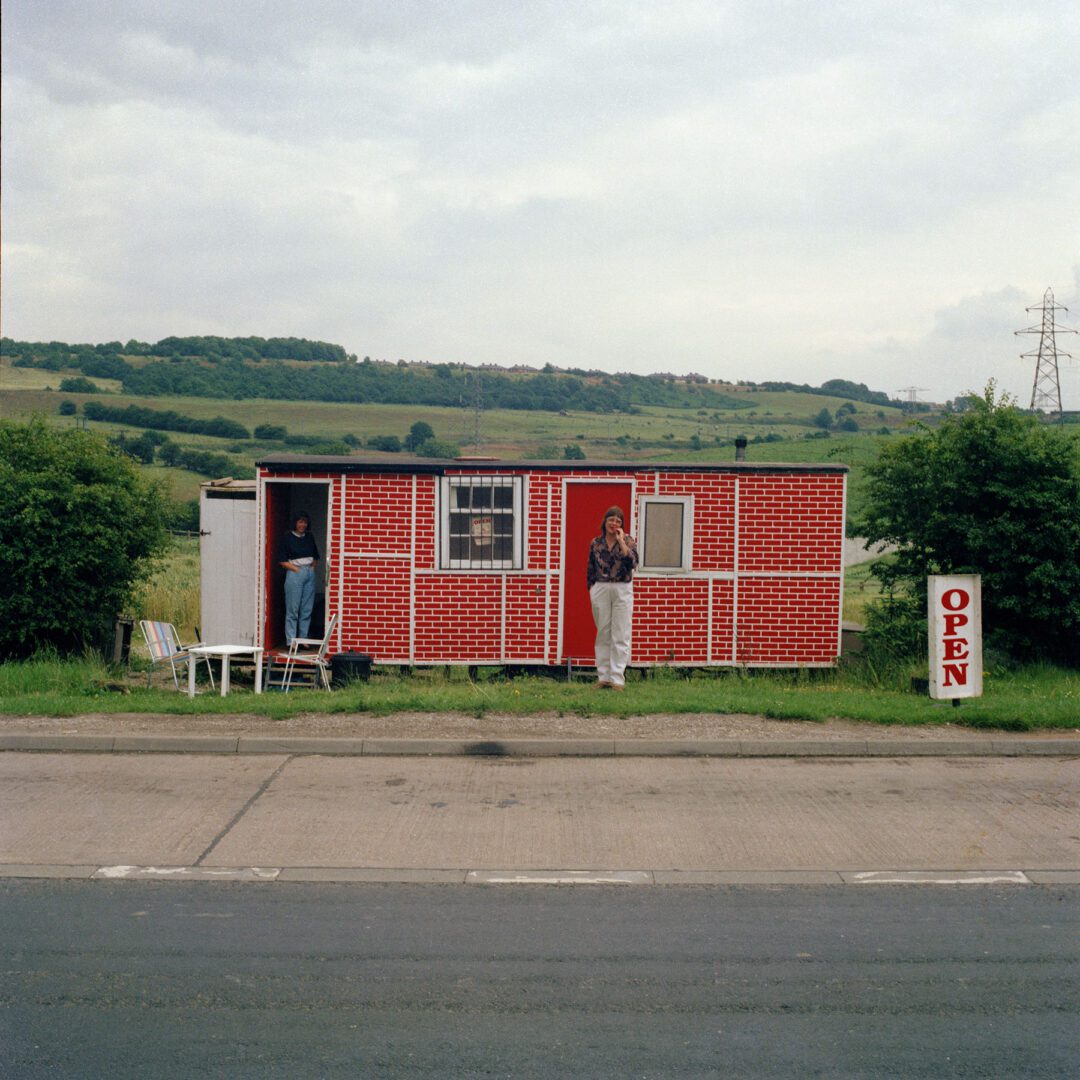
The scenes in the book are made up of shopkeepers in their doorways, factory gates, cafés, scrapyards and terraced streets halfway to demolition. Mitchell worked slowly, with a medium-format camera and a stepladder, and his subjects posed willingly. The result is an affectionate portrait of a city on the very brink of change. Some images are literally mid-transformation, such as one where three boys sit on the upper level of a church, other buildings represent vibrant community hubs or local business, such as the “East End Tool Stores” and “Cabin Café,” which offers sandwiches, tea, coffee and breakfast. Together, these images form a sensitive portrait of the region. This is not glamourising poverty, nor is it exploiting working-class people for a narrative, it’s a genuine and enduring love letter to a city and its people.
Perhaps even more poignant than the images themselves are Mitchell’s reflections on his time in the city. The Leeds he documented no longer exists. New buildings have sprung up in place of old ones, shops change hands and home are demolished. The book’s accompanying text is really effective in capturing the feeling of being a ghost in your own hometown, when you yourself become the last vestige of a bygone era. There’s a responsibility in holding these memories, one which Mitchell takes seriously. “Leeds is a city in the North where I’ve ended up and it’s now where I’m from…All gone now – a few exceptions, perhaps, where the bulldozers missed their mark or land values fell off a cliff – but as I stride down the new canyons of glittering emptiness that litter our cities, I hear my photographs chattering away, catch a sight of Noel & his Lads, the demolishers of the mighty Quarry Hill Flats, waving to me from what has become a car park.”
It’s refreshing to see this book brought back into public circulation. Mitchell has enjoyed renewed interest in recent years, including with exhibitions at The Photographers’ Gallery and Leeds Art Gallery. His series are an important time capsule for a bygone era – and a vital part of the 20th century photographic archive.
On Strange and Familiar Ground is published by RRB Photobooks: rrbphotobooks.com
Words: Emma Jacob
Image Credits:
1. Tetley Malthouse, Mill Street, Leeds, Winter 1973 © Peter Mitchell.
2. Elaine Whitehead and Linda Snar, The Red Brick Cafe, Dewsbury Road, Leeds. Summer 1992 © Peter Mitchell.
3. Mr. Reuben, The Rugby Cabinet Co Ltd, Lucas Court, Leeds, Summer 1974 © Peter Mitchell.
4. Bradshaw’s Bike, Otley Road, Leeds, Spring 1979 © Peter Mitchell.
5. George Clegg, East End Tool Stores, Marsh Lane, Leeds, Winter 1973 © Peter Mitchell.