Contemporary design is inseparable from the landscapes it transforms. The minerals embedded in digital infrastructure, the fibres used in fashion and the materials that shape our cities all originate in ecological systems whose limits are becoming increasingly apparent. As extraction, biodiversity loss and climate instability expose the consequences of conventional production, designers are questioning not only how objects are made, but also the relationships between resources, industry and the natural world. A growing field of research is exploring alternatives rooted in biological processes, material reuse and local knowledge, bringing ecological responsibility into closer conversation with creative practice. Opening on 19 November 2026, A Matter of Land, a new display at London’s Design Museum, examines how these changing relationships might reshape the principles underpinning contemporary design.
Organised by Future Observatory, the museum’s national research programme for the green transition, the exhibition brings together seven projects spanning biotechnology, architecture, computing, craft and environmental research. Curated by Abbie Adams, the presentation is structured around three interconnected themes – Field, Forest and Earth – which consider the relationship between human activity and the landscapes that sustain it. Rather than presenting sustainability as a question of replacing one material with another, the selection examines the wider conditions of production, including resource extraction, biodiversity, social participation and waste. Its emphasis is on regenerative thinking: an approach that considers how design might contribute to the restoration of ecological systems rather than simply reduce the damage associated with existing industries. In doing so, the display positions design as both a practical discipline and a means of reconsidering humanity’s relationship with the natural world.
Nearly half of all raw materials extracted from the land each year are used in buildings, clothing and infrastructure. This dependence reveals a fundamental contradiction within contemporary material culture: the objects that make modern life possible are often produced through processes that undermine the environments on which future production depends. Design has traditionally been associated with progress, efficiency and innovation, yet these values are increasingly difficult to separate from questions of environmental cost. The challenge is not simply to develop alternatives to established materials, but to reconsider the economic and cultural assumptions that make extraction appear inevitable. Can production become regenerative without reproducing the same patterns of consumption? What might innovation look like when ecological health, rather than commercial efficiency alone, becomes a measure of success?
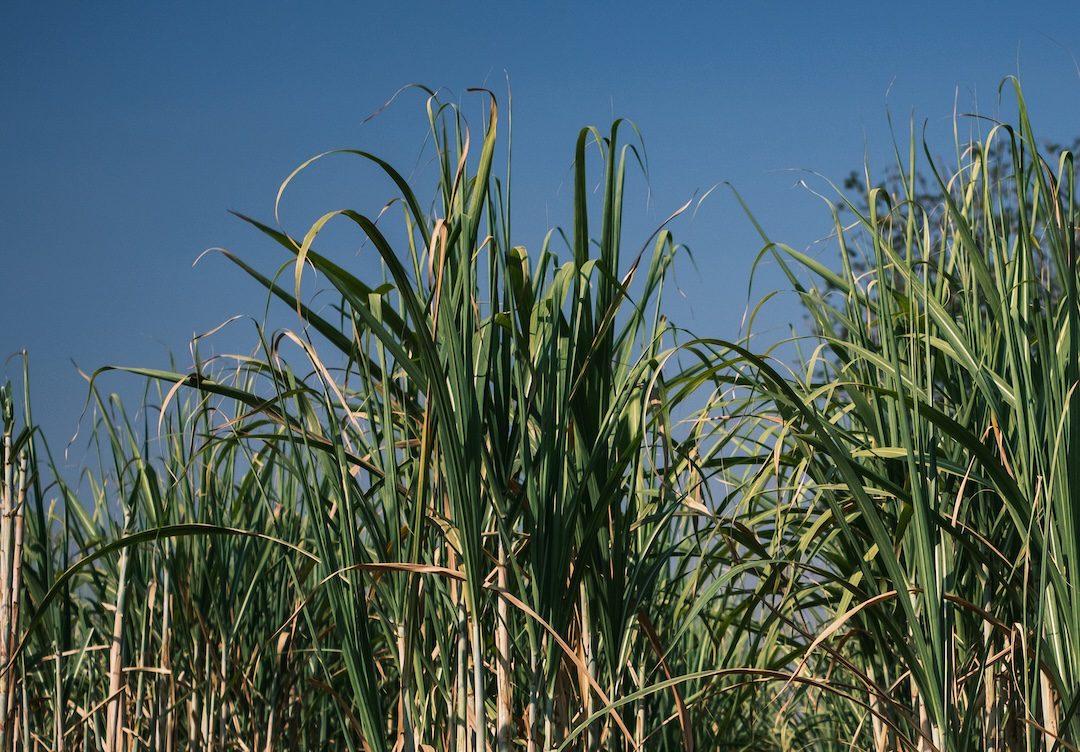
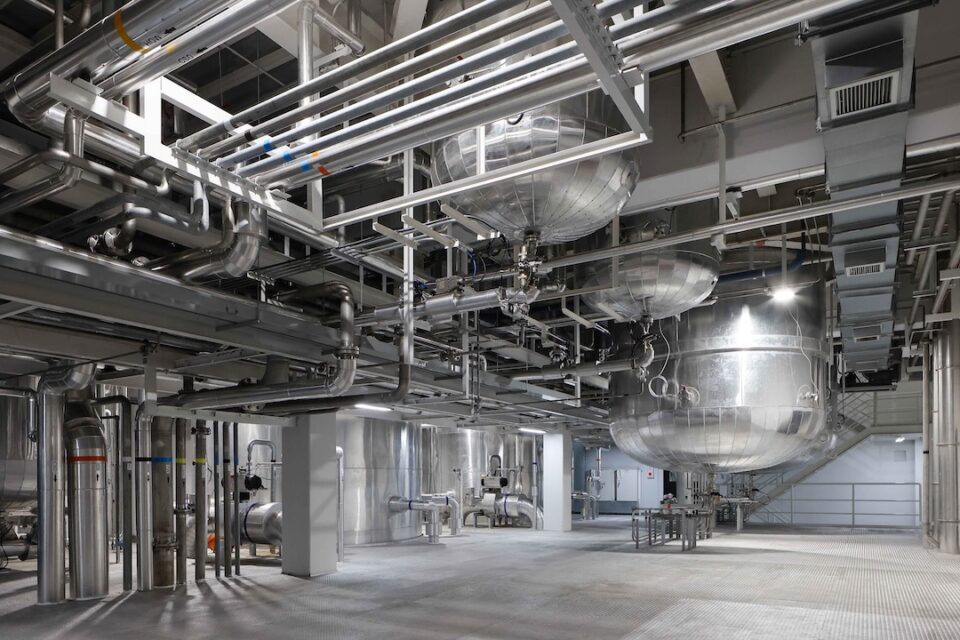
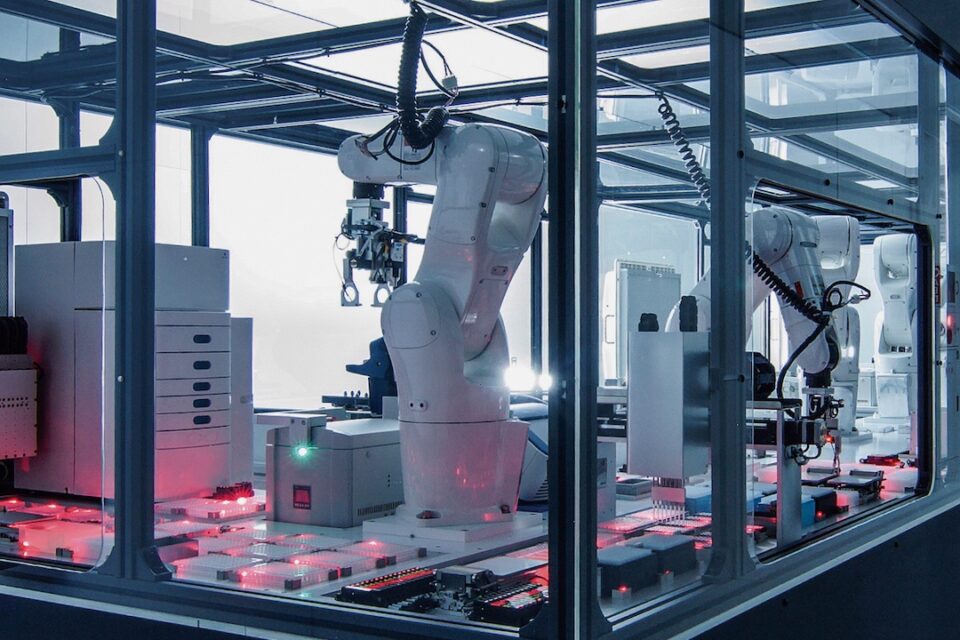
Biotechnology offers one possible response, although its implications extend beyond the development of new materials. Japanese company Spiber has created Brewed Protein™, a textile produced through fermentation, using plant sugars derived from sugar cane waste to generate protein fibres. Compared with cashmere, the company reports that its production process uses 99 per cent less land and 97 per cent less water, while generating 79 per cent fewer greenhouse gas emissions. The material is already being explored by fashion labels including ISSEY MIYAKE, Goldwin, Vollebak and Juukiff, whose garments demonstrate its potential across different applications. A dress and bolero from A-POC ABLE Issey Miyake’s Autumn/Winter 2026 collection will feature alongside a Vollebak laboratory-grown scarf, a Juukiff skort and a waterproof jacket by Goldwin. These collaborations are a suggestion on how scientific research might possibly enter established creative industries, challenging the preconceived notion that desirable textiles must depend upon conventional agricultural or animal production.
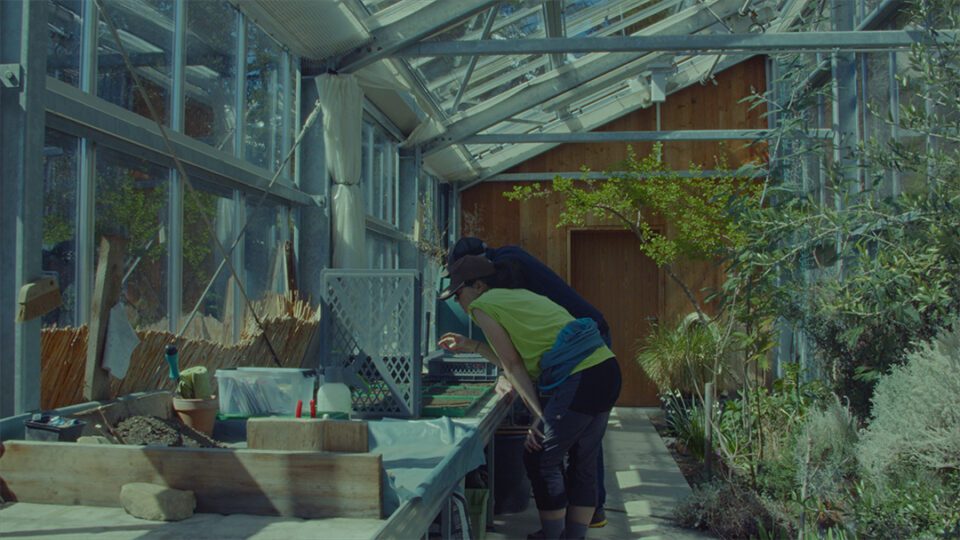
However, the relationship between biology and design is not confined to laboratory processes. Eliza Collin’s research project Flowers on a Moving Mountain approaches ecological resilience through the movement of plant species across high-altitude Alpine meadows. Working alongside scientists, herders, gardeners and local communities, Collin investigates how flowers respond to shifting climatic conditions, exploring whether hybridisation might produce species better equipped to survive environmental change. Her research will be represented through a film featuring commentary from specialists, alongside a commissioned “cow crown.” Inspired by traditional headdresses used to adorn cattle during seasonal migrations across Italy, Switzerland and France, the object incorporates endangered seeds that could be dispersed as animals travel through the landscape. Its proposition is quietly radical: agricultural traditions and animal movement might become active participants in conservation, allowing established cultural practices to support botanical survival. Where Spiber utilises biological processes to rethink manufacturing, Collin turns towards existing ecological relationships, demonstrating that innovation has the capability emerge through attention to the knowledge already embedded within landscapes.
Such an emphasis on material relationships also informs the work of London-based designer Jacob Marks, whose practice draws on the history of resin-based craft. Using pine rosin collected from trees already destined for logging, Marks transforms a by-product of forestry into decorative lamps, vessels, door handles and architectural fixtures. Through casting, moulding, dipping and painting, the material acquires distinctive colours and textures, sometimes combined with natural fibres and paper. Several objects will be presented in the display, demonstrating how existing resources can be reimagined through small-scale production. The work also raises questions about the cultural status of materials, particularly the distinction between what industrial systems classify as waste and what designers might recognise as possessing aesthetic or practical value. Rather than treating natural materials as passive components, this approach foregrounds their histories, properties and capacity for transformation.
The social dimensions of making become notably visible through Brighton-based charity Making it Out, whose collaboration with the University of Brighton introduces woodworking to people moving on from prison, homelessness and addiction. Participants gain practical, creative and professional experience, developing skills through processes that connect individual development with local production. A prototype Sussex S.E.E Chair, made from hazel wood as part of the organisation’s Design Accelerator research, will be exhibited alongside hand tools, woodworking jigs, pruning saws and experimental samples. These objects reveal the knowledge and collaboration involved in traditional craft, while questioning the assumption that environmental progress can be measured through material efficiency alone. By bringing social inclusion in tandem with sustainable production, the project expands the meaning of regeneration to encompass the communities and working relationships sustaining creative industries.
Digital infrastructure presents another contradiction. Computing is frequently understood as an immaterial activity, despite its dependence on energy-intensive systems, mineral extraction and extensive physical infrastructure. Critical Climate Computing, a research group at the University of the Arts London, investigates how these demands might be reconsidered through microbial fuel cells, which generate electricity through the activity of microorganisms. Its contribution to the exhibition centres on a website powered entirely by one such cell, designed to fit within the server cabinets commonly used in data centres. A printed toolkit will also invite visitors to construct their own microbial-powered web server, translating experimental research into a practical resource. The project challenges conventional assumptions about technological progress, proposing that the infrastructures of digital culture might draw energy from biological processes rather than relying exclusively on established power systems.
Questions of resource extraction take on a more direct geological dimension in Chilean architect and artist Mále Uribe’s Minerasophia: Underground Cycles. Developed with environmental engineering initiative T2CM, the project investigates how copper mining waste from the Salar de Atacama might be repurposed for construction and renovation. Composite materials have been developed with the potential to replace 90 – 100 per cent of typical concrete, while further experiments explore the functional and decorative possibilities of copper tailings. The research focuses on the contradictions in contemporary infrastructure, notably the environmental consequences of extracting minerals required for technological and energy transitions. By redirecting industrial waste into new building applications, Uribe questions whether geological resources must be a linear path from extraction to disposal. Her work suggests that the future of architecture is dependant on reconsidering existing material reserves as on discovering new ones.
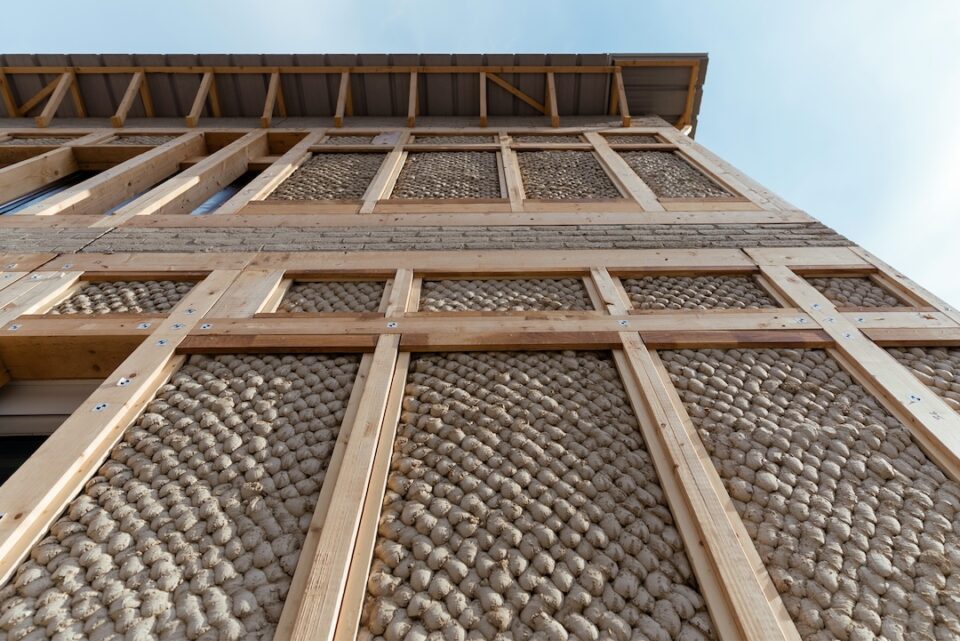
A comparable reconsideration of construction emerges through Zurich-based company Impact Build, which combines automated manufacturing with the ancient practice of building using earth. Its process propels a mixture of clay, silt and quarry or construction-site waste at high speed, compacting the material into dense architectural walls without cement. The resulting modules offer a lower-carbon alternative to typical concrete, showing how contemporary engineering might work with locally available geological resources. A wall module and accompanying film will introduce visitors to the production process, connecting technological experimentation with longstanding building traditions. These architectural investigations question the relationship between industrial scale and ecological responsibility, suggesting that future construction need not depend upon the continued dominance of resource-intensive materials.
The projects’ different approaches are brought into dialogue through Future Observatory’s curatorial framework, which moves between scientific experimentation, artistic research and community-led practice. Director Justin McGuirk describes the selection as an opportunity to consider how designers are becoming more intentional in their relationship with the land, while Adams emphasises the importance of understanding landscapes as networks of interconnected relationships. This distinction is important: regeneration cannot be reduced to a visual language of natural materials or a collection of environmentally conscious products. It involves examining the systems through which resources circulate, the people who participate in their transformation and the ecological consequences that extend beyond the finished object. By placing projects of markedly different scales and disciplines alongside one another, the curators resist a singular definition of sustainable design. Instead, they present it as an evolving field in which technological innovation, inherited knowledge and cultural responsibility can inform one another.
The Design Museum’s wider programme provides a key context for this enquiry, showing an institutional interest in design as a means of interpreting the cultural and material conditions of contemporary life. Recent exhibitions have examined how creative disciplines shape everything from cinematic imagination to fashion, identity and collective experience. Wes Anderson: The Archives, which ran from November 2025 to August 2026, explored the filmmaker’s distinctive visual language through storyboards, costumes, miniature sets and production objects. Its attention to the processes behind cinematic world-building revealed the extent to which design determines how audiences experience fictional spaces. Similarly, NIGO: From Japan with Love traced the intersections of streetwear, luxury fashion, music and traditional Japanese craft, examining how cultural references are transformed through contemporary creative practice. Both presentations demonstrated that design operates beyond the production of individual objects, influencing the visual codes and cultural narratives through which society understands itself.
Currently, Es Devlin: Other Worlds brings three decades of the British artist and designer’s practice into focus, exploring the intersections of sculpture, stage design, music, language and light. The retrospective considers how immersive environments shape collective experience, while presenting the drawings, models and working processes behind Devlin’s large-scale installations and performances. Alongside it, The Nue Black Aesthetic, guest curated by Charlene Prempeh, considers the contributions of contemporary Black designers across fashion, architecture, furniture, product design and sculpture. Its emphasis on multiple identities and cultural perspectives challenges the idea of a singular design language or shared aesthetic experience. Read together, these exhibitions reveal a curatorial programme concerned with the relationship between design and systems of representation, whether expressed through cinematic worlds, performance environments or the politics of cultural identity. A Matter of Land goes to extend this critical perspective beyond the human sphere, asking how design might account for the ecological systems that make cultural and material production a possibility
Regenerative design demands a shift in how value is grasped. Materials are no longer considered solely through their usefulness, durability or commercial potential, but through the relationships they establish with the spaces from which they originate. The projects gathered here suggest that this change need not produce a single aesthetic or technological solution. Instead, it requires an expanded grasp of authorship and making, one that recognises the contributions of microorganisms, migrating species, geological processes and local communities alongside those of designers and manufacturers. There is something particularly significant in this redistribution of agency: the land ceases to be a backdrop to human invention and becomes an active participant in it. Perhaps the most compelling question raised by A Matter of Land is therefore not what designers can make from the earth, but what they might learn to leave intact.
Future Observatory: A Matter of Land is at the Design Museum, London, 19 November – October 2027.
https://designmuseum.org/exhibitions/future-observatory-a-matter-of-land
Words: Shirley Stevenson
Image Credits:
- Unharvested sugar cane. Courtesy of Spiber.
- Interior of Spiber’s Thailand production facility. Courtesy of Spiber.
- Facade of building made with Impact Build wall modules. Courtesy of Impact Build and Fangan Architekten.
- Automated machinery at one of Spiber’s labs. Courtesy of Spiber.
- Plant researchers in a greenhouse. Still from Crossing the Middle Meadow (2026). Film featured in A Matter of Land at the Design Museum. Courtesy of Eliza Collin.