Who controls what can be seen, and what happens when an image refuses to obey? From military surveillance to television, technologies of vision have long been entangled with the exercise of political power. Their apparent neutrality conceals systems of selection, distortion and exclusion, determining not only how information circulates but also how reality is understood. However, images are never entirely secure in these structures. Glitches, interference and alternative forms of sensory knowledge can expose the mechanisms governing visibility, creating possibilities for resistance. South Korean American artist Na Mira explores this territory through a practice that brings experimental cinema into a with animism, geopolitical histories and the supernatural. Her forthcoming exhibition, NO SMOKING, at The Museum of Modern Art in New York examines the fragile relationship between technology and perception, asking whether the breakdown of established visual systems might show ways of seeing beyond their control.
From 14 November 2026 to 14 February 2027, the exhibition marks Mira’s first solo museum presentation in New York and her largest installation to date. Developed as a major commission for the Marie-Josée and Henry Kravis Studio, it combines infrared video, holography, radio-frequency interference and a site-responsive sonic environment. Instead of functioning as a neutral backdrop, the gallery becomes an active component of the work. Its architecture, electromagnetic conditions and relationship with the surrounding city shape a space in which images shift according to their surroundings and the movements of visitors. Curated by Sophie Cavoulacos, Curator in MoMA’s Department of Film, with Abby Hermosilla, Curatorial Associate in the Department of Curatorial Affairs and Department of Media and Performance, the commission also tests the conventions of the museum as a space for moving-image presentation.
Geography has long been central to Mira’s investigation of political power. Her interest draws on fûkeiron, a Japanese film theory developed in the late 1960s that proposed landscape as a means of exposing underlying political conditions. Its proponents moved away from conventional narrative and documentary approaches, considering how roads, buildings and urban infrastructure could communicate the structures governing everyday life. This perspective is particularly relevant to an artist whose work repeatedly returns to territories marked by military occupation and geopolitical division. Previous projects have engaged locations including Dragon Hill Garrison in Seoul and the Demilitarised Zone separating North and South Korea. Here, architecture and landscape become records of ideological decisions, revealing how authority is embedded within the organisation of physical space. The environment is neither passive nor neutral; it carries the visible and invisible consequences of the systems that shape it.
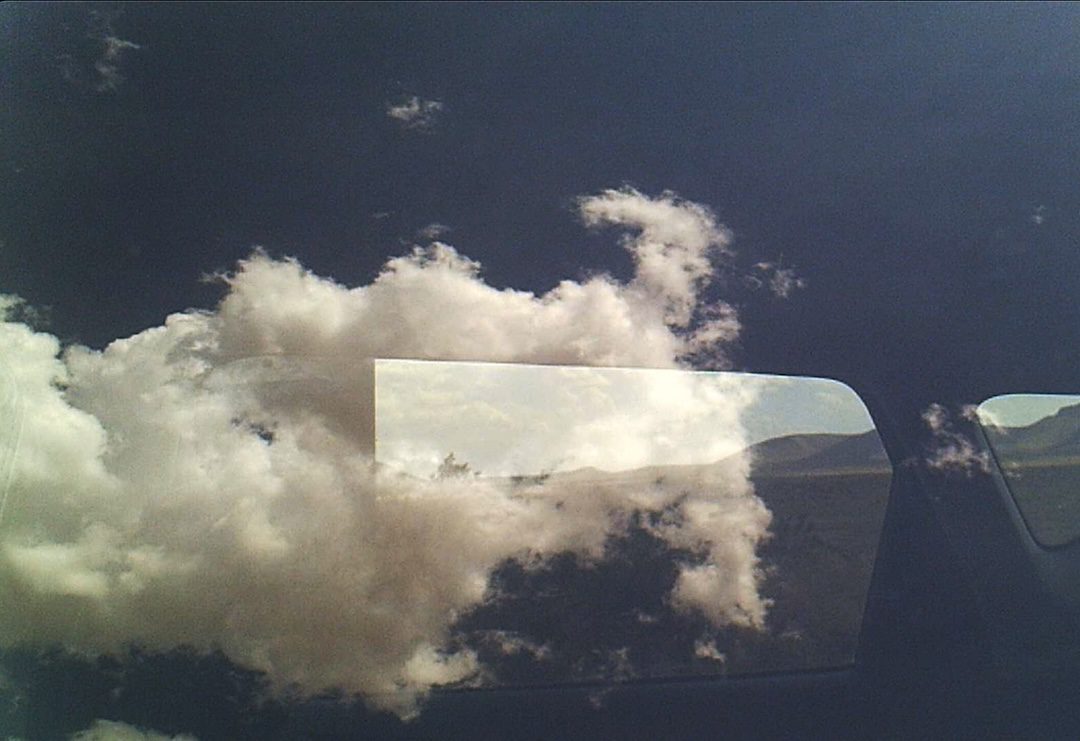
An abandoned cinema on Fort Bliss, alongside the neighbouring White Sands Missile Range in the American Southwest, provides the geographical starting point for NO SMOKING. During the summer of 2025, Mira recorded footage across these locations, which form part of the largest military installation in the United States and sit along the US – Mexico border. The juxtaposition of an empty cinema and an active military landscape is particularly revealing. Historically associated with collective spectatorship, entertainment and imaginative escape, the cinema becomes a remnant within an environment organised around defence, surveillance and military research. Its absence of an audience raises questions about who controls the production and circulation of images, and how technologies developed for entertainment intersect with those designed for warfare. Mira articulates this relationship directly: “Systems of war appropriate, mutate, and weaponize sensory technologies to discipline perception. I follow signals that defect, sacred instants torqued to negative volume.” Her interest lies in the possibility that a signal might escape its intended purpose, disrupting the structures through which perception is managed.
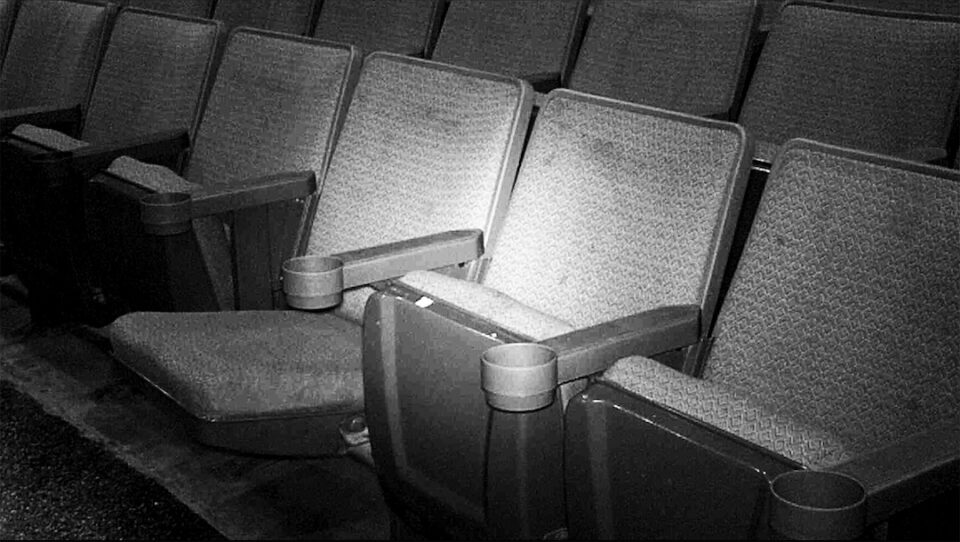
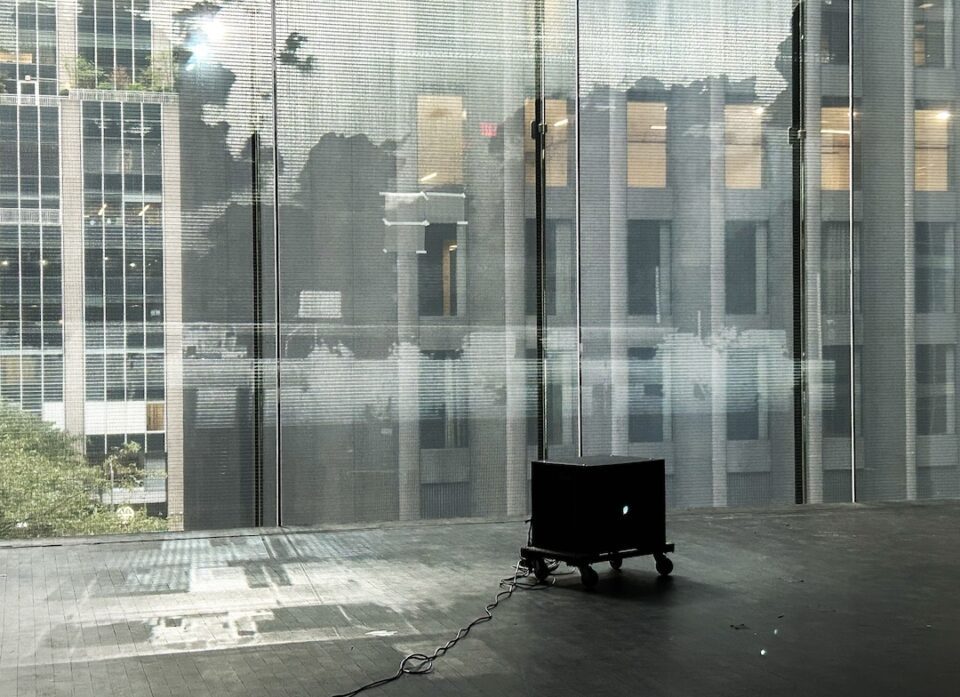
This instability becomes tangible through the installation’s treatment of architectural space. Drawing on anamorphic painting traditions dating back to the Ming dynasty, Mira will project images onto the Kravis Studio’s floor-to-ceiling window overlooking Manhattan’s 53rd Street, alongside a smaller plexiglass panel embedded within an alcove. Anamorphic imagery depends upon the spectator occupying a particular position before its forms become legible; viewed from elsewhere, the image appears fragmented or distorted. Translating this principle into an installation makes looking inseparable from physical position. Holographic effects allows for projections to echo across architectural thresholds, creating images that overlap and recede as visitors have the opportunity to move through the room. No single viewpoint offers a complete account of what is present. Instead, spectators encounter a shifting relationship between image, architecture and perspective, exposing how easily visual certainty can be unsettled.
The technological apparatus is equally significant. Mira has identified a frequency distortion running through MoMA’s building, an interference that Museum technicians would ordinarily seek to eliminate when installing media works. Instead of correcting the anomaly, she incorporates it into the exhibition, positioning CRT monitors according to its distribution. Analogue televisions tuned directly to the interference will transmit black-and-white infrared footage that continually shifts through unexpected bursts of colour. The decision recalls experimental cinema’s longstanding interest in exposing the material conditions of image production. Structural filmmaking, in particular, challenged the illusion of cinematic transparency by drawing attention to duration, projection, repetition and the physical properties of film itself. Mira goes on to extend this investigation into the electromagnetic environment of the contemporary museum, transforming what would ordinarily be dismissed as technical noise into a means of revealing the hidden infrastructure through which photographs are transmitted and received.
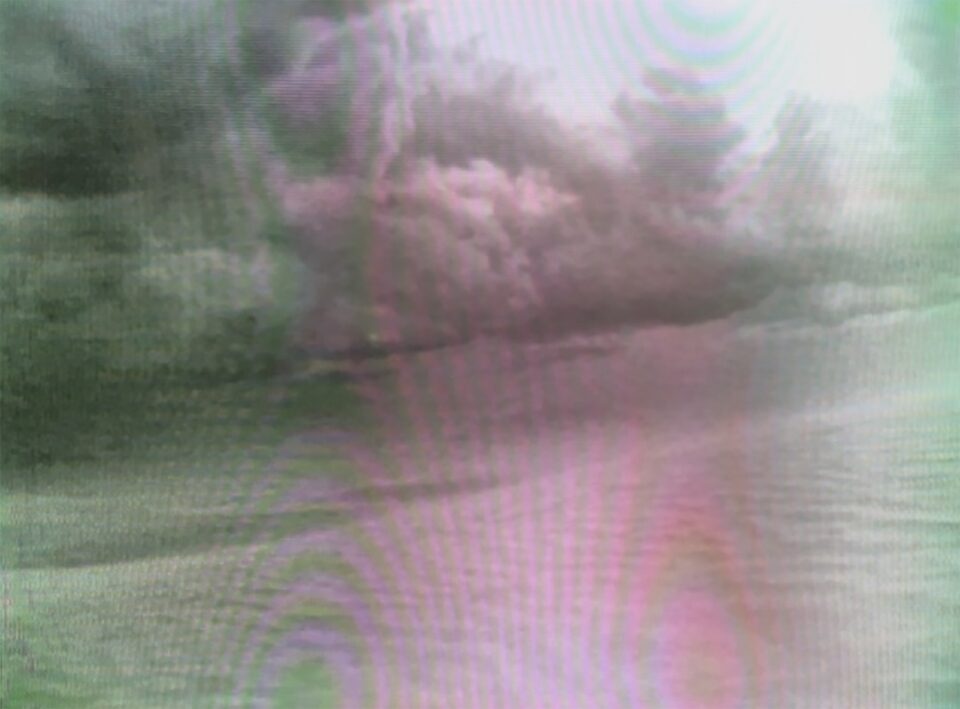
Nam June Paik offers an important historical reference for these experiments. His relationship with Korean shamanism and his understanding of broadcast television as a possible conduit for communication with spirits challenged the medium’s conventional association with information and mass communication. Paik also criticised television’s military development, drawing attention to the transformation of a two-way signal into a one-way public broadcast. The distinction remains pertinent in an era when digital platforms promise participation while concentrating control over the infrastructures through which information travels. Satellite imaging, surveillance networks and algorithmic systems have intensified the imbalance between those who produce information and those who are observed by it. Mira revisits Paik’s ideas through this contemporary landscape, imagining artworks as “vanishing points” that have the capability of disrupting the apparent fidelity on which propaganda, soft power and statecraft rely. Disappearance therefore becomes a refusal to provide the certainty demanded by systems of control.
Sound offers another means of unsettling the authority of the visual. Marking Mira’s most complex engagement with audio to date, NO SMOKING combines field recordings, spatialised feedback and music samples by artist and composer Chuquimamani-Condori. A spiral of overhead speakers will reshape the room through delay, resonance and the physical sensation of low-frequency sound. Visitors will encounter the installation not only through what they see, but through vibrations that alter their awareness of space and bodily presence. This shift is significant within an exhibition concerned with the limitations of optical information. Sound moves beyond the fixed boundaries of the screen, occupying architectural surfaces and reaching the body directly. A found taxidermy under-armature, described by Mira as a “bare transmission”, introduces a further unsettling presence. Suspended between sculptural object and bodily remnant, it brings the material and spectral dimensions of the installation into closer proximity.
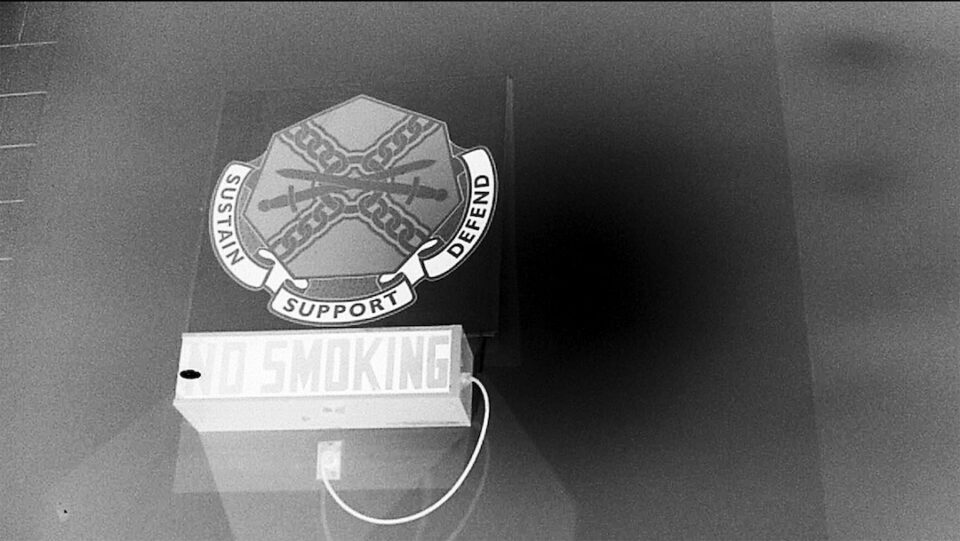
Animism provides a framework for understanding these encounters. Mira’s practice challenges the assumption that objects, images and technological systems are passive instruments, instead considering their capacity to carry histories, energies and forms of agency. Such an approach complicates the separation between subject and object that has shaped much of Western image-making, opening up alternative understandings of how meaning circulates between bodies, spaces and machines. Her engagement with the writing of Theresa Hak Kyung Cha and the legacies of the student-led Gwangju Uprising extends this investigation into language and historical memory. Cha’s experimental treatment of language, displacement and fragmented identity offers a way to consider experiences that resist linear narration. Gwangju, meanwhile, remains a notable reference point for the relationship between collective resistance, political violence and the suppression of historical testimony. As Cavoulacos observes, Mira approaches these histories not simply through representation, but through “language, conceptual scores, or trance states” as means of provoking critical reflection. Political history and spiritual enquiry emerge not as opposing concerns, but as interconnected ways of challenging the limits of what can be known.
The exhibition also raises questions about the contemporary museum and its relationship with spectatorship. Moving-image installations have increasingly displaced the traditional cinematic arrangement of fixed screens and seated audiences, inviting visitors to navigate images through their own physical movement. Yet the language of immersion and participation can obscure the structures that continue to determine how an artwork is encountered. Museums remain carefully organised environments, regulating movement, attention and the conditions of display. Mira makes these mechanisms unusually visible by allowing the Kravis Studio’s architecture, electromagnetic interference and viewing positions to shape the work itself. Visitors become implicated in a system that cannot be understood from a single vantage point. Rather than presenting technology as an instrument of liberation, the installation exposes its contradictions, acknowledging that the same apparatuses capable of extending perception can also restrict and discipline it. The tension places NO SMOKING within a wider debate about technological innovation, institutional authority and the politics of looking.
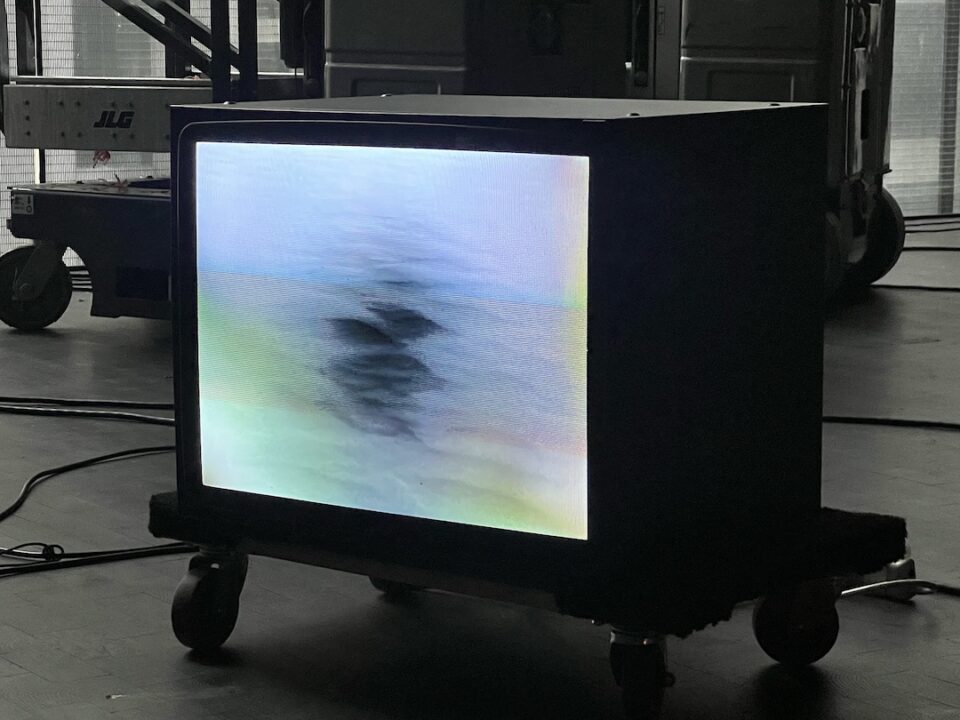
Mira’s wider practice reflects a sustained commitment to the intersections of media history, political memory and experimental form. Her work has been presented at the Whitney Biennial, Venice Biennale, Gwangju Biennale, Performa Biennial and Made in LA Biennial, alongside exhibitions at institutions including the Los Angeles County Museum of Art, Berkeley Art Museum and Pacific Film Archive, Kunsthalle Zürich and Seoul Museum of Art. She is an assistant professor of art and head of experimental video and moving image at the University of California, Irvine, a position that connects her practice with critical discussions surrounding the histories and possibilities of moving-image culture. The publication of The Book of Na, the first collection of her writing, by Wendy’s Subway in 2022 further demonstrates the importance of language and theoretical enquiry to her body of work. Across these different contexts, artistic production and critical thought remain closely intertwined. Formal experimentation is therefore not an end in itself, but a means of engaging with the political conditions of the present.
NO SMOKING approaches perception as something continually negotiated between bodies, technologies and systems of power. Military landscapes become cinematic environments; electromagnetic interference acquires an unexpected agency; sound and spectral imagery challenge the primacy of the visible. Mira’s engagement with animism further unsettles the distinction between material evidence and intangible experience, suggesting that not everything meaningful can be captured, measured or translated into information. These concerns resonate in a culture organised around surveillance and the continuous production of images. Yet, the exhibition does not offer a simple opposition between technological control and artistic freedom. Instead, it locates resistance in the unstable spaces where signals break down, images lose their coherence and established forms of communication falter. Perhaps the most notable proposition is that the world has never been fully contained by the technologies through which we attempt to see it.
Na Mira: NO SMOKING is at MoMA, New York, from 14 November – 15 February.
Words: Simon Cartwright
Image Credits:
1. Na Mira. MANHATTAN MANHATTAN, 2026. Infrared high-definition video (black and white), frequency. Courtesy the artist.
2. Na Mira. NO SMOKING [work in progress view], 2026. Courtesy the artist.
3. Na Mira. BLISS BLISS, 2026. Two-channel infrared high-definition video (black and white), glass, plexiglass, sun. Courtesy the artist.
4. Na Mira. MANHATTAN MANHATTAN, 2026. Infrared high-definition video (black and white), frequency. Courtesy the artist.
5. Na Mira. BLISS BLISS, 2026. Two-channel infrared high-definition video (black and white), glass, plexiglass, sun. Courtesy the artist.
6. Na Mira. MANHATTAN MANHATTAN, 2026. Infrared high-definition video (black and white), frequency. Courtesy the artist.