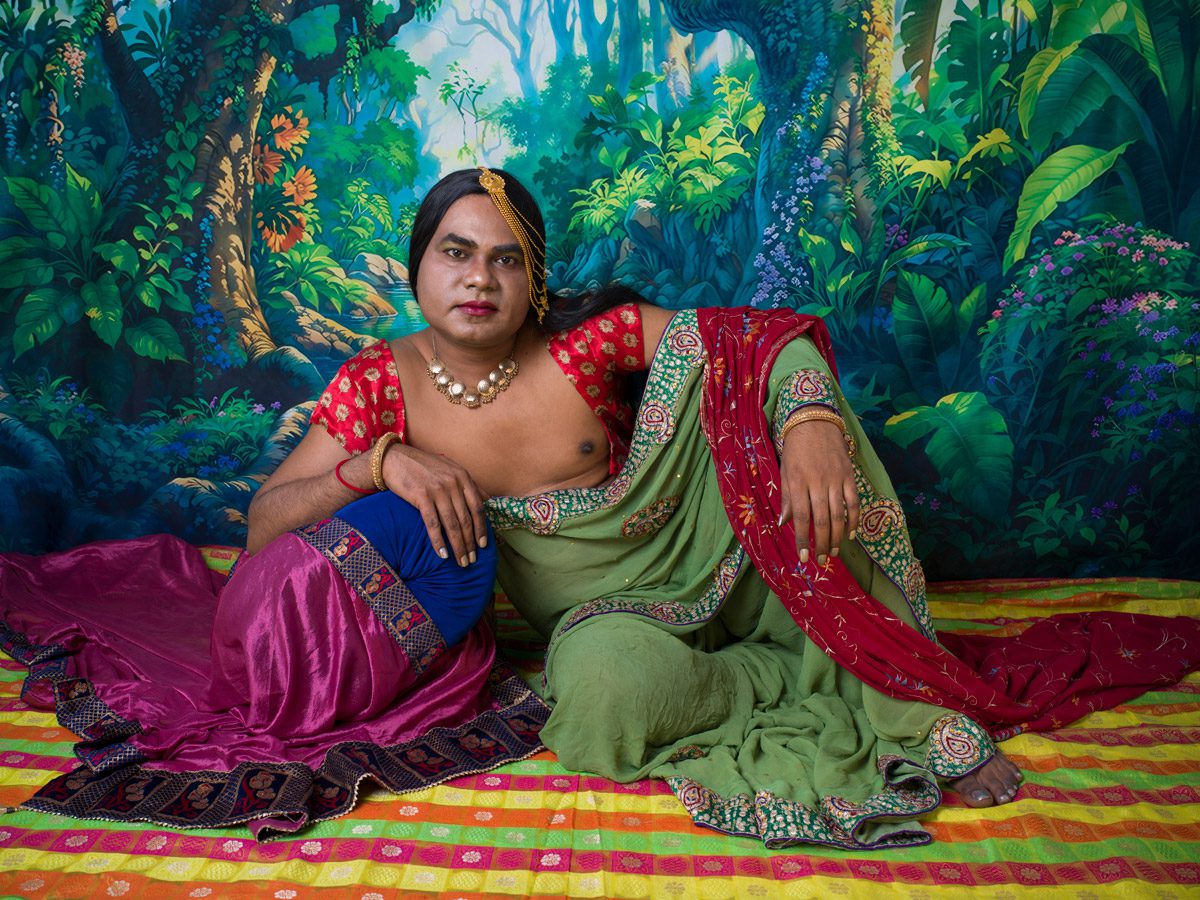
Across South Asia, gender fluidity and sexual diversity have deep histories that have often been obscured and overlooked. In Nepal’s Himalayan region, there’s a long tradition of recognising a third gender, with Meti individuals – typically people assigned male at birth who live, dress and present themselves in feminine ways – forming part of everyday life and understandings of gender. Meanwhile, in India, Hijra are legally and socially defined as people who identify as neither completely male or female. There’s little doubt that binary, western ideas of gender have been imposed upon these nations, driving them away from traditional understandings of gender expression. Your Tongue in My Mouth, a major new exhibition at Autograph, London, examines how British colonial rule imposed rigid controls on gender expression and intimacy in India, criminalising long-established third gender, queer and trans communities.
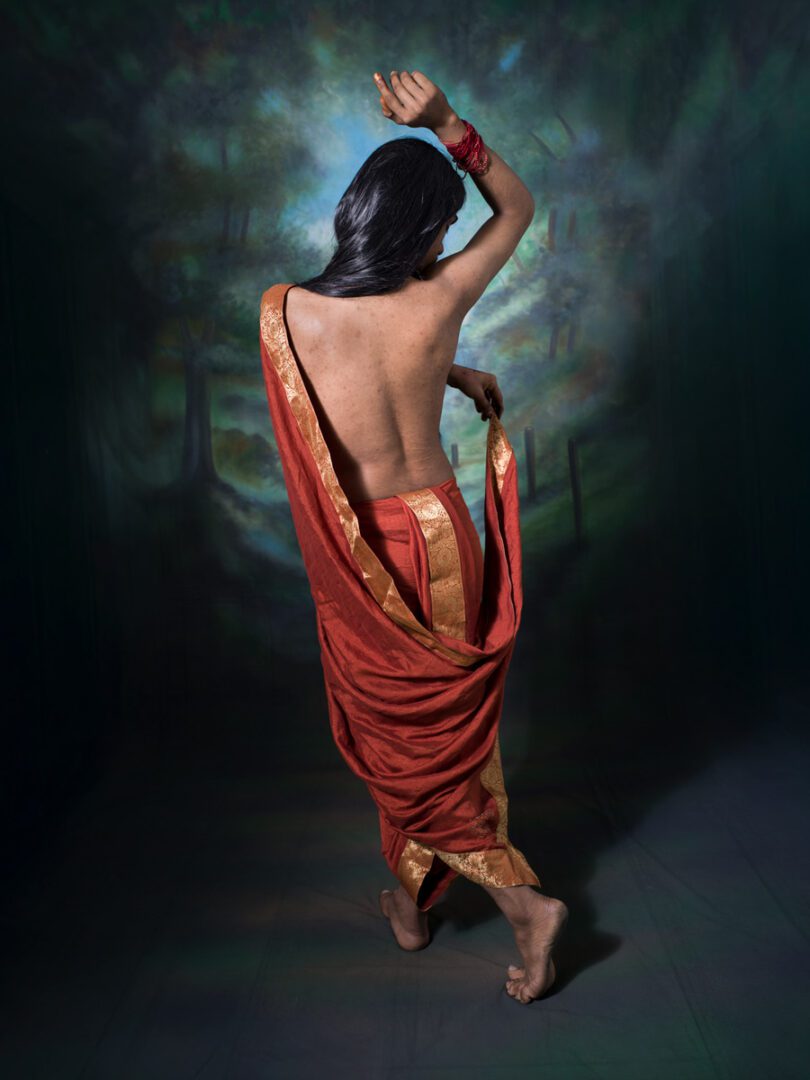
The exhibition debuts 22 never-before-shown works, commissioned specifically for the gallery. These new portraits, by artist Charan Singh, portray Hijra, Kothi and trans people – acknowledging their agency as individuals and their shared histories. The multi-disciplinary artist brings a fascinating perspective to this project, not least because before recentring his attention on art, Singh was an AIDS worker in India. His work leans into this lived experience, using photography, video and text to understand how language shapes queer landscapes and the politics of representation. Here, language is the key. Prior to coming to the UK in 2012, Singh was a non-English speaker and had an unusual relationship to the vocabulary, where words adopted new meaning. He often uses his “pre-English language” life to question the legitimacy of queer histories in India and the UK. His practice asks the question: what are we missing when we view gay experience through the colonial lens of English. These latest studio portraits continue this enquiry, drawn from the long-standing relationships Singh formed through more than two decades of HIV/AIDS advocacy.
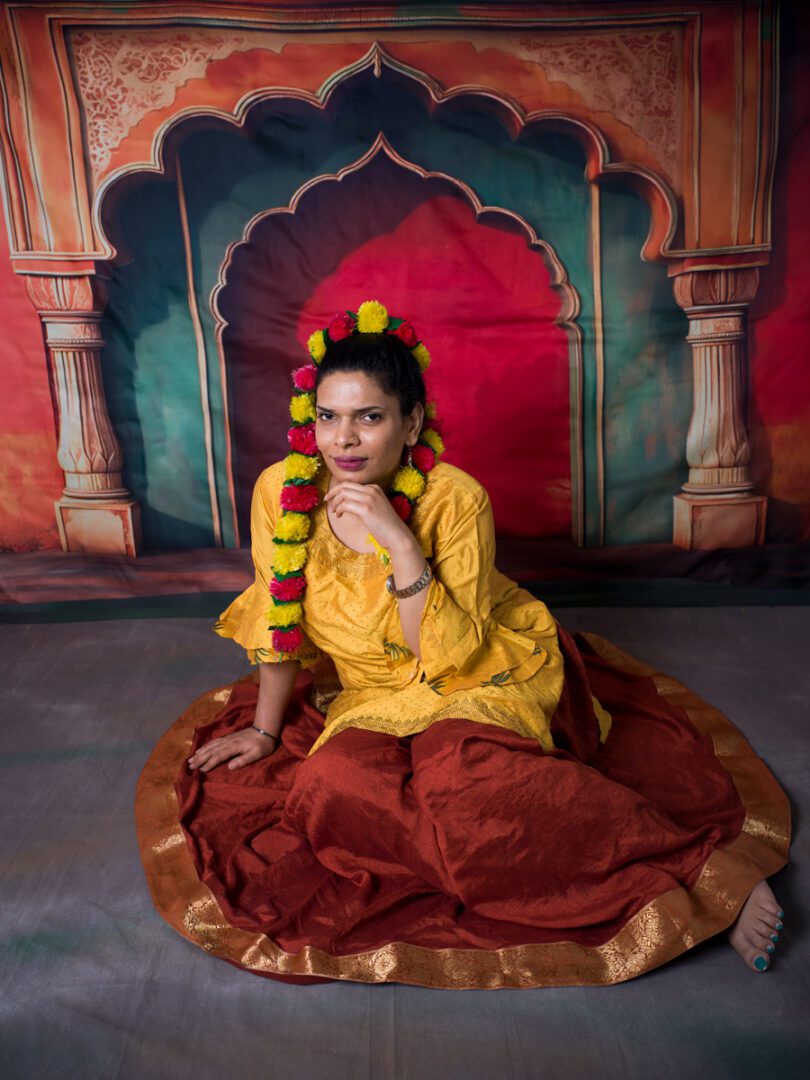
The terms Hijra and Kothi refer to experiences of gender, identity and ways of life rooted in South Asian cultures that do not have direct English equivalents. For many Hijra, identity is connected not only to gender but also shared traditions, cultural practices and social ties. Depending on the context, Kothi may speak to the ways gender, sexuality, desire and social relationships are expressed and understood. These concepts are deeply rooted in South Asian histories and identities, but under British colonial rule, law became a tool for policing gender expression and intimacy. Section 377 of the Indian Penal Code (1861) criminalised sexual acts deemed to be “against the order of nature,” while the Criminal Tribes Act (1871) imposed restrictions on communities. These laws turned British colonial prejudice into public policy.
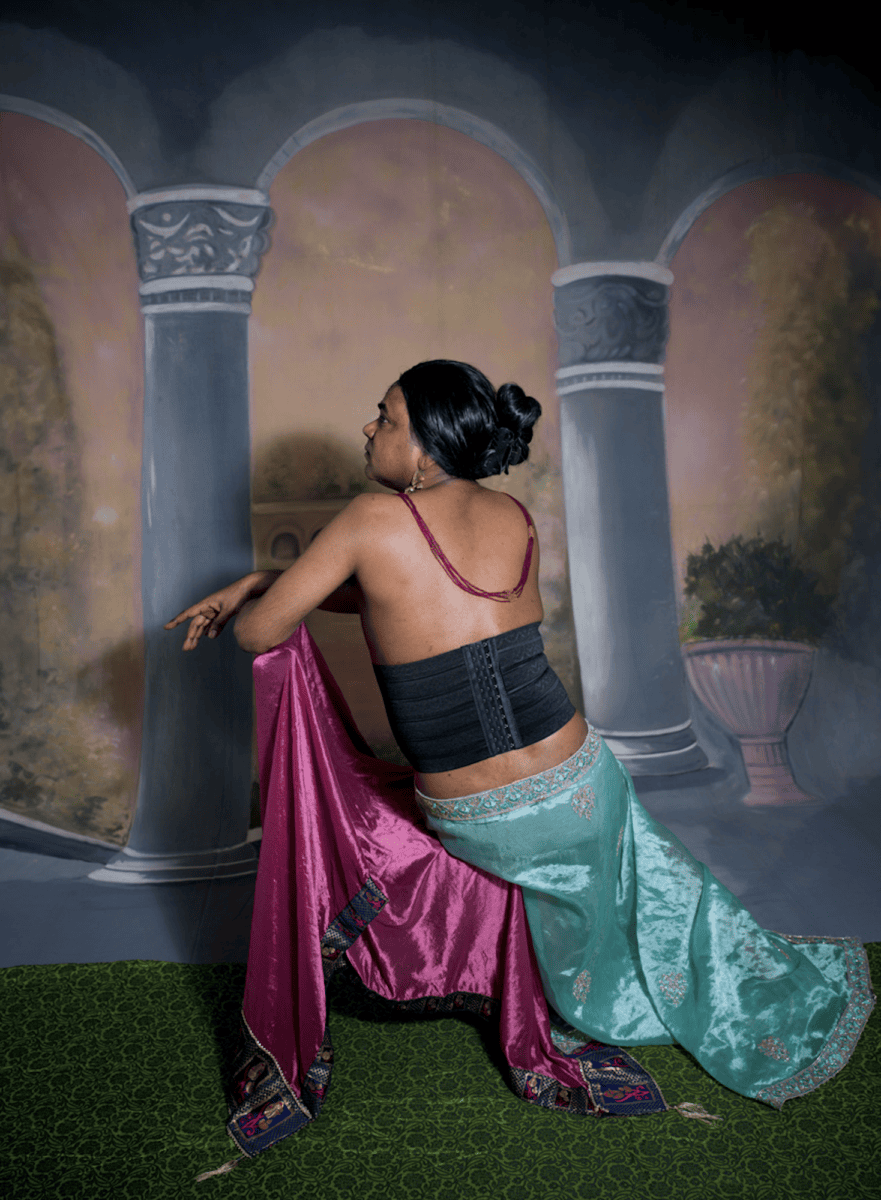
The reality of legislation, legal documents and historic mandates is that they’re often forgotten. They’re left to the annals for historians to pick over, with little widespread consideration for their lasting impacts. Singh refuses to allow this to happen. At the heart of this exhibition, a chronology traces how these histories have been written, contested and changed. It brings together legislation, court judgements, community organisation, political movements and acts of resistance from 1835 to the present, rejecting a simple story of progress. Instead, it shows how law has been used to define and control identities, whilst also being challenged through collective struggle. The chronology extends to the 2026 amendment to India’s Transgender Persons Act (2019), which removed the right to self-identification.

In this light, Your Tongue in My Mouth is an act of resistance in itself. It does not allow the big moments of history to overshadow the people that live with their consequences today. Each portrait is affirms ways of belonging that existed long before colonialism, centring the sitters’ right to define how they are seen, represented and understood. They are a reminder of people at the heart of narratives – and celebrate the collective resistance that continues to shape demands for rights and recognition.
Charan Singh: Your Tongue in My Mouth is at Autograph, London until 13 February: autograph.org.uk
Words: Emma Jacob
Image Credits:
1. Charan Singh, Rasili, 2026. Commissioned by Autograph, London. © Charan Singh.
2. Charan Singh, Munnibai, 2026. Commissioned by Autograph, London. © Charan Singh.
3. Charan Singh, Nargis, 2026. Commissioned by Autograph, London. © Charan Singh.
4. Charan Singh, Chand, 2026. Commissioned by Autograph, London. © Charan Singh.
5. Charan Singh, Naagrani & Roopa, 2026. Commissioned by Autograph, London. © Charan Singh.