

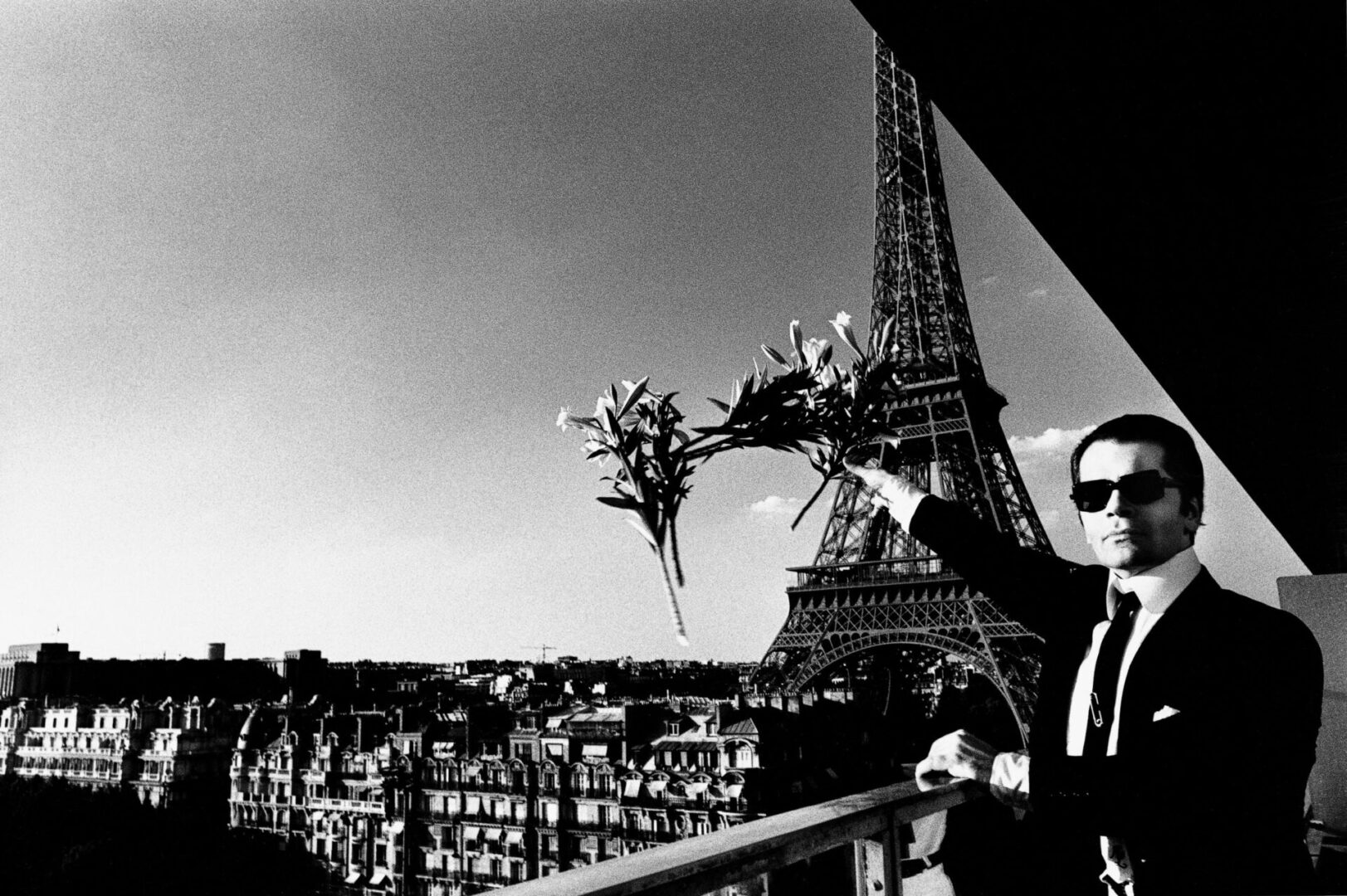
In 2020, a documentary was released to mark the 100th birthday of Helmut Newton. It was called The Bad and the Beautiful, a title that sums up general feelings towards the infamous artist. The artist has been described as photography’s “enfant terrible” and “the king of kink,” whilst a recent Guardian article suggested he “invented pornography chic.” During a now renowned 1979 interview on French television show Apostrophes, art critic Susan Sontag challenged Newton’s claim to love women, arguing that “the master adores his slave and the executioner adores his victim.” The photographer’s controversial and provocative works made him one of the most influential – and talked about – artists of the 20th century. His was a career that spanned decades, shooting for major publications like Vogue and Harper’s Bazaar, but the Newton Foundation’s latest exhibition is devoted to just three books.
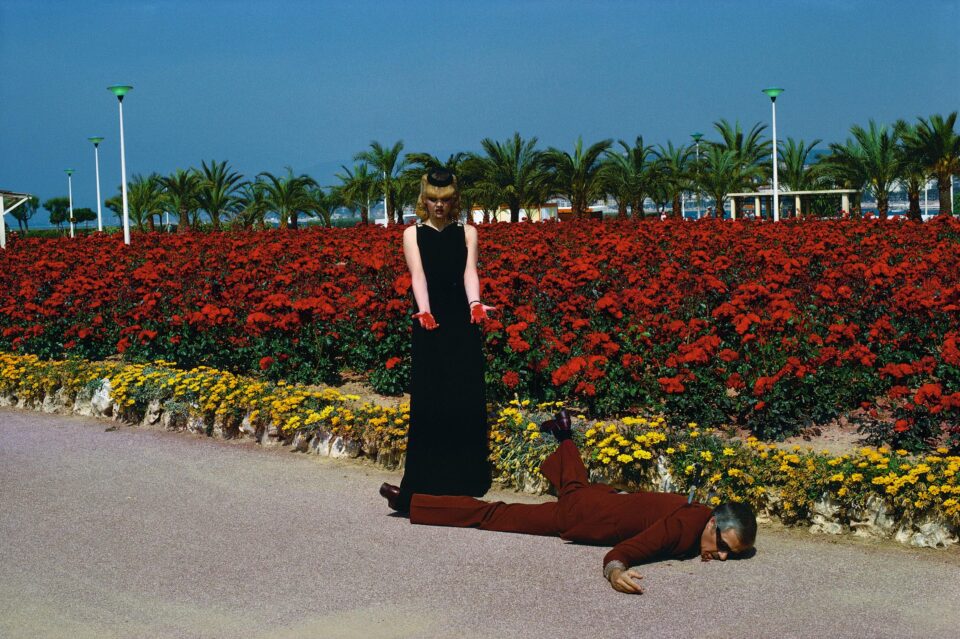
Helmut Newton’s Early Books begins in 1975, a point when the artist was well established with magazines and newspapers but less acquainted with galleries. In fact, this was the year he first showed work in an exhibition, an event that was closely followed by his first book, White Women, also known as Femmes Secrétes. The publication – which won the Kodak Photo Book Award – was controversial from the beginning, bringing together fashion, portraiture and the erotic. Sleepless Nights followed in 1978, and Big Nudes three years later. As celebrated as they are notorious, these books established Newton’s international reputation beyond his countless magazine publication. The exhibition spotlights photographs from all three books, as well as original book maquettes with their alternative cover designs.
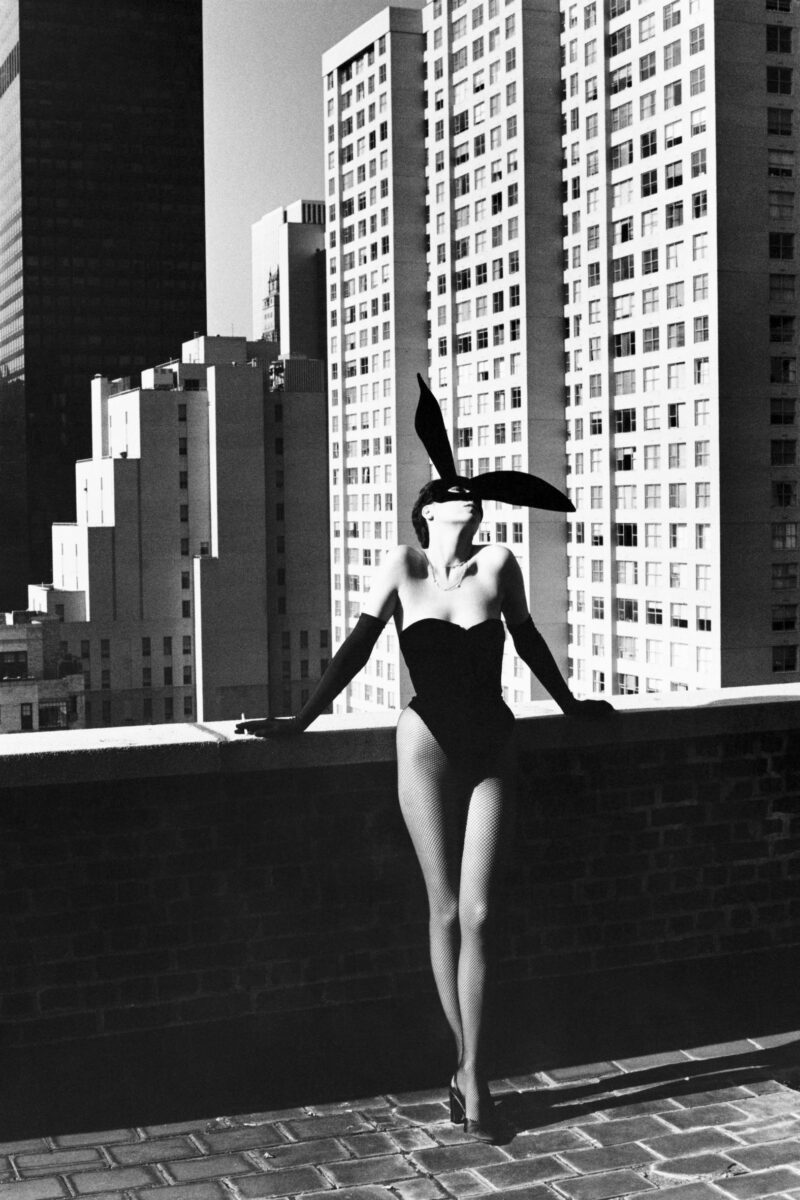
Femmes Secrètes paved the way for an eroticisation of fashion imagery that defined his career during the 1980s. He had been laying the groundwork for this unconventional idea – contemporary fashion in diptychs, the model clothed in one frame and nude in the other – as early as the mid-1970s, but it was this book that really consolidated this creative approach. Newton described how it was “important at this stage in my career, because a book gives a photographer an authority that magazines and newspapers can never offer.” Later recalling that the book “made a big furor because it was the first of its kind.” In it, he brought together nudity and fashion for the first time, producing images that read like film stills.
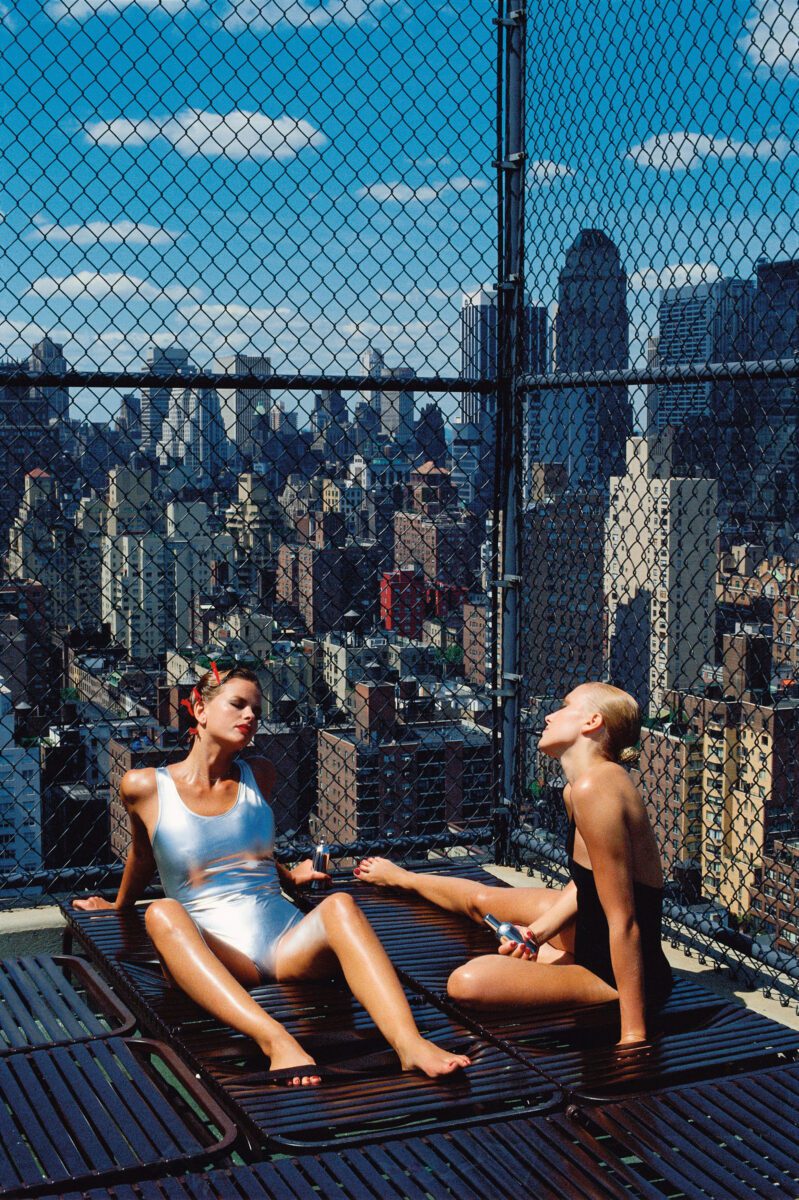
Sleepless Nights is compiled with similar finesse: a different selection of recent black-and-white and colour images that had previously appeared in numerous magazines. Here again the subject is women – their bodies and their clothes. Many of the images are not only fashion pictures but also portraits or partial nudes. Among them are three smaller, iconic series: images of models in orthopaedic braces, made shortly after the publication of J. G. Ballard’s legendary novel Crash; models with Hermés leather saddles, which drew particular controversy; and the so-called “dummies.” This fascination with the uncanny valley, employing dolls that walk the line between real and artificial. Newton worked with shop mannequins whilst on fashion assignments for French Vogue, and in one stunt, had them secured with wire late at night on the Pont Alexandre III bridge over the Seine. Stylists made them up so convincingly that it could take a second or third look to tell whether a figure was a live model or a life-size mannequin. It was an unusual, even radical idea, one Newton seized upon in this book to impressive effect.
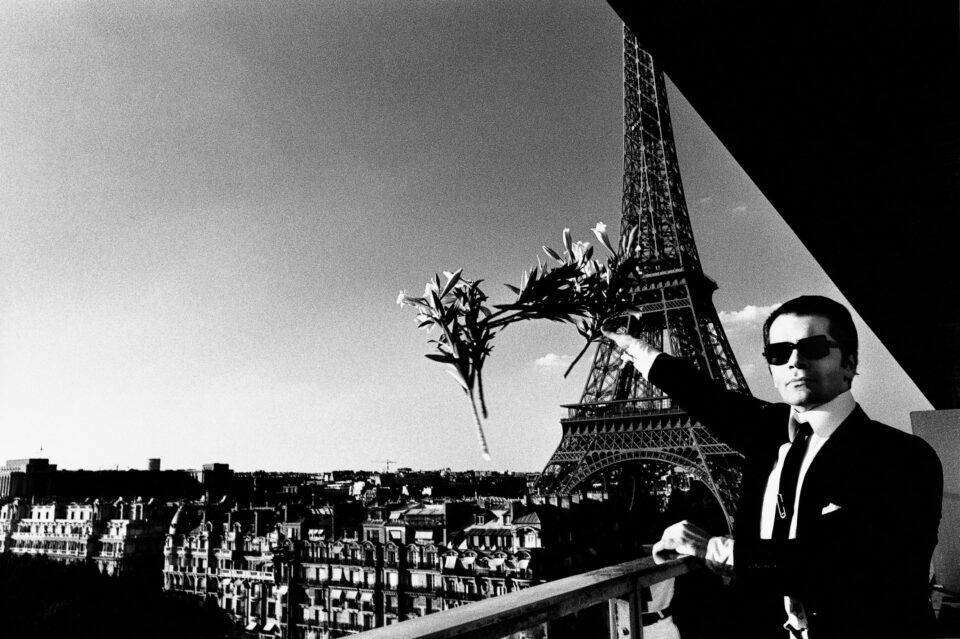
The exhibition moves onto Big Nudes, the third book in this trilogy and the publication that finally made Newton, by then in his early 60s, world famous. It ran to hundreds of thousands of copies and appeared with several publishers and in several languages. Here, full bodies nudes come to the fore. Newton traced the idea for this series to the oversized wanted posters for Red Army Faction (RAF) members issued by the German police: they gave him the idea of shooting full-body nudes with a medium-format camera in the studio, then printing them life-size. It is the culmination of a three-book trilogy that completes a full image of Newton’s disruptive and distinct style. The images are among the best-known of his career, including black-and-white nudes taken between 1979 and 1981 in Paris, Monaco, Los Angeles and Saint-Tropez.
Newton’s legacy continues to permeate contemporary art, and divide opinion, and this exhibition takes a closer look at the publications and projects that established him as a household name. It’s a fascinating angle, and one which gives audiences an insight into the inspiration behind many classic photographs.
Helmut Newton’s Early Books is at Newton Foundation, Berlin from 3 December – 16 May: newton-foundation.org
Words: Emma Jacob
1&5. Helmut Newton, Karl Lagerfeld, Paris 1976, copyright Helmut Newton Foundation.
2. Helmut Newton, Rose Murder, Promenade de la Croisette, Cannes 1975, copyright Helmut Newton Foundation.
3. Helmut Newton_Elsa Peretti as a Bunny, New York 1975, © Helmut Newton Foundation.
4. Helmut Newton, Security New York II, New York City 1977, copyright Helmut Newton Foundation.


