What does time look like when it becomes impossible to measure? Laurent Grasso’s Metaphysical Maze turns MASS MoCA’s vast Building 5 into a device for asking this question, where film, architecture, sound and sculpture operate within an atmosphere of suspended duration. Opening in November 2026, the exhibition brings together Grasso’s most emblematic films alongside new works, including Cosmic Drive, developed through a research residency at the SETI Institute in California. Electromagnetic energy, radio waves, radiation and cosmic phenomena recur throughout his practice, yet the exhibition’s deeper subject is perception itself – how the unseen acquires form, and how uncertainty can alter our experience of time.
Three cross-shaped structures extend through the former industrial space, introducing a geometry that feels both monumental and strangely functional. Inspired by Sol LeWitt’s geometric works, and rotated 45 degrees, they suggest the hands of a clock while disrupting the orderly progression that a clock implies. Their surfaces become screens, carrying Grasso’s films into the architecture, while paintings and sculptures inhabit the same field of vision. Movement through the structures becomes part of the composition, with each turn producing another relationship between image, sound and space.
Grasso’s decision to remove titles, dates and identifying labels deepens that sense of disorientation. Information gives way to association, allowing an image of a landscape, a sculptural form or a moving picture to accumulate meaning through proximity rather than explanation. His description of the exhibition as “an imaginary landscape where you wander without trying to identify every species of tree” is an elegant account of this curatorial strategy. Denise Markonish, who first presented his work at MASS MoCA in Explode Every Day: An Inquiry into the Phenomena of Wonder in 2016–2017, has spent a decade developing the dialogue that led to the project. Her involvement gives the exhibition a longer institutional memory, while the finished installation asks what happens when that history recedes from view.
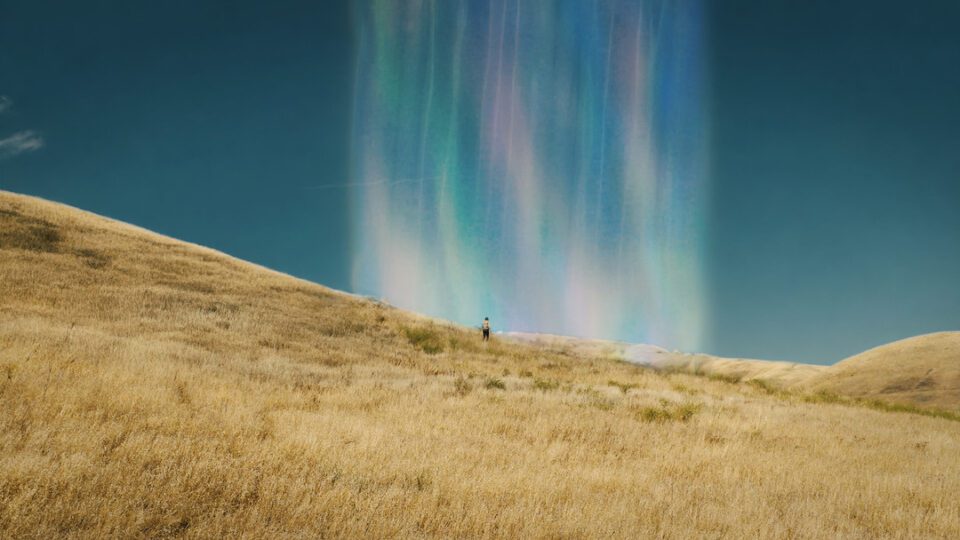
That question places Grasso within a lineage of artists who have treated perception as a material in its own right. James Turrell’s environments provide an illuminating comparison: light becomes architecture, colour acquires physical weight, and the act of seeing slows into an event. Grasso shares Turrell’s interest in the instability of vision, while introducing narrative, scientific speculation and historical memory into the experience. His images carry traces of places and phenomena that seem to exist beyond the immediate room, giving perception a temporal dimension. Turrell asks viewers to attend to the conditions of seeing; Grasso asks what might emerge once they become permeated by stories of forces beyond the visible.
Invisible systems have acquired cultural resonance in an age shaped by technologies that surround us while remaining largely imperceptible. Radio signals, electromagnetic fields and radiation structure contemporary life, yet they resist direct sensory recognition. Anicka Yi has approached a related problem through scent, microorganisms, biotechnology and experimental materials, shifting attention towards forms of knowledge that the visual field cannot contain. Her installations make scientific processes intimate and bodily, while Grasso works through projection, sound and architecture. Both practices reveal how contemporary art can expand perception by giving presence to what ordinarily remains outside it.
Sound becomes crucial to this expansion. Contributions from Warren Ellis and Nicolas Godin of Air move through the gallery as continuous layers, connecting separate works while creating an atmosphere that has no obvious beginning or end. Acoustic space extends the exhibition beyond its visible structures, turning duration into something the body registers through rhythm, repetition and anticipation. Cinema consequently becomes architectural: images surround the viewer, while sound creates connections across distances that the eye cannot hold simultaneously. Grasso’s environment asks for sustained attention, and its pace resists the accelerated consumption associated with much contemporary image culture.
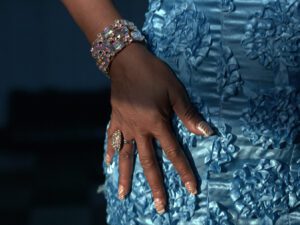
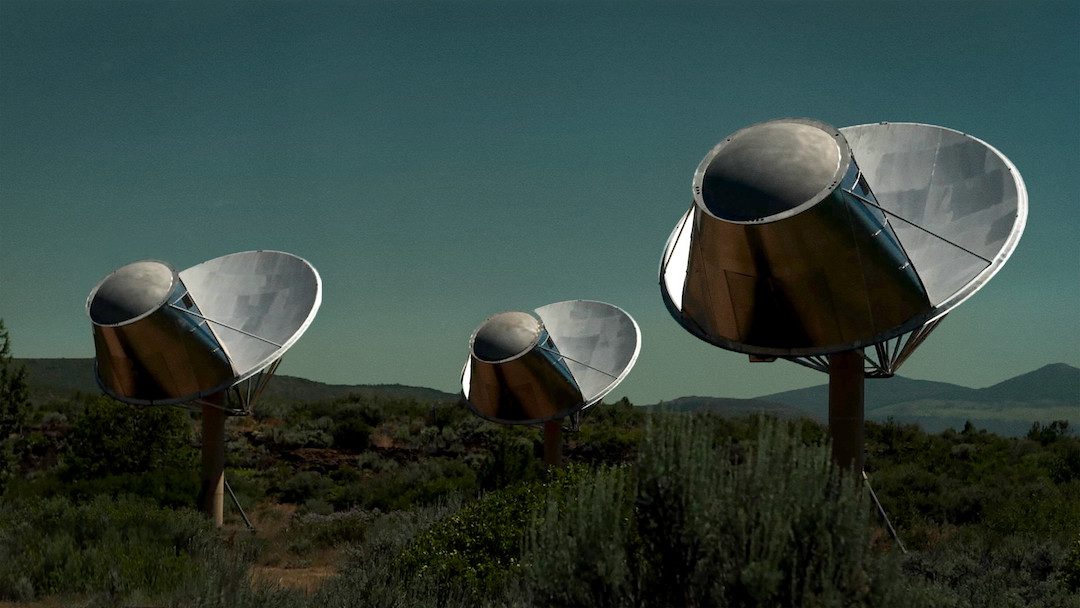
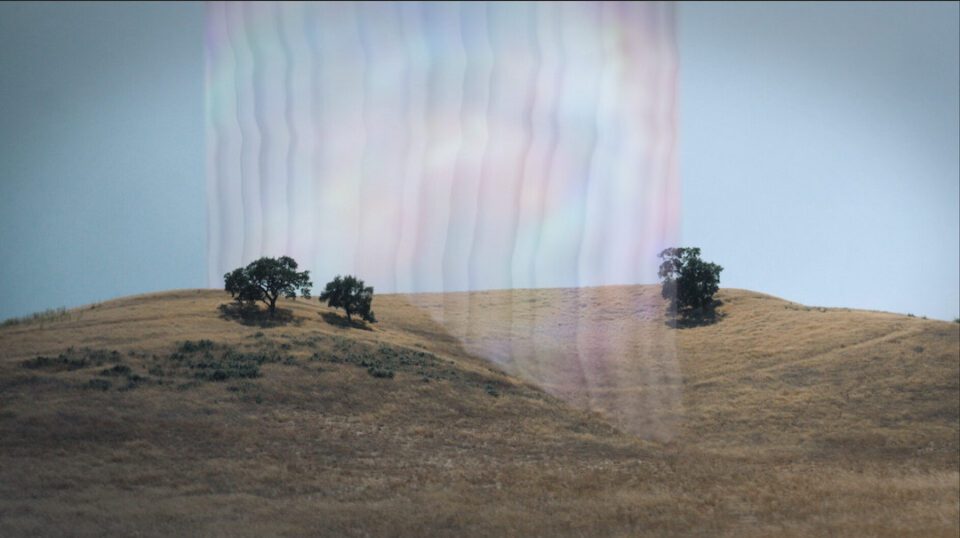
Cosmic Drive extends this enquiry towards planetary and astronomical scales. Developed through Grasso’s residency at the SETI Institute, the film draws on research into the emergence of life in extreme environments and beyond Earth, placing scientific enquiry alongside an altered space-time continuum. Katie Paterson’s practice offers a revealing parallel, particularly in its engagement with geological duration, astronomical distances and forms of time that dwarf human experience. Paterson frequently translates immense scales into intimate encounters, allowing an audience to contemplate processes unfolding across thousands or millions of years. Grasso reaches towards a similar temporal vertigo through cinema.
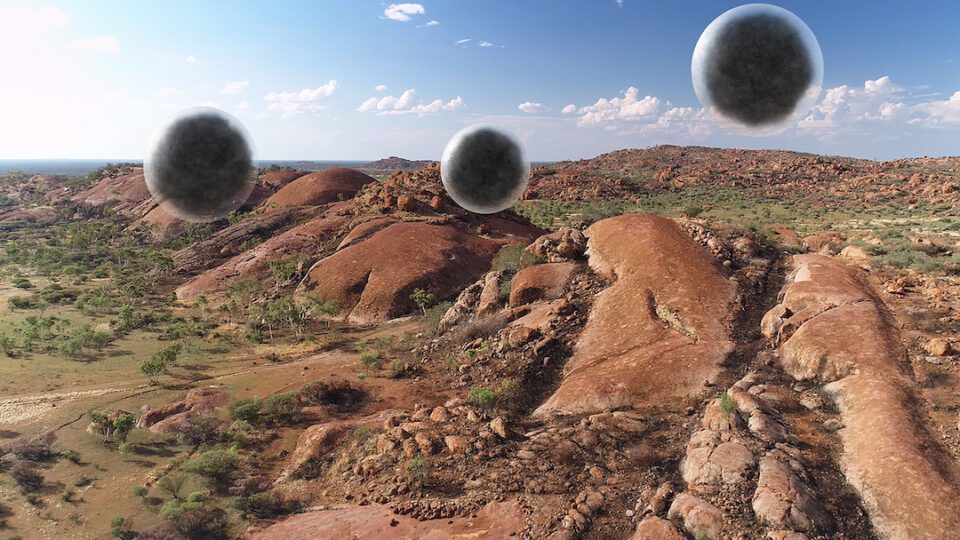
Scientific research enters contemporary art with its own set of tensions. It can provide access to systems and scales that exceed ordinary perception, while artistic interpretation can introduce ambiguity into material that begins with empirical enquiry. Grasso’s collaboration with SETI therefore raises a productive question about where research ends and imagination begins. His films occupy that threshold, drawing on scientific ideas while allowing them to become atmospheric and symbolic. Metaphysical Maze finds its depth in this uncertainty, asking audiences to stay with phenomena that resist a single explanation.
A similar negotiation between structure and openness occurs in the relationship with Sol LeWitt. A Wall Drawing Retrospective, installed in an adjacent MASS MoCA gallery, establishes a direct architectural conversation with Grasso’s cross-shaped forms. LeWitt’s conceptual systems generate visual variation through rules, repetition and instruction, while Grasso uses geometry to choreograph movement and duration. His structures become screens, pathways and clock-like mechanisms, acquiring different meanings as the viewer changes position. The connection between the two exhibitions is more than a formal resemblance: both demonstrate how a strict visual system can produce open-ended experiences.
Landscape introduces a different conception of time. Grasso’s Studies Into the Past series draws upon the Hudson River School, particularly Frederic Edwin Church, whose monumental paintings transformed American scenery into an arena for contemplating nature, scale and the sublime. The connection is especially pertinent in 2026, the bicentenary of Church’s birth, with satellite presentations at Olana State Historic Site and the Thomas Cole National Historic Site extending Grasso’s project into the Hudson Valley. Church’s landscapes and Grasso’s films emerge from radically different technological cultures, yet both turn vast environments into instruments for contemplating forces bigger than ourselves. Mountains, skies and distant horizons become vehicles for thinking about duration, mortality and the limits of human vision.
Romantic landscape painting offers an unexpected route into the technological present. Nineteenth-century artists confronted the sublime through mountains, storms, wilderness and celestial light; contemporary artists encounter comparable forms of scale through satellite systems, planetary data, geological processes and deep space. Grasso brings these histories into contact, suggesting that the desire to visualise the ungraspable has shifted its subject while retaining its emotional force. His landscapes carry the residue of painting even when they appear through a cinematic medium, while his scientific references acquire the atmosphere of mythology. Past and future begin to fold into one another.
This temporal layering gives Metaphysical Maze its strongest critical proposition. Museums traditionally organise art through chronology, authorship and classification, providing visitors with a framework through which objects can be situated and understood. Grasso instead constructs an environment where historical periods, scientific concepts and fictional possibilities coexist. The removal of labels creates freedom for association, while also raising a more complicated question: what is gained, and what becomes harder to see, when context recedes? That tension gives the exhibition an edge, because its openness also asks visitors to consider how museums produce knowledge through the information they choose to reveal.
MASS MoCA director Kristy Edmunds describes Grasso’s work as an exploration of “invisible and continuous forces” that surround us, whether real or imagined. Those forces give the exhibition its underlying rhythm, linking electromagnetic energy with landscape, cinema with architecture, and scientific research with speculative thought. The ambition of Metaphysical Maze lies in making these relationships physical rather than illustrative: visitors encounter them through movement, darkness, projection, sound and changing scale. Grasso’s forest metaphor becomes increasingly apt as the exhibition unfolds, because its meanings emerge through wandering, repetition and delayed recognition.
Grasso leaves the visitor with a different sense of time. His architecture turns duration into something physical, shaped by movement, repetition and shifts in perspective. Film extends this experience from the gallery towards geological and cosmic scales, while references to Church and LeWitt place those ideas within a longer history of art and perception. Metaphysical Maze brings science, landscape and speculation into the same space, leaving viewers to question about what can be seen, measured and understood. The exhibition makes room for uncertainty without making it abstract, giving the invisible a physical presence.
Metaphysical Maze is at MASS MoCA, North Adams, from 7 November.
Words: Simon Cartwright
Image Credits:
1. Laurent Grasso, Cosmic Drive Film HR, 2026 (in progress). Courtesy of the artist, Sean Kelly, Perrotin and Pedro Cera. © Laurent Grasso / ADAGP, Paris, 2026 © Laurent Grasso Studio.
2. Laurent Grasso, Cosmic Drive Film HR, 2026 (in progress). Courtesy of the artist, Sean Kelly, Perrotin and Pedro, Cera. © Laurent Grasso / ADAGP, Paris, 2026 © Laurent Grasso Studio.
3. Laurent Grasso, OttO, 2018 HR film, 21’26’’. Courtesy of the artist, Sean Kelly and Perrotin. © Laurent Grasso / ADAGP, Paris, 2025.
4. Laurent Grasso, Cosmic Drive Film HR, 2026 (in progress). Courtesy of the artist, Sean Kelly, Perrotin and Pedro Cera. © Laurent Grasso / ADAGP, Paris, 2026. © Laurent Grasso Studio.