This autumn, Yorkshire Sculpture Park presents five bronzes in its historic 18th century Formal Garden. The display brings together works by internationally acclaimed artists exploring metamorphosis, hybrid forms, mythology and the body. Three of the featured pieces are introduced to the Park for the very first time, placed alongside two much-loved works from the collection. Louise Lohr, Deputy Curator at YSP, said that the artworks “explore the body in transformation – hybrid, fragmented and mythologised – and ask how sculpture can hold the tension between permanence and change. The Formal Garden provides a particular evocative setting for these works, bringing contemporary and modern sculpture into conversation with its historic architecture and carefully ordered landscape. We are also delighted to place two of Arsham’s most popular works into the wider landscape, allowing visitors to encounter them in dialogue with the Parks’ lakes, woodlands and historic vistas.”
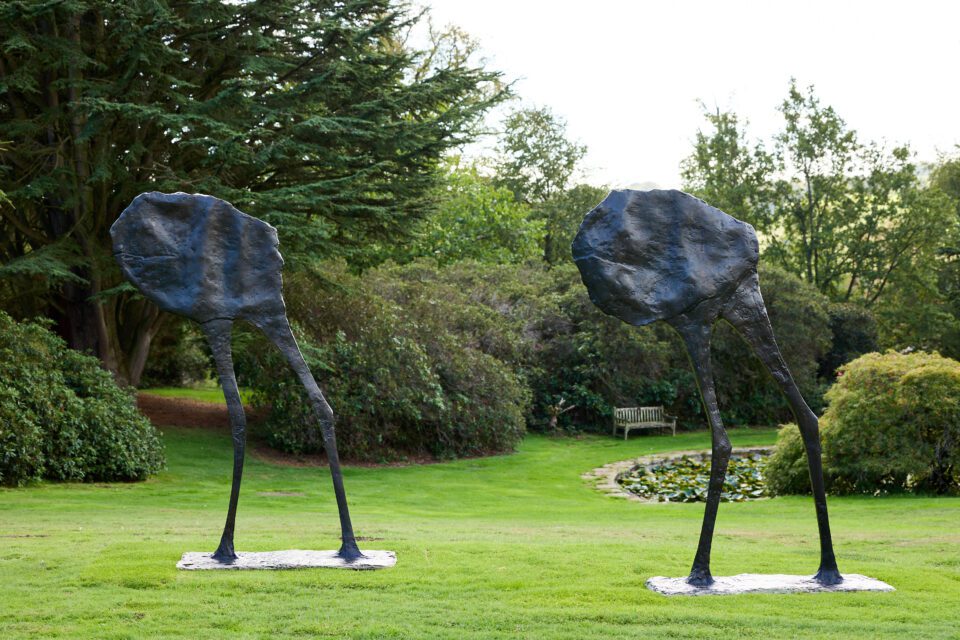
Elisabeth Frink | Mirage I and II
These dual pieces were inspired by the artist’s time living in southern France. She saw flamingos and other wading birds obscured by hazy mirages. Their forms were distorted and appeared as animals, people or trees. Frink used this experience to create ambiguous sculptures, which are fittingly installed in the Formal Garden near to the water, with the pond behind them. The pieces are part of a wider artistic tradition for Frink, whose sculptures are often based on men, horses, birds and hybrid creatures. This was compounded by her experiences during WWII, which saw her images of animals suffering become intertwined with the brutal and random damage that war inflicts on human bodies.
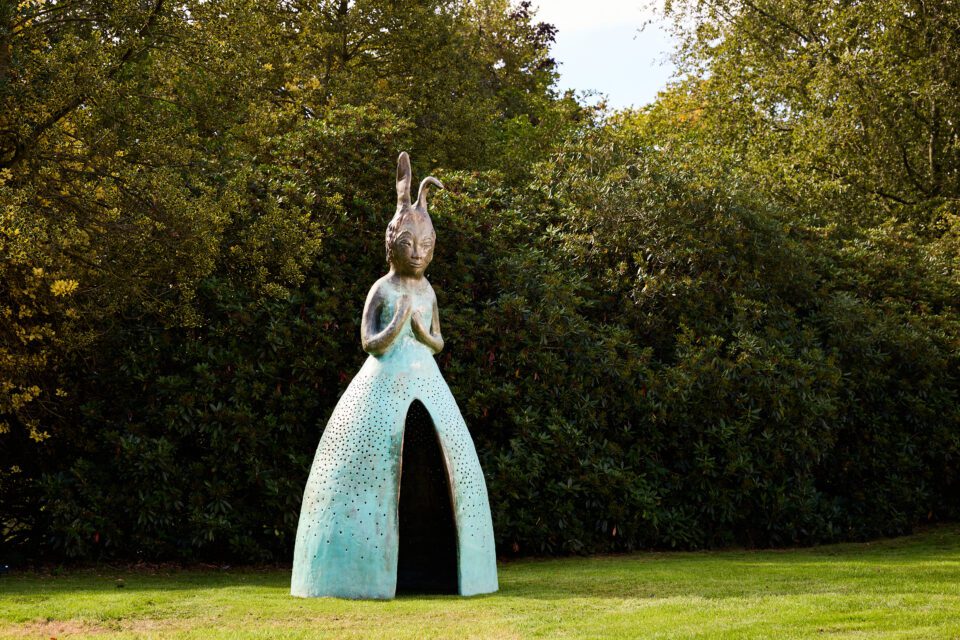
Leiko Ikemura | Usagi Kannon II [Rabbit Madonna]
Usagi Kannon II transforms the familiar figure of the Madonna into a mysterious hybrid presence. The creature with rabbit ears and a crying, human face acts as a symbol of universal mourning, first created in 2011 in response to the Fukushima nuclear disaster in Japan, and the subsequent reported birth defects in animals. The piece questions cycles of creation and destruction, sharing the artist’s concerns for the future of our planet at a time when natural habitats are increasingly under threat. The character’s bell-shaped skirt acts as protective shrine. It combines Ikemura’s interest in Eastern and Western imagery, combining the Japanese Buddhist goddess of mercy, Kannon, and Christian iconography of the Virgin of Mercy.
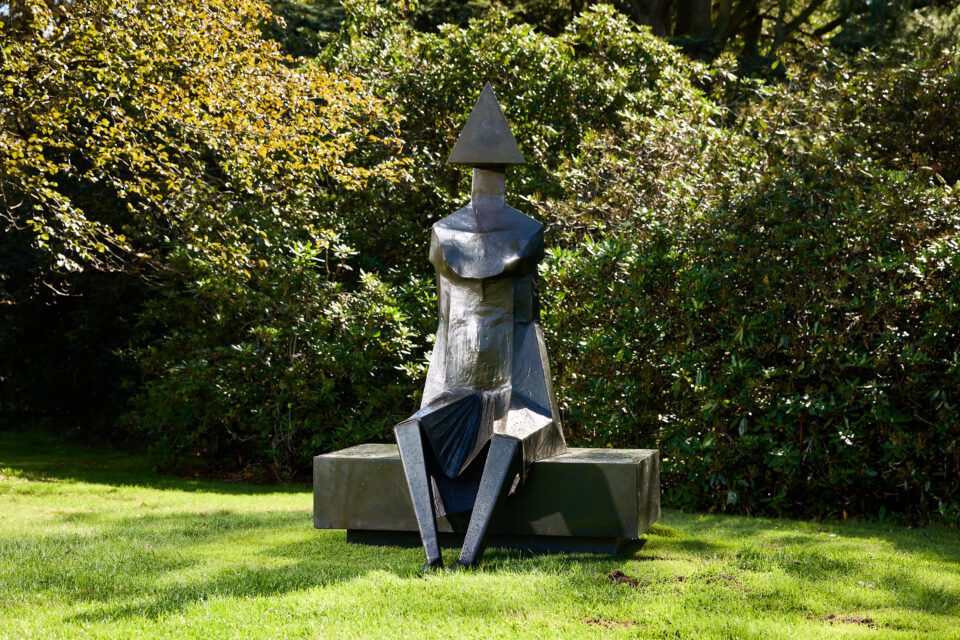
Lynn Chadwick | Little Girl
Lynn Chadwick emerged on the art scene at a similar time to Elisabeth Frink, both reckoning with a society that was profoundly changed by WWII. In this 1987 piece, the artist’s distinctive, angular approach to the figure transforms bodies and nature into something more elemental and symbolic. Little Girl is a prime example of Chadwick’s style, with the artist often experimenting with stainless steel to create sharper profiles infused with dynamic energy. His inclusion in this exhibition is the latest in a long relationship with Yorkshire Sculpture Park – the first display of his work took place at the gallery in 1992, and has since played host to countless shows and installations, championing the sculptor’s enduring legacy.
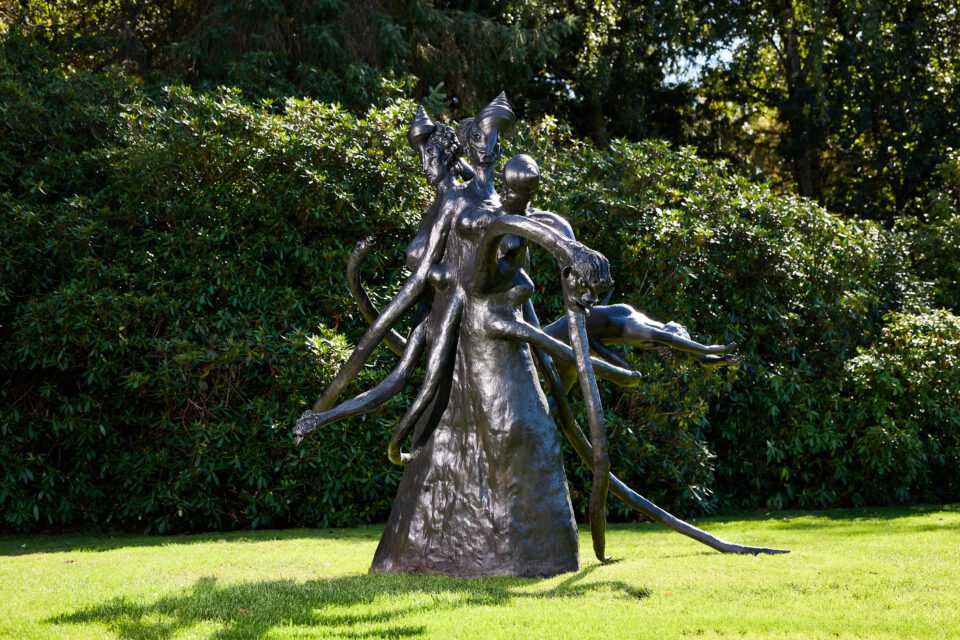
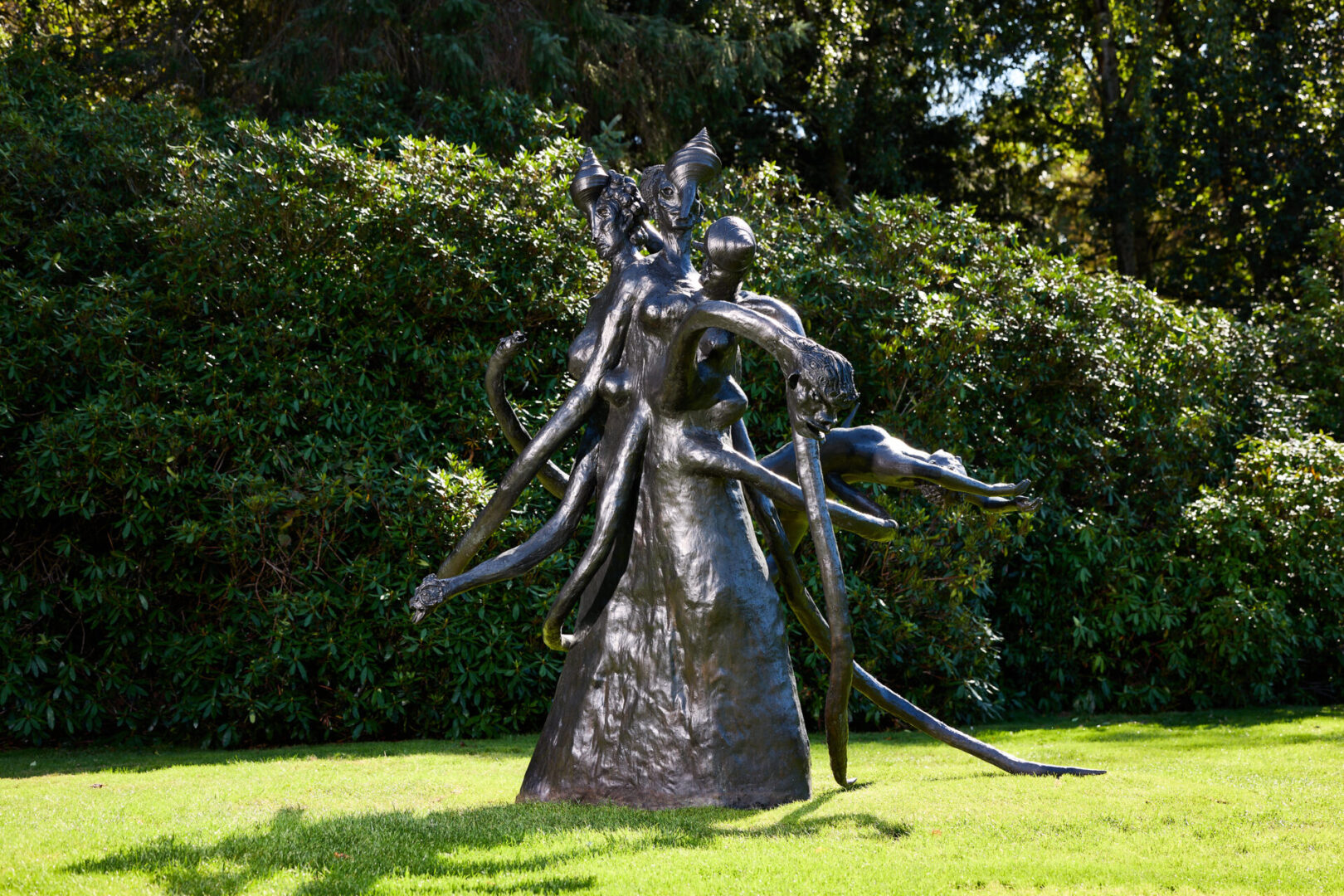
Bharti Kher | Choleric, phlegmatic, melancholy, sanguine
This piece takes its title from the four classical “humours” – the ancient Greek idea that associated bodily fluids with temperament and behaviour. Kher translates this historic theory of personality and emotion into enigmatic sculptural form, representing Kali, the Hindu goddess of time and death. The artist is fascinated by the deity as a complex and powerful female icon, embodying both creation and destruction as a mother figure and fierce destroyer of evil. In examining these ideas, Kher explores the concept that we have multiple versions of ourselves that continuously play out throughout our lives. She challenges fixed ideas of identity and objects to see what other meanings might be possible.
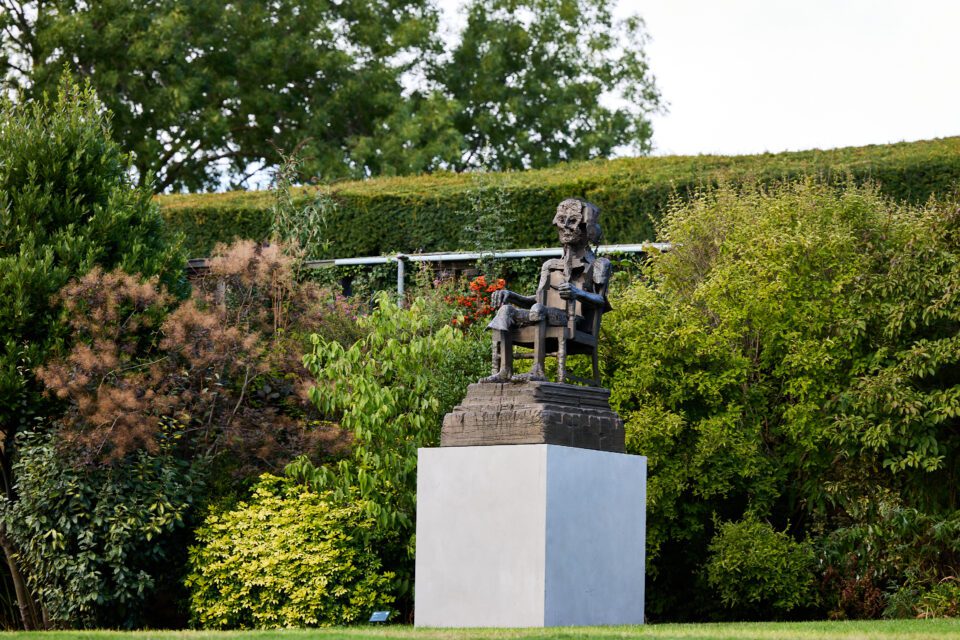
Huma Bhabha | The Orientalist
In Huma Bhabha’s The Orientalist, a human figure becomes fragmented and monumental like an archival remnant. Its otherworldly appearance conjures ideas of ancient civilisations and imagines futures, while questioning how histories and cultural narratives are represented. The character is humanised through exaggerated hands and feet and sympathetic cartoon styling, formed from clay, chicken wire, Styrofoam and found objects. The piece was described by Christies as “an isolated, mutant figure on what appears to be part-throne, part-electric chair. Portrayed with skeleton abjectness, the artist questions the purpose of commemoration and the legitimacy of heritage – making the work a monument to human frailty.”
Find out more about Yorkshire Sculpture Park’s latest display: ysp.org.uk
Words: Emma Jacob
Image Credits:
1&5. Bharti Kher, choleric phlegmatic melancholy sanguine, 2009. Courtesy the artist. Photo Copyright: David Lindsay courtesy YSP.
2. Elisabeth Frink, Mirage I and II, 1980. Photo Copyright: David Lindsay courtesy YSP.
3. Leiko Ikemura, Usagi Kannon II, 2013. Courtesy of the artist. Photo Copyright: David-Lindsay courtesy YSP.
4. Lynn Chadwick, Little Girl, 1987. Courtesy of YSP Collection. Photo Copyright: David-Lindsay courtesy YSP.
6. Huma Bhabha, The Orientalist, 2007. Courtesy of Tia Collection. Photo Copyright: David Lindsay courtesy YSP.