

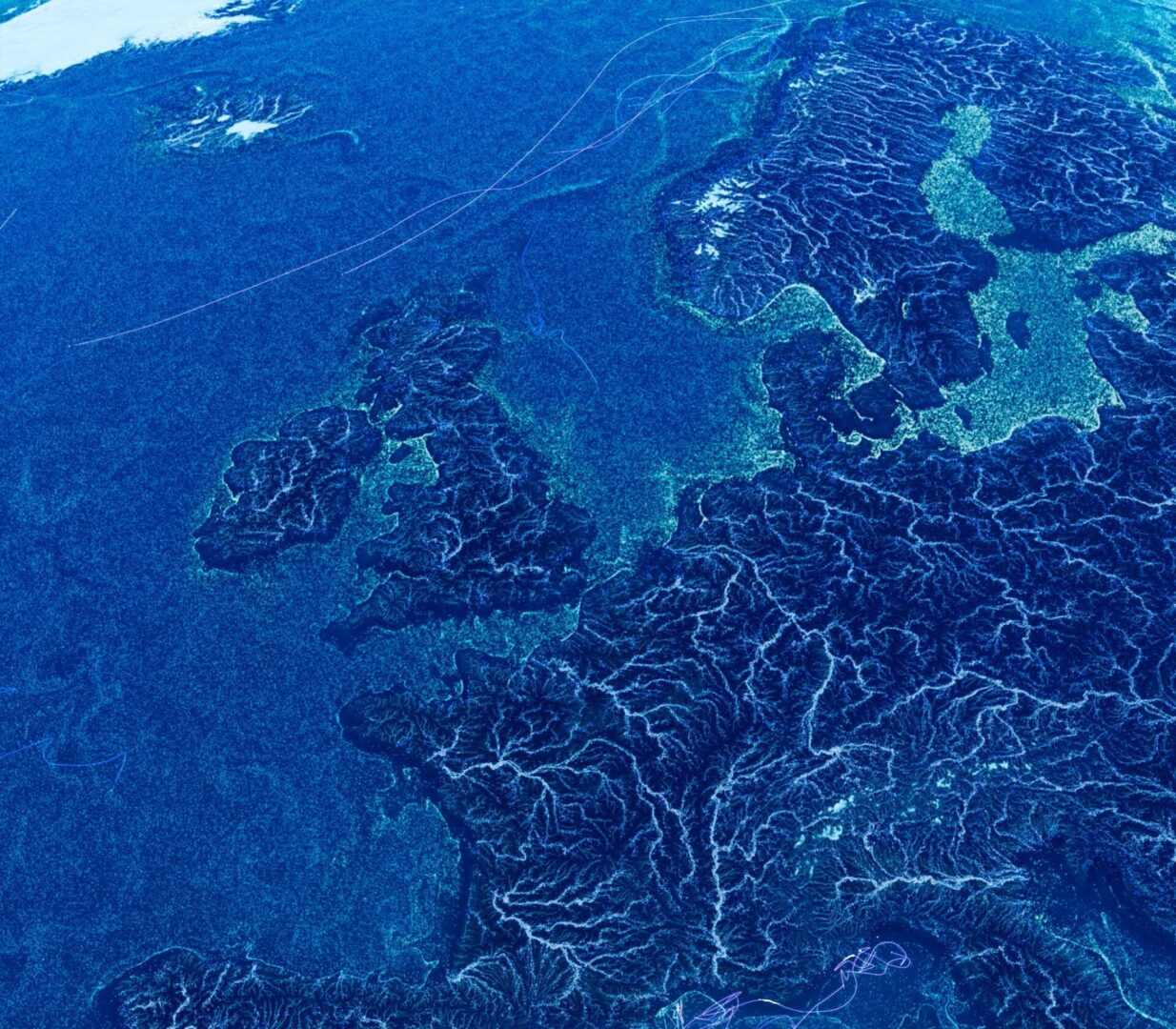
Immersion, participation and planetary interconnection define the 70th BFI London Film Festival’s expanded understanding of screen culture. Returning from 7-18 October 2026, LFF Expanded places immersive art, XR, A.I and video games within the festival’s wider cinematic ecology, asking what a film festival can become when the screen is no longer a fixed surface but a space to enter, navigate and alter. Nine projects are distributed across the BFI IMAX, BFI Southbank Atrium and the new Expanded venue at St Martin-in-the-Fields, bringing together environmental crisis, memory, machine intelligence and play. The emphasis is not simply technological novelty, but a deeper rethinking of spectatorship – shifting audiences from observers towards participants whose presence can shape, activate or complete a work. In this sense, LFF Expanded continues a longer history of cinema as an unstable medium, one that has repeatedly tested the boundaries between image, architecture, performance and lived experience.
Few institutions are better positioned to explore that instability than the London Film Festival, which reaches its 70th edition this year. Founded in 1957 at the National Film Theatre on London’s Southbank, the festival began as a “festival of festivals”, presenting major global works such as Akira Kurosawa’s Throne of Blood, Ingmar Bergman’s The Seventh Seal and Federico Fellini’s Nights of Cabiria. Its history has always been marked by shifts in what cinema might encompass – from the first British film in 1960, through the start of London Choices and the discovery of emerging filmmakers, to the provocative programming of The Texas Chain Saw Massacre, Salò and Natural Born Killers. What feels resonant in 2026 is that spirit of curiosity being directed towards forms that once sat outside conventional definitions of film. As Artistic Director of BFI Festivals Kristy Matheson observes, “like now, we turn to artists to synthesise our times”, positioning the festival as a site where technological and social change can be considered through creative practice.
Curatorial thinking becomes crucial when the distinction between cinema, contemporary art and games begins to dissolve. Ulrich Schrauth, the BFI’s XR and Immersive Programme Lead, has curated LFF Expanded alongside his work as artistic director of VRHAM! in Hamburg, developing a programme that deliberately operates between disciplines rather than belonging neatly to one. His description of the form is telling: “with XR or expanded realities, so many different genres collide or come together”, a position that places narrative urgency and the relationship between physical and virtual space at the centre of the curatorial process. Such an approach recalls the ambitions of Gene Youngblood’s Expanded Cinema, published in 1970, which proposed that cinema could exceed the conventional apparatus of projector, screen and auditorium. More than five decades later, LFF Expanded suggests that this proposition has moved from experimental theory into a practical question for mainstream cultural institutions.
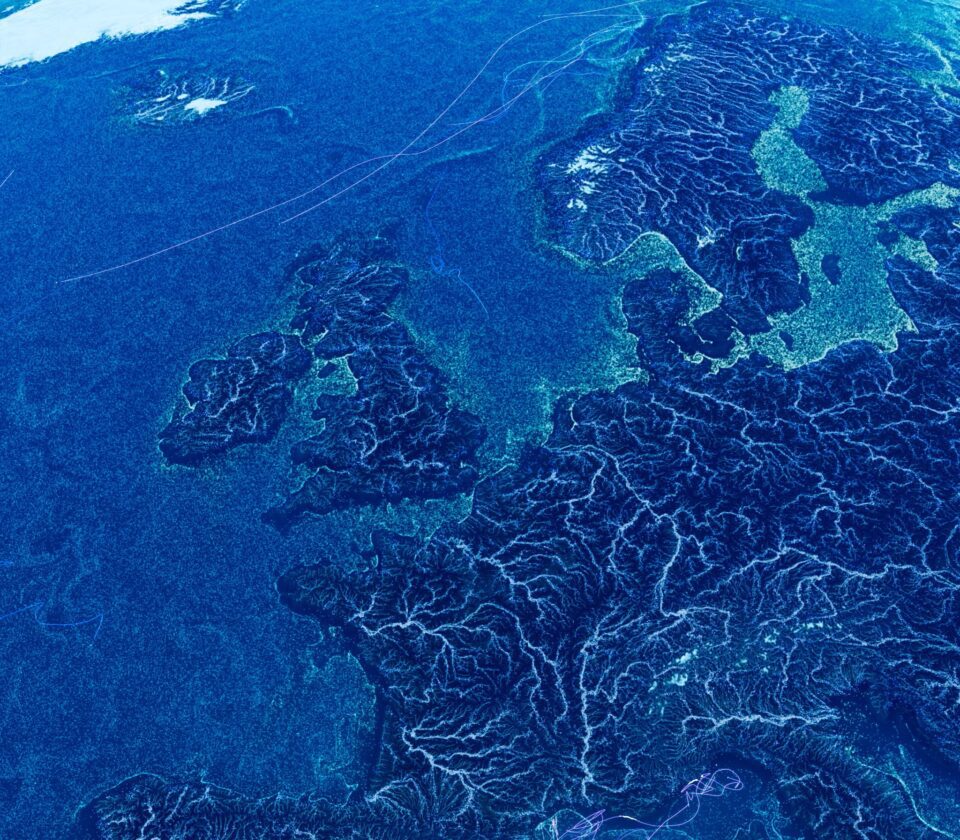
Water, in particular, becomes a medium through which this expanded cinematic language can be understood. Water Body, by Marshmallow Laser Feast in collaboration with writer Robert Macfarlane, James Bulley and Ludmilla Balkis, occupies The Hall at St Martin-in-the-Fields from 3 – 18 October, transforming the new venue into a site for thinking through planetary circulation. Using global Earth systems data, the installation traces the movement of water through rivers, oceans, landscapes and living organisms, refusing the neat separation between human and environmental systems. Marshmallow Laser Feast has long explored relationships between technology and the more-than-human world, and here data becomes something experiential rather than merely informational. The work consequently sits within a wider contemporary discourse around ecological art, in which visualisation is used not simply to represent climate change but to alter our perception of interconnected systems. Its significance lies in making an abstraction – planetary circulation – feel spatial, embodied and immediate.
Another form of environmental memory emerges in Solwata, created by Felix Gaedtke and Gayatri Parameswaran, and The World Came Flooding In, by Isobel Knowles and Van Sowerwine. Both works address rising waters, but neither treats climate change as a distant spectacle; instead, communities and personal histories become the way in which environmental crisis is understood. Solwata uses 360° video, spatial sound and tactile objects to place audiences in the saltwater communities of the Solomon Islands, while The World Came Flooding In works with flood-affected communities in Australia, restoring lost domestic spaces through cardboard, photogrammetry, sound and digital spaces. The contrast is vital because immersive media can easily reproduce the visual language of catastrophe – vast landscapes, overwhelming data, spectacular destruction – while these works pursue intimacy and testimony. Their focus on situated experience raises an ethical issue central to documentary practice: how can immersive technologies create proximity without turning a person’s vulnerability into an aesthetic commodity?
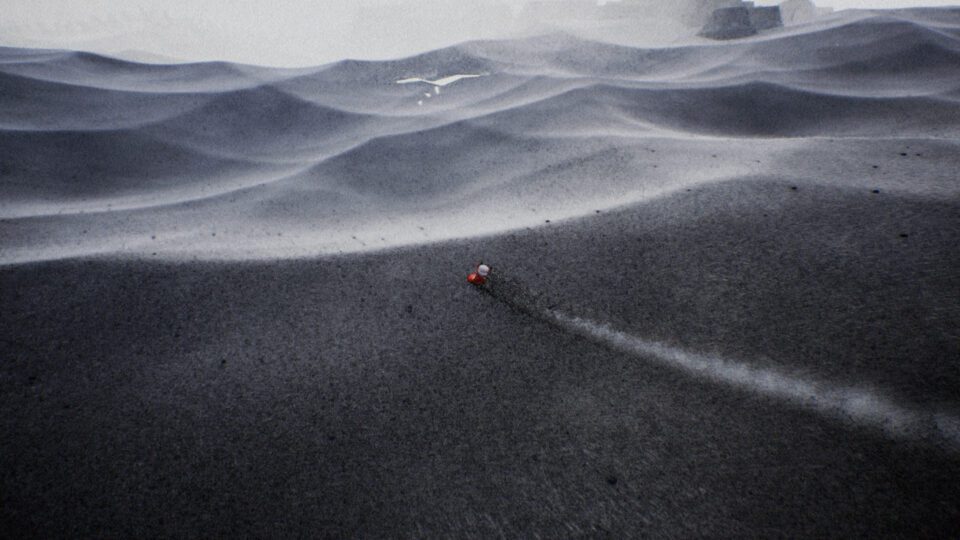
Memory takes a more psychologically unstable form in the Games Lounge, where interactive storytelling becomes a means of exploring identity, perception and emotional experience. …And Roger by TearyHand Studio centres on dementia-related experiences, using an interactive visual novel to complicate the relationship between memory and truth. Love Eternal, by brlka, similarly turns recollection into a physical problem, with shifting gravity and memories functioning as obstacles within a precision platformer. These games demonstrate why the inclusion of gaming within a film festival matters critically rather than simply commercially – the player is not positioned outside the narrative but implicated in its unfolding. Game studies has long examined this distinction between spectatorship and agency, and the LFF programme makes that debate tangible by treating interaction itself as a narrative material.
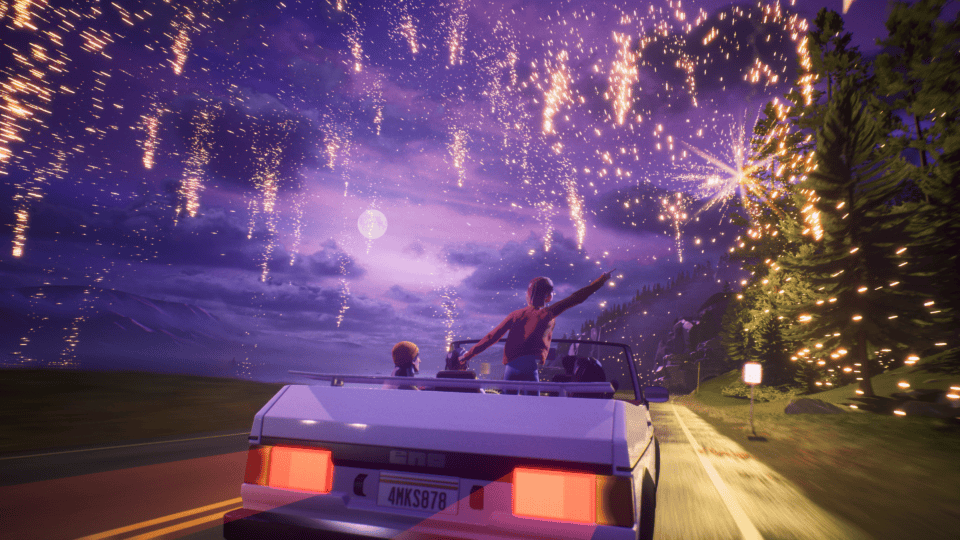
Other titles extend this idea into questions of language, adolescence and collective memory. Unrelated Studio’s Lofsöng places players within brutalist landscapes where a hidden language must be deciphered through listening and exploration, making interpretation a mechanic rather than an activity that happens after the artwork has been experienced. The Day I Became a Bird, from Passion Pictures and Hyper Luminal Games, follows Frank through a handcrafted adventure concerned with self-expression, while Mixtape by Beethoven and Dinosaur uses the structure of a final night together to construct a playable archive of friendship and youth. The games therefore share a concern with transition – between childhood and adulthood, memory and experience, confusion and understanding. Their visual and mechanical differences matter, yet they are connected by an understanding of narrative as something produced through movement, choice and attention. What emerges is a more fluid conception of authorship, in which the creator establishes a world but the audience determines how that world is traversed.
Artificial intelligence introduces a further complication to this question of authorship. Red the Ocean Around U, created by CROSSLUCID with original story by Orion J. Facey, transforms the BFI IMAX into an evolving digital environment in which visitors encounter an AI oracle and influence the development of the world around them. The work asks, pointedly, “what happens when AI starts asking the questions?”, shifting the familiar cultural anxiety around machine-generated images towards the problem of agency and dialogue. Contemporary criticism has increasingly questioned the idea of the autonomous artwork in an age of generative systems, where prompts, datasets, algorithms and human decisions become entangled. Red the Ocean Around U does not resolve that debate, but its participatory structure makes the uncertainty part of the experience itself. The visitor is simultaneously audience, contributor and subject – a position that reflects the increasingly unstable boundaries between human intention and computational response.
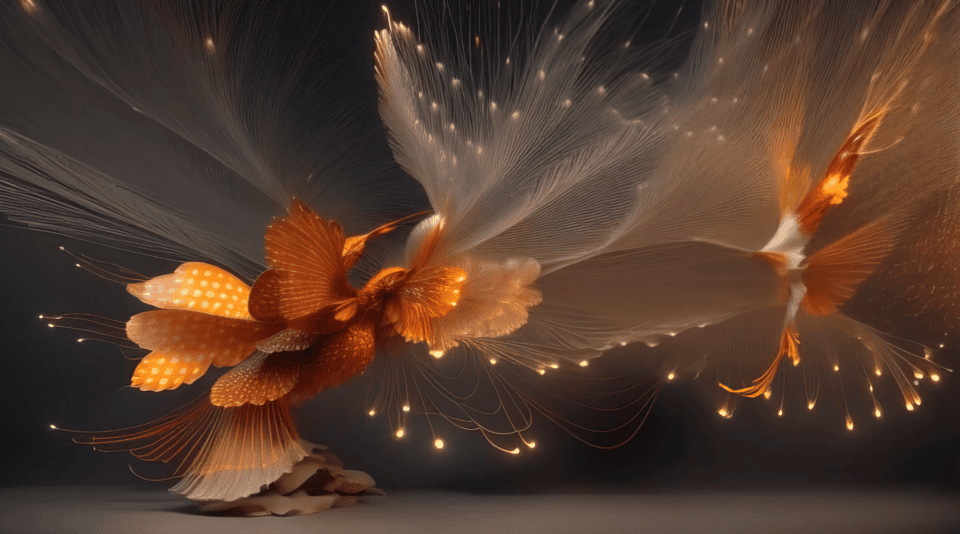
Such instability is precisely where the curatorial ambition of LFF Expanded becomes apparent. Instead of isolating immersive work as a specialist technological annex, the festival places it in its wider programme, while the nine Expanded projects occupy distinct architectural and social contexts across London. The choice of St Martin-in-the-Fields for Water Body is suggestive, as a historic church becomes a setting for a technologically mediated meditation on planetary systems, while the BFI IMAX shifts from monumental cinema screen to interactive installation space. This movement between venues foregrounds something often overlooked in discussions of XR – immersion is not produced by technology alone, but by the relationship between bodies, architecture, sound, image and expectation. Curation therefore becomes a form of spatial storytelling, determining not only what audiences encounter but how they encounter it.
The historical importance of this shift becomes clearer when placed against the changing definition of the film festival itself. London’s festival has repeatedly expanded its remit in response to transformations in cinema and culture, from its early emphasis on international festival winners to the discovery of new filmmakers, independent cinema and formally difficult work. The 1970s brought greater attention to undiscovered films and independent voices, while the 1980s saw an expanding network of venues and programming strands; by the 1990s, the festival had grown into a substantial international event encompassing a far wider range of genres and national cinemas. LFF Expanded can be understood as another stage in that history – not a departure from cinema, but an acknowledgement that moving-image culture has become radically plural. Its presence suggests that the contemporary festival is less about defining what counts as film than about creating encounters between different ways of telling stories.
That development has a productive parallel in York. Aesthetica Film Festival was the first UK film festival to include games within its public programme, launching its Games Lab in 2023 as a dedicated space for interactive storytelling alongside screenings, VR and immersive work. The initiative recognised earlier than many traditional screen institutions that games belong within the wider conversation about narrative, spectatorship and image culture – not as an adjunct to cinema, but as a form capable of generating its own sophisticated languages. From 4-8 November 2026, Aesthetica returns to York with a Games Lab showcasing 55 titles, alongside VR, podcasts, film, live music and an extensive programme of industry conversations. The proximity of these two festivals in the autumn calendar is revealing, showing how questions associated with specialist digital culture are becoming central to the contemporary screen arts.
LFF Expanded’s most compelling proposal is not that technology can make cinema bigger, more spectacular or more immersive, but that it can make the relationship between artwork and audience newly visible. Across Water Body, Solwata, The World Came Flooding In, Red the Ocean Around U and the Games Lounge, Involvement becomes a critical condition through which questions of climate, memory, identity and machine intelligence are experienced instead of simply represented. The programme suggests that the future of screen culture will not be decided by a single medium, but by the discussions between film, games, contemporary art, data, performance and architecture. Seventy years after the London Film Festival first gathered audiences beneath Waterloo Bridge to encounter global cinema, its latest iteration is asking a comparable question in a radically altered media landscape: what might a festival become when stories no longer have to remain on screen? This October, London becomes a test for that question, while Aesthetica’s return to York in November offers another chance to meet bold new forms of storytelling – and to consider how the next wave of artists might redraw the boundaries of the moving image.
BFI London Film Festival 2026 runs from 7-18 October: whatson.bfi.org.uk
Words: Simon Cartwright
Image Credits:
All images courtesy of BFI.


