

Photography’s emergence as an art form was also a battle over who controlled the image. Pictorialism placed authorship, materiality and artistic intention at the heart of photographic culture from the late 19th century onwards. Light & Magic: The Birth of Art Photography, opening at Tate Modern this autumn, brings together more than 200 rare vintage prints by over 80 artists across Europe, North and South America, Asia and Australia. Rather than presenting Pictorialism as a transitional episode between Victorian photography and Modernism, the exhibition reveals a movement with its own ambitions, networks and visual languages, asking us to look beyond the established centres of the medium.
Pictorialism began at a moment when photography was caught between mechanical reproduction and artistic expression. Photographers manipulated negatives, papers, chemicals and printing processes to resist the assumption that a photograph was merely a transparent record of the world. Soft focus, atmospheric effects, tonal variation and elaborate composition became strategies for asserting individual vision, while painting, Symbolism and other contemporary art forms provided important points of dialogue. However, this history has often been flattened into a European and North American narrative, with Pictorialism positioned as a conservative precursor to the sharper visual language of Modernism. Curated by Charmaine Toh, Acting Head of Curatorial at Tate Modern, and Genevieve Barton, Assistant Curator, International Art, Light & Magic instead extends the movement across cultures and decades.
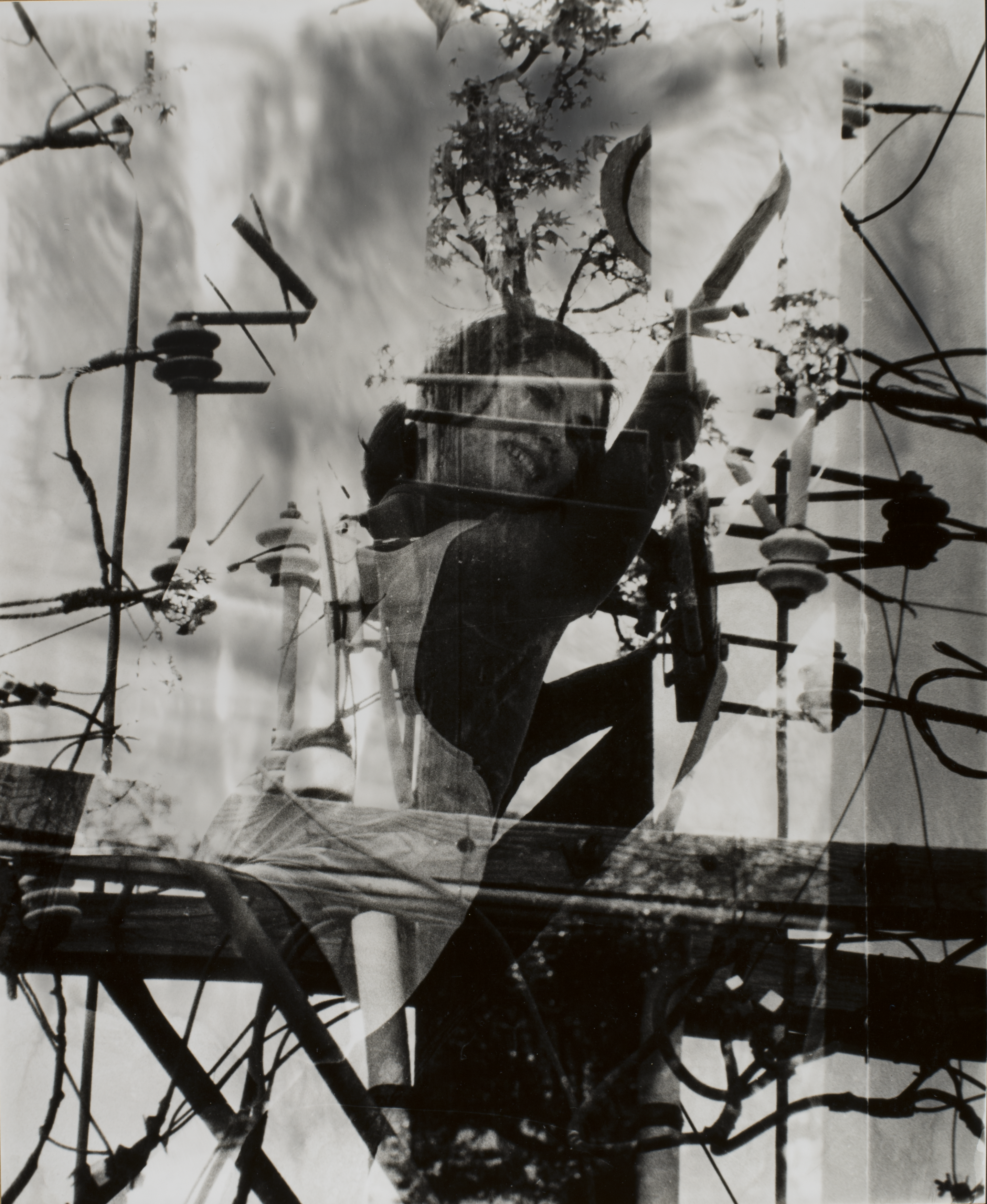
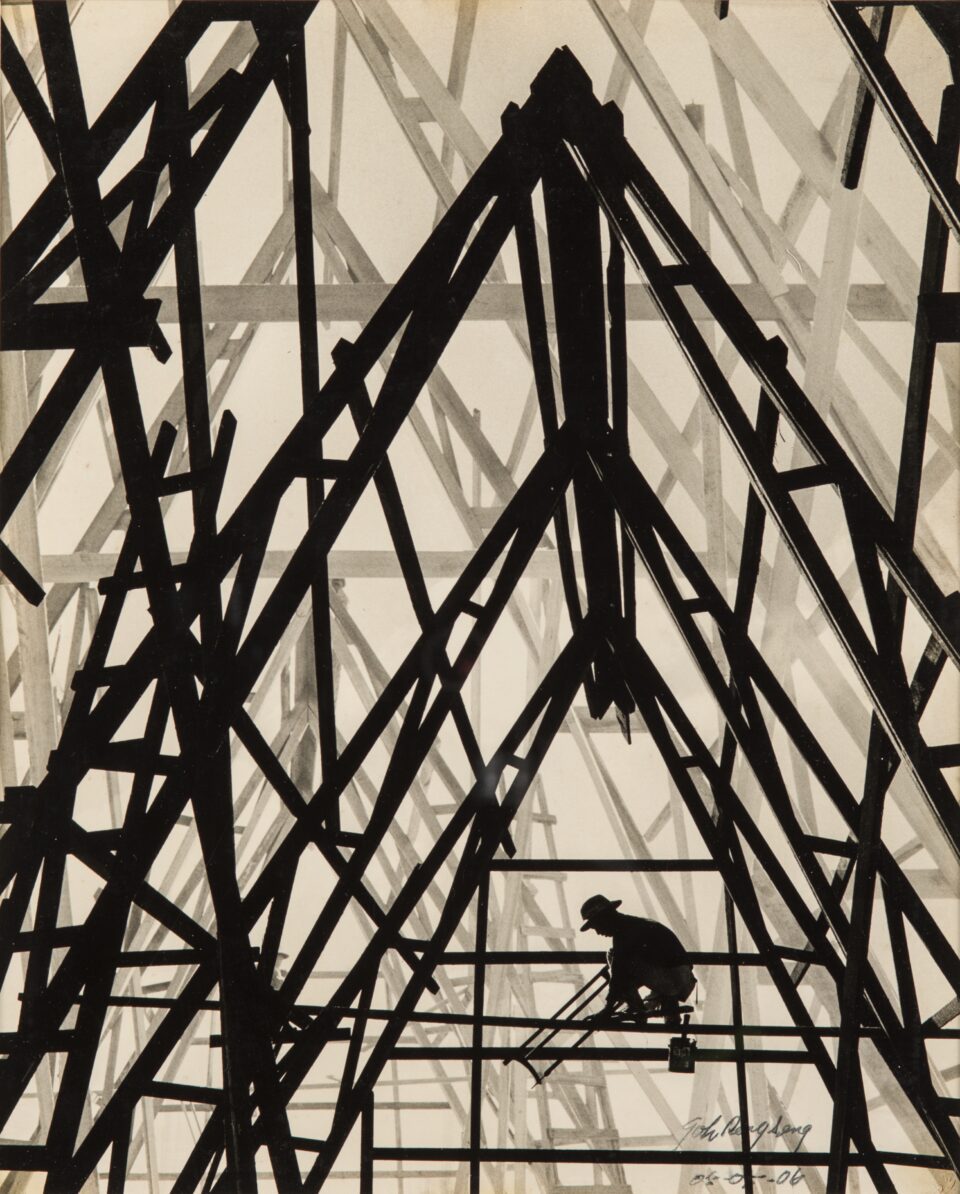
Every photographic canon is also a story about exclusion. What survives, what enters collections and what is repeatedly exhibited can determine which practices come to stand for an entire medium. By placing celebrated figures alongside photographers whose work has received considerably less attention, Tate’s exhibition complicates the familiar hierarchy between centre and periphery. Adolph de Meyer and Clarence H. White appear alongside Long Chin-san, Luo Bonian and Shapoor N. Bhedwar, producing a field in which different photographic traditions can be read in relation rather than isolation. Long Chin-san’s Pavilion Fairyland, with its evocation of traditional Chinese ink painting, is particularly revealing, demonstrating that photographic modernity did not require a rejection of inherited visual languages.
Softness becomes a form of authorship in Emma Barton’s The Awakening (1903). Rather than presenting the portrait as an unmediated record, Barton builds an image through delicacy, atmosphere and controlled tonal effects. The result sits at an interesting distance from photography’s supposed obligation to document, suggesting that the camera can be as imaginative as it is evidential. That tension feels particularly relevant now. As photographic manipulation and AI-generated imagery continue to complicate ideas of truth, Barton’s insistence on intervention looks like an early claim for the artist’s agency.
A photograph, in Pictorialism, was never simply what happened inside the camera. Paper, chemistry, surface and tone all became part of the image’s identity, turning the print into something closer to a crafted object than a neutral document. Peter Henry Emerson’s A Norfolk Boat-Yard (1886) sits within this exploration of process, while pairs of prints reveal just how radically different techniques could alter the same image. A functioning darkroom extends the point into the gallery itself, making visible the labour that is usually hidden behind the finished photograph. At a time when so much image-making happens without a physical trace, that emphasis on touch and process feels particularly resonant.
Performance enters the picture through the rise of studio photography, where constructed environments, costumes and theatrical poses allowed photographers to move beyond the conventions of straightforward portraiture. Bertram Park, Yvonne Gregory and Cavendish Morton developed images in which identity could be staged, stylised and transformed, while Yevonde’s Goddesses series pushes this impulse into colour through experimental Vivex prints. Such work makes photography appear less like a passive witness than a form of production, anticipating contemporary concerns with self-fashioning, celebrity and mediated identity. Portraiture here becomes a space in which the subject is not simply recorded but actively invented. What appears at first to be an historical curiosity consequently opens onto a larger cultural question about the extent to which images construct the identities they claim merely to depict.
Photographic societies, salons and camera clubs were equally important to Pictorialism’s development. These networks created an international infrastructure through which images, techniques and arguments could circulate, offering photographers an alternative geography to the conventional museum-centred history of modern art. London’s Royal Photographic Society forms one important node, but Light & Magic also draws attention to organisations including Guangshe in Shanghai, The New Line Group in South Korea and the Photographic Society of Singapore. Their journals, books and exhibition cultures reveal a sophisticated print ecology in which photography was debated and disseminated long before the arrival of today’s globalised art market. Publications such as Camera Work, Shashinkai: The Monthly Photographic Journal and USSR in Construction demonstrate how magazines could operate not merely as records, but as active spaces for constructing artistic communities and circulating new visual ideas.
The networked history of Pictorialism also challenges the seductive myth of the isolated photographic genius. Artistic movements rarely develop through individual innovation alone; they depend upon infrastructures of publication, criticism, collecting and exhibition that determine whose experiments become visible. Pictorialism’s camera clubs and salons functioned as laboratories for this process, connecting practitioners across national boundaries while also establishing standards of taste and legitimacy. Tate’s curatorial strategy is strongest when it allows these systems to become part of the story rather than treating them as background information. The exhibition participates in a wider art-historical shift towards understanding modernism as plural, interconnected and institutionally produced.
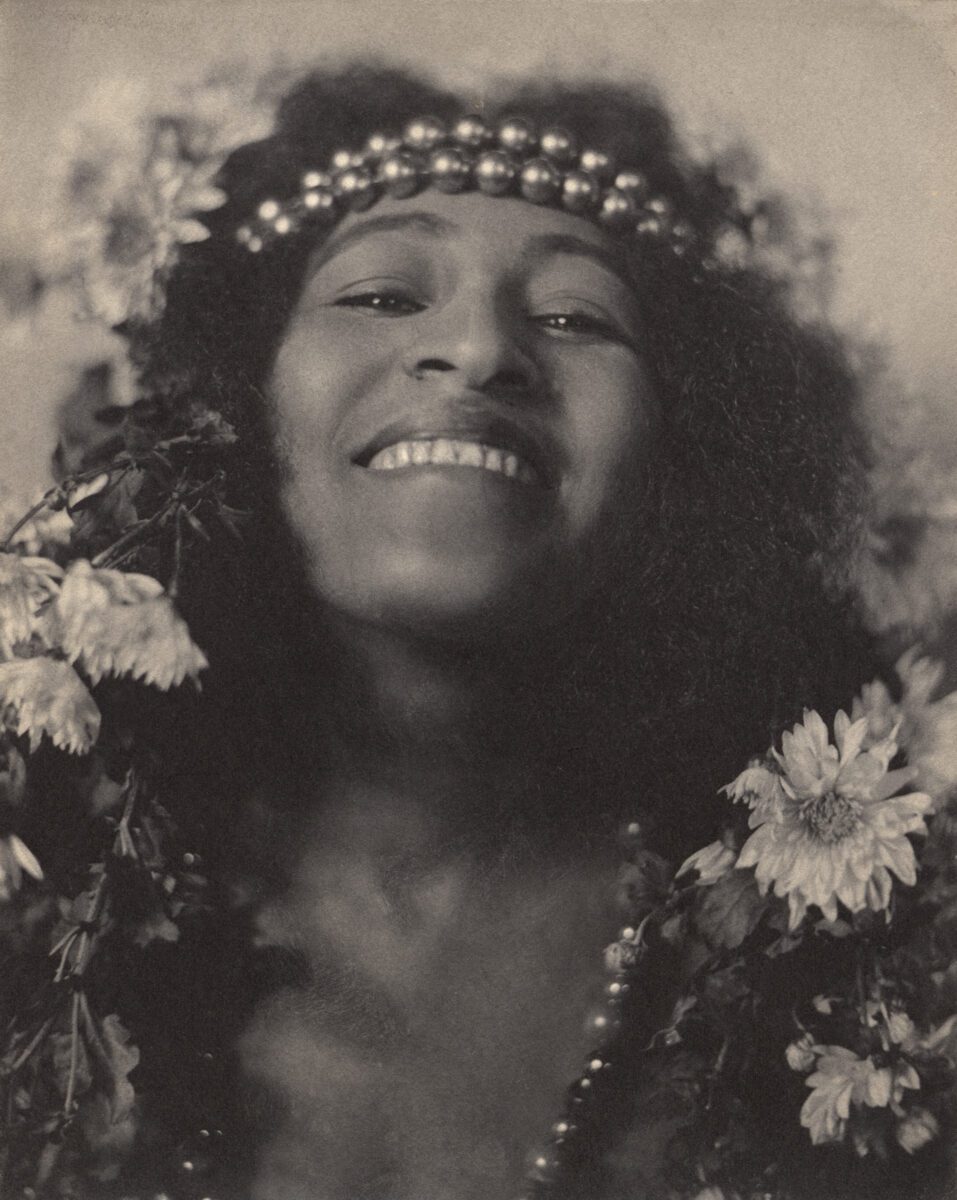
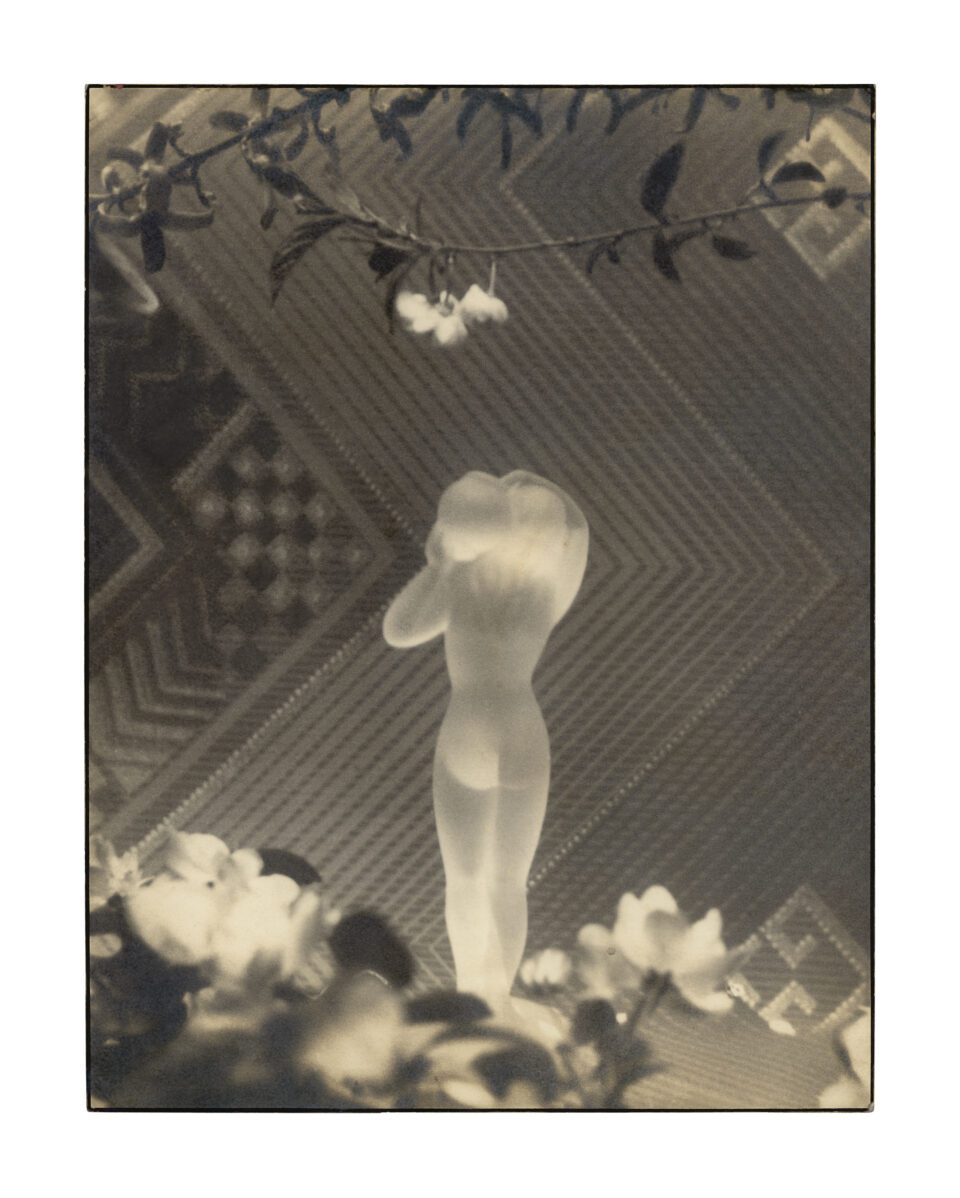
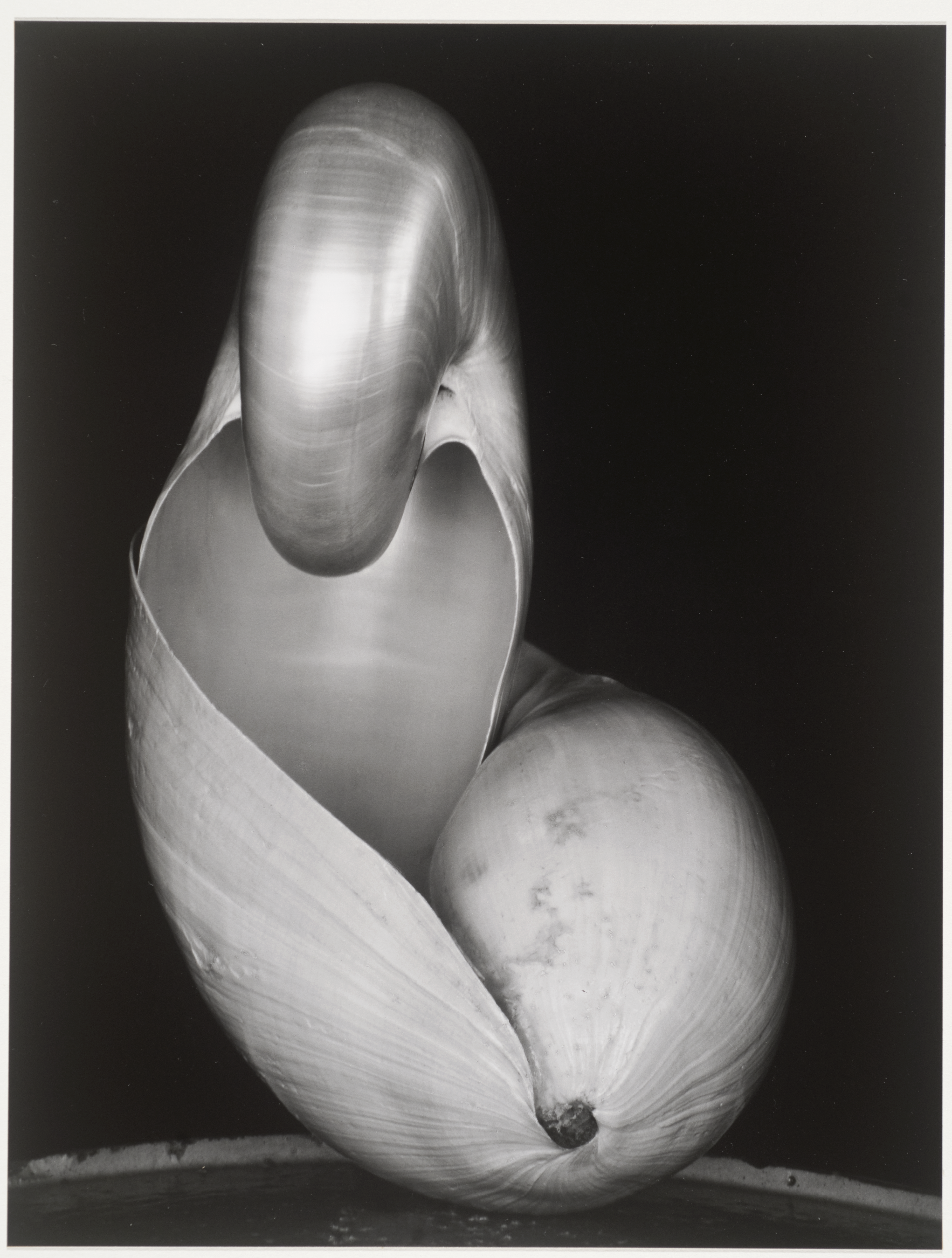
The boundary between Pictorialism and Modernism proves far less stable than photographic history has often suggested. Lionel Wendt’s solarised portraits from the 1930s and Shigeru Onishi’s experimental compositions of the 1950s demonstrate that pictorial strategies did not simply disappear when Modernist photography gained critical authority. Instead, abstraction, solarisation, distortion and formal experimentation could develop alongside – and sometimes through – an older investment in photographic manipulation. Edward Steichen, Paul Strand and Edward Weston further complicate any clean division between movements, their careers crossing from Pictorialist practices into forms of modernism that would later become canonical. Steichen’s Primo Carnera and Strand’s Miss Thomson, New Mexico, both from around 1922, consequently operate as evidence of a medium negotiating competing ideas of progress.
Modernism’s mythology depends, in part, on the language of rupture – the old image giving way to the new. Yet the works gathered here suggest something more interesting: photographic modernity was built through inheritance as much as rejection. Light & Magic proposes that photography’s identity was formed through contradiction, borrowing and persistent reinvention. Pictorialism could be decorative and experimental, conservative and radical, deeply invested in tradition while simultaneously testing the possibilities of a new medium. Those tensions make the movement particularly relevant now, as distinctions between photographic, digital and computational image-making become increasingly unstable.
Few moments make London’s position within the international art world more visible than Frieze Week. Galleries, collectors, museums, curators and artists converge on the capital, turning the city into a particularly dense site of exchange between the commercial and institutional spheres. Tate Modern’s decision to open Light & Magic during this period gives the exhibition an added resonance, placing a reassessment of photographic history within one of the busiest moments of the global art calendar. The timing also offers a reminder of the UK’s continuing cultural reach, while the exhibition itself resists any straightforward idea of London as the centre. Its story moves outward – towards Shanghai, Singapore, Seoul, Sri Lanka and beyond – making the capital a meeting point rather than the endpoint.
What materialises is a history of photography defined by possibility. Pictorialism gave photographers permission to manipulate, stage, soften, colour and reimagine the world in front of the lens, while the societies, journals and salons surrounding the movement created an international culture in which those ideas could travel. Tate’s exhibition restores that sense of experimentation, placing familiar names alongside artists and networks that have received far less attention. Photography did not have to become less photographic in order to become art; its artistic potential was found precisely in what could be done with the medium. More than a history of an early movement, Light & Magic is a reminder that the photograph has always been an inventive form – one whose boundaries remain open to being remade.
Light & Magic: The Birth of Art Photography is at Tate Modern, London from 14 October – 21 February: tate.org.uk
Words: Anna Müller
Image Credits:
1&5. Wu Peng Seng, Construction, 1958 Gelatin silver print on paper, 49.5 x 40 cm. Collection of National Gallery Singapore. Image courtesy of National Heritage Board, Singapore. © Wu Peng Seng family.
2. Paul Strand, Miss Thomson, New Mexico. c.1922. Wilson Centre for Photography. © Paul Strand Archive, Aperture Foundation.
3. Shigeru Onishi, Title Unknown. c. 1950s. Tate. © Estate of Shigeru Onishi.
4. Luo Bonian, Drawing Water from a Well, May 1932. Gelatin silver print on paper 24.5 x 18.8 cm © Luo Bonian, Courtesy of Luo Bonian Art Foundation and Three Shadows +3 Gallery.
6. Edward Weston, Shells, 1927. Tate. All rights reserved, DACS 2026.


