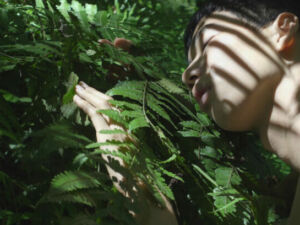
Memory is never static. It is carried by bodies, embedded in materials and rewritten through images, sounds and gestures. The Hammer Museum’s autumn programme brings together five exhibitions that examine these processes across generations and geographies, from Mavis Pusey’s geometric abstraction to Gê Viana’s counter-archives and Vibeke Mascini’s electrically charged sculptures. Questions of identity, migration, gender and ecology recur, but the exhibitions resist a single frame. Instead, they propose art as a space where histories can remain unfinished – fragmented, contested and open to revision.
Across the programme, artists challenge the assumption that history exists as a stable sequence of facts waiting to be preserved. Their practices instead reveal how cultural memory is shaped by what institutions collect, what families retain and what communities transmit through gesture, sound, material and image. Huguette Caland’s sensual drawings and textiles, for instance, place intimacy and physicality alongside questions of gender, ageing and social convention, while Felipe Baeza’s hybrid figures unsettle the expectation that identity should resolve into a coherent image. The connection between these artists is not stylistic but conceptual. Each finds ways of making visible experiences that have historically been difficult to accommodate within dominant accounts of modern and contemporary art.
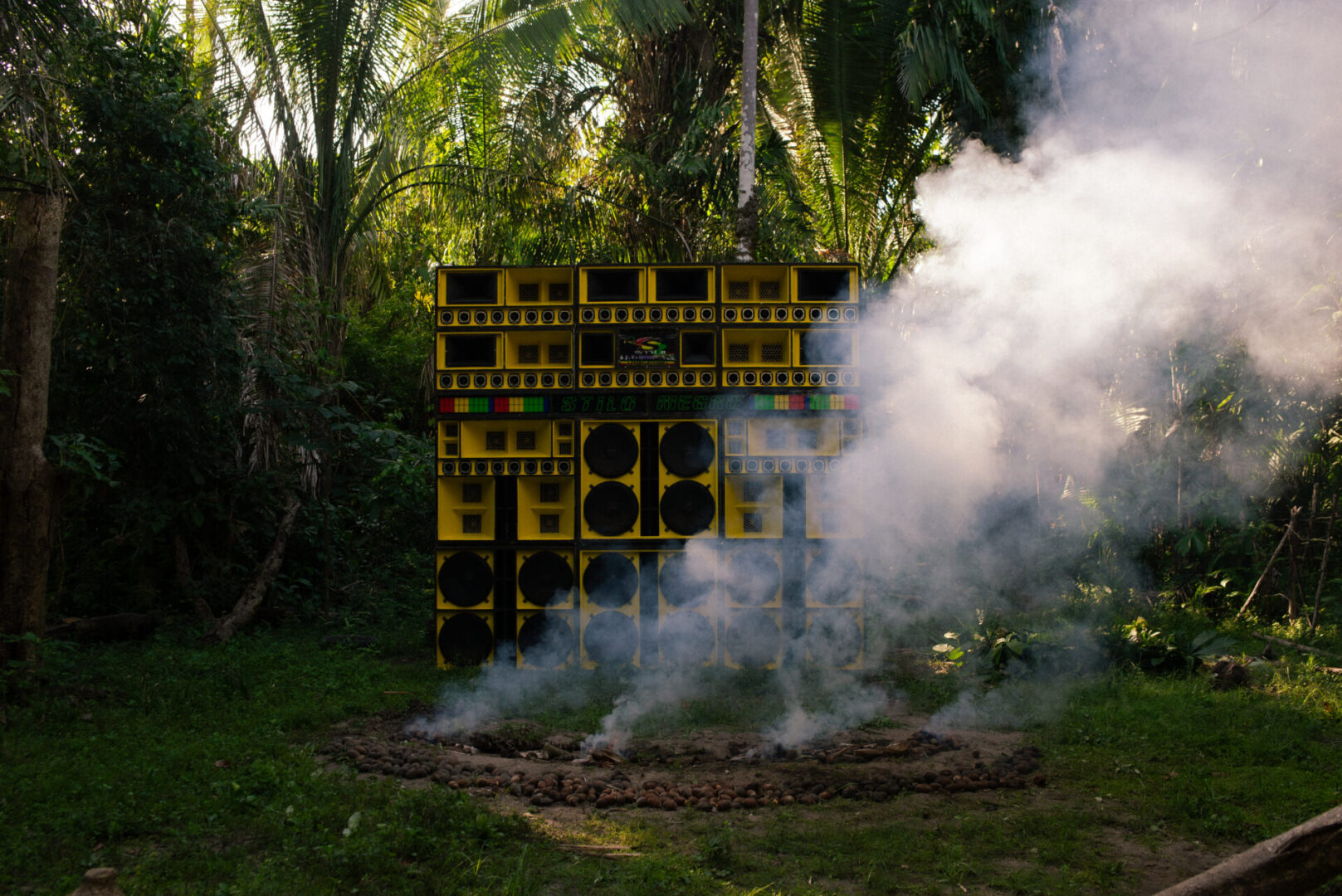
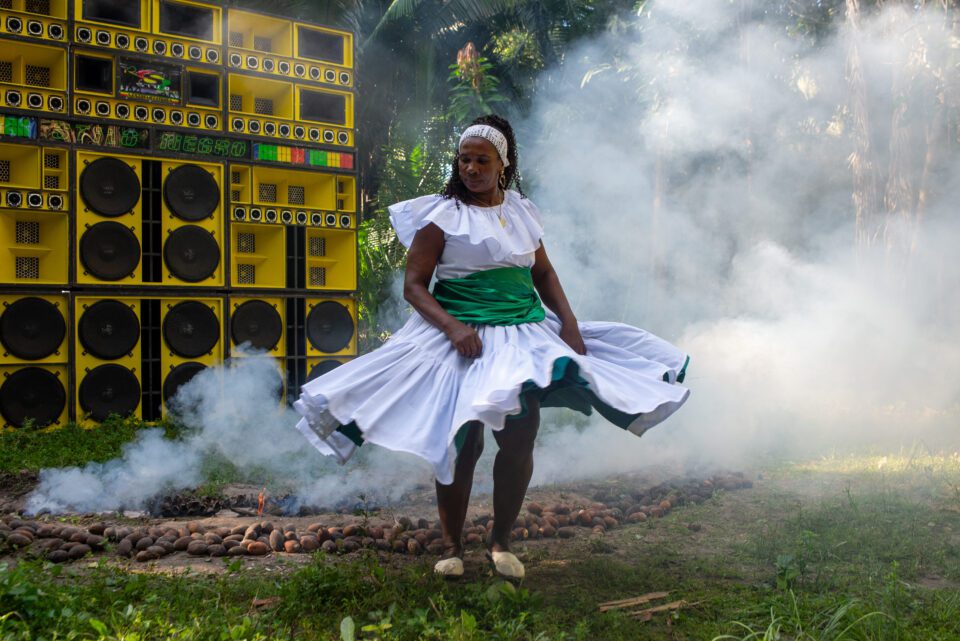
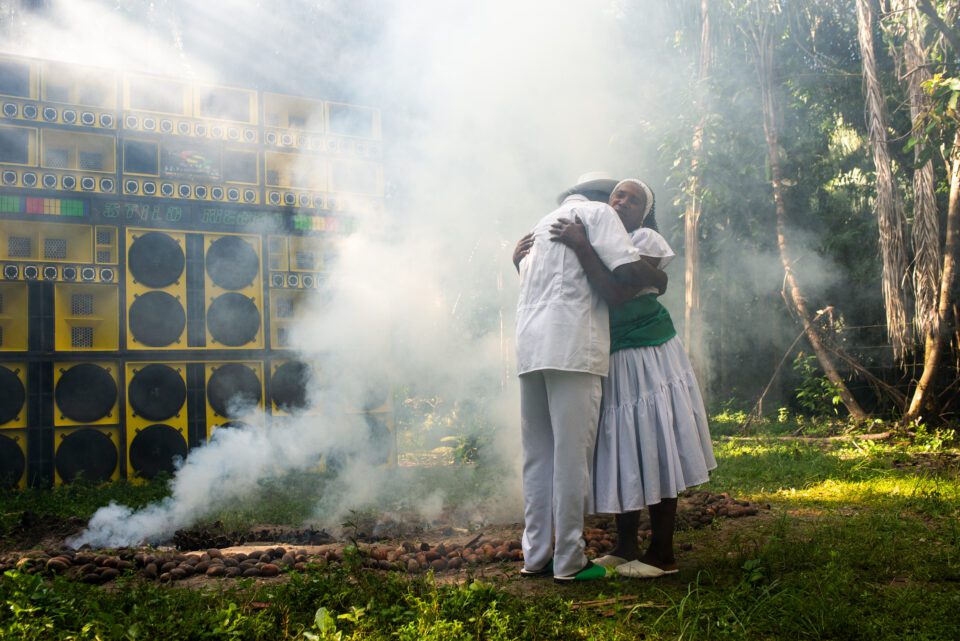
Gê Viana’s work approaches the archive as an incomplete construction rather than an authoritative record. Working across collage, sound, video and installation, the Brazilian artist moves between domestic, urban and rural environments, combining analogue and digital processes with early photographic techniques. Her practice considers the gaps maintained by institutional memory, particularly in representations of Afro-Brazilian identity and heritage. In Radiola de Promessa (2025), everyday life in rural Maranhão becomes a repository of ancestral rhythms, songs, dances and memories, while reggae connects cultural history to the landscape. Faith, music and belonging consequently operate as living forms of transmission.
That approach speaks to a wider shift in contemporary art towards the counter-archive. For decades, artists and scholars have questioned whose histories museums preserve and whose experiences remain absent from official narratives. The archive has increasingly become a site of artistic intervention, with practitioners turning towards oral histories, domestic photographs, vernacular imagery and embodied knowledge. Viana’s contribution is particularly compelling because she does not simply attempt to fill an historical gap. Instead, her collages and moving images allow uncertainty, invention and memory to coexist, suggesting that cultural inheritance is not something that can be stabilised once it enters an institution.
Curator Erin Christovale, working with curatorial assistant Azul Silverio, gives Viana’s Hammer Project a context in which these questions can remain open. That curatorial decision matters because the museum itself is implicated in the processes the work examines. To display an archive is also to frame it, assigning relationships and hierarchies to material that may have circulated differently outside institutional space. Contemporary curatorial practice has increasingly recognised this tension, moving away from the idea of exhibitions as neutral arrangements towards models that foreground context, provenance and competing forms of knowledge. Viana’s installation is therefore not simply about recovering what has been overlooked; it asks what happens when those recovered histories enter another system of interpretation.
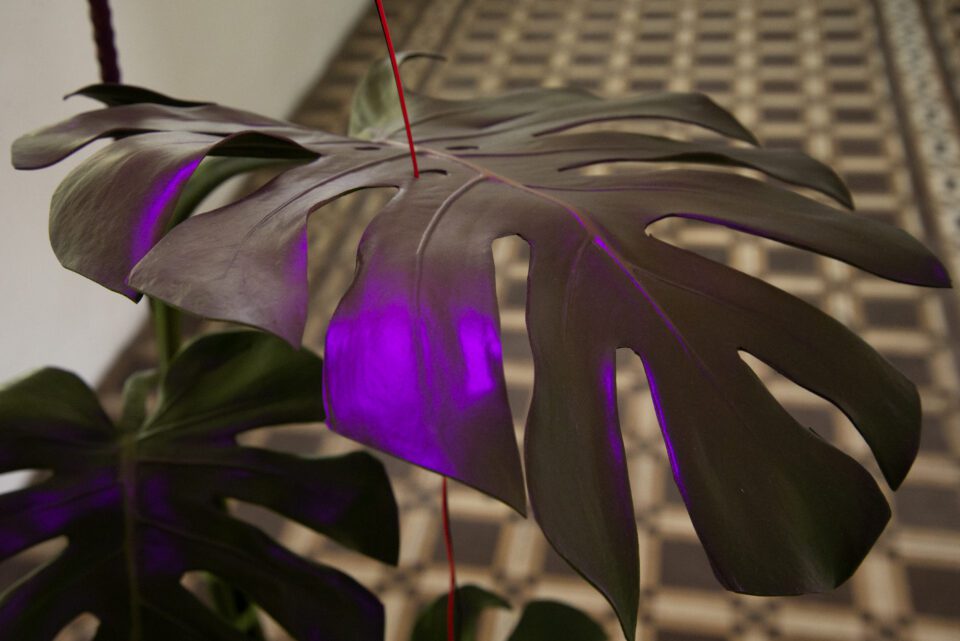
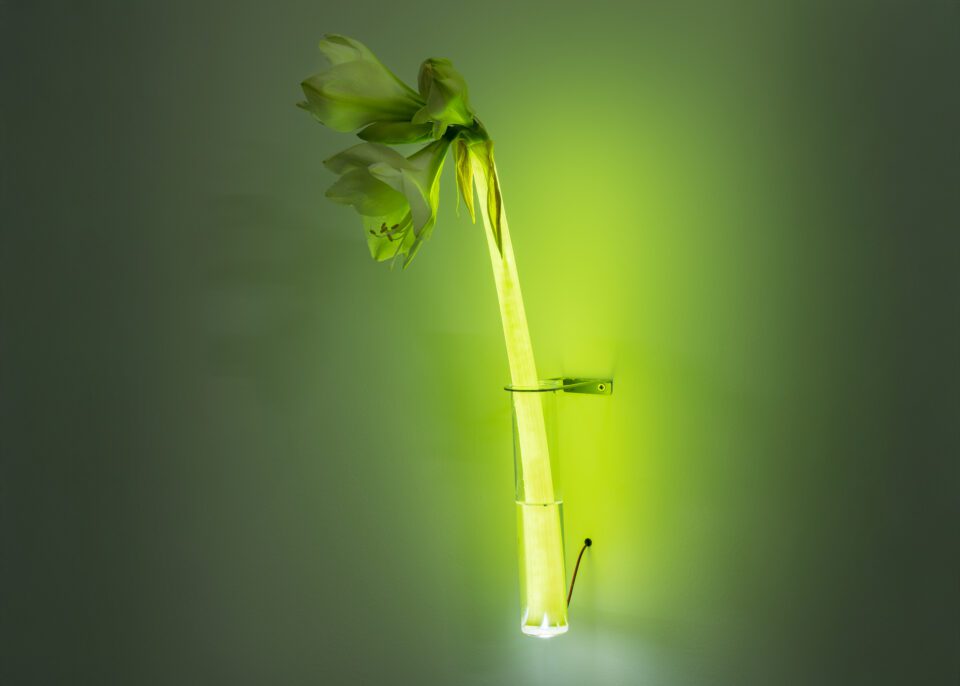
Material histories become equally important in Vibeke Mascini’s sculptures. The Dutch artist has developed a practice around electricity, energy storage and the networks connecting technological systems with natural environments, working through collaborations with scientists, engineers, government employees and musicians. For her Hammer Project, copper recovered from stripped electrical wires in Mexico City is transformed into the roots of a young ceiba tree, which are electroformed into cables used to illuminate the gallery. Another work consists of three suspended sculptures resembling moth pupae, each powered by its own car battery. These objects make infrastructure perceptible, turning something usually invisible into a physical encounter with extraction, consumption and dependence.
Mascini’s work complicates the familiar opposition between nature and technology. Electricity appears to us primarily as convenience – immediate, efficient and largely detached from the materials that make it possible. Her sculptures interrupt that abstraction by returning energy to questions of labour, extraction, storage and ecological consequence. The ceiba tree is particularly suggestive: its roots become electrical conduits, collapsing distinctions between organic growth and technological infrastructure. Pablo José Ramírez, who organises the project with Jennifer Buonocore-Nedrelow, creates a setting in which these relationships can be experienced materially. The result belongs to a wider ecological discourse in which art is increasingly concerned with systems and interdependence rather than isolated objects.
Baeza’s figures, meanwhile, refuse the stability that conventional portraiture often promises. Felipe Baeza: Anima brings together more than 40 works combining printmaking, collage and painting, with bodies appearing fragmented, layered and hybrid. The Mexican-born, Brooklyn-based artist explores racialised, queer and migrant subjects whose identities exceed straightforward categories of representation. Printmaking becomes particularly significant because its processes of repetition, layering and transfer mirror the instability of the images themselves. Rather than offering identity as something that can be simply revealed, Baeza makes fragmentation a visual strategy through which identity remains multiple.
That refusal of legibility resonates with a broader critical conversation around representation and visibility. Contemporary art has increasingly questioned whether being seen necessarily equates with being understood, particularly for communities whose identities have historically been reduced to predetermined categories. Recognition can become another form of containment when an image is required to explain itself. Baeza’s hybrid bodies resist that demand, occupying an uncertain space between visibility and opacity. His work consequently suggests that ambiguity can be politically productive – a means of protecting complexity rather than a failure to communicate.
The exhibition’s organisation reinforces the importance of material process within that argument. Anima was organised by Print Center New York and curated by Jenn Bratovich and Alex Santana, with the Hammer presentation organised by Pablo José Ramírez alongside Jessi DiTillio. Such a structure allows the exhibition to be understood not only as a survey of an artist’s imagery but also as an investigation into how experimental printmaking can generate new visual languages. The emphasis on works on paper connects Baeza to a longer institutional interest in print and drawing at the Hammer. Yet the exhibition also demonstrates how these supposedly traditional mediums can become sites for addressing contemporary questions of migration, sexuality and belonging.
Abstraction takes another route through questions of movement in Mavis Pusey: Mobile Images. Born in Jamaica in 1928, Pusey developed a distinctive language of geometric abstraction shaped by her engagement with fashion, printmaking, music and the urban environments in which she lived. Her paintings and works on paper resist the idea that abstraction must be detached from lived experience. Geometry becomes rhythmic and mobile, registering the visual pressures of the city and the movement of bodies through modern space. The exhibition’s focus on Pusey also contributes to the continuing reassessment of whose work has been admitted into the histories of abstraction.
That reassessment has become an important strand of contemporary art criticism. Traditional accounts of geometric abstraction have often privileged European and North American artists while treating other practitioners as peripheral to the development of the form. Pusey’s career complicates that hierarchy, demonstrating how abstraction can emerge from transnational experiences and cultural. Her engagement with music and fashion further unsettles the boundary between supposedly serious artistic forms and popular visual culture. Co-organised by the Institute of Contemporary Art at the University of Pennsylvania and the Studio Museum in Harlem, and curated by Hallie Ringle with Kiki Teshome, the survey gives archival material a significant role in reconstructing that history.
Huguette Caland’s A Life in a Few Lines shifts the conversation from the geometry of public space towards the intimacy of the body and home. Approximately 150 drawings, paintings, sculptures and textiles are presented alongside archival materials and ephemera, revealing an artist whose work continually crossed the boundaries between private experience and social commentary. Caland approached the body with humour and sensuality, using lines that suggest flesh, gesture and movement without settling into conventional anatomical representation. Language, sexuality, ageing and gender become embedded within this visual vocabulary. The exhibition consequently demonstrates how apparently intimate subjects can become a means of challenging much larger cultural assumptions.
Caland’s practice also exposes the limitations of art-historical hierarchies that have traditionally privileged monumental scale, medium-specificity and the rhetoric of the heroic artist. Domestic experience can appear marginal within such narratives, as can textiles, ephemera and forms of visual humour. Yet Caland turns precisely these supposedly minor territories into spaces of formal and political experimentation. Her refusal to separate drawing from sculpture, textile from painting or personal experience from public discourse makes categorisation itself seem inadequate. Organised by the Museo Nacional Centro de Arte Reina Sofía in cooperation with Deichtorhallen Hamburg and curated by Hannah Feldman, the exhibition arrives at the Hammer with additional curatorial consultation from Aram Moshayedi and Jennifer Buonocore-Nedrelow, extending this reconsideration of where and how an artist can be situated.
Seen together, the five exhibitions suggest that the Hammer’s autumn programme is less concerned with a single definition of contemporary art than with the structures through which histories become visible. Bodies fragment, electrical systems circulate, geometric forms move and memories pass between generations. Each practice makes a different argument about what can be carried forward and what must be questioned, whether through the counter-archive of Viana, the material networks of Mascini, Baeza’s unstable figures, Pusey’s mobile abstraction or Caland’s intimate negotiations with the body. The curatorial framework is strongest where it allows these differences to remain intact. This season treats history as a living material – one that can be cut, layered, rewired, redrawn and continually brought into focus.
Find out more about Hammer Museum’s programme: hammer.ucla.edu
Words: Shirley Stevenson
Image Credits:
1. Gê Viana, Radial de Promessa, 2025 (still). Single-channel, color, sound. 13:07 mins. Courtesy of the artist and Mitre Galeria.
2. Vibeke Mascini, Lixiviado, 2023. Electricity from waste, repurposed car battery, dimmer, battery clamps, cable, artificial monstera leaves, LED light, custom-made iron mount, Velcro strip. Dimensions variable. Installation view, Vibeke Mascini: Alchemy of Aches, Proyectos Ultravioleta, Guatemala City, October 27–November 25, 2023. Photo: Margo Porres.
3. Gê Viana, Radial de Promessa, 2025 (still). Single-channel, color, sound. 13:07 mins. Courtesy of the artist and Mitre Galeria.
4. Vibeke Mascini, Prelude, 2025. Seasonal flowers (amaryllis, delphinium), customized glass tubes, water, LED strips, adapter, electrical wire, metal fixtures. Dimensions variable. Installation view, Vibeke Mascini: Le monde est un verbe, Capc, Musée d’art contemporain de Bordeaux, March 28–September 28, 2025. Photo: Arthur Pequin.
5. Gê Viana, Radial de Promessa, 2025 (still). Single-channel, color, sound. 13:07 mins. Courtesy of the artist and Mitre Galeria.