County Durham has many historic associations with light – from the creation of St. Bede’s lunar calendar 1,300 years ago to Durham University’s involvement with NASA James Webb Space Telescope. The region was also home to Durham Light Infantry between 1881 and 1968, a branch of the British Army that served around the world, most notably on the Western Front between 1914 and 1918, and as part of Dunkirk during WWII. The regiment gave its name to a museum in the city, which opened in 1966 and welcomed up to 40,000 visitors a year, before closing in 2016. Now, a decade on, the former military museum gives way to The Light, a brand-new gallery space that brings together contemporary art and creativity with local history, scientific discovery and technological innovation. The museum represents the next step in Durham emergence as a cultural destination, following on from the wildly successful biannual Lumiere Festival.
The gallery’s first exhibition is Victory Over the Sun: Encounters with Light, a fitting display that features artists using light in extraordinary and experimental ways. The exhibition explores the connection between innovation and science, art and creativity, and includes new commissions and works by renowned artists such as Olafur Eliasson, Tracey Emin, David Shrigley, Steve McQueen, Cerith Wyn Evans, Liz West and Chila Burman. Each piece offers a fascinating explore of how creatives have employed light as a material in their work from the 1960s to the present day, using newly developed technologies from fluorescent tubes and neons, to LEDs and digital media. This familiar medium, which has become integral to contemporary art, is explored in different and complex ways, from single artworks to immersive installations.
The show takes Joseph Swan as a starting point – a British physicist, chemist and inventor of the lightbulb. He’s an appropriate figure to act as a jumping off point, both integral to the use of light and to the region itself. Swan was born in Sunderland, within the historic county of Durham. His spirit of innovation continues in the region today with world-class research into space, optics and communication at Durham University. Practical Electrical Incandescent Lamp (1878 – 1879) greets visitors, with his historic and groundbreaking practice leading into other artworks. These include Cael Floyer’s Light Switch, a slide projection of a switch that invites audiences to think about the blurred boundary between function and illusion. Meanwhile, Light bulb to Simulate Moonlight is a poetic work by Scottish artist Katie Paterson, which connects the power of nature and the vastness of time and space to the human experience.
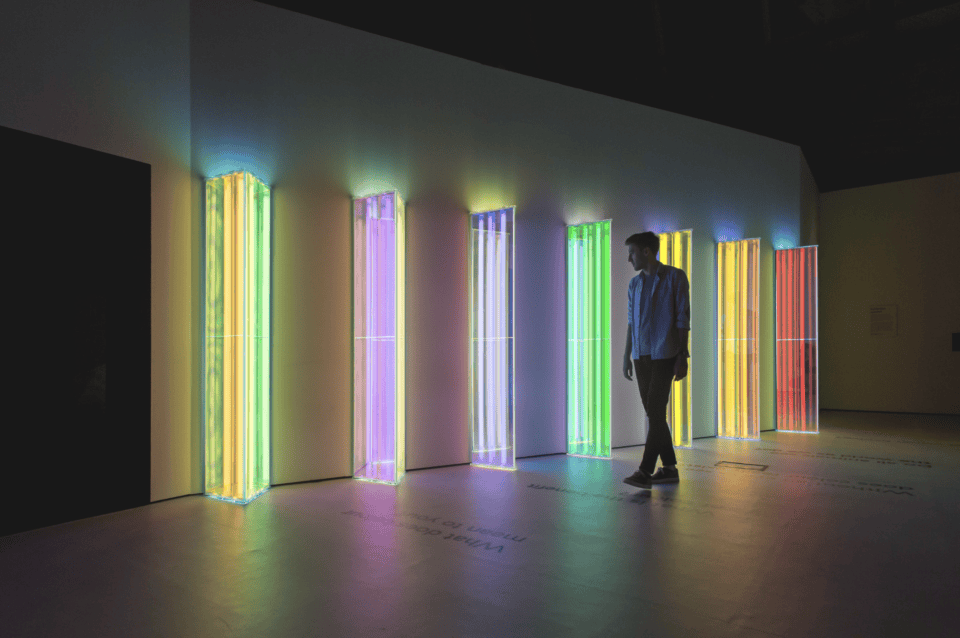
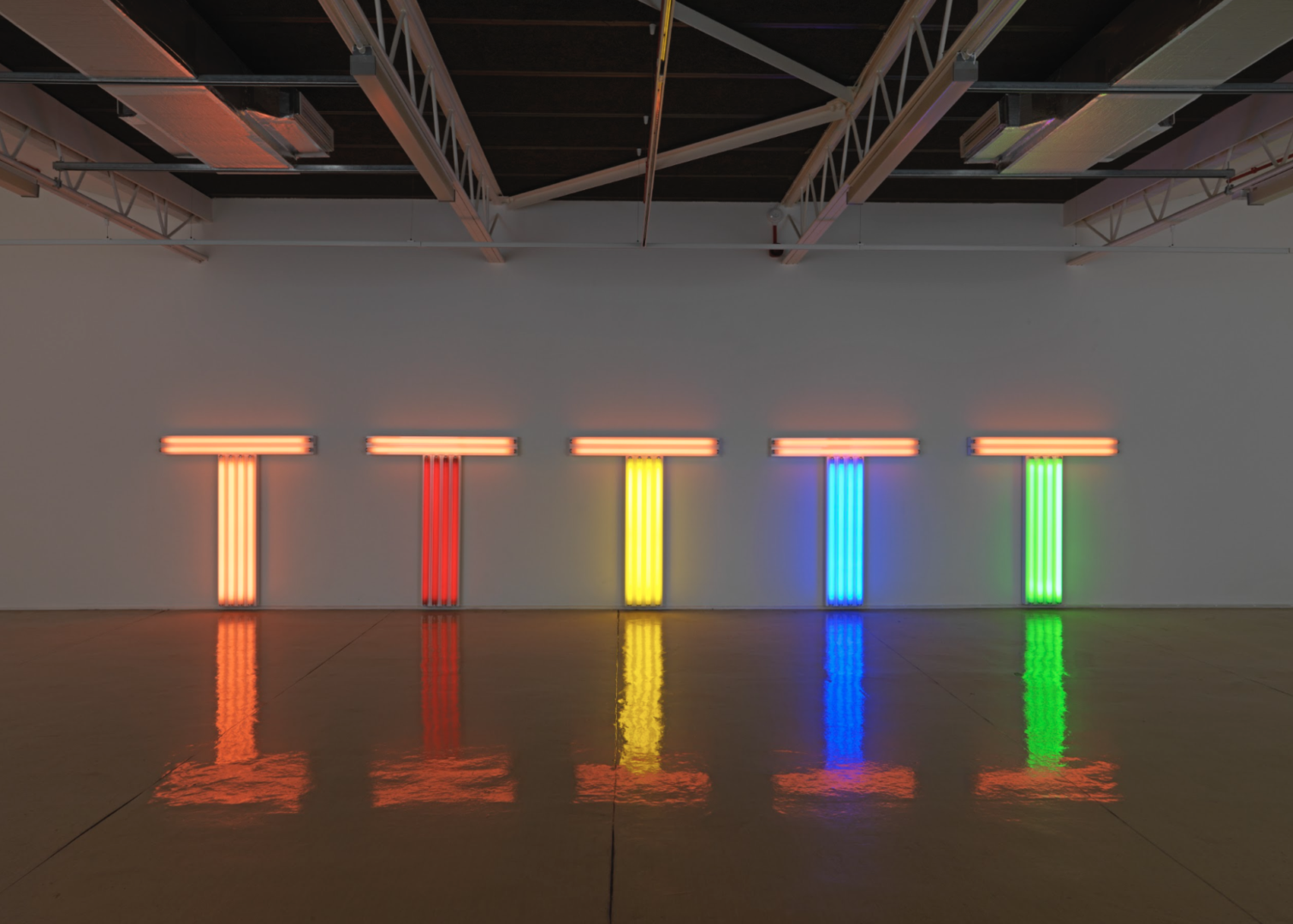
Yto Barrada’s Palm Sign is part of a larger series, using the motif of the non-native palm tree as a comment on the rapid modernisation of Morocco. Her work centres on the tensions around borderlands, immigration, tourism and resistance strategies. Meanwhile, Liz West’s Our Spectral Vision uses LED-lit glass prisms to fill the space in saturated colour, creating an immersive environment that explores how we experience light. Dan Flavin’s Untitled (to Don Judd, colourist) is the celebrated artist at his best. Flavin is renowned for his use of mass-produced, commercially available fluorescent tubes from hardware stores. He is considered one of the first artists to embrace light as an artistic medium. The work is a set of five “T” shapes, inspired by friend and fellow artist Donald Judd’s use of distinct colour blocks.
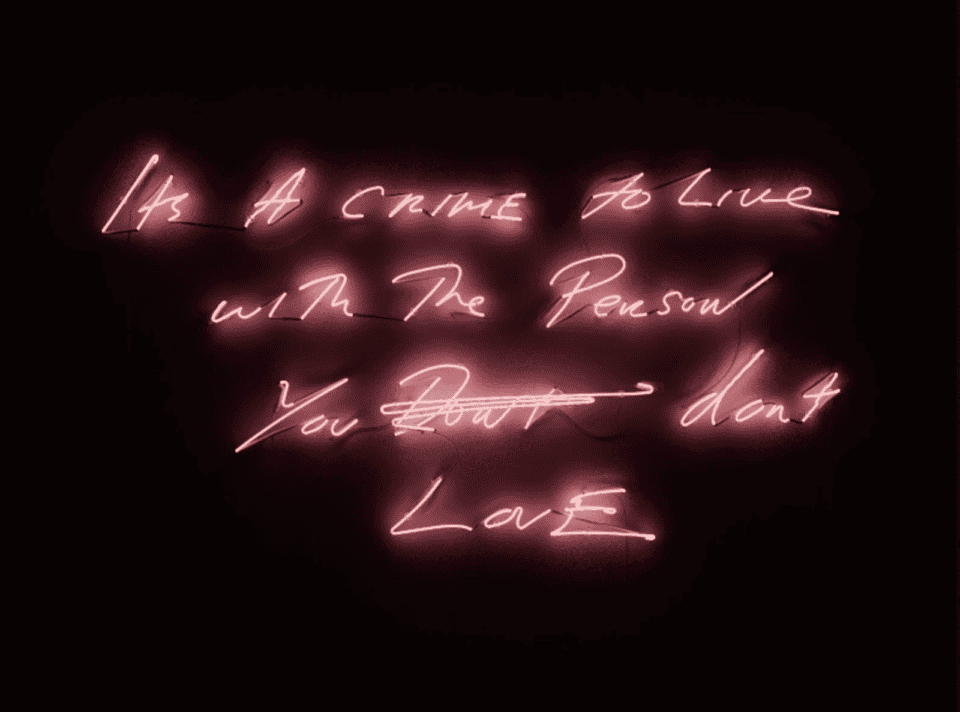
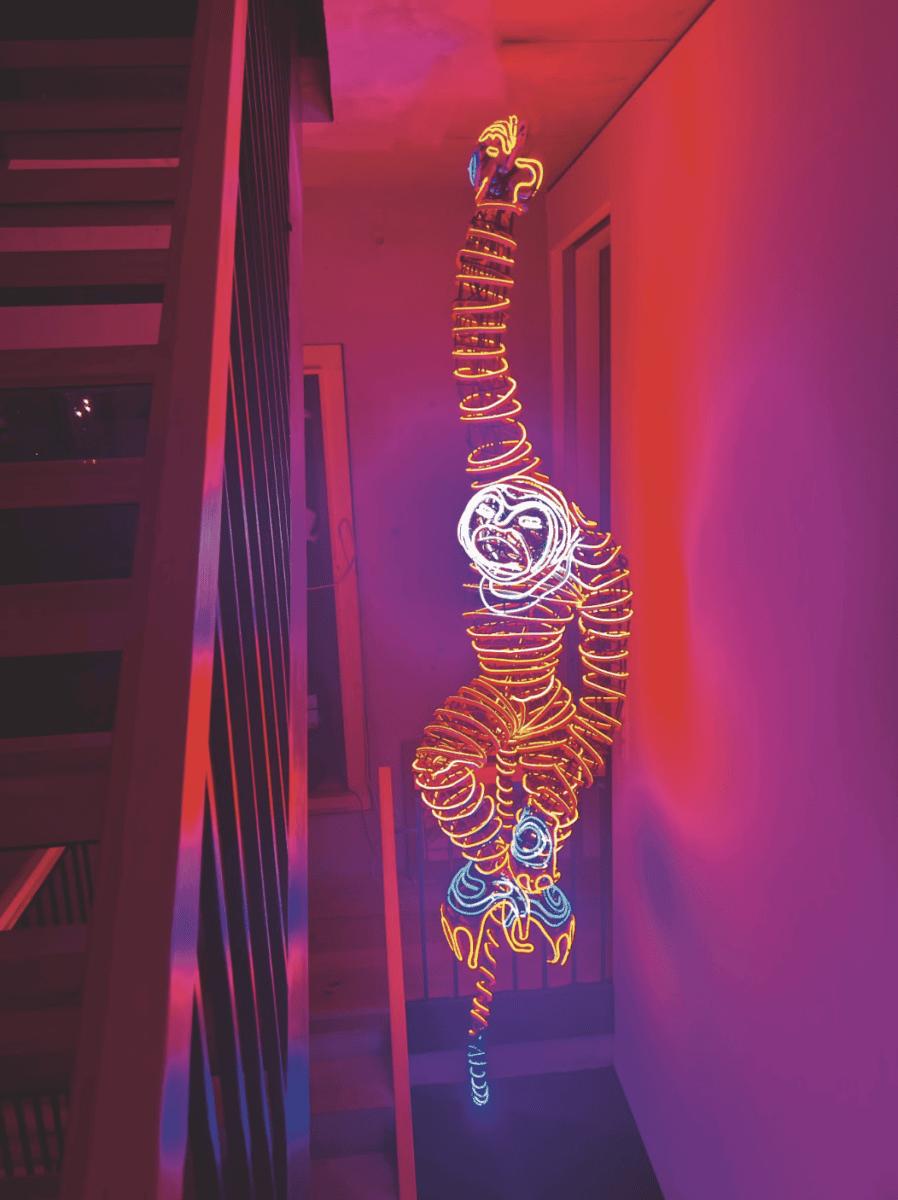
Text plays an important role in the exhibition, with neon lettering utilised in innovative ways. Nowhere is this more evident than in Tracey Emin’s It’s a crime to live with the person you don’t love and Glenn Ligon’s black neon Warm Broad Glow. Elsewhere, Steve McQueen’s Remember Me (2016) adds a poignant reference to the Durham Light Infantry collection, also on display in The Light. This work is one of a number of versions of the words “remember me”, which the artist and filmmaker asked his friends to write. Each one is an anonymous voice, coming together to form a series that explore mortality, loss and memory. In other parts of the show, light is used as a three-dimensional, drawing tool, such as in Cerith Wyn Evans in Neon Forms (After Noh II), which captures performers’ movements from traditional Japanese Noh theatre, whilst Chila Burman’s suspended Hanging Monkey expands her neon practice into sculpture.
The Light opens with a confident and sweeping exhibition, leaving no question that this is an institution with grand ambitions. Victory Over the Sun invites audiences to experience different sensory encounters throughout the show, demonstrating how the simply lightbulb can produce a myriad of possibilities. This is a rare combination of regional heritage and contemporary art, intertwining local rooms with major international names, producing something entirely unique.
Victory Over the Sun: Encounters with Light is at The Light, Durham until 17 January: thelightdurham.org.uk
Words: Emma Jacob
Image Credits:
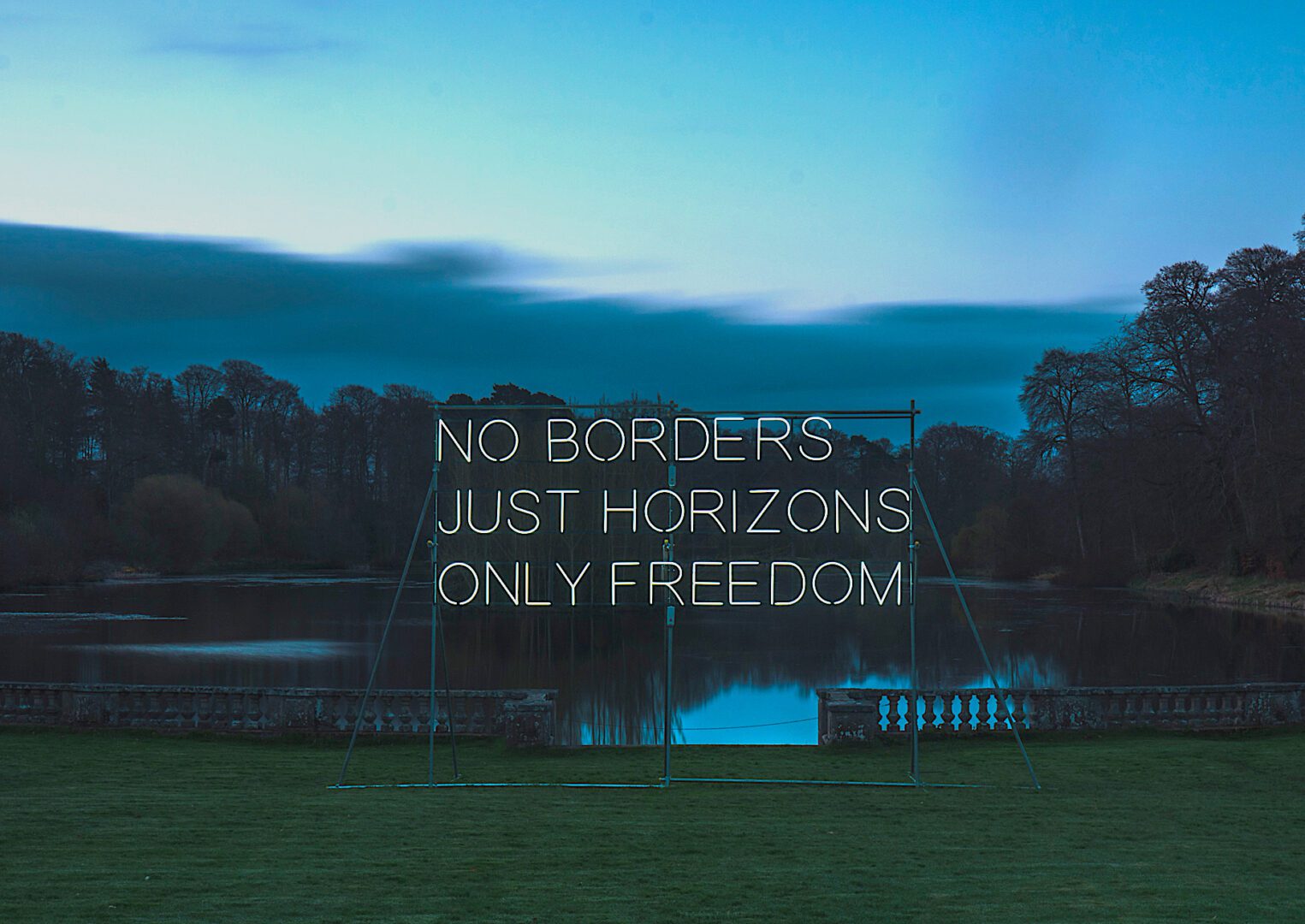
1. Hilary Jack, No Borders 2017. Image: Installation at Mellerstain House and Gardens, 2018. ©Hilary Jack. Photo ©Steve Iles.
2. Dan Flavin, Untitled (to Don Judd, colourist) 1-5 1987. Image: © 2026 Stephen Flavin / Artists Rights Society, New York an DACS, London.
3. Stuart Haygarth, Shadey Family 2024. Image: © Stuart Haygarth.
4. Liz West, Our Spectral Vision 2016.
5. Tracey Emin, It’s a crime to live with the person you don’t love 2021. Image: ©Tracey Emin. All rights reserved, DACS, 2026. Photo ©White Cube (Theo Christelis).
6. Chila Burman, Hanging Monkey 2022/2026. Image: © Chila Burman.