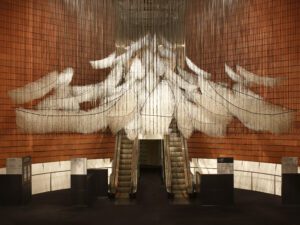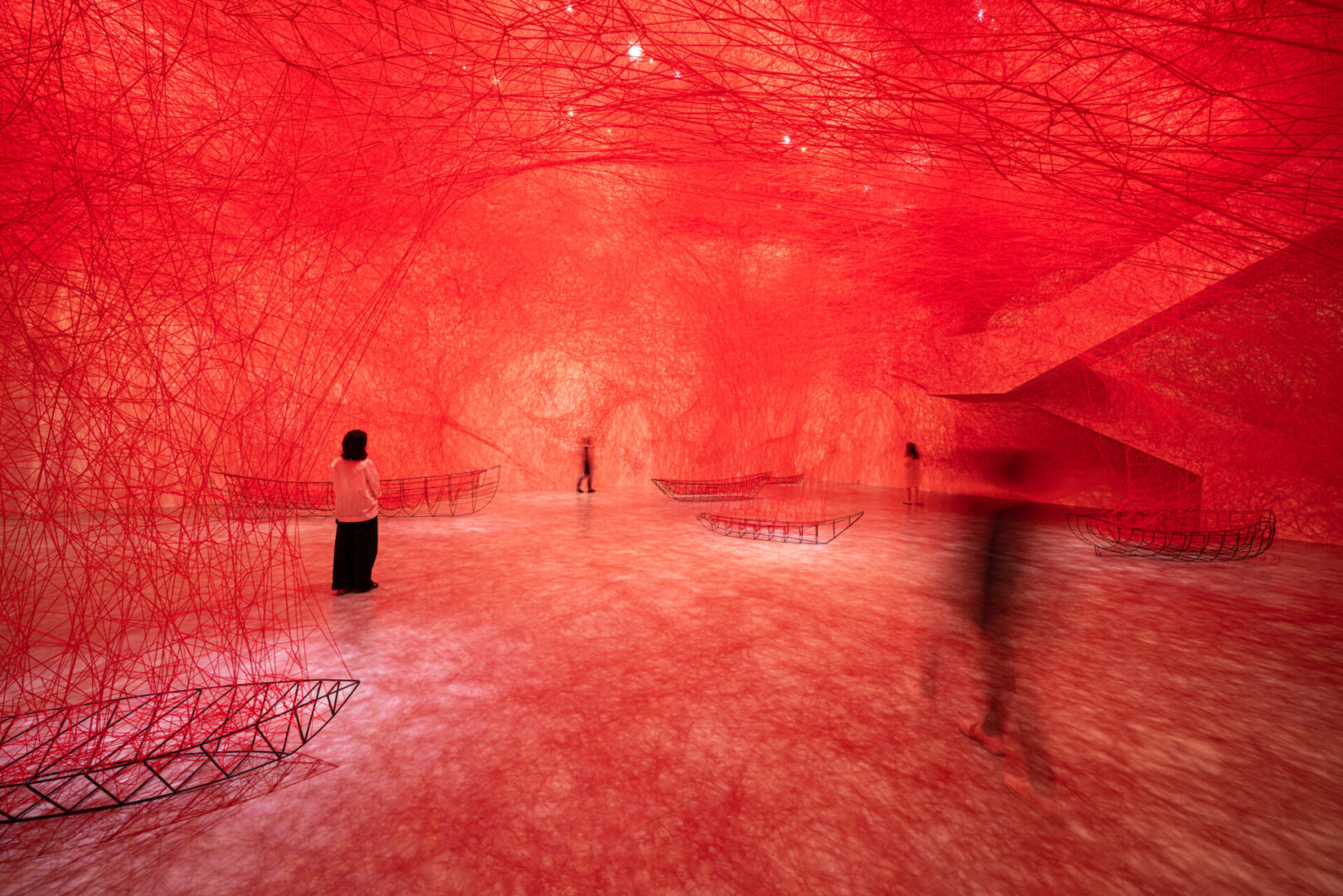
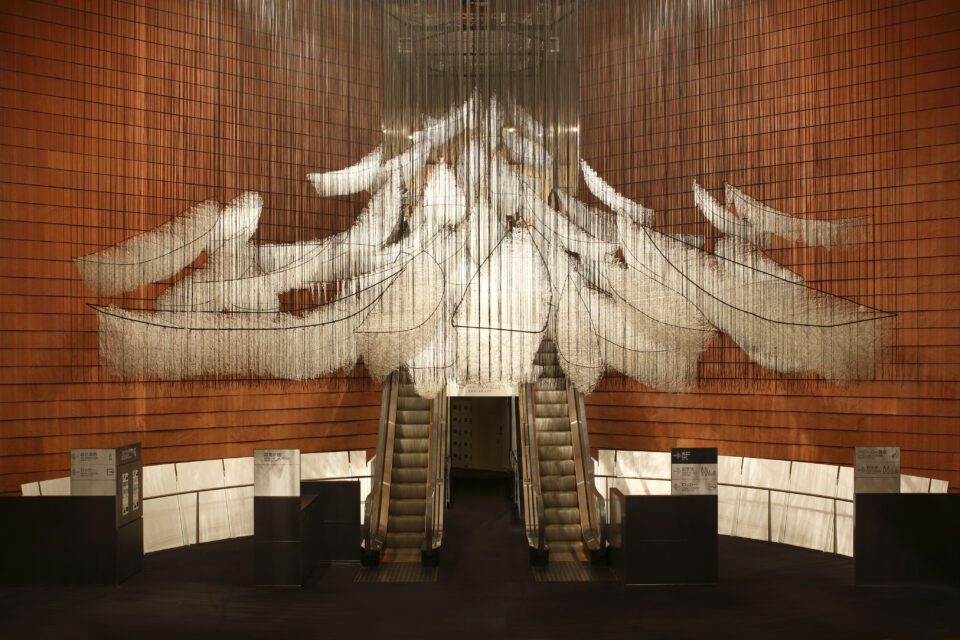
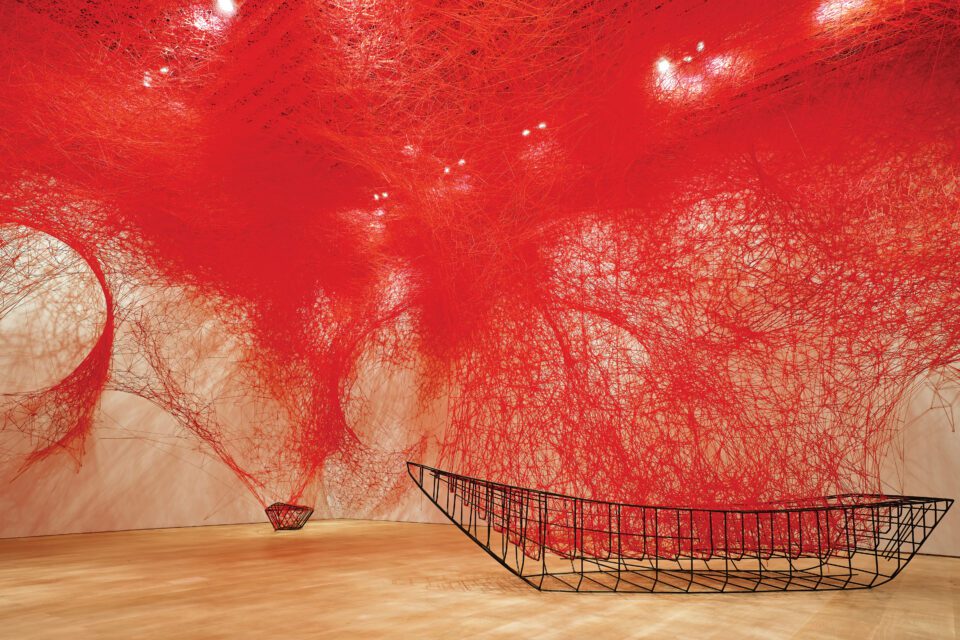
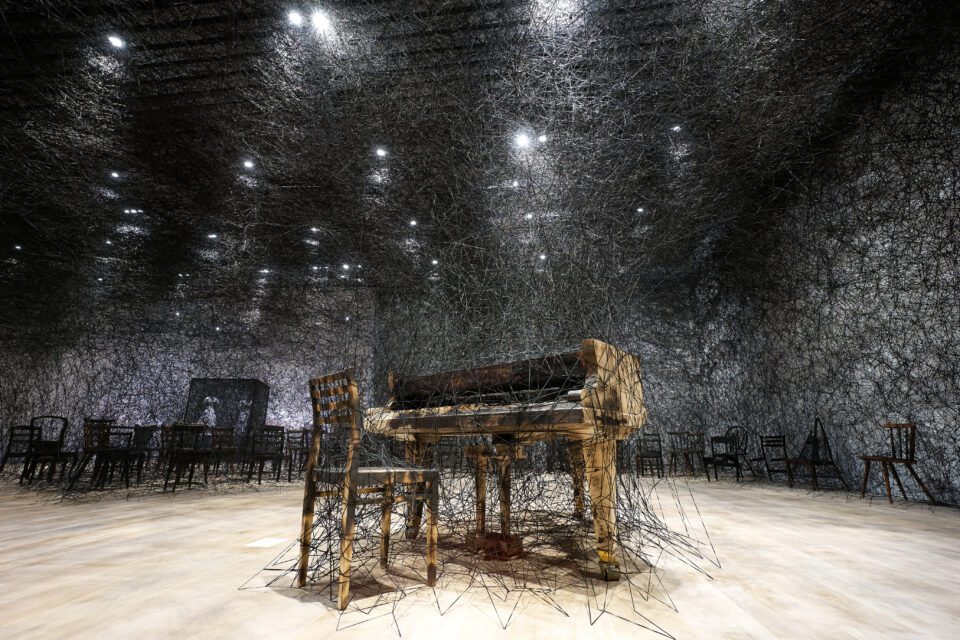
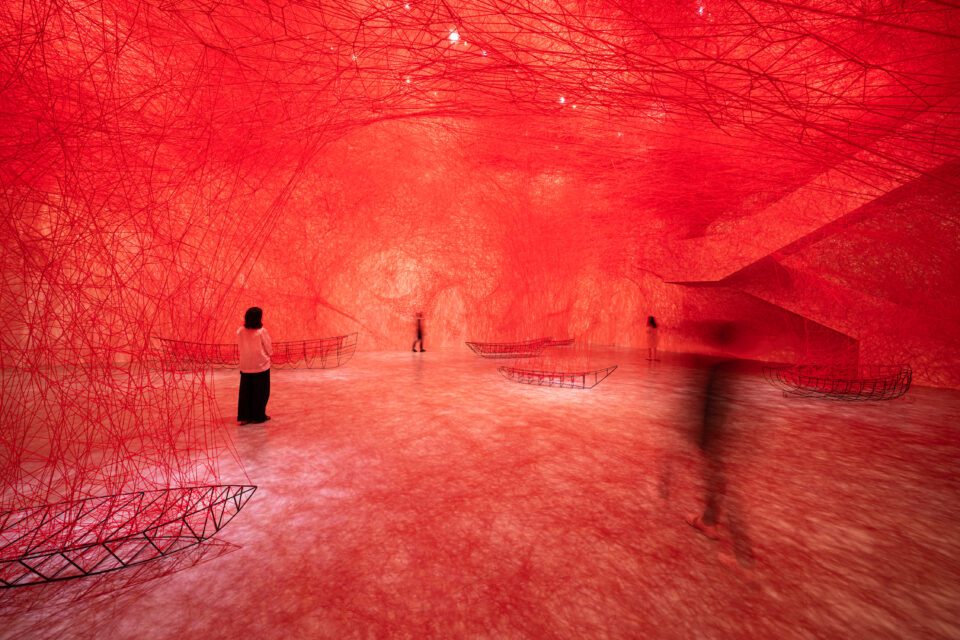
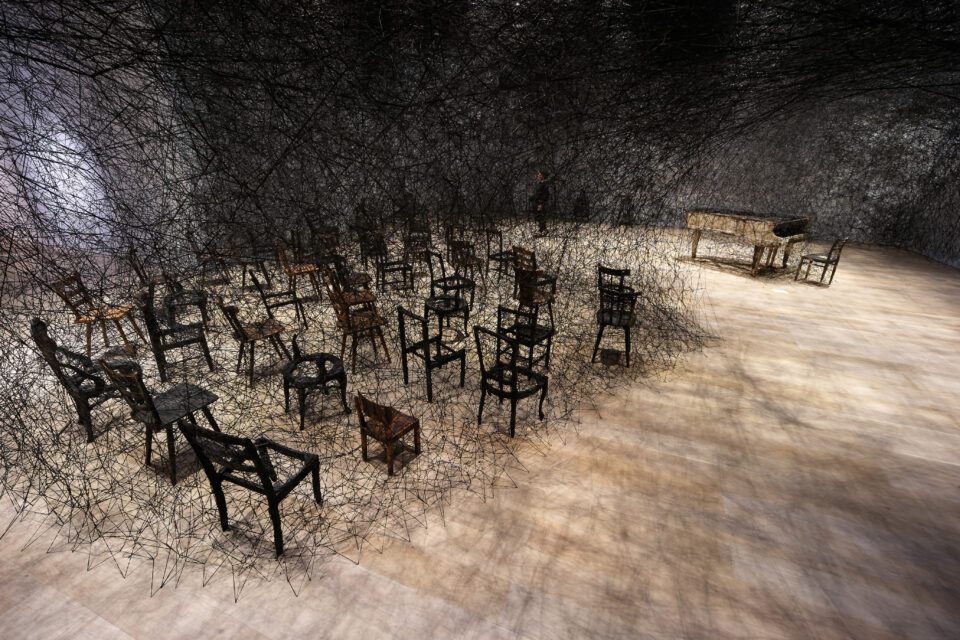
Chiharu Shiota’s (b. 1972) work is some of the most recognisable in contemporary art. Red thread engulfs entire rooms, forming dense networks that obscure personal belongings, architectural structures and, at times, sleeping figures. The evocative installations, rendered primarily in red, black and white, are often rooted in the artist’s own personal experiences, including being diagnosed with cancer. This autumn, Shiota’s monumental works will occupy the Montreal Museum of Fine Arts in her largest solo exhibition to date. The show, titled The Soul Trembles, covers three decades of creative output, paying tribute to the artist’s poetic and sensitive practice. The exhibition includes celebrated works like Where Are We Going (2017/2026), an installation suspended from the ceiling, composed of boats that are filled with sheets of white thread, as well as In Silence (2002/2026), which sees a piano and chairs surrounded by a cloud of black yarn. We caught up with Shiota ahead of the show’s opening to discuss what it is like to look back at 30 years of artistic output and what continues to drive her creative practice.
A: Could you take us right back to the start. When did you begin working as an artist?
CS: I knew I wanted to be an artist when I was 12 years old. Even when I was younger, I already loved to draw and would do this much more than other children, and people would compliment my pictures. When I was drawing, I forgot time, and it felt like I could create my own personal world. I wanted to make paintings and I really dreamed of being an artist. I’ve never wanted to be anything else.
A: Why are you drawn to large-scale installation. What does it allow that other practices do not?
CS: Even though I wanted to be painter, after the first year of art school, I had to stop painting. I could not find my identity in the medium. Everything I created looked like someone else’s work. It had no feeling to me. I searched for other materials and when I started working with thread, it felt like an extension of the line from the canvas into space. For me, it’s like a three-dimensional drawing. An installation can convey emotion immediately, and when the viewer enters the space they are immediately involved in the work.
A: You often take something deeply personal – for example in Out of My Body, which was made in response to your second cancer diagnosis – and turn it into something universal. How do you determine which stories to share and which will strike a chord with audiences?
CS: My work always starts with a personal feeling and then extends into something universal. When I was creating art during my chemotherapy, it was about my own existence, but I believe people who have not encountered this can still relate to the feeling. The experience of illness or confronting death is not unique; anyone can go through it. Viewers have empathy and can imagine this feeling for themselves.
A: Tell us more about your use of thread. Where did this initial come from?
CS: I started using thread when I was still in my studies and moving away from painting, making early works like Accumulation (1994) and for From DNA to DNA (1994). I was experimenting with different materials during that time but this specific way of creating a web began when I was living in Germany. I had moved nine times in three years at this point and I was sitting in my bed and began weaving around my body, creating my own space. In the beginning it was more like making a drawing, but later the focus of the webs has become connection. We are all linked by an invisible line and I want to make this visible.
A: What is the act of constructing a piece like? Is it a meditative experience?
CS: We have to construct the installation quite systematically, beginning by weaving from the ceiling and then wall, and then connecting both while working from top to bottom. Weaving the whole room is like meditation. I make the same movement over and over again and put all my feeling into it.
A: After three decades of creating installations that are rebuilt and transformed from one place to another, what does permanence mean to you?
CS: For me, it’s all about memory. My installations simply can’t exist forever, the material is always going to be impermanent, but the visitor can keep their experience of the installation in their minds forever. Memory shapes our existence and without it I could not explain myself, or connect with audiences.
A: This is the largest solo exhibition of your work to date and covers three decades of creative output. What is it like to have so much of your artistic life laid out in one exhibition?
CS: When I walk through the show, I can see how my work presents turning points in my life. It is interesting to see how my practice has changed over the years, where I was emotionally in the beginning and where I am now. Alongside this solo exhibition, I have continued to create new work.
A: The exhibition moves from your early work through to more recent installations, creating a kind of journey through your artistic life. How did you decide on the sequence in The Soul Trembles?
CS: Mami Kataoka invited me to show a solo exhibition at the Mori Art Museum, and we went through all my work and as the curator, she decided what to display. She created this journey through my work itself. At the time I was also going through chemotherapy and was thinking a lot about death and what my daughter was thinking about the soul. This was inspiration for the title.
A: Looking back, what has changed about your practice over the past three decades? Do you see moments of departure, or is there a sense of continuation?
CS: I have had cancer twice, and you can see these experiences in my work. After my studies, I had stopped drawing and painting for 10 years, but when I got cancer the first time, I began drawing again. I understood that it’s not about technique but feeling and I was drawing every day like it was my journal. The second time I was diagnosed with cancer, I thought a lot about soul. And it was the first time I wanted to include my body again in my work, but this time mainly from other materials like bronze. A substance that would exist forever in comparison to my body. My work is always connected to my life.
A: The pieces invite audiences to step inside and interact with the works. What do you hope they take away from that experience?
CS: Every single person thinks differently, and there is no one true answer in contemporary art. I want the visitors to Montreal Museum of Fine Art to feel free to think or feel whatever they will.
Chiharu Shiota: The Soul Trembles is at Montreal Museum of Fine Art from 26 September – 14 February: mbam.qc.ca
Words: Emma Jacob & Chiharu Shiota
Image Credits:
1. Installation view of Chiharu Shiota’s Uncertain Journey (2016/2019) in the exhibition Shiota Chiharu: The Soul Trembles, Mori Art Museum, Tokyo, 2019. Collection of the artist. © Chiharu Shiota / VG Bild-Kunst, Bonn / CARCC Ottawa 2026. Photo Sunhi Mang. Photo courtesy Mori Art Museum, Tokyo.
2. Installation view of Chiharu Shiota’s Where Are We Going? (2017/2019) in the exhibition Shiota Chiharu: The Soul Trembles, Mori Art Museum, Tokyo, 2019. Collection of the artist. © Chiharu Shiota / VG Bild-Kunst, Bonn / CARCC Ottawa 2026. Photo Kioku Keizo. Photo courtesy Mori Art Museum, Tokyo.
3. Installation view of Chiharu Shiota’s Uncertain Journey (2016/2019) in the exhibition Shiota Chiharu: The Soul Trembles, Mori Art Museum, Tokyo, 2019. Collection of the artist. © Chiharu Shiota / VG Bild-Kunst, Bonn / CARCC Ottawa 2026. Photo Sunhi Mang. Photo courtesy Mori Art Museum, Tokyo.
4. Installation view of Chiharu Shiota’s In Silence (2002/2019) in the exhibition Shiota Chiharu: The Soul Trembles, Mori Art Museum, Tokyo, 2019. Collection of the artist. © Chiharu Shiota / VG Bild-Kunst, Bonn / CARCC Ottawa 2026. Photo Sunhi Mang. Photo courtesy Mori Art Museum, Tokyo.
5. Installation view of Chiharu Shiota’s Uncertain Journey (2016/2019) in the exhibition Shiota Chiharu: The Soul Trembles, Mori Art Museum, Tokyo, 2019. Collection of the artist. © Chiharu Shiota / VG Bild-Kunst, Bonn / CARCC Ottawa 2026. Photo Sunhi Mang. Photo courtesy Mori Art Museum, Tokyo.
6. Installation view of Chiharu Shiota’s In Silence (2002/2019) in the exhibition Shiota Chiharu: The Soul Trembles, Mori Art Museum, Tokyo, 2019. Collection of the artist. © Chiharu Shiota / VG Bild-Kunst, Bonn / CARCC Ottawa 2026. Photo Sunhi Mang. Photo courtesy Mori Art Museum, Tokyo.