

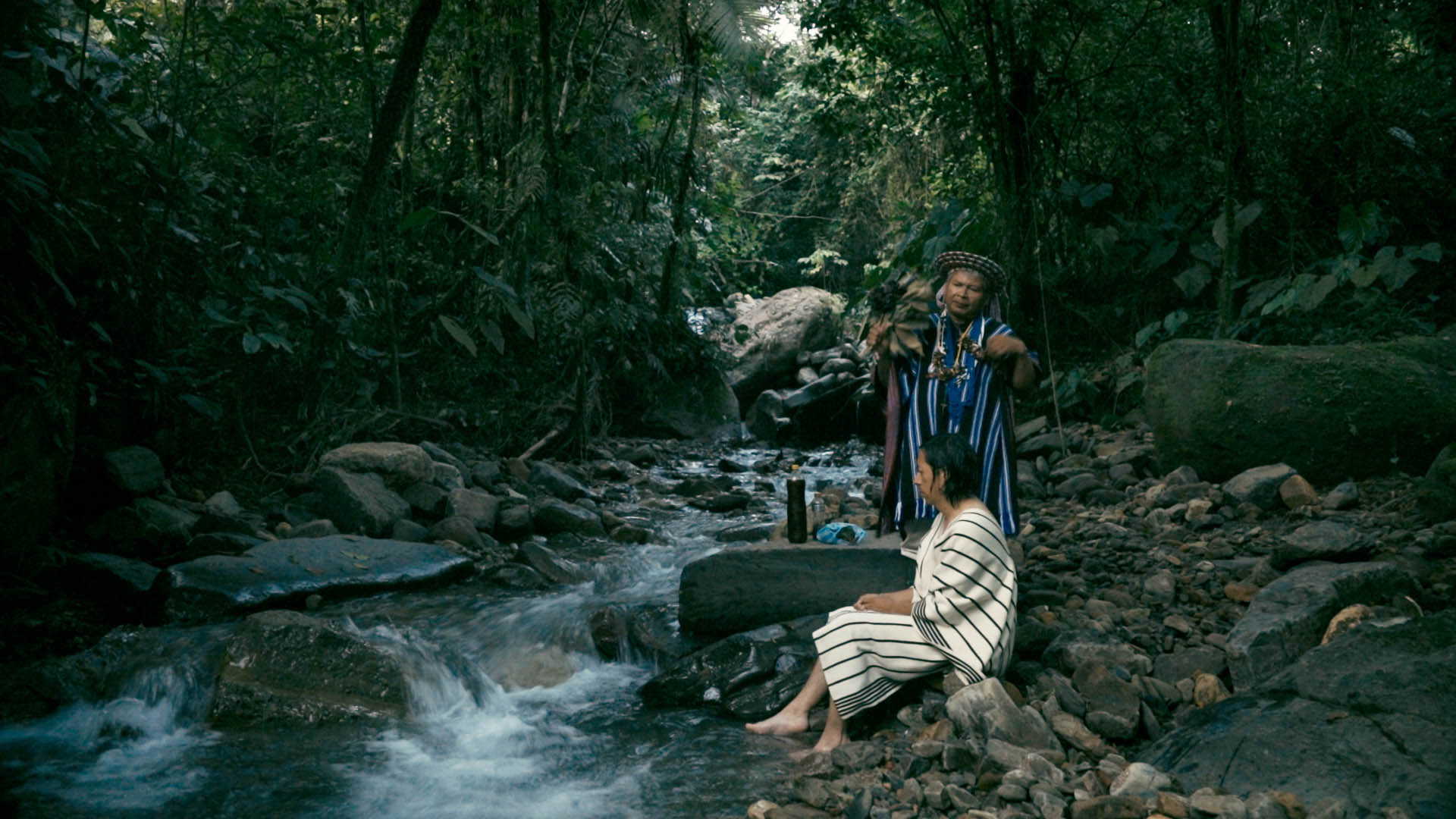
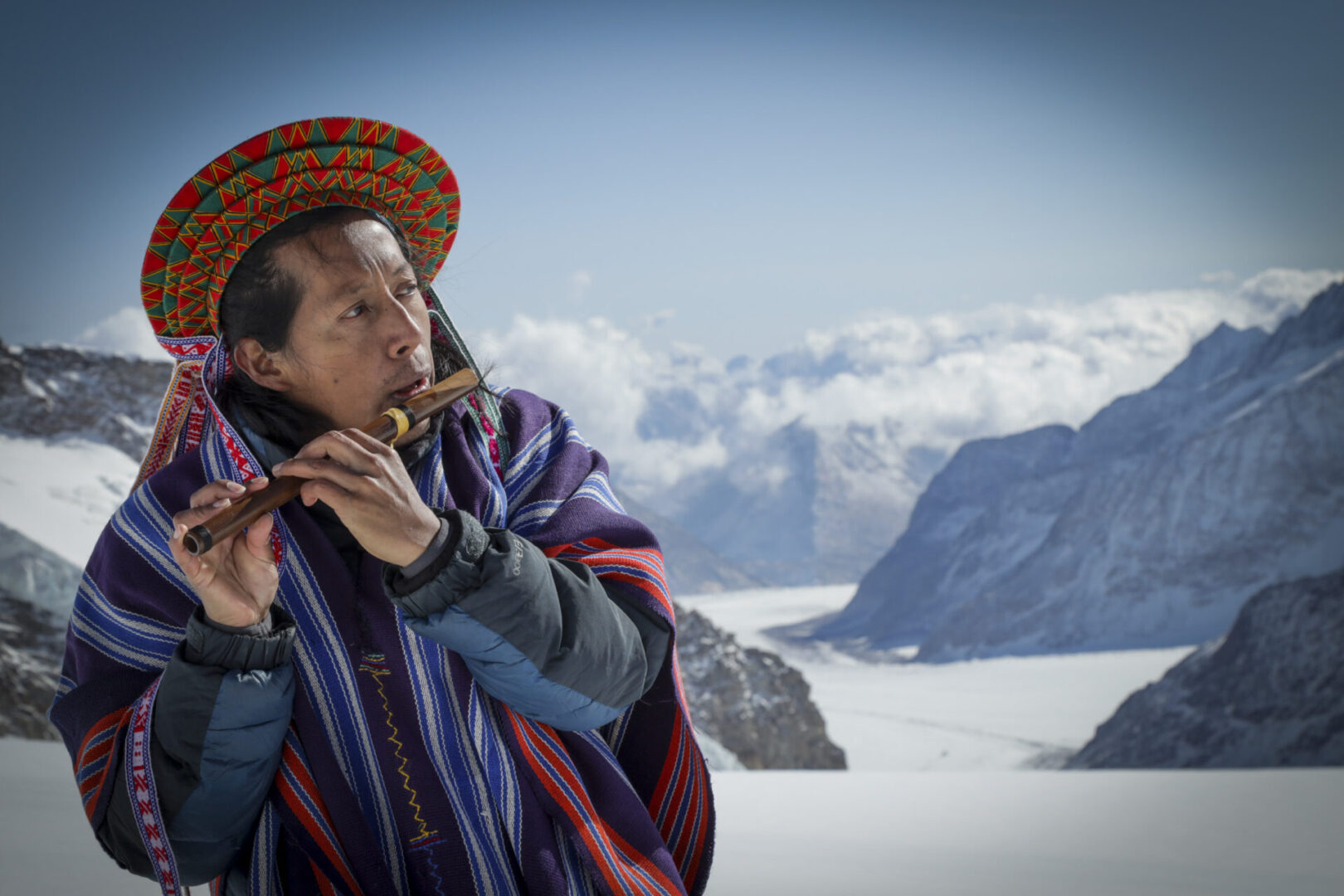
Felipe Castelblanco is a multidisciplinary artist, researcher, and filmmaker working at the intersection of participatory, film, and Media Art. His 2026 Aesthetica Art Prize-winning piece Tunda: A Quantic Plant and the Devil’s Breath is a multi-channel video that explores the entangled histories of plants and colonial extraction. Audiences see an Indigenous man thrust from the Colombian Amazon to the Swiss Alps, drifting between vision and reality. Landing in a remote museum’s herbarium, he encounters botanical artifacts relating to the Brugmansia plant. This plant is a powerful teacher for Kamnënstá Indigenous healers in Colombia’s Andean-Amazon region. Among these communities, it is believed to possess the ability to cross boundaries of time and space. The work combines science, ethnomedicine, and ecology, encouraging viewers to question how they see things. We spoke to Castelblanco about the practicalities of making a film in the Amazon, what it means to work with Indigenous communities and what’s next for the artist.
A: Take us back to the start. How did you first begin working as an artist?
FC: Growing up in Bogotá in the late 1990s was deeply formative. Colombia was marked by political violence and the trauma of narco-politics, but there was also a strong belief in art as a tool for healing, regeneration, and peacebuilding. By 2008, I was involved in artist-run initiatives bringing public art, video and participatory projects to underserved communities across the country. Those experiences shaped my practice but also exposed me to the realities of the armed conflict, eventually leading me to migrate—first to the United States, and later to Europe—where I continued working across different contexts.
A: Tell us about Tunda: A Quantic Plant and the Devil’s Breath. How did the project first come about?
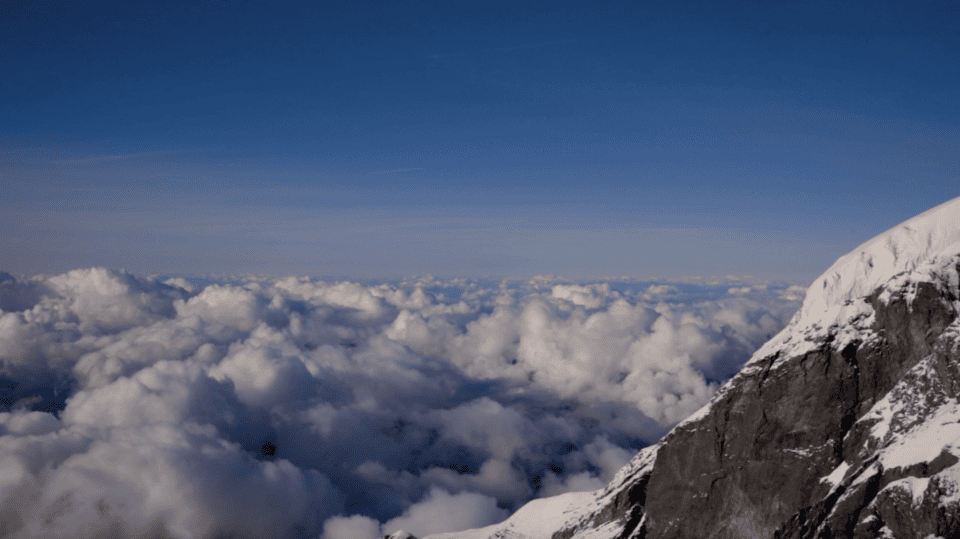
FC: In the Andean-Amazon foothills, la tunda, or being entundado, means becoming disoriented, distracted or lost. There are countless stories of explorers looosing their way in the rainforest despite carrying navigation instruments, yet little is said about the role of plants and other forest beings in safeguaring these territories from external pressures. That paradox led me to think of la tunda as an existential condition shaping our relationship with the more-than-human world. The film imagines an Indigenous man unexpectedly transported from the Colombian Amazon to the Swiss Alps after encountering the Brugmansia plant. As he searches for a way home, Kamëntšá knowledge unfolds through a journey where dreams, memory and time collapse, and the plant becomes both guide and guardian.
A: What are the practicalities of shooting a film like this? Talk us through your process.
FC: The film took nearly five years to complete, shaped by the pandemic and a rare fungal infection I contracted during research in the Peruvian Amazon, which quite literally took my breath away. We began filming in Colombia’s Putumayo region in 2020 and 2023, then continued in Europe whenever research residencies, festivals or exhibitions created opportunities to shoot. Several scenes emerged from real healing sessions, where traditional healers paradoxically used Brugmansia to aid my recovery. Rather than following a fixed script, the film was built through editing—like carving a sculpture from stone—guided by a single sensation: the experience of becoming disoriented and absorbed by the landscape.
A: Could you explain the properties of the Brugmansia plant?
FC: I encountered Brugmansia while conducting PhD fieldwork in Colombia’s Andean-Amazon foothills in 2018. An Inga elder told me about the Andaki people, renowned for resisting the Spanish conquest and for their profound knowledge of medicinal plants. According to local tradition, they disappeared into the rainforest, leaving behind Borrachero Andaki, a variety of Brugmansia believed to protect the territory by disorienting those who arrive with harmful intentions. Revered by Indigenous healers for its medicinal and prophetic qualities, Brugmansia is also feared in urban contexts for its powerful psychoactive alkaloids, from which a raping drug known as “Devil’s Breath” is derived. I was captivated by the paradox of a plant that can both heal and deceive, protect a territory while disrupting memory, perception and human will.
A: What kinds of research informed the project?
FC: Walking through the rainforest means moving through a rich chemospace, where plant scents and invisible chemical signals shape perception, mood and memory. This project brings together ethnomedicine, Indigenous cosmologies, and speculative fiction to explore how plants—or the spirits they embody—can guide, confuse and reshape our experience of time and space. It is also informed by the Kamëntšá people’s vision of territorial justice, which recognises plants as living beings with agency and advocates for a more dignified relationship with the natural world. This project was developed in the framework of larger artistic research titled Plants_Intelligence. Learning like a plant.
A: How did you work with Kamnënstá healers and community members?
FC: The project was developed in close collaboration with my friend Ayënan Quincha Juajibioy, a Kamëntšá filmmaker and member of the territorial council. From the outset, we treated the film as an opportunity to walk, document and reflect on the condition of his ancestral territory in the face of expanding extractive industries. We also spent many nights with Kamëntšá healers, whose guidance shaped not only the film’s narrative but also its ethics and production. They taught us to ask permission—from both human and more-than-human beings—and to approach each filming location as a sacred site.
A: Why did you choose a multi-channel installation rather than a single-screen film?
FC: I wanted viewers to enter the film rather than sit passively in front of it. The work was originally conceived as a five-channel video installation, premiered at Haus für Medienkunst Oldenburg in 2025, where visitors could lie beneath a monumental Brugmansia flower that also served as a projection surface. From the beginning, I envisioned it as a work of expanded cinema, allowing the landscape to unfold as an immersive environment rather than a framed image. The two-channel version retains this spatial logic by pairing different viewpoints, places and moments, creating a fractured cinematic experience that echoes the film’s themes of disorientation, memory and multiple ways of perceiving the world.
A: What does it mean for your artistic trajectory to win the Aesthetica Art Prize?
FC: First and foremost, the prize is a celebration of a lot of care, love and team work. It is also hugely important to use this platform to recognise the massive work being done today by the Kamëntšá and Inga communities in Putumayo (Colombia), whose ancestral territories are incredibly diverse and lively. It goes without saying that without the work of Indigenous peple across the Andean-Amazon, there would be no place, story or even room to make this kind of work.
A: If there is one question you hope visitors leave with after experiencing the installation, what is it?
FC: If plants could speak back, what would they say about us? What names would they use to lable us with? And what would they teach to other species about us?
A: Looking forward, are there new themes or mediums you’re interested in exploring next?
FC: While making Tunda, I witnessed firsthand the devastating effects of alluvial gold mining and mercury pollution in the Amazon, both in Colombia and Peru. During fieldwork in a heavily mined landscape, I contracted a rare fungal infection that transformed my own lungs into an unexpected archive of ecological damage. That experience became the starting point for my next piece, Inversed Oasis. The film traces the history of mercury contamination in the Amazon, weaving together archival footage, medical CT scans, and field recordings to ask how environmental violence extends beyond landscapes and into the human body.
felipecastelblanco.com | @felipecastel
Words: Emma Jacob
The Aesthetica Art Prize 2026: States of Becoming is at York Art Gallery until 15 November: yorkartgallery.org.uk
Image Credits:
1. Felipe Castelblanco, Tunda: A Quantic Plant and the Devil’s Breath (2025).
2. Film Still. Felipe Castelblanco, Tunda: A Quantic Plant and the Devil’s Breath (2025).
3. Installation view. Felipe Castelblanco, Tunda: A Quantic Plant and the Devil’s Breath (2025).
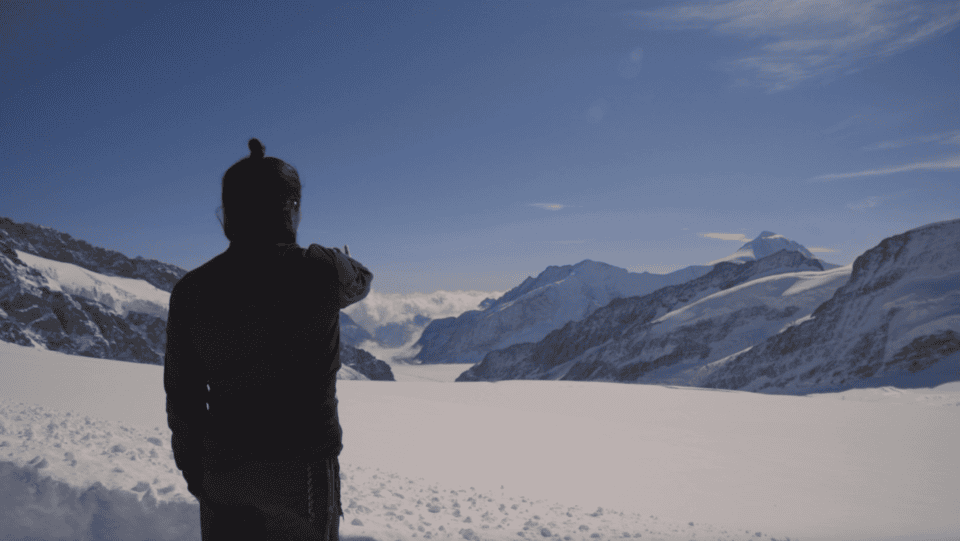
4. Film Still. Felipe Castelblanco, Tunda: A Quantic Plant and the Devil’s Breath (2025).
5. Felipe Castelblanco. Artist Insight.
6. Film Still. Felipe Castelblanco, Tunda: A Quantic Plant and the Devil’s Breath (2025).


