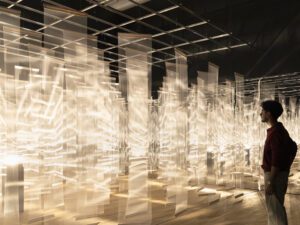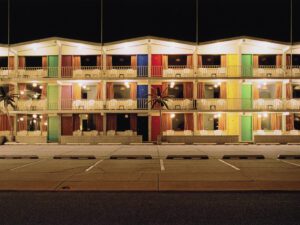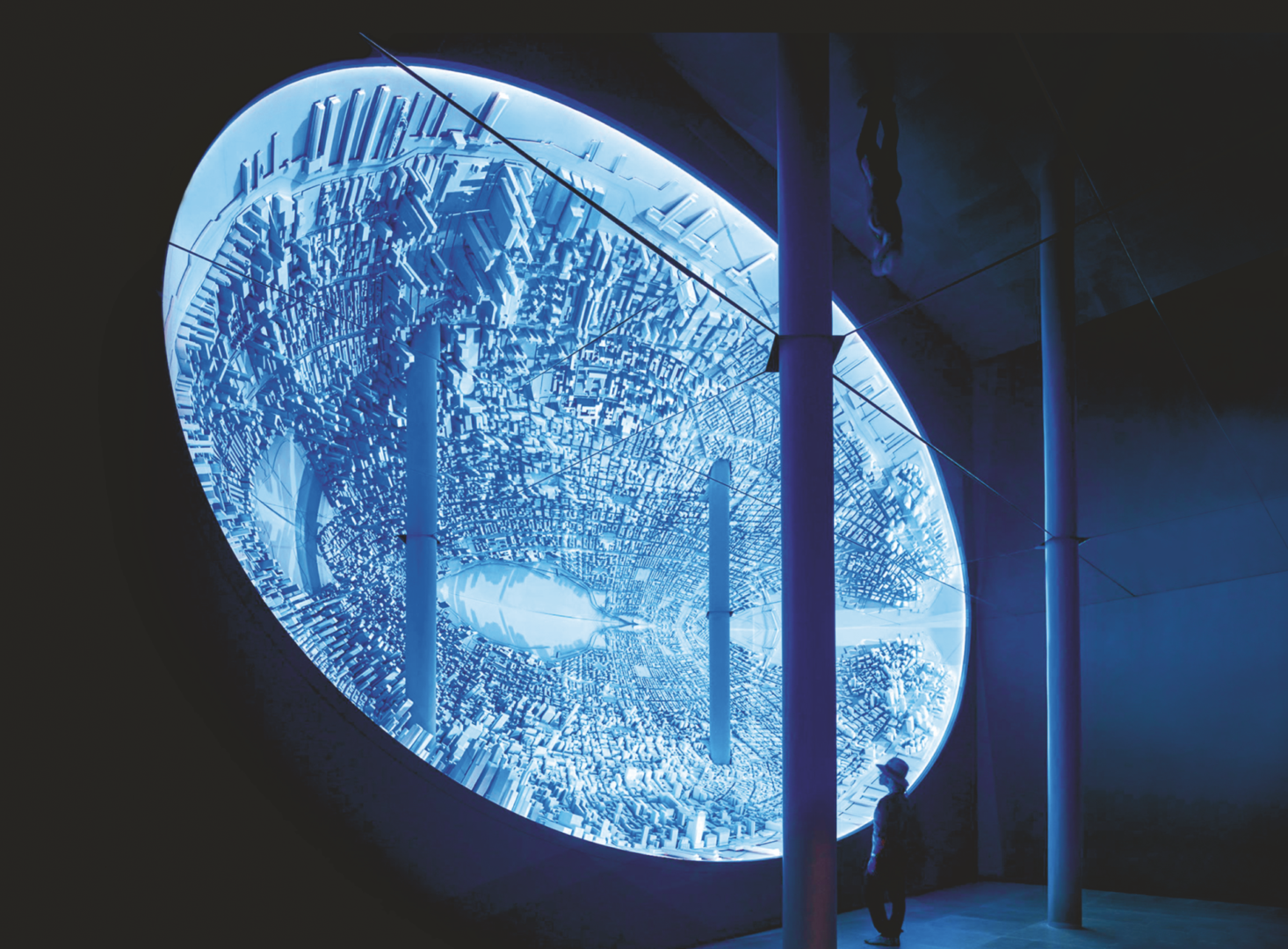
Es Devlin has spent three decades reshaping how audiences encounter art, design and collective experience. Her interdisciplinary practice spans sculpture, theatre, music, architecture and language, producing some of the most recognisable cultural environments of recent decades. From large-scale stage installations to public artworks that explore ecology, identity and participation, Devlin has consistently challenged the boundaries between disciplines. Her first European retrospective, Es Devlin: Other Worlds, opening at the Design Museum in October, arrives as a defining moment in a career built on experimentation and collaboration. Rather than functioning as a traditional survey, the exhibition offers an immersive exploration of the ideas, research and creative processes that shape her work.
Museums are increasingly moving beyond the presentation of finished objects towards examining the networks, decisions and forms of labour that underpin cultural production. This shift reflects a broader reassessment of design itself, which now occupies a more expansive position alongside fine art, architecture, performance and social practice. Recent exhibitions at the Design Museum have demonstrated the appeal of this approach, including the acclaimed presentation of Wes Anderson’s creative universe, which invited visitors into the meticulous visual systems behind his filmmaking. Such exhibitions recognise that audiences are drawn not only to completed works but to the imagination, references and processes that bring them into being. Other Worlds continues this trajectory by transforming Devlin’s archive and studio practice into a public encounter with creativity itself.
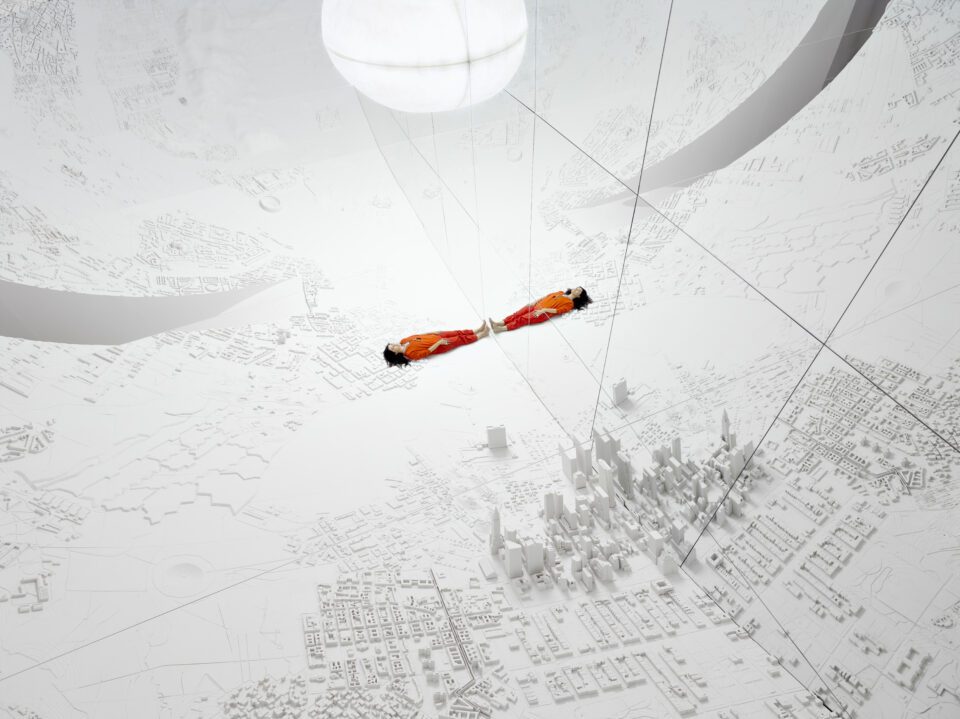
Tim Marlow, Director and CEO of the Design Museum, describes the institution’s programme as exploring “design in an expanded field” – an approach that dissolves conventional divisions between disciplines. Devlin’s career embodies this philosophy through work that moves fluidly between art, activism, poetry, sculpture, music and architecture. The exhibition has been curated by Johanna Agerman Ross, Conran Foundation Chief Curator at the Design Museum, alongside Senior Curator Danielle Thom and Margherita Dosi Delfini, in close collaboration with Devlin and her studio. Their curatorial approach focuses on both the internationally recognised projects that have defined her career and the research-driven processes that remain largely unseen. As Agerman Ross explains, it has been “a huge joy to explore Es’ archive alongside her, and to shine a light on how and why she builds the worlds that she does”.
Devlin’s decision to foreground process is central to the exhibition’s ambition. “I am moving my studio and practically my entire 30-year archive into the Design Museum for this show,” she explains, describing the opportunity to share her methods as “an immense privilege”. Visitors will begin inside a recreation of her South London studio, surrounded by books, objects, drawings, tools and materials that reveal the foundations of her practice. This introduction shifts attention away from the finished artwork and towards stages of uncertainty, experimentation and discovery. By allowing audiences access to these normally private spaces, Other Worlds reflects a wider cultural desire to understand how ideas are developed.
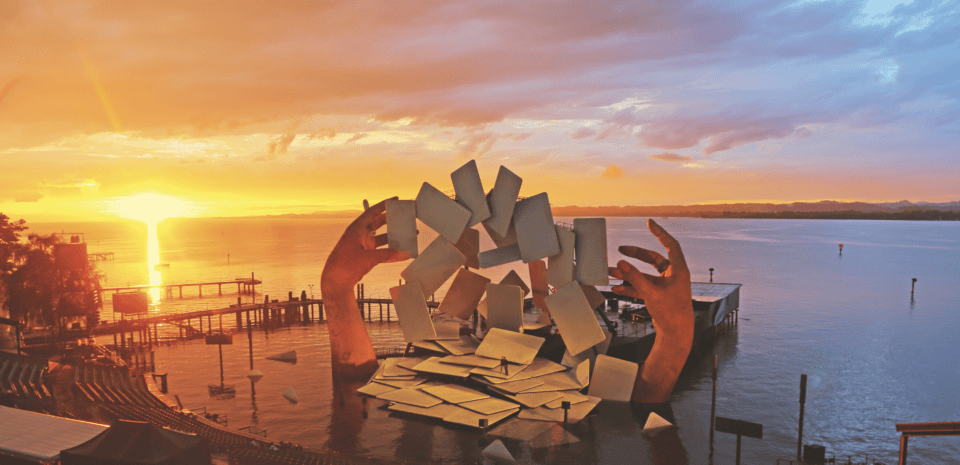
Few contemporary practitioners demonstrate the movement between creative fields as seamlessly as Devlin. Her early career in theatre established an enduring interest in the relationship between space, narrative and audience participation, principles that continue throughout her work today. Projects created for opera houses, museums, arenas and global stages – including the London 2012 Olympic Games Closing Ceremony, the 2022 Super Bowl halftime show and kinetic sculptures for renowned musicians – reveal an artist working beyond traditional categories. Performance, for Devlin, is not simply a moment of spectacle but an opportunity to create environments where audiences become part of the artwork. This approach has positioned her among the most influential figures in contemporary design.
Environmental consciousness and collective responsibility are central to one of the exhibition’s key works, Come Home Again. Originally presented outside Tate Modern in 2022, the installation transformed a cross-section of St Paul’s Cathedral’s dome into a landscape populated by hand-cut representations of endangered species, including birds, fungi and wildflowers. Commissioned by Cartier and created with guidance from the London Wildlife Trust, the work connected architecture, biodiversity and public engagement. Its return to London in a newly reimagined form at the Design Museum reflects Devlin’s interest in creating evolving experiences rather than static objects. The installation demonstrates how her practice uses spectacle as a means of encouraging reflection on urgent cultural and ecological questions.
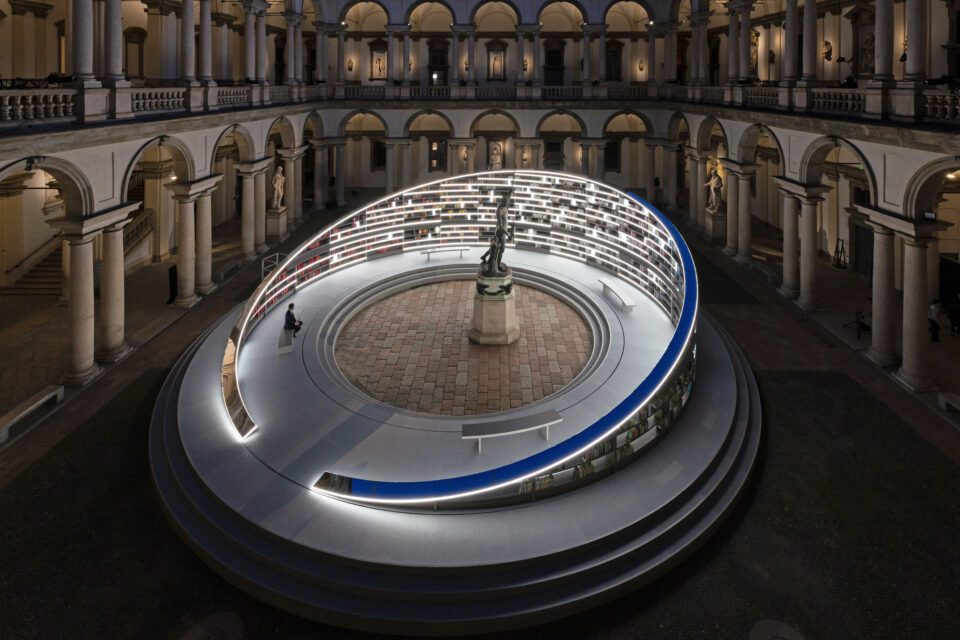
Alongside major public commissions, the exhibition places the archive at the centre of Devlin’s creative narrative. 30-Year Desk presents hundreds of objects spanning concept drawings, photographs, personal materials and ephemera, many never previously shown publicly. More than 30 models and maquettes trace the development of projects that later became monumental sculptures, stage designs and installations across the world. This attention to process connects with a broader movement within contemporary museums towards revealing hidden forms of artistic labour. The archive offers a considered understanding of creativity as an evolving sequence of research, failure and refinement.
Devlin’s archive also reveals the importance of drawing as the foundation of her entire practice. Archive Unboxed follows this thread through early sketches, paintings, collages, diaries and prints created from childhood through to her professional career. These works demonstrate that even the most technologically ambitious installations begin with a personal and intuitive act of mark-making. Such an emphasis challenges perceptions of contemporary design as primarily industrial or digital, instead positioning it as a discipline rooted in imagination and storytelling. Across the exhibition, drawings become important maps for future worlds, connecting private reflection with a wider, collective experience.
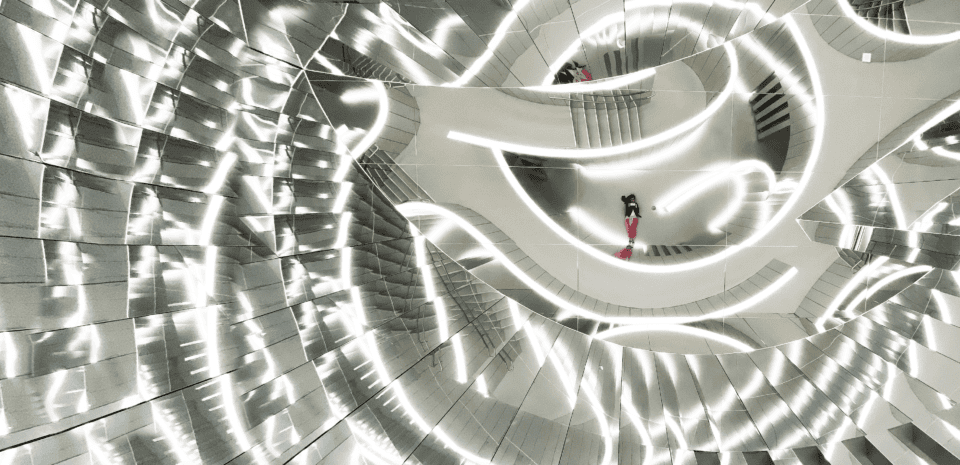
The growing popularity of process-led exhibitions reflects a wider transformation in how cultural institutions engage audiences. Recent museum programmes focusing on filmmakers, designers and creative figures have shown that visitors increasingly seek access to the systems of thought behind cultural production. Devlin’s practice is particularly significant within this context because it has always existed between categories, drawing inspiration from science, literature, technology and environmental research. Her archive does not simply record past achievements; it reveals a methodology based on curiosity, collaboration and constant reinvention. By presenting unfinished ideas alongside realised works, Other Worlds challenges the notion that creativity is a linear journey towards completion.
Autumn 2026 will see the Design Museum present one of its most ambitious exhibitions to date, bringing together the scale of Devlin’s public achievements with the intimacy of her creative process. Danielle Thom describes Other Worlds as an opportunity to showcase “some of Devlin’s most-loved recent works” alongside “new surprises and less-known creations”, creating a portrait that balances familiarity with discovery. The result is not only a retrospective of an extraordinary career, but an exploration of how contemporary creativity is formed through collaboration, experimentation and exchange. Devlin’s immersive worlds invite audiences to reconsider the role of design within society. Other Worlds ultimately presents imagination itself as a shared space – one that continues to evolve each time it is experienced.
Es Devlin: Other Worlds is at The Design Museum, London from 2 October 2026 – 4 April 2027: designmuseum.org
Words: Anna Müller
Image Credits:
1. Egg by Es Devlin, 2017. The Xi Gallery, New York, 2017. Photo credit Nikolas Koenig.
2. Es Devlin photographed in ‘Memory Palace’ 2019. Photo credit Peter Mallet.
3. Carmen at Bregenz Festival by Es Devlin, Bregenz, Austria, 2017. Photo credit Es Devlin.
4. Library of Light by Es Devlin, Milan. Pinacoteca di Brera, Milan, 2025. Photo credit Es Devlin.
5. Forest of Us at Superblue Miami 2021. Photo credit Es Devlin.