In the 18th century, artists and writers began to tell stories of ghosts, monsters and decay. Crumbling castles and looming terror were a reflection of the darker side of human nature and the anxieties of the early Victorian period. According to Stephen Carlick, writing for Penguin: “What unites works of Gothic fiction is a sense of the unfathomable: death and impending mortality; time and its passage; destruction and chaos; the awesome power of nature; supernatural forces; and, indeed, the shadowy depths of our own mind.” Now, this fascinating topic comes to the Martin Parr Foundation. Dark Tales explores the complex relationship between the Gothic and British documentary photography, revealing waning industrial powers, claustrophobic domestic scenes and menacing nocturnal activities.
The exhibition, which opens on 17 September, features images that span more than 80 years, depicting Britain from the post-war to the present era. It includes work from artists who defined the 20th century, including Akihiko Okamura, Alice Poyzer, Anna Fox, Bill Brandt, Charlie Philips, Donovan Wylie, Don McCullin, Janine Wiedel, Jo Spence, John Myers, Kjell-Åke Andersson, Lee Miller, Robert Frank, Sarah Pickering and Sue Packer. Dark Tales‘s selection of celebrated image are complimented by lesser-known photographs, selected from over 5000 prints in the Martin Parr Foundation collection. The emerging, playful narrative shows a resilient yet haunted place. It illustrates the camera’s role in visualising fear and fascination, whilst amplifying the Gothic principle that horror thrives in proximity to the familiar.
Curator Isaac Blease says: “From its inception, photography has been a medium used to record the troubled, political, moral and social issues that have unsettled the modern world: a certain darkness creeps throughout its histories. As Gothic authors of the 18th and 19th centuries conveyed anxieties through the mode of fiction, photographers have reflected the darkness of their times through images of the real world; creating artworks that invoke within us a similar sense of terror and wonder at the tangible and psychological realities depicted. Interest in the Gothic resurfaces during times of uncertainty, and documentary photography itself is in a dark moment, with its purpose and role in question, public distrust of “photographers,” and the existential threat post by Artificial Intelligence. This moment presents intriguing conditions to explore the Gothic imaginations lens through which to re-examine the medium, while also revealing in the ambiguity of images and the multitude of meaning they evoke.”
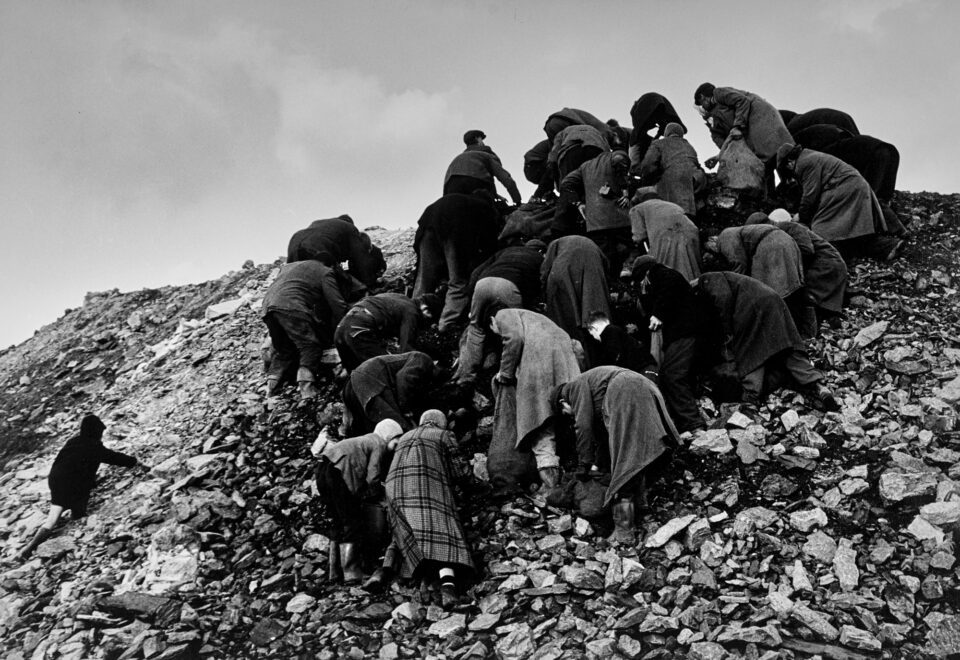
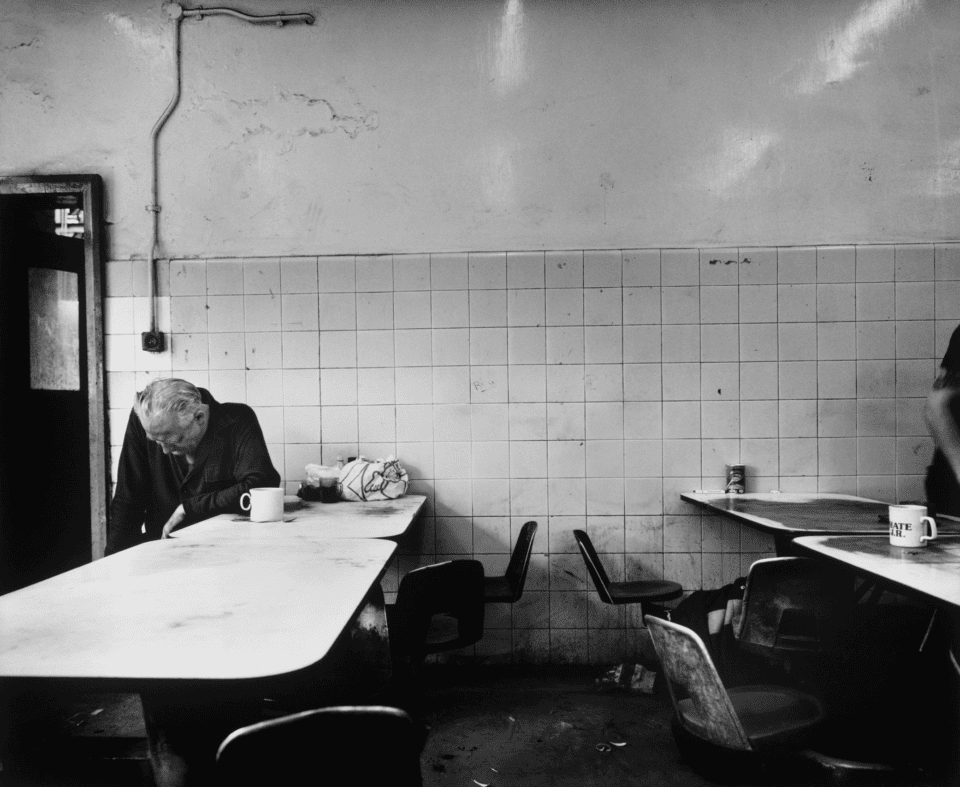
Visitors are taken through four enigmatically titled chapters: The Castle, Domestic Bliss, Double Take and Night Creatures. Kjell-Åke Andersson and Janine Wiedel’s depictions of heavy industry reveal human fragility against the rhythms of production. This idea also comes to the fore in Colin Jones’ Sunderland, North East of England 1962, which shows coal scavengers working on a mound. In the Domestic Bliss section, Anna Fox’s Pete’s Food and Flowers offers a quiet yet poignant portrayal of PTSD in the home. Meanwhile, Derek Ridgers’ photographs of the Bat Cave in the chapter Night Creatures capture one of the birthplaces of British Goth culture.
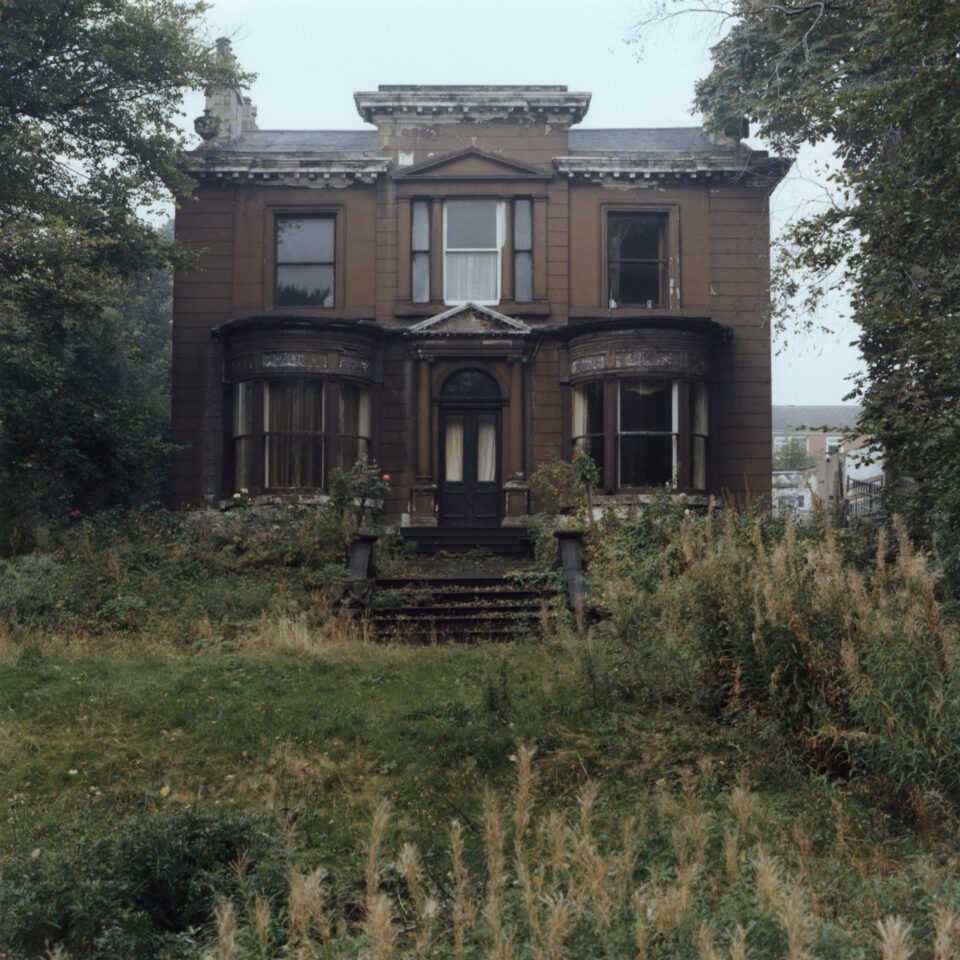
Throughout each section, the images maintain one pervading feeling: the uncanny. Audiences feel as though they’re peering into a moment that isn’t quite right. Perhaps it is the aftermath of violence and destruction, such as in Akihiko Okamura’s Derry/Londonderry, Northern Ireland, at around 4pm on August 12, 1969, which shows a burning building, or Sarah Pickering’s Incident series, capturing the spaces used to simulate emergencies in firefighting training exercises. Or maybe there’s the eerie sense of witnessing a location that is usually full of people and activity, left empty. Donovan Wylie’s shot of a stripped bed in Long Kesh Prison is a prime example, as is Peter Mitchell’s image of an abandoned house.
Dark Tales is a show driven by atmosphere. Some artists work firmly within the documentary tradition, others actively contest and subvert its norms, but all exist firmly within the Gothic. The result is a haunting experience, visualising how our contemporary anxieties, lifestyles and imaginations shape the art world. Each work is made all the more impactful when we remember: they are a reflection of us.
Dark Tales: British Documentary Photography and the Gothic is at Martin Parr Foundation, Bristol from 17 September – 20 December: martinparrfoundation.org
Words: Emma Jacob
Image Credits:
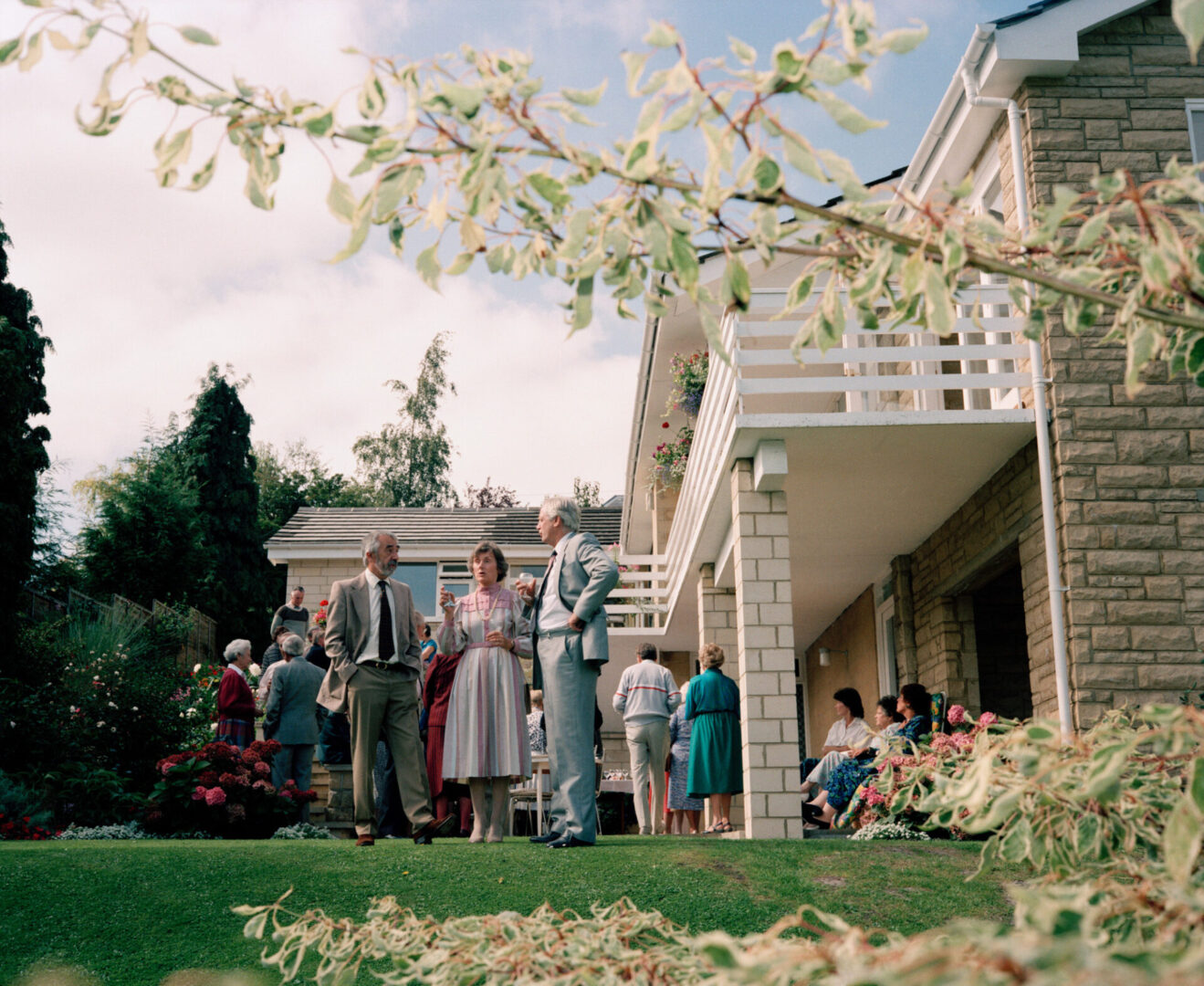
1. Conservative Party fundraiser, England, 1988. © Martin Parr / Magnum Photos.
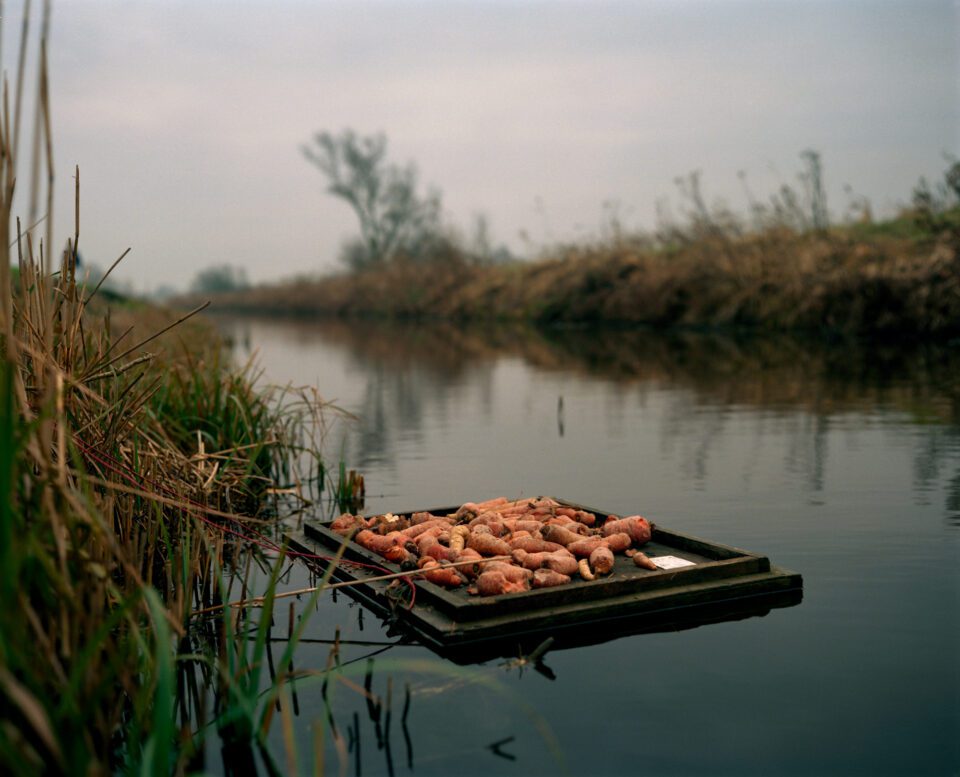
2. The Raft of Carrots 1987-1992. © Jem Southam.
3. ‘Sunderland, North East of England 1962’. Coal scavengers working on a mound. Part of the grafters collection. © Colin Jones / TopFoto.
4. Spencer Place. Leeds, 1979. © Peter Mitchell.
5. Thirty Eight Bastard Years on the Furnace Front, Furnace Keeper, Mess room for Number 4 and Number 5 Furnaces, Clay Lane Ironworks, South Bank, Middlesbrough. 1983 © Graham Smith, courtesy Augusta Edwards Fine Art.