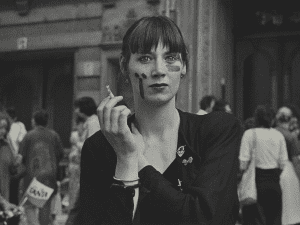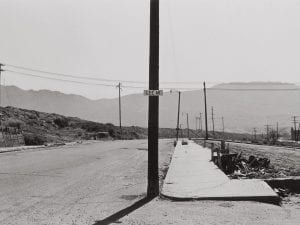
Portrait of a City, opening at Dulwich Gallery on 28 July, traces how photography has shaped our collective understanding of the American city. The show demonstrates how rapid urban expansion catalysed the medium’s rise as a tool to document changing conditions, presenting a compelling visual account of a nation in motion. Alexander Morre, Curator of the show, says: “American photography offers one of the most vivid and influential records of the modern city, and by bringing this remarkable collection to London, we invite audiences to reflect on how the rhythms, challenges and possibilities of urban life continue to echo through our own – a century of human stories told with extraordinary immediacy and invention.”
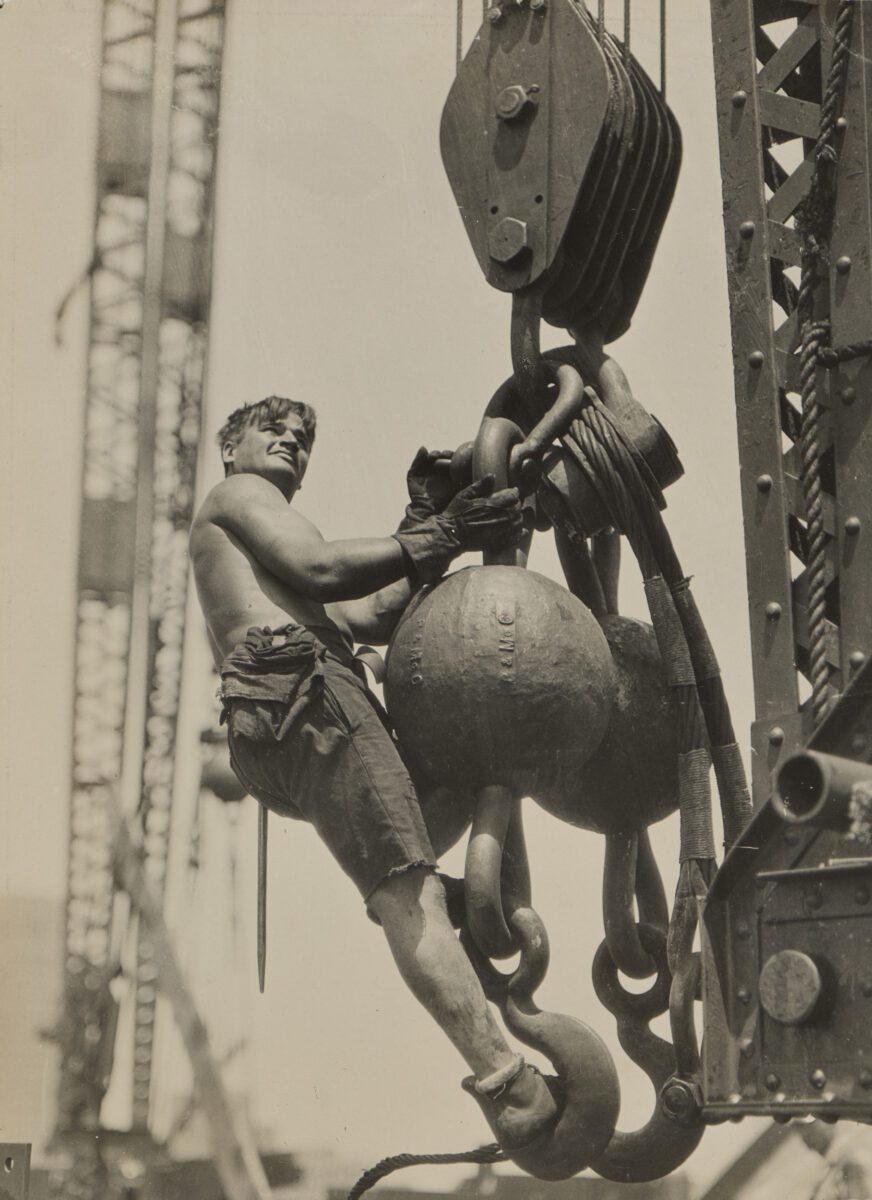
Visitors begin in the early 1900s, a moment when American cities grew rapidly due to mass immigration, industrial growth and new forms of labour, drawing photographers to sites of social and economic shifts. The evolving skyline became a symbol of change – physically and metaphorically reaching new heights – captured in works such as Lewis Hine’s Riding the Ball High up on Empire State (1930). The image shows a young construction worker balancing on huge metal hooks, helping to construct the skyscraper in a record-breaking 410 days. At the same time, figures like Alfred Stieglitz were redefining the medium’s artistic potential, with seminal images like The Steerage (1907) revealing the realities of labour and class.
In 1929, the Wall Street Crash devastated stick markets in the USA, wiping out billions in wealth and triggering the Great Depression. It was a turning point for lens-based art, as photographers took on an urgent social role, recording mass unemployment, poverty and migration. This period saw some of the most enduring images of the 20th century emerge, such as Dorothea Lange’s White Angel Breadline, San Francisco (1933) and Margaret Bourke-White’s Augusta, Georgia (1936). Both artists traced the profound impact of the economic depression, bringing into sharp focus the harsh realities of the period for millions of people across the country, as they struggled to find work or security.
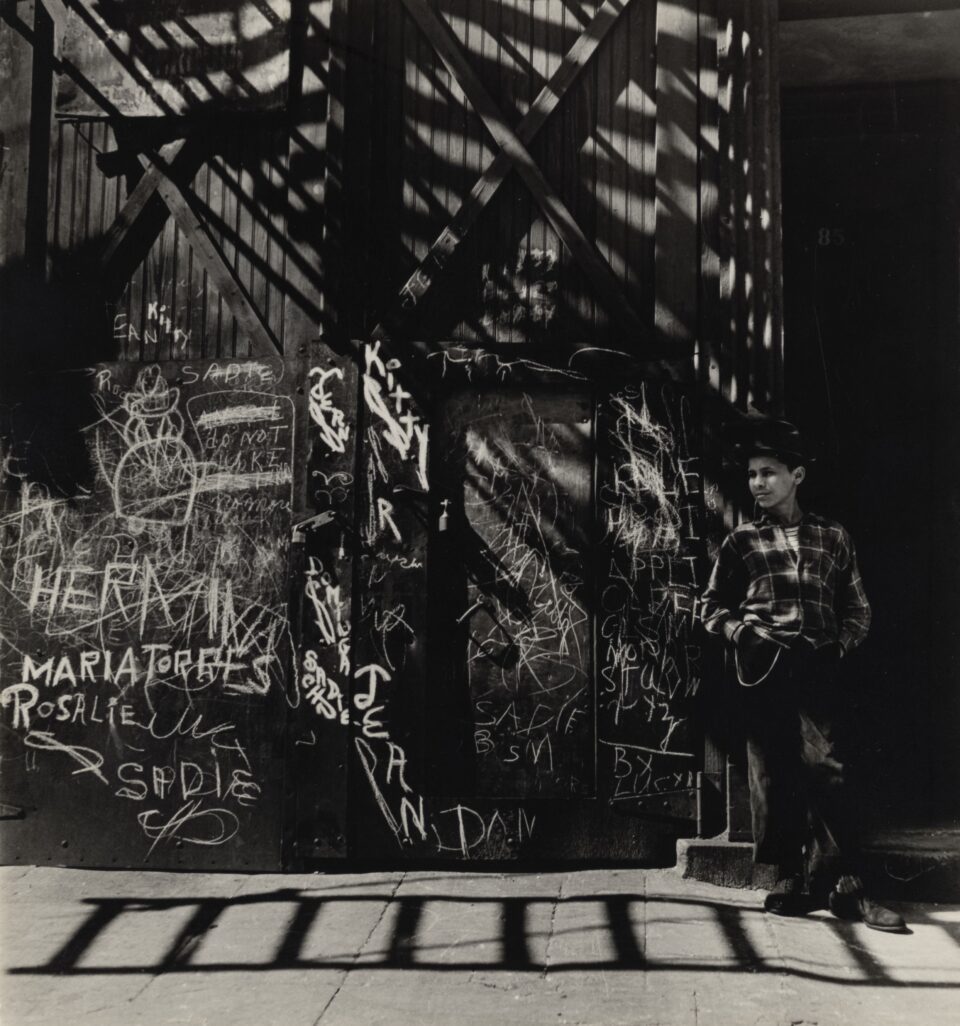
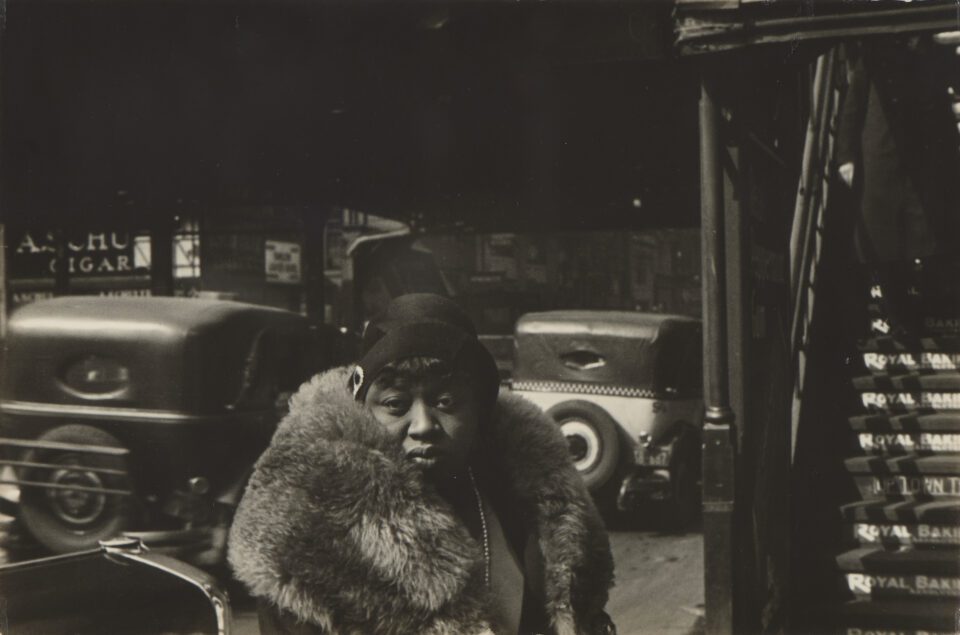
From here, the exhibition changes gear, tracing the rise of photographic modernism through artists such as Walker Evans, whose work helped secure the medium’s place within the modern art world. Alongside this, the influence of the New York Photo League is represented through artists including Weegee, Morris Engel, Ruth Orkin, Aaron Siskind, Rebecca Lepkoff and Lisette Model, whose socially engage images capture the rhythms and pressures of everyday urban life. Also presented are intimate portrayals of marginalised communities in New York, including Helen Levitt and Saul Leiter’s studies of street life.
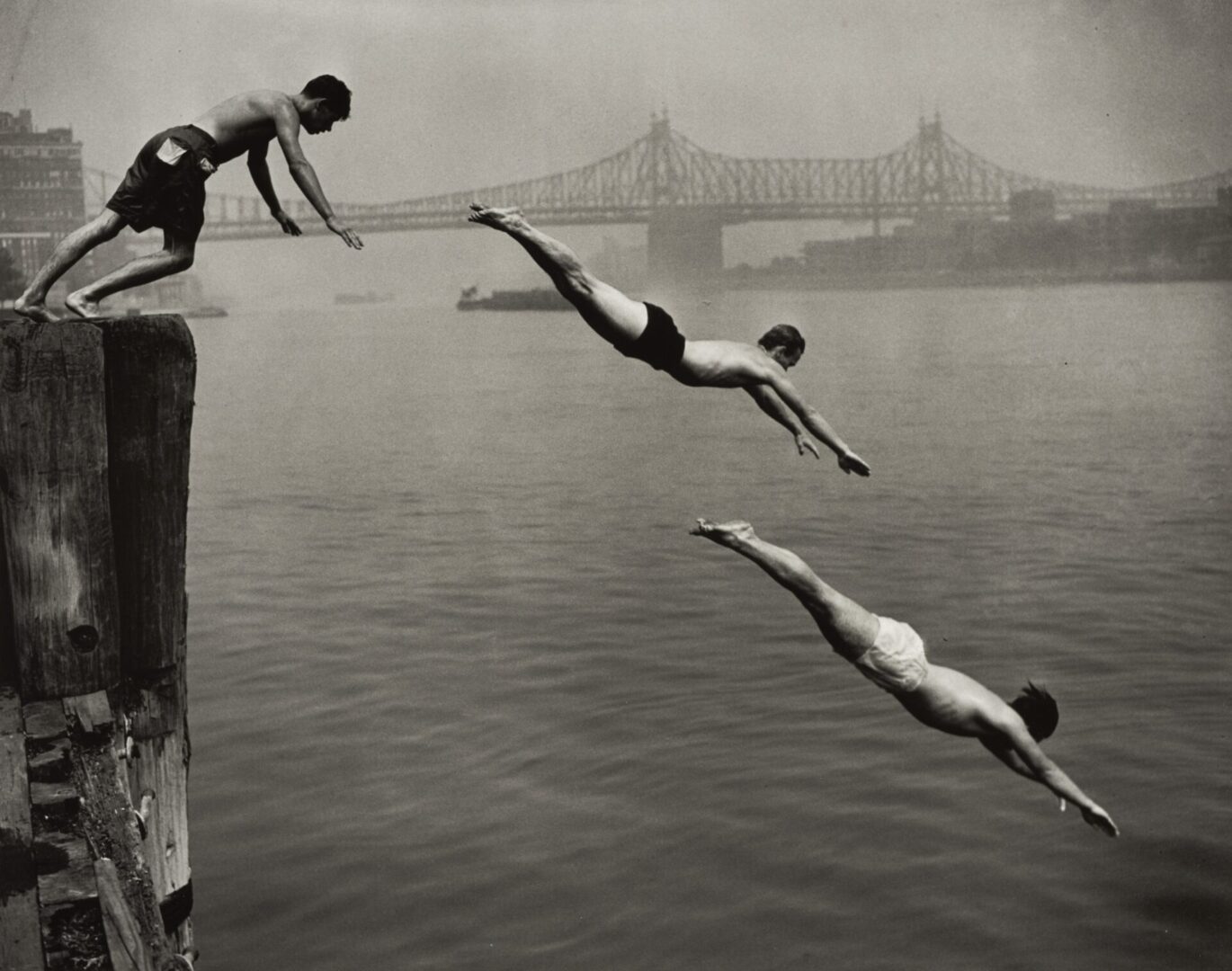
The exhibition then turns to artists documenting the dramatic physical changes reshaping American cities in the mid 20th century. Works by Berenice Abbott record the evolution of New York’s skyline, setting new architectural forms against the city’s historic fabric, whilst Arthur Leipzig’s Divers, East River (1948), captures how peripheral urban spaces became sites of leisure and community. Moving into the 1960s and 1970s, the show explores how photographers responded to a nation undergoing cultural and political transformation. Artists such as Ed Ruscha and Robert Adams examined the structures and systems of the built environment, whilst Garry Winogrand, Diane Arbus and Lee Friedlander brought new immediacy to street photography. This section also depicts life on the margins, including Mary Ellen Mark’s the Damm Family in Their Car, Los Angeles (1987), which confronts the realities of homelessness, and Peter Hujar’s Richie (1985), offering an insight into communities affected by the AIDS crisis.
Portrait of a City captures the profound social and cultural changes that have shaped the modern American landscape. More than that, it is the story of how photography came to play such a central role in both documenting and influencing these changes, putting the people who live and work in the cities at the heart of the narrative. Here, the exhibition transcends 20th century America, revealing something universal about the power of photography to influence our lives and the places we inhabit.
Portrait of a City: A Century of American Photography is at Dulwich Picture Gallery, London from 28 July – 4 October: dulwichpicturegallery.org.uk
Words: Emma Jacob
Image Credits:
1. Arthur Leipzig, Divers, East River ̧1948 © Estate of Arthur Leipzig, Courtesy of Howard Greenberg Gallery, New York.
2. Walker Evans, 42nd Street and Sixth Avenue, 1929 © Walker Evans Archive, The Metropolitan Museum of Art.
3. Rebecca Lepkoff, New York, 1949 © Estate of Rebecca Lepkoff, Courtesy of Howard Greenberg Gallery, New York.
4. Lewis Hine, Riding the Ball High up on Empire State, c.1930.