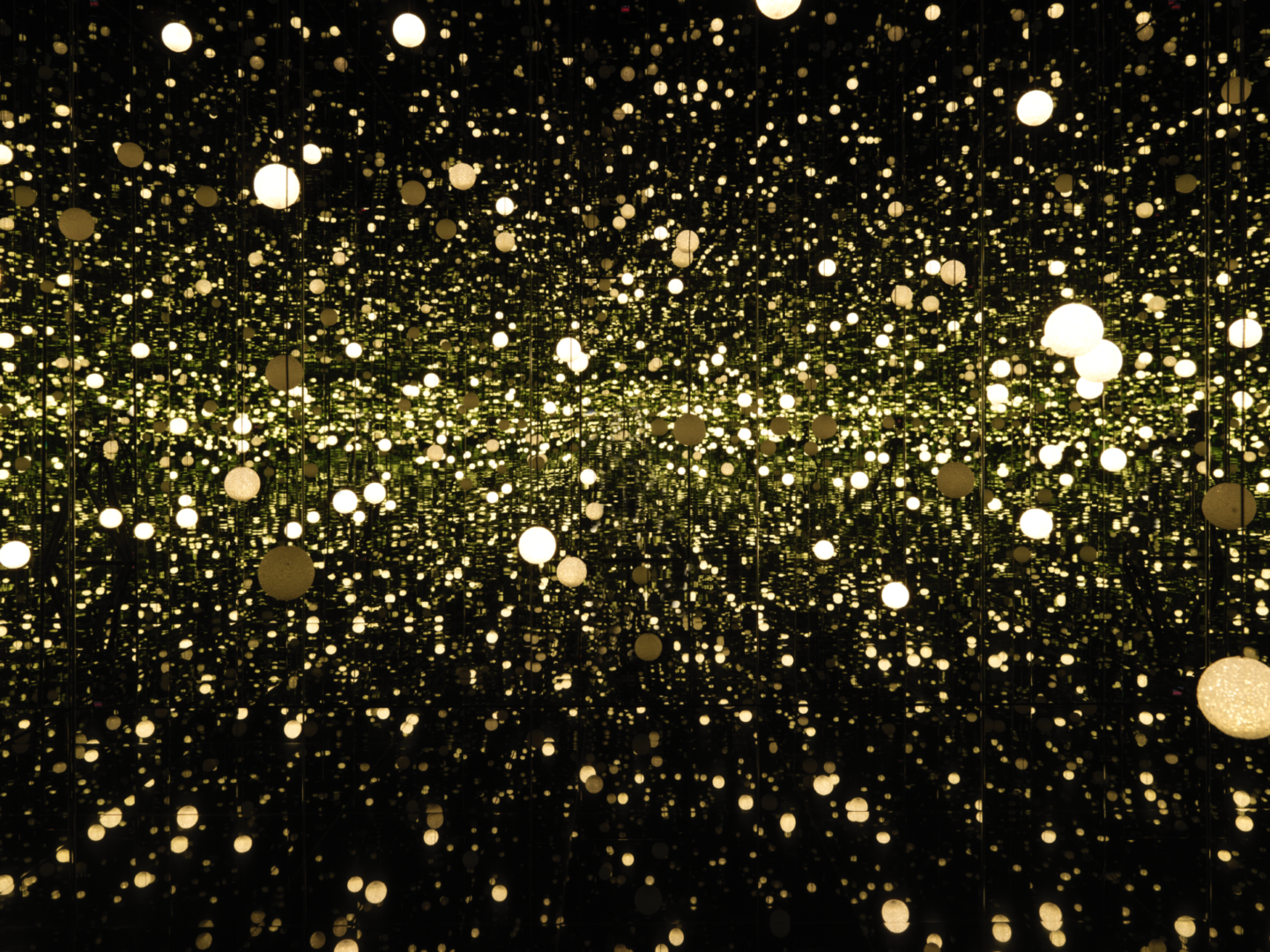
In Guggenheim Pop: 1960 to Now, the Museum stages not simply an exhibition, but a proposition about how the visual language of the last six decades continues to structure perception itself. Pop is approached less as a historical movement than as an operative condition, one in which images circulate through systems of media, reproduction and digital acceleration until distinction between production and reception begins to dissolve. The significance of the presentation lies in its timing, arriving at a moment when visual culture is no longer characterised by representation but by continuous generation, driven by algorithmic repetition and attention economies that privilege visibility over duration. What once appeared as critique of mass culture now reads as its underlying blueprint, embedded within the infrastructures that organise contemporary life. The Guggenheim spiral becomes less a neutral container than a diagram of return, where history loops through itself without resolution. Within this framing, the exhibition positions Pop as an unresolved contemporary condition rather than a completed historical episode.
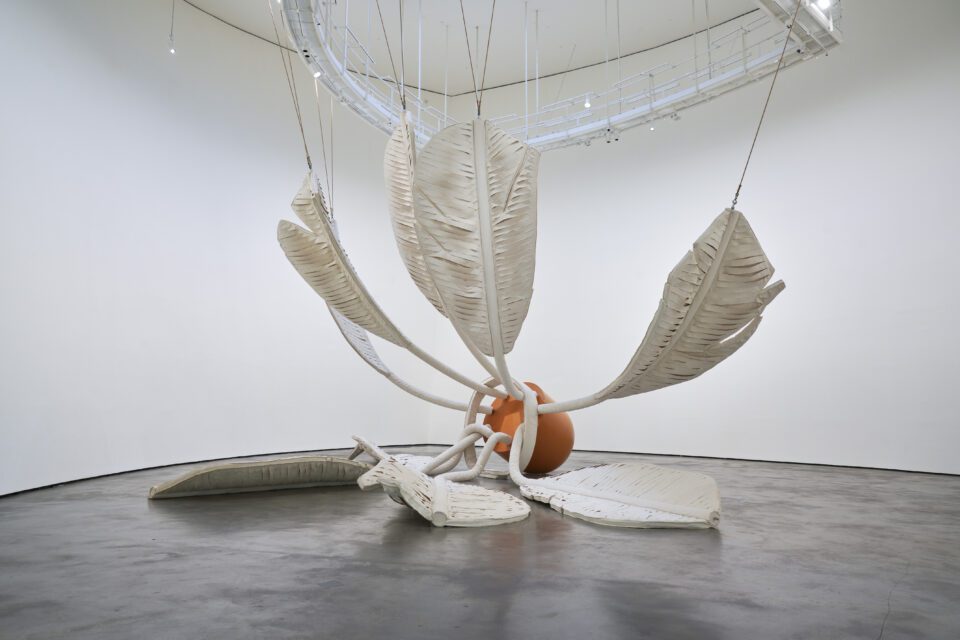
Pop’s emergence in the early 1960s registers here as a recalibration in the status of the image rather than the arrival of a style. Andy Warhol’s serial silkscreens dissolve authorship into repetition, where identity is produced through recurrence rather than expression, and where the artwork becomes indistinguishable from its own distribution. Roy Lichtenstein’s enlarged comic frames isolate the mechanics of mediation, exposing how emotion itself is already formatted by industrial reproduction and graphic simplification. Claes Oldenburg’s inflated everyday objects extend this logic into spatial experience, where scale destabilises the boundary between commodity and sculpture, turning recognition into estrangement. Richard Hamilton’s early collages add another layer of articulation, assembling domestic interiors from advertising fragments that already anticipate a world constructed through images. These works do not stand apart from consumer culture so much as inhabit its structures from within. Meaning, in this configuration, no longer resides in the object but in the circulation that produces its legibility.
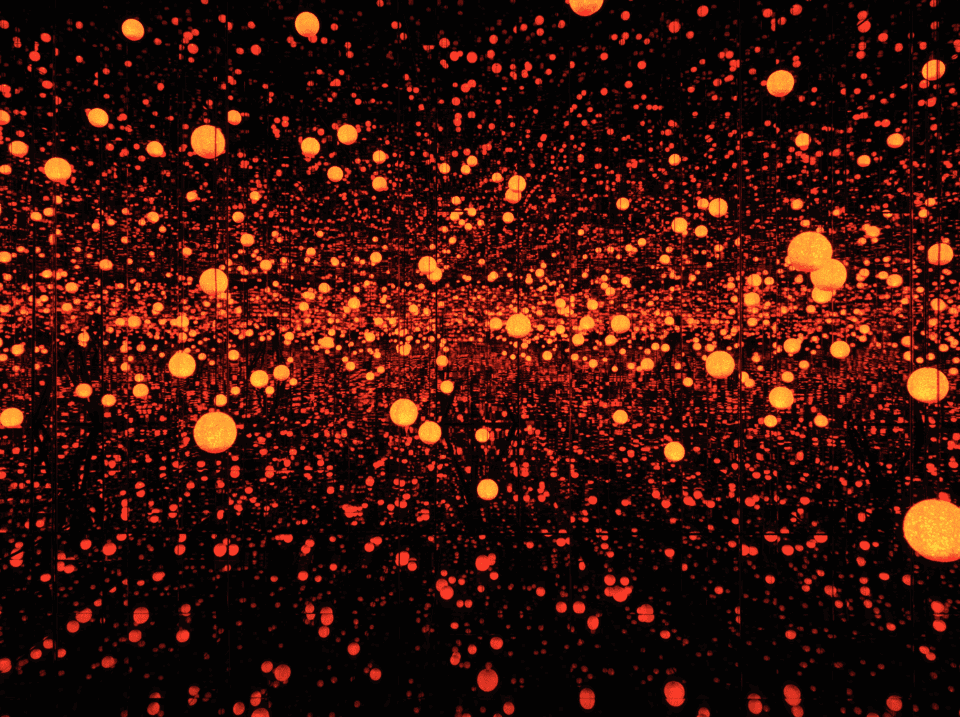
A parallel logic unfolds in the shift from object to environment, where artistic experience becomes inseparable from participation and immersion. Yayoi Kusama’s mirrored installations generate perceptual fields in which repetition becomes spatial condition, dissolving orientation through endless reflection and light. Rather than presenting a work to be viewed, these environments absorb the viewer into systems of visual recursion in which boundaries between body and image collapse. The effect is not contemplative distance but perceptual saturation, where experience is structured as continuous feedback. Kusama’s position across Pop, Minimalism and Happenings signals a refusal of categorical stability, reinforcing the sense that visual culture now operates through overlapping systems rather than discrete movements. Her early Infinity Net paintings already anticipate this condition, where surface becomes both depth and repetition becomes structure. The museum environment intensifies this trajectory, transforming perception into something closer to spatial cognition than aesthetic contemplation.
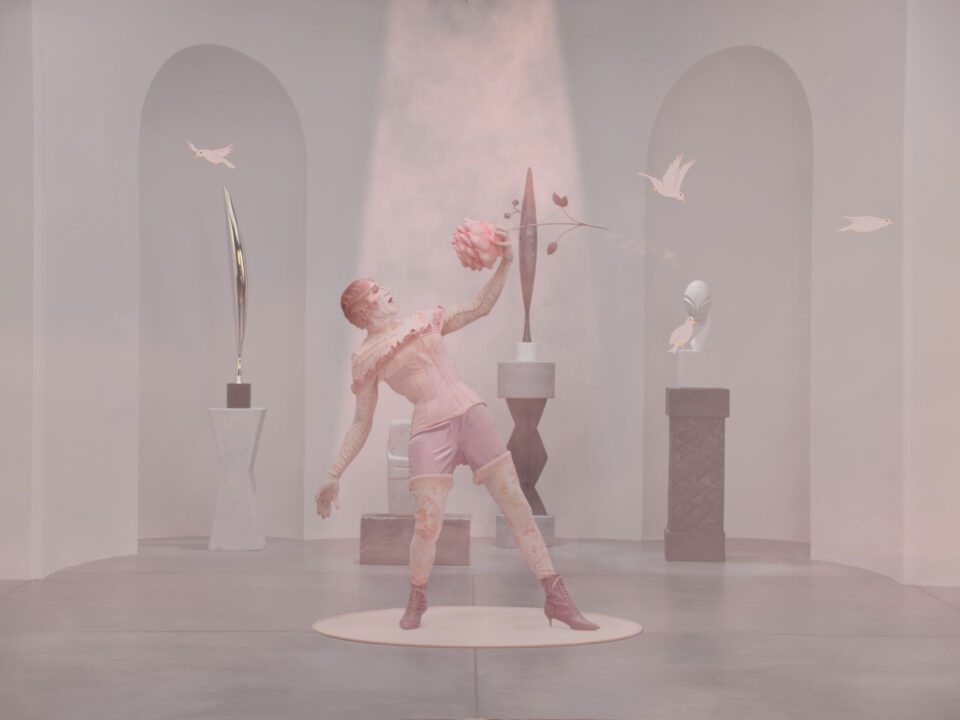
Contemporary practice extends these conditions into a field defined by institutional entanglement, cultural overproduction and the instability of authorship. Maurizio Cattelan’s Comedian compresses value, authorship and display into a single unstable gesture, where irony operates not as commentary but as structural condition. The banana affixed to the wall becomes less object than circulating proposition, shifting meaning through context, repetition and institutional framing. The work exists as much in discourse as in material form, reflecting a condition in which visibility replaces permanence as the primary artistic currency. Alex Da Corte’s ROY G BIV fragments identity into a sequence of cultural avatars, where painting, cinema, performance and pop iconography collapse into one another without hierarchy or resolution. The work operates as a chromatic and narrative system in which subjectivity is assembled through citation rather than coherence. Across practices by Lauren Halsey, Lucia Hierro, Sheida Soleimani, Daniel Gordon and Farah Al Qasimi, image-making becomes a mode of cultural indexing, where identity is constructed through archive, repetition and mediated reference. These works articulate a condition in which representation is no longer reflective but generative, producing identity as a circulating field.
The historical dimension of this trajectory is anchored in the post-war expansion of mass media, where advertising, television and print culture begin to reorganise perception at scale. A new density of images emerges, shaping desire, aspiration and identity through continuous exposure rather than singular encounter. Pop art does not respond to this shift from a position of distance but amplifies its mechanisms until they become visible as form. The movement’s critical charge lies not in refusal but in intensification, exposing how commodity culture operates through repetition and recognition. Within this framework, early Pop works appear less as commentary on consumerism than as experiments in perceptual restructuring, where lived experience is mediated through reproducible imagery. The exhibition draws this line forward into the present, where digital platforms extend these logics into continuous circulation.
Digital circulation intensifies this condition into a regime defined by flow rather than stability. Images move at speeds that destabilise authorship, fragment attention and reorganise perception into a series of discontinuous encounters. Social media platforms, meme cultures and algorithmic feeds operate as expanded fields of Pop logic, where repetition is no longer aesthetic strategy but infrastructural condition. The exhibition traces how appropriation and amplification become embedded within everyday visual behaviour, dissolving distinctions between artistic production and cultural participation. Within this environment, critique loses its external position and becomes part of the same system it seeks to describe. Meaning emerges from circulation itself, where images acquire value through repetition. The Guggenheim spiral gives spatial form to this condition, transforming cultural flow into architectural experience.
The Guggenheim’s spiralling structure reinforces this sense of recursion by replacing linear chronology with a continuous return. Movement through the galleries produces temporal folding, where historical moments reappear in altered configurations rather than sequential order. Early Pop, post-war experimentation and contemporary practice are held in proximity without hierarchy, generating a field in which origin and repetition become increasingly indistinguishable. Each turn of the building stages a return to previous visual logics, reframed through new technological and cultural conditions. The trajectory from 1960 onwards resolves not into closure but into expansion, where visual systems persist as ongoing infrastructure rather than completed history. What emerges is a portrait of culture defined by circulation without end, where perception itself is structured through repetition, return and continual reappearance.
Guggenheim Pop: 1960 to Now is at Guggenheim Museum, New York until 10 January 2027: Guggenheim.org
Words: Anna Müller
Image Credits:
1. Yayoi Kusama, INFINITY MIRRORED ROOM – DANCING LIGHTS THAT FLEW UP TO THE UNIVERSE, 2019. Mirrored glass, wood, LED lighting system, metal, and acrylic panel, 113 5/8 × 163 1/2 × 163 5/8 in. (288.6 × 415.3 × 415.6 cm), edition of 5, plus 1 A.P. Private collection, courtesy David Zwirner. © YAYOI KUSAMA. Photo: Courtesy David Zwirner and Ota Fine Arts
2. Claes Oldenburg and Coosjevan Bruggen, Soft Shuttlecock, 1995. Canvas, latex paint, expanded polyurethane foam, polyethylene foam, steel, aluminum, rope, wood, duct tape, fiberglass, and reinforced plastic;nine feathers, approximately 26 ft.(7.9 m) long, 6–7 ft.(1.8–2.1 m) wide each; nosepiece, approximately 6 × 6 × 3 ft.(1.8 × 1.8 ×0.9m); overall dimensions variable.Solomon R. Guggenheim Museum, New York, Partial gift, Claes Oldenburg and Coosjevan Bruggen, New York95.4488.©Estate of Claes Oldenburg and Coosjevan Bruggen. Photo: Erika Ede, Solomon R. Guggenheim Museum, New York.
3.Yayoi Kusama, INFINITY MIRRORED ROOM – DANCING LIGHTS THAT FLEW UP TO THE UNIVERSE, 2019. Mirrored glass, wood, LED lighting system, metal, and acrylic panel, 113 5/8 × 163 1/2 × 163 5/8 in. (288.6 × 415.3 × 415.6 cm), edition of 5, plus 1 A.P. Private collection, courtesy David Zwirner. © YAYOI KUSAMA. Photo: Courtesy David Zwirner and Ota Fine Arts
4. Alex Da Corte, ROY G BIV, 2022. Digital color video installation, with sound, 60 min.; and wood box with rear projection screen, paint, performance, and powder-coated chairs, edition 5/5. Wood box: 9 ft. 2 in. × 12 ft. 2 1/4 in. × 12 ft. 2 1/4 in. (2.8 × 3.7 × 3.7 m); overall dimensions variable. Solomon R. Guggenheim Museum, New York, Anonymous gift2022.18.© Alex Da Corte, courtesyMatthew Marks Gallery, New York.