There are few cultural institutions in London that have so consistently expanded public understanding of contemporary Japan as Japan House London. Situated on Kensington High Street, the venue was established to foster a deeper appreciation of Japanese culture beyond familiar stereotypes, presenting an ambitious programme spanning art, design, architecture, craft, gastronomy, technology and performance. Japan House operates as a cultural bridge, placing traditional practices alongside contemporary innovation and encouraging dialogue between Britain and Japan. Recent exhibitions have reflected this expansive vision, from Hyakkō: 100+ Makers from Japan, a celebration of contemporary craft, to its landmark presentation of photography through KYOTOGRAPHIE: Kawada Kikuji x Iwane Ai, the institution’s first exhibition dedicated entirely to the medium. The exhibition signals not only a new direction for Japan House, but also the growing prominence of Japanese photography in the international cultural landscape.
Photography is one of contemporary art’s defining languages. Across the past decade, the medium has experienced renewed critical attention, evolving beyond its documentary origins to become a vital means of exploring memory, identity, history and place. Museums, galleries and cultural institutions increasingly position photography at the centre of their programmes, recognising its capacity to shape conversations. Japan, whose photographic tradition has long exerted influence on global visual culture, has emerged as one of the most compelling centres of this resurgence. Japan House London’s presentation of KYOTOGRAPHIE: Kawada Kikuji x Iwane Ai feels less like a standalone exhibition than part of a broader shift in the way contemporary photography is being experienced and understood.

It is impossible to separate this conversation from Kyoto itself. Unlike Tokyo’s relentless velocity, Kyoto moves according to a slower rhythm, where centuries-old temples, gardens and machiya townhouses exist alongside contemporary architecture and experimental artistic practice. As Japan’s former imperial capital, the city carries extraordinary historical weight, yet it has continually reinvented itself as a site for cultural innovation. The city’s layered urban fabric provides an ideal setting for artists interested in questions of time, place and continuity, making it uniquely suited to photography, a medium equally concerned with preserving fleeting moments, whilst generating new perspectives. Kyoto has become a destination where heritage and experimentation comfortably coexist, offering fertile ground for artistic exchange.
Founded in 2013 by Lucille Reyboz and Nakanishi Yūsuke, KYOTOGRAPHIE has transformed this remarkable city into one of the world’s leading photography destinations. Every spring, exhibitions unfold throughout Kyoto’s temples, shrines, historic residences, warehouses and museums, allowing photography to inhabit spaces charged with centuries of history. Rather than confining itself to the white cube gallery, the festival integrates each exhibition into its architectural surroundings, encouraging visitors to experience photography as part of the city itself. This curatorial philosophy has helped establish KYOTOGRAPHIE as one of Asia’s largest photography festivals, attracting hundreds of thousands of visitors while fostering educational programmes and international collaboration. Its distinctive approach demonstrates how photography can activate heritage spaces rather than simply occupy them.
Today, photography festivals occupy an increasingly vital position within the global cultural calendar. Events such as Les Rencontres d’Arles in France, Photo London, Cortona On The Move and FORMAT International Photography Festival have demonstrated how the medium flourishes when dispersed across cities rather than confined to single institutions. These festivals create temporary communities where established practitioners, emerging voices and audiences intersect, encouraging experimentation while broadening access to photography. KYOTOGRAPHIE occupies a distinctive place within this ecosystem, combining rigorous international programming with an acute sensitivity to local context. The festival’s exhibitions consistently position Japanese artists alongside practitioners from around the world, producing dialogues that transcend geography while remaining rooted in Kyoto’s unique cultural identity.
The growing international appetite for Japanese photography has been particularly evident in London this summer. At The Photographers’ Gallery, Japanese Women Photographers: From 1950s to Now offers a landmark reassessment of photographic history through the work of twenty-seven women whose contributions have too often remained marginalised. Spanning more than seven decades, the exhibition reveals an extraordinary breadth of approaches, from documentary and conceptual practice to intimate explorations of family, identity and everyday life. Together, the exhibition challenges the long-standing dominance of male narratives within histories of Japanese photography, offering a richer and more inclusive understanding of the medium’s development. Its arrival alongside KYOTOGRAPHIE suggests a broader institutional recognition that Japanese photography is entering a new phase of global visibility.
Seen together, these exhibitions reflect a wider shift in contemporary photographic discourse. Increasingly, audiences seek work that addresses questions of memory, displacement, ecology and personal history through nuanced visual storytelling rather than spectacle. Japanese photographers have long excelled in this territory, producing images characterised by subtle observation, emotional restraint and extraordinary formal precision. However, their work also speaks powerfully to global concerns, transcending national boundaries without abandoning cultural specificity. Photography has become a means of negotiating shared experiences of uncertainty, environmental change and historical remembrance.
Japan House’s collaboration with the KYOTOGRAPHIE team crystallises many of these developments. Rather than recreating the festival wholesale, the exhibition focuses on two artists whose practices reveal distinct yet complementary understandings of photography’s capacity to navigate history and lived experience. The exhibition pairs the pioneering post-war photographer Kawada Kikuji with the contemporary artist Iwane Ai, establishing a dialogue that stretches across more than half a century of practice. Importantly, the exhibition has been directed by the KYOTOGRAPHIE team themselves, marking their first exhibition project in the United Kingdom and extending the festival’s beyond Kyoto.
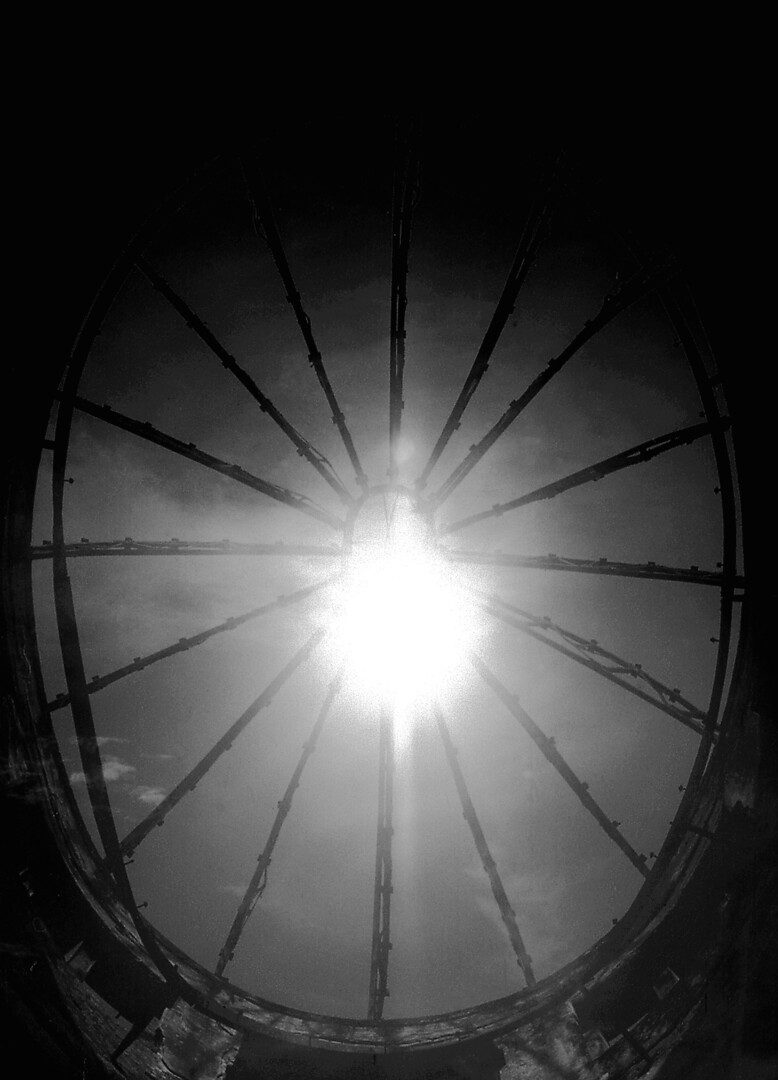
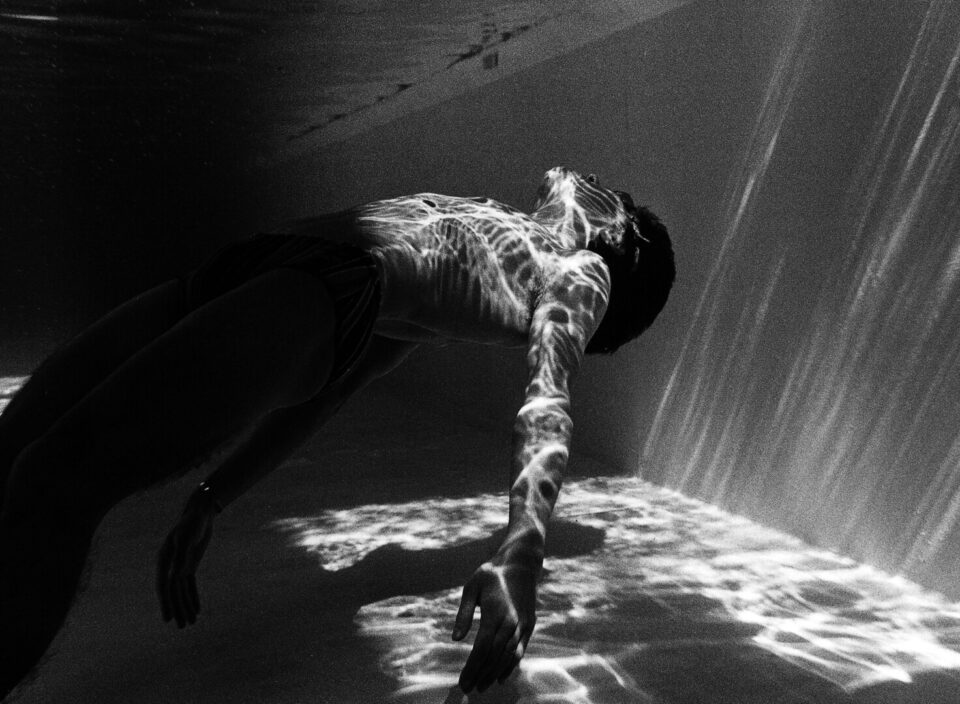
Kawada’s contribution revisits one of the defining bodies of post-war photography. Works from his seminal Chizu (The Map) series continue to confront the psychological scars left by Hiroshima, employing abstraction, texture and fragmentation to communicate experiences that resist straightforward representation. His photographs remain astonishingly contemporary, demonstrating how the medium can hold collective trauma while resisting closure or certainty. Alongside these historic works are selections from later series, illustrating an artist whose practice has continually evolved across seven decades.
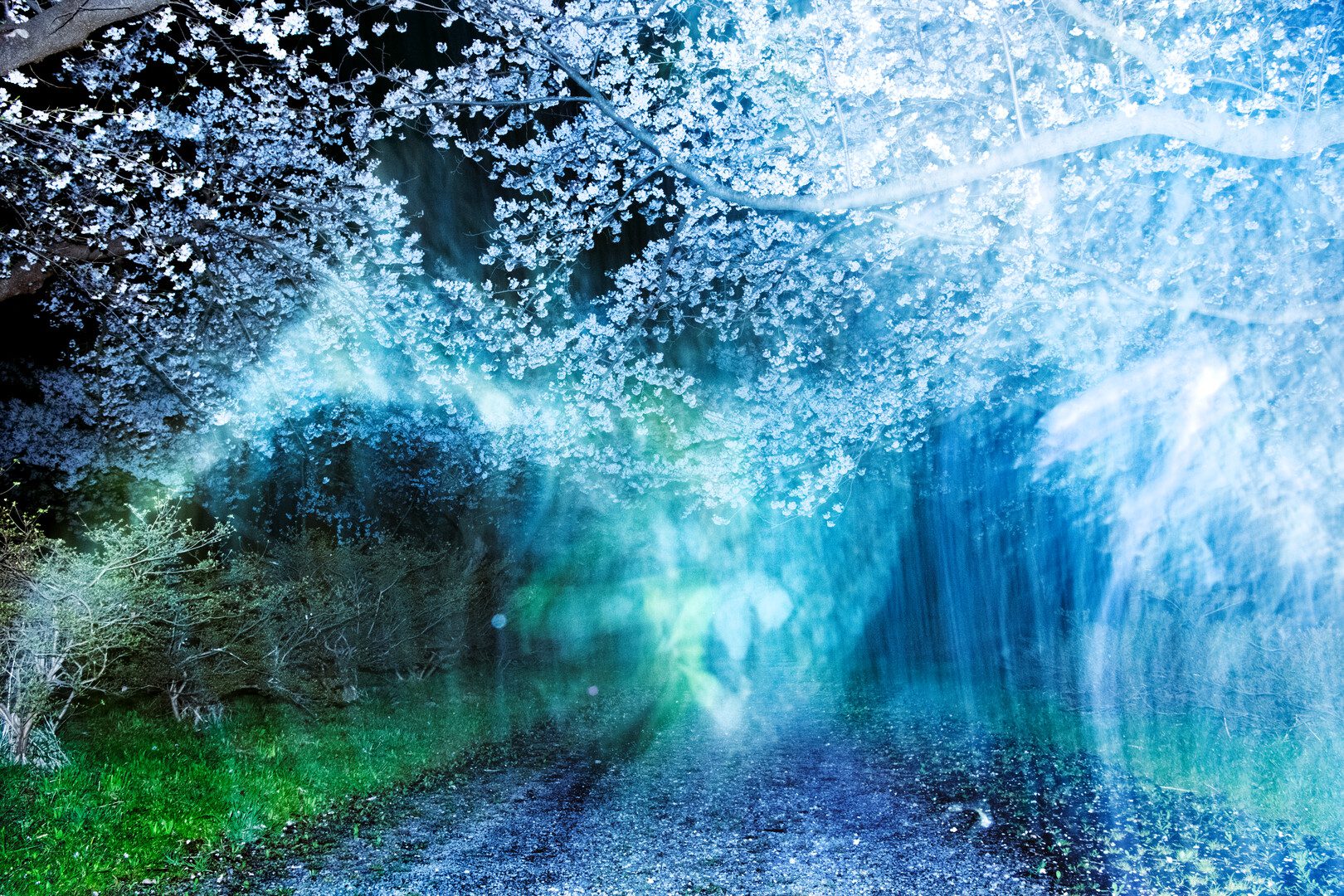
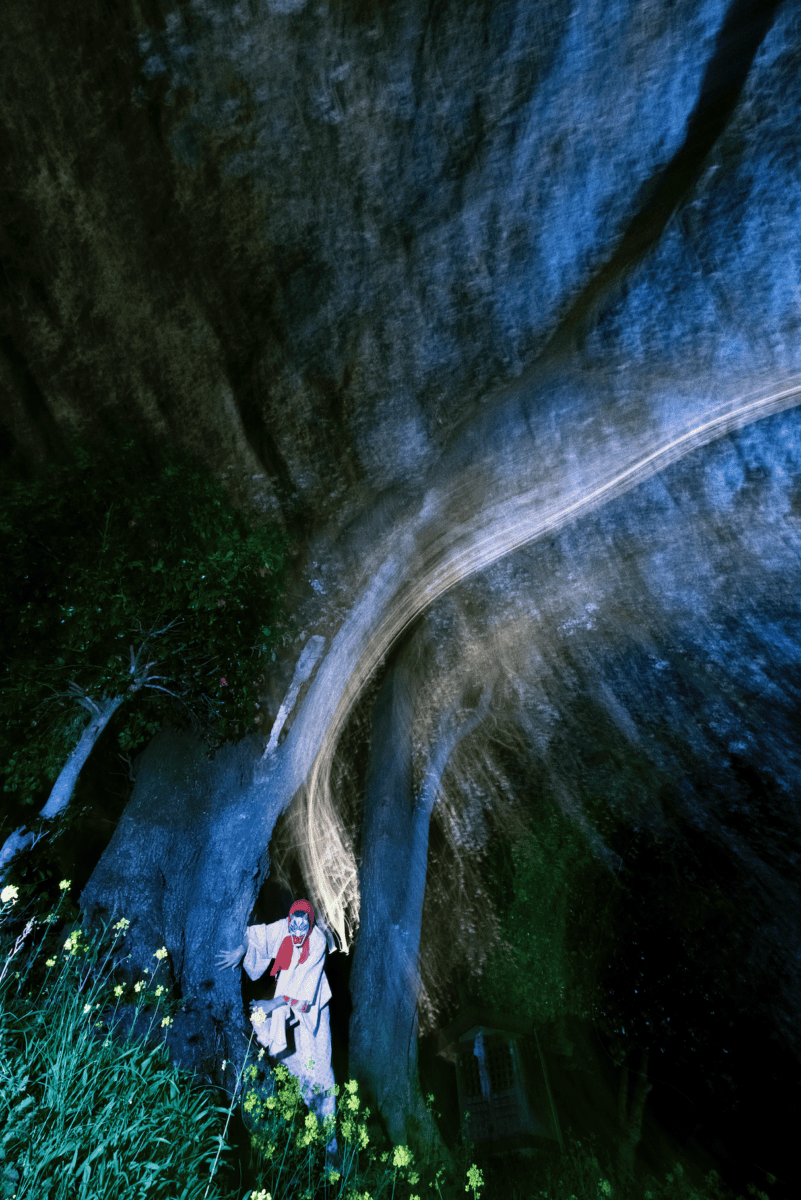
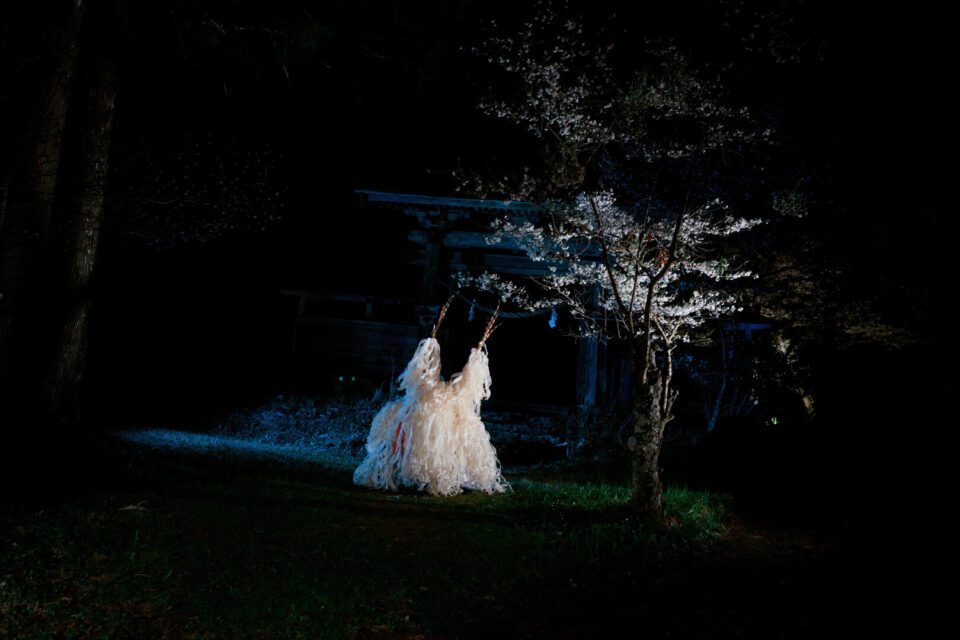
Iwane Ai’s photographs introduce a markedly different, though equally affecting, sensibility. Her series A New River, created in the Tōhoku region during the COVID-19 pandemic, combines nocturnal cherry blossom landscapes with figures drawn from Japanese folklore, producing images suspended between documentary observation and mythic imagination. Elsewhere, Kīpuka explores Japanese immigrant communities in Hawaii, tracing histories of migration, memory and belonging across the Pacific. Her photographs move fluidly between cultures and generations, emphasising photography’s capacity to connect personal narratives with larger historical currents. They demonstrate the remarkable breadth of contemporary Japanese photography, where history, landscape and identity continually intersect.
KYOTOGRAPHIE: Kawada Kikuji x Iwane Ai represents far more than an exhibition imported from Japan. It encapsulates photography’s growing importance as a global language capable of traversing cultures while remaining deeply attentive to place. At a moment when institutions are re-evaluating the histories and futures of photographic practice, Japan House London offers an exhibition that feels both timely and enduring. By bringing the spirit of Kyoto to Kensington, it reminds audiences that photography is never simply about images; it is about the relationships those images create between people, histories and landscapes. In doing so, Japan House and KYOTOGRAPHIE affirm photography’s enduring ability to deepen cultural understanding, ensuring that conversations begun in Kyoto resonate far beyond the city.
Kyotographie: Kawada Kikuji x Iwane Ai is at Japan House London until 18 October: japanhouselondon.uk
Words: Shirley Stevenson
Image Credits:
1. From A NEW RIVER © Iwane Ai.
2. The Last Total Eclipse of Sun in the 20th Century, 1999, From the The Last Cosmology series © Kikuji Kawada.
3. From A NEW RIVER © Iwane Ai.
4. Kawada Kikuji from the series The Map © Kikuji Kawada Courtesy PGI.
5. Iwane Ai A NEW RIVER ©︎ Iwane Ai.
6. Kikuji Kawada From the series Los Caprichos, Invisible © Kikuji Kawada.