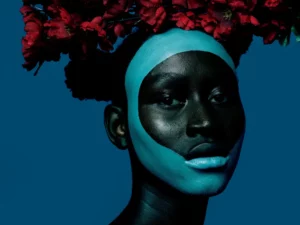
London’s cultural dominance has long rested on more than the strength of its institutions. It is a city whose creative identity is built through constant reinvention, where world-renowned museums sit alongside artist-run spaces, where commercial galleries coexist with experimental projects, and where culture remains one of the capital’s most valuable exports. In 2026, that position was formally recognised when Time Out named London the world’s best city for culture, placing it ahead of Paris, New York, Berlin and Cape Town. The ranking reflected the breadth of a cultural ecosystem that continues to evolve despite economic uncertainty, rising costs and global competition. At a time when many cities are struggling to sustain creative communities, London remains a place where culture is not merely preserved but actively produced. The city’s creative economy has become one of its defining strengths, influencing everything from tourism and education to investment and urban development.
The significance of that recognition becomes clearer when viewed against the cities London surpassed. Paris possesses unparalleled cultural heritage and institutional prestige. Berlin remains a magnet for artists drawn by experimentation and alternative modes of practice. New York continues to dominate the commercial art market and global collecting networks. However, London occupies a unique position between these worlds. It combines the historical weight of a European capital with the entrepreneurial energy of a global financial centre, creating conditions in which creativity can operate simultaneously as cultural expression and economic driver. This ability to bridge public and private, heritage and innovation, has become one of London’s most distinctive characteristics.

The institutions underpinning that success are among the most influential in the world. Tate Modern continues to shape international conversations around contemporary art, whilst the Design Museum reflects London’s position at the intersection of creativity, technology and innovation. The Victoria and Albert Museum remains a cornerstone of global design and decorative arts, while the arrival of V&A East signals an ambitious commitment to the city’s future cultural landscape. Whitechapel Gallery maintains its historic role as a platform for experimentation, and the Serpentine Galleries continue to champion interdisciplinary practices that connect art with science, architecture and ecology. Together, these organisations form a cultural infrastructure that extends far beyond exhibition-making, generating research, education, employment and international exchange.
The impact of this ecosystem is economic as well as cultural. Creative industries contribute more than £120 billion annually to the UK economy, with London functioning as the sector’s principal hub. Museums, galleries, theatres and festivals attract millions of visitors every year, generating revenue that extends into hospitality, retail, transport and tourism. The cultural economy supports a vast network of professionals, from artists and curators to technicians, fabricators, educators and designers. In a global marketplace increasingly driven by ideas and innovation, culture has become one of London’s most valuable exports.
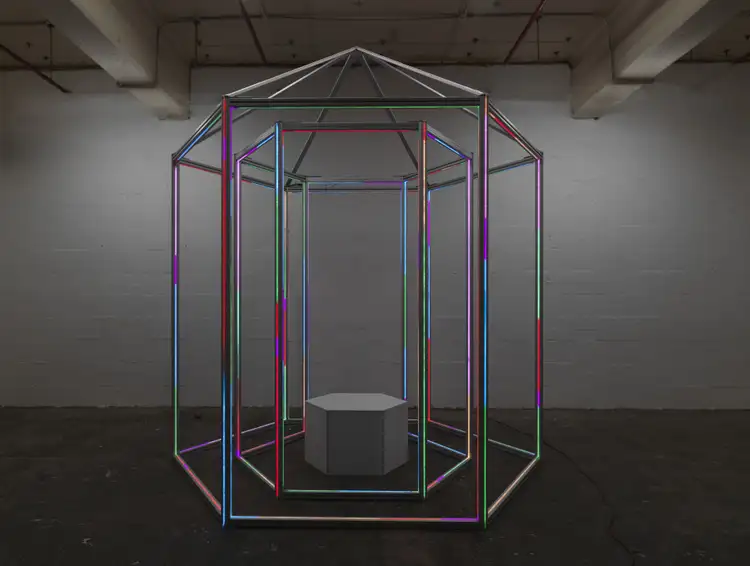
Yet, London’s cultural success cannot be measured solely through institutions or economic statistics. Its strength lies equally in the spaces that sit between them. Commercial galleries, artist-run initiatives and independent organisations have become increasingly important actors within the contemporary cultural landscape. The distinction between public and private sectors has grown less rigid in recent years, with galleries taking on responsibilities once associated primarily with museums. Major commercial spaces now commission ambitious exhibitions, publish scholarly catalogues, support artist research and present work of genuine cultural significance. Increasingly, they are centres of production, discourse and engagement.
It is within this broader context that London Gallery Weekend returns from 5–7 June for its sixth edition. Bringing together 126 galleries across the capital, the event has evolved into one of the most compelling expressions of London’s collaborative cultural identity. Rather than concentrating activity within a single venue, London Gallery Weekend transforms the city itself into a network of interconnected exhibition spaces. Visitors move through neighbourhoods, discovering not only galleries but the wider cultural fabric that surrounds them. The experience becomes as much about navigating London as it is about viewing art.
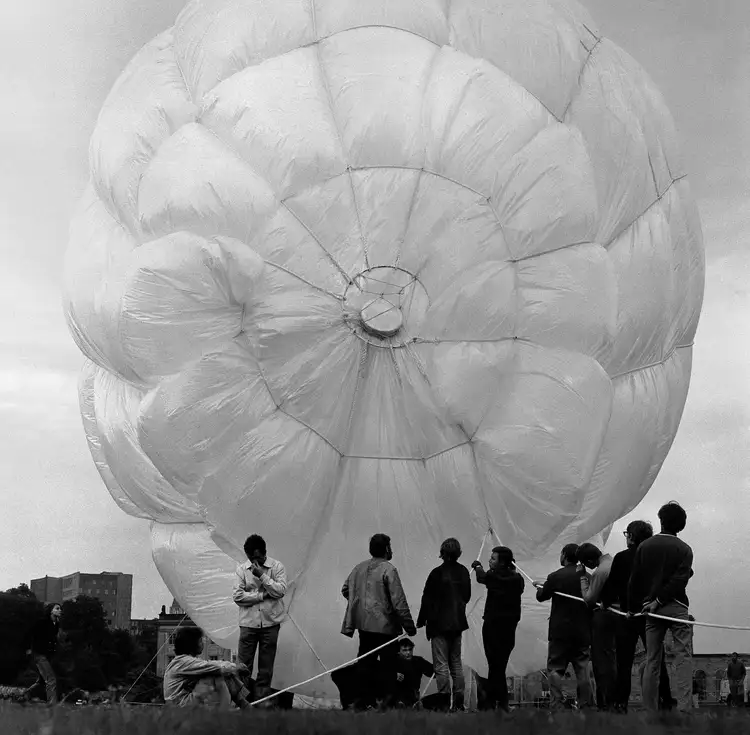
The growing prominence of gallery weekends reflects a wider shift in contemporary culture. For decades, art fairs dominated the international calendar, creating marketplaces where commercial activity often took precedence over engagement. Gallery weekends offer an alternative model. They encourage audiences to encounter art within the spaces where galleries operate year-round, fostering deeper connections between artists, exhibitions and local communities. The emphasis is less on exclusivity and acquisition and more on exploration and accessibility. In an era when cultural institutions face pressure to broaden participation, gallery weekends represent a powerful mechanism for opening doors.
This democratising potential is perhaps one of the format’s most significant achievements. The contemporary art world is often criticised for its opacity and perceived exclusivity. Gallery weekends challenge those assumptions by creating entry points for audiences. Free admission, coordinated programming and citywide visibility encourage participation beyond established art-world circles. Visitors can engage on their own terms, whether they are seasoned collectors, students, tourists or first-time gallery-goers. The result is a more porous relationship between contemporary art and the public sphere.
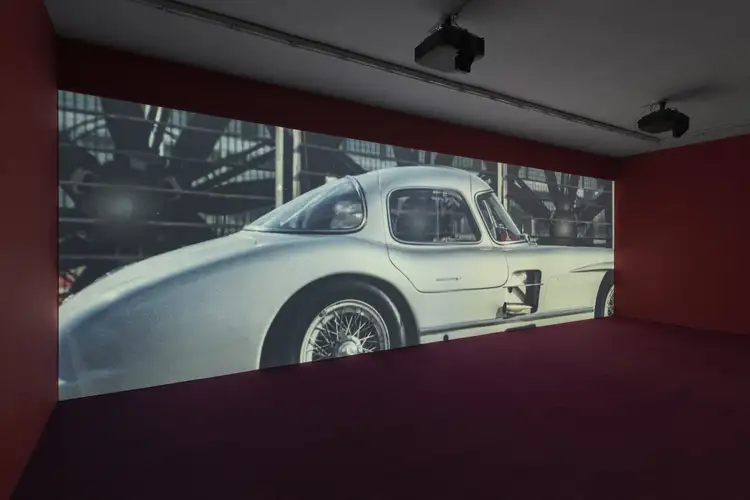
London is not alone in recognising the value of this approach. Berlin Gallery Weekend has played a crucial role in establishing the German capital as one of Europe’s most influential contemporary art centres. Brussels Gallery Weekend has successfully repositioned the Belgian capital as a significant destination for collectors and curators, highlighting the strength of its gallery ecosystem. In New York, coordinated gallery initiatives across Chelsea, Tribeca and the Lower East Side have helped sustain engagement beyond the major auction houses and art fairs that often dominate headlines. However, London Gallery Weekend operates on a scale few cities can match. The participation of 126 galleries demonstrates not only the size of the capital’s art sector but also its willingness to act collectively.
The event also arrives at an interesting moment in London’s post-pandemic cultural recovery. During the uncertainty of 2020 and 2021, many predicted a prolonged contraction of the gallery sector. Concerns around Brexit, international mobility and escalating operational costs further fuelled anxieties about London’s future position. While challenges remain, the reality has proven more nuanced. New galleries have opened, international operators have expanded their presence, and emerging dealers have developed innovative models. Far from retreating, London’s gallery landscape has continued to evolve.

At the same time, success brings its own complexities. The very cultural vitality that attracts investment can contribute to rising property values and the displacement of artists from the communities they helped shape. Questions of affordability remain pressing. Studio space is increasingly scarce, and younger practitioners often face significant barriers to establishing sustainable careers within the capital. Discussions around environmental responsibility have also become increasingly urgent, prompting galleries and institutions to reconsider everything from exhibition production to international shipping. London’s future cultural success will depend not only on growth but on sustainability.
These tensions make events such as London Gallery Weekend particularly important. Beyond showcasing exhibitions, they create opportunities to reflect on how cultural ecosystems function and whom they serve. They highlight the interdependence of institutions, galleries, artists and audiences whilst demonstrating the value of collaboration in an increasingly fragmented world. The event’s strength lies not simply in the number of participating galleries but in the collective statement those galleries make together.

This year’s programme offers a compelling snapshot of the city’s breadth. Visitors can encounter a solo presentation by the late Australian artist Emily Kam Kngwarray at Pace Gallery ahead of her major Tate retrospective, explore a rare retrospective of American painter Dotty Attie at Public Gallery, experience monumental works by Paul McCarthy at Hauser & Wirth and view paintings by Patrick Heron at Hazlitt Holland-Hibbert. Alongside internationally recognised names, newly participating galleries and recently opened spaces demonstrate the continued dynamism of London’s art scene. The programme reflects a city capable of balancing established figures with emerging voices, global perspectives with local contexts.
Navigating a citywide event of this scale inevitably requires thoughtful coordination. This is where platforms such as GalleriesNow play a valuable role. Acting as the Official Navigation Partner for the 2026 edition, the platform provides visitors with maps, exhibition listings, artist information and curated routes designed to simplify exploration. Importantly, the technology functions as an enabler rather than the focus itself. Its purpose is to connect audiences with galleries and exhibitions, making a complex cultural landscape more accessible without overshadowing the experiences it facilitates.
London Gallery Weekend is a reminder of what makes the capital such a compelling cultural destination. It reflects a city whose strength lies in the relationships between them. Across three days, 126 galleries will contribute to a conversation that extends far beyond their walls, speaking to questions of access, community, creativity and cultural value. At a time when cities around the world are competing to define their place within an interconnected cultural landscape, London continues to demonstrate that its greatest asset is not simply the art it presents, but the ecosystem that makes such creativity possible.
London Gallery Weekend runs at various location from 5-7 June: londongalleryweekend.art
Words: Anna Müller
Image Credits:
1&5. Sara Cwynar, ‘Baby Blue Benzo’, installation view, 2026. Courtesy of the artist and The Approach, London. Photo: Michal Brzezinski.
2. Anne Imhof, ‘Grey Wave’, 2025 (detail). Courtesy of Sprüth Magers.
3. Yuko Shiraishi, ‘Brief Encounter – Gazebo’, 2025. Aluminium, stainless steel, LED strip lights, plastic and painted wood, 260 x 220 x 220 cm.
4. CHRISTO, 5,600 Cubicmeter Package (first skin). Installation view: Kassel, 1968. Artwork © Christo and Jeanne-Claude Foundation. Photo: Klaus Baum. Courtesy Christo and Jeanne-Claude Foundation and Gagosian.
6. Courtesy of Slugtown and Sadie Coles HQ.
7. Samir Laghouati-Rashwan, Film still from ’Night on MLK Blvd’, 27 min, 2025.