Historic European cities now occupy a rare and productive tension. Shaped by centuries of memory, architecture and ritual, they continue to operate as living cultural systems rather than fixed historical artefacts. Within them, heritage is not a static condition but an active framework through which identity is continuously negotiated. These cities function most powerfully when preservation and transformation are held in productive relation rather than opposition. The question is not whether cities change, but how they manage to evolve while retaining the depth of their rich accumulated histories.
Bruges exemplifies this condition with particular clarity. Its UNESCO World Heritage status situates it within a global network of protected urban environments, where over 1,100 properties are now inscribed, many of them historic city cores balancing conservation and contemporary use. At the same time, global cultural tourism exceeds 1.4 billion international arrivals annually, reinforcing the pressure and potential of historic cities within contemporary cultural economies. In this context, heritage cities are increasingly required to function as active systems of cultural production rather than static forms of representation. They are lived environments in which meaning is continuously produced, revised and reimagined.
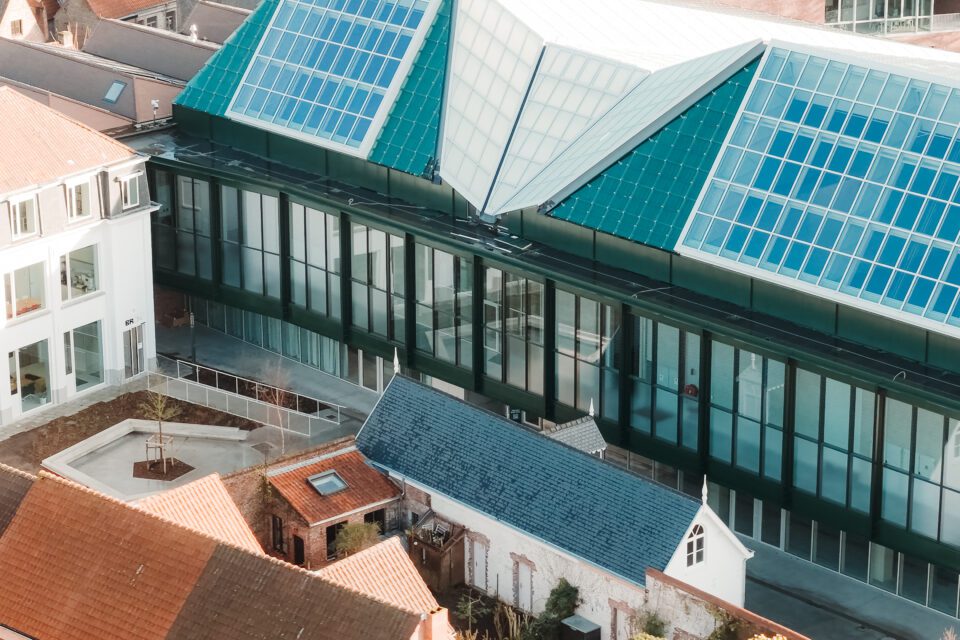
Against this backdrop, BRUSK emerges as a new contemporary art gallery for Bruges, reframing how the city engages with its own cultural inheritance. Rather than presenting heritage as an image to be preserved, it positions Bruges as a site of ongoing cultural production and experimentation. The project operates as both institution and proposition, asking how historic environments might remain open to transformation without losing their historical density. It stages past and present as coexisting temporal layers and in doing so, BRUSK becomes a reorientation of how the city is understood.
Institutionally, BRUSK reflects a broader shift in the role of cultural buildings within contemporary urban life. Across Europe, museums and galleries are increasingly embedded within social, educational and economic infrastructures, functioning as agents of regeneration as much as exhibition. In the UK alone, the museum and gallery sector contributes an estimated £2.2 billion in direct gross value added, underscoring the scale of cultural infrastructure within urban economies. From Dublin’s Centre for the Image to Rotterdam’s Depot Boijmans Van Beuningen, from London’s V&A East to Sydney’s Powerhouse Parramatta, and from Cape Town’s Zeitz MOCAA to Lagos’s Museum of West African Art, the museum is a civic instrument. It operates as infrastructure – shaping how cities are inhabited, interpreted and shared.
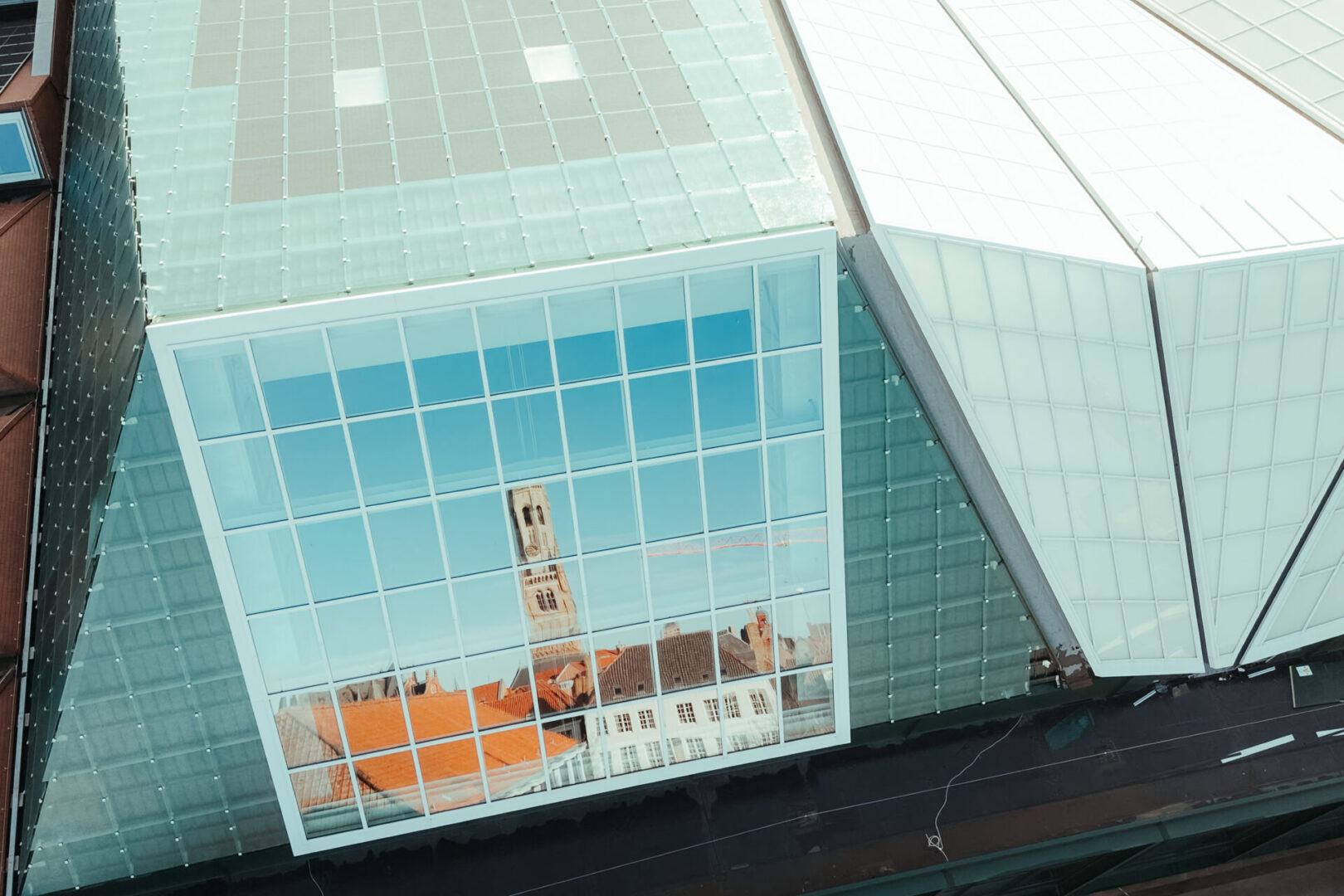
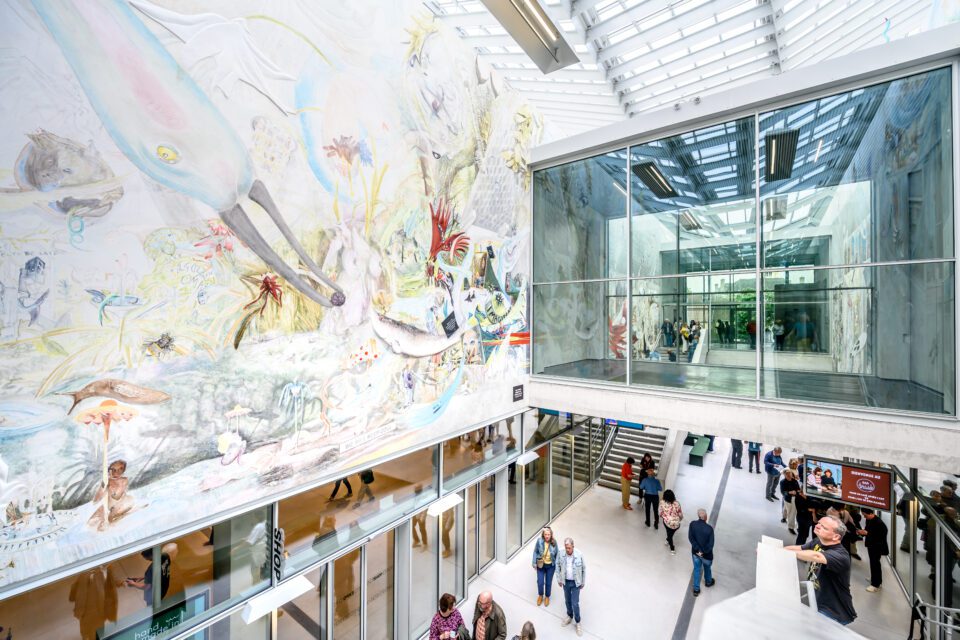
BRUSK makes this shift tangible through its architectural and spatial logic. Designed by Robbrecht en Daem architects and Olivier Salens architects, the building dissolves the boundary between institution and city. Its most prominent gesture is a fully open ground floor that functions as a covered urban square, accessible beyond ticketed exhibition spaces. The architects describe the project as one that “does not dominate, but enters into dialogue” and “does not close itself off, but opens up,” framing it as an extension of civic space. Movement through the building is deliberately porous, allowing interior and exterior conditions to fold into one another. In this sense, BRUSK behaves more like an inhabitable urban threshold.
This architectural openness reflects a wider recalibration of cultural infrastructure. Cultural participation is now understood as both an economic and social measure, with cities competing for visibility within global networks of creativity, education and tourism. Leading European museums continue to attract millions of visitors annually, underscoring the scale at which cultural institutions now operate as part of broader urban economies. At the same time, cultural policy increasingly positions museums within frameworks of wellbeing, sustainability and civic cohesion. Within this shifting landscape, BRUSK operates as a node rather than a monument – part of a distributed cultural field rather than an isolated landmark.
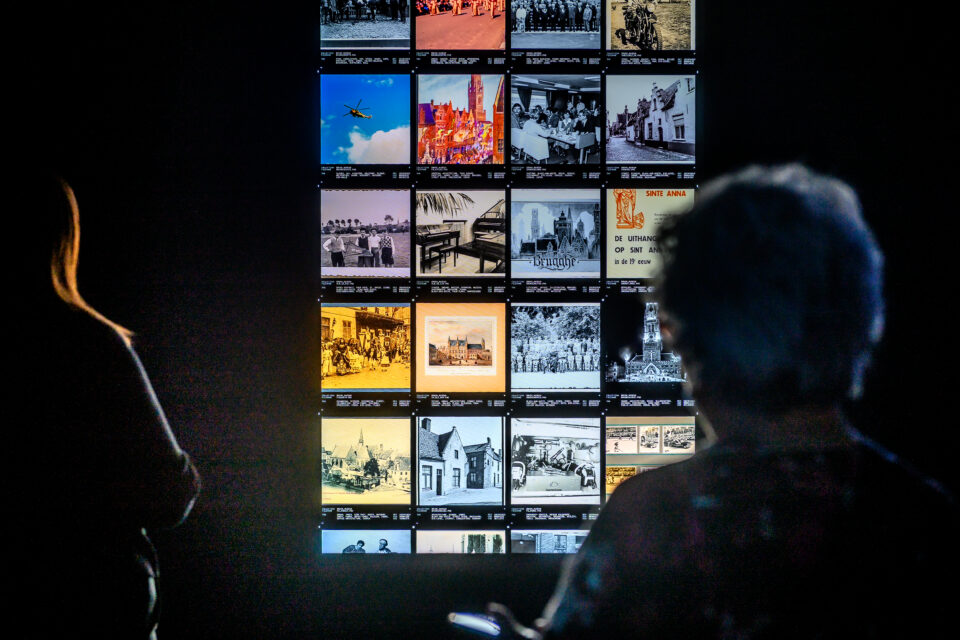
These ideas become most visible in BRUSK’s opening programme, which frames Bruges simultaneously as historical archive and contemporary laboratory. Bigger Picture: Connected Worlds of Bruges 900–1550 repositions the medieval city within expansive networks of exchange spanning Europe, North Africa, the Middle East and Asia. Illuminated manuscripts, devotional objects, maritime artefacts and cartographic fragments are presented as evidence of circulation and contact. Rather than reinforcing a closed European narrative, the exhibition foregrounds Bruges as a point of intersection – shaped by movement, trade and translation. History here is not linear, but relational, unfolding through connection rather than isolation.
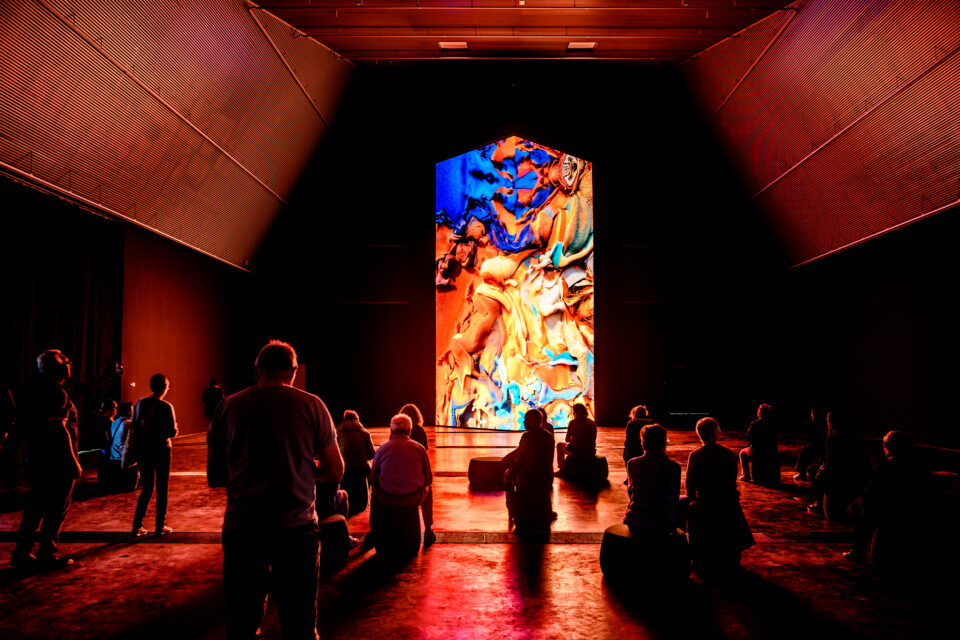
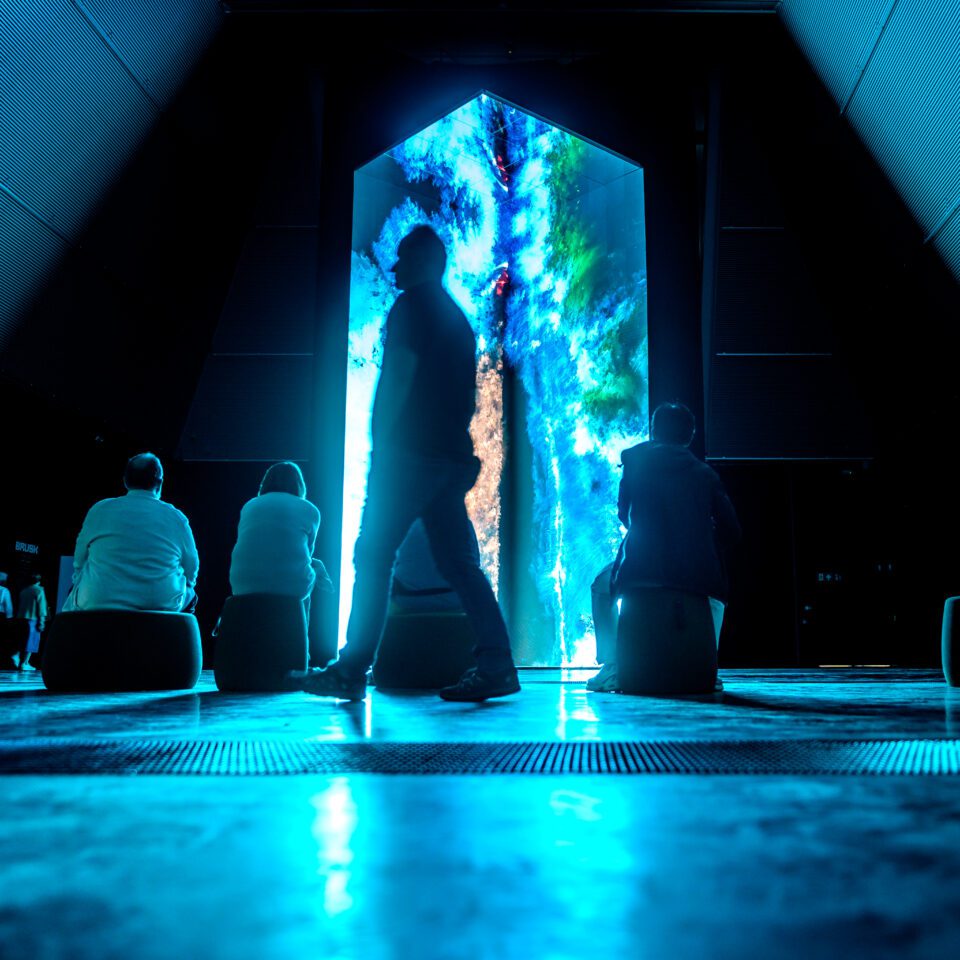
Alongside this historical reconfiguration, Refik Anadol’s Latent City introduces a radically contemporary counterpoint. The installation uses artificial intelligence and machine learning to process architectural, environmental and archival datasets relating to Bruges, generating an immersive, continuously evolving spatial environment. The city is no longer presented as a fixed image, but as a shifting computational field in perpetual transformation. Data becomes atmosphere: structural forms, weather systems and historical records merge into fluid visual and sonic conditions. The result is a space in which perception is unstable, and the city is experienced as something that is constantly being rewritten in real time.
If Latent City dissolves the city into data, Laure Prouvost’s The Whispering Walls Rêve dissolves it into language. Extending across walls, corridors and thresholds, the work is embedded directly into the architecture of BRUSK, appearing as fragments of text, sound and image that seem to surface unexpectedly from the building itself. It unfolds as a dispersed narrative that shifts with movement and proximity. Prouvost’s practice is rooted in miscommunication, poetic distortion and emotional slippage, transforming the act of moving through the gallery into a form of reading without resolution. The building becomes sentient, as if it is quietly narrating itself in fragments that can never fully be assembled.
Publicly, BRUSK FEST extends this logic outward into the surrounding urban fabric. The museum quarter is temporarily transformed through performance, music and collective participation, dissolving the boundary between institution and city. The BRON research centre anchors this expanded field within longer-term curatorial and scholarly structures, supporting conservation, production and international collaboration. Together, these elements position BRUSK not as a singular destination but as an evolving civic system. It is at once exhibition space, public square, research environment and social infrastructure.
BRUSK reframes how heritage cities must be understood in the present. Preservation alone is no longer sufficient in contexts shaped by tourism, mobility and accelerated cultural exchange. What is required are institutions capable of generating new forms of participation, interpretation and meaning across time. BRUSK proposes a model in which heritage is not stabilised but activated, allowing history to remain open, revisable and lived. Bruges is therefore not positioned against its past, but through it, as a city where memory and transformation remain in continuous dialogue, and where the future emerges through the reactivation of what already exists. This is one destination to add to your list of places to visit this summer.
Find out more about BRUSK, Brugge: visitbruges.be
Words: Anna Müller
Image Credits:
1. Musea Brugge | © Jasper van het Groenewoud.
2. Musea Brugge | © Jasper van het Groenewoud.
3. Refik Anadol. Latent City 8/5/2026 to 8/11/2026. One of the two opening exhibitions at art hall BRUSK. With Latent City, BRUSK presents the first solo exhibition in Belgium by Refik Anadol, an international pioneer in AI-driven art. Visit Bruges – © Jan Darthet.
4. Visit Bruges – © Jan Darthet.
5. Refik Anadol. Latent City 8/5/2026 to 8/11/2026. One of the two opening exhibitions at art hall BRUSK. With Latent City, BRUSK presents the first solo exhibition in Belgium by Refik Anadol, an international pioneer in AI-driven art. Visit Bruges – © Jan Darthet.
6. Refik Anadol. Latent City 8/5/2026 to 8/11/2026. One of the two opening exhibitions at art hall BRUSK. With Latent City, BRUSK presents the first solo exhibition in Belgium by Refik Anadol, an international pioneer in AI-driven art. Visit Bruges – © Jan Darthet.