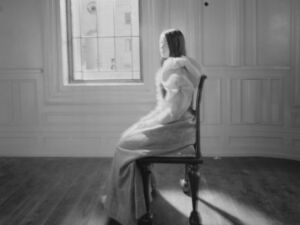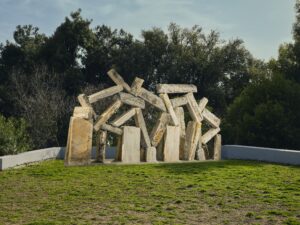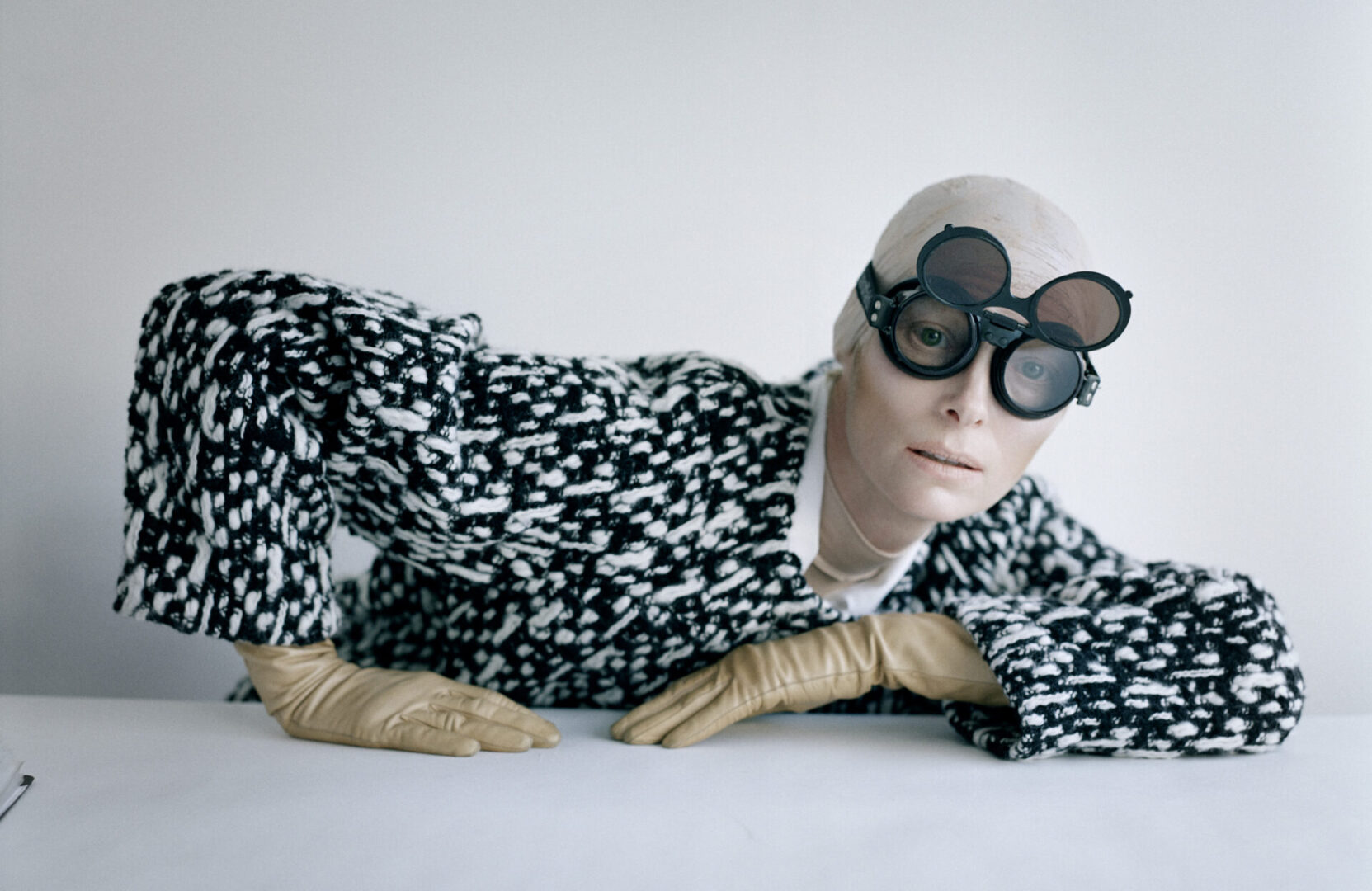
What does it mean for an exhibition to resist closure, to exist instead as an unfolding constellation of relationships, memory and shared artistic practice? Ongoing | Tilda Swinton arrives at Onassis Ready in Athens as a proposition that moves beyond retrospective structure, presenting instead a network of encounters that continue to develop in real time. Cinema, performance, fashion and installation are positioned here as intersecting forms rather than separate disciplines. Within the industrial space, authorship shifts into dialogue, and biography becomes distributed across collaborators, long-term friendships and partnerships. The exhibition resists final resolution, favouring duration, recurrence and process. What emerges is a system of exchange shaped through trust rather than hierarchy.
At the centre is Tilda Swinton – performer, artist and cultural figure whose practice has consistently resisted fixed categorisation. Born in London in 1960 and educated at Cambridge, she entered cinema through her collaboration with Derek Jarman, beginning with Caravaggio in 1986 and continuing through Edward II, The Last of England and Wittgenstein. These works established her within a strand of British independent cinema defined by formal experimentation and political urgency. From the outset, Swinton’s screen presence challenged conventional ideas of identity, favouring transformation and ambiguity over recognisable persona. Over time, her practice has expanded into a sustained mode of collaboration, where projects develop through long-term creative relationships rather than isolated roles. Her work is defined less by representation than by sustained engagement with shared artistic processes.
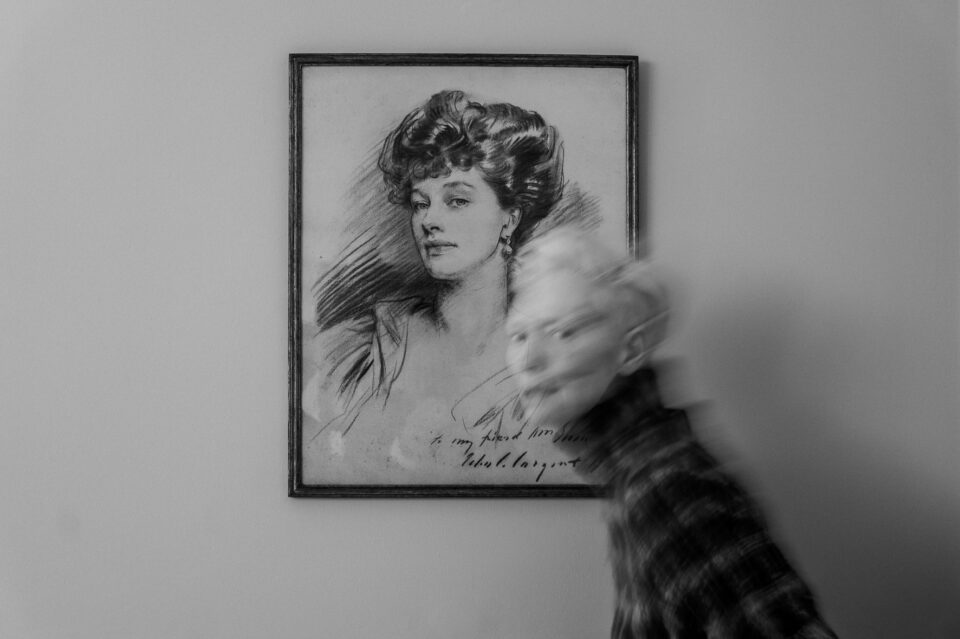
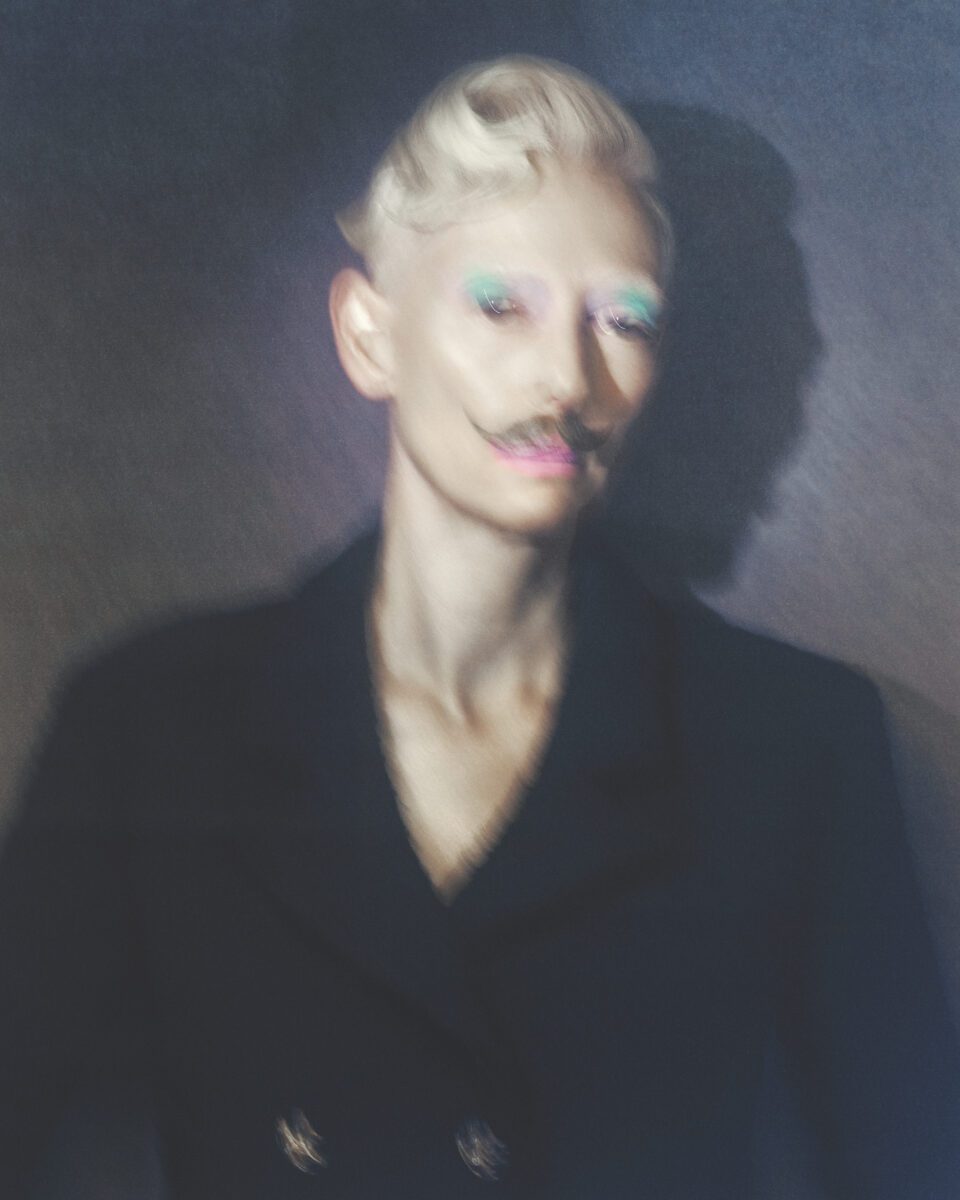
This approach forms the structural basis of Ongoing, which brings together works by artists and filmmakers who have been central to Swinton’s practice. Luca Guadagnino presents a sculptural film installation that extends his ongoing collaboration with Swinton into spatial form. Jim Jarmusch reworks material from The Dead Don’t Die into an installation built from fragmented narrative and tonal shifts. Apichatpong Weerasethakul creates an environment structured around slowed perception, where time is treated as non-linear and unstable. Pedro Almodóvar presents The Human Voice as an installation, translating the original film into an architectural experience. Joanna Hogg reconstructs Swinton’s 1980s London apartment in Flat 19, using space as a framework for memory. Tim Walker’s photographic work explores lineage and constructed image, while Olivier Saillard treats clothing as a form of embodied archive. Each work operates independently while remaining connected through shared practice.
Within Onassis Ready, these works are installed as interconnected environments rather than discrete sections. The exhibition avoids linear sequencing, allowing sound, image and material to overlap across spaces. Film fragments, photographic works and objects circulate between rooms, creating shifts in perception rather than fixed viewpoints. Movement through the exhibition produces different readings depending on proximity and order of encounter. Meaning is produced through relation. The space accommodates multiple temporal registers at once – cinematic, performative and archival.
The Onassis Foundation provides the institutional framework for this approach. Through Onassis Stegi in Athens, it has developed a platform for interdisciplinary work across performance, visual art and critical practice since 2010. With Onassis Ready, a former industrial building repurposed for artistic use, this approach extends into a space designed for experimentation and process. The emphasis is placed on artistic research and development rather than finished outcomes, allowing works to remain open and adaptable. Within this structure, Ongoing aligns with a broader institutional emphasis on collaboration.
The exhibition also connects to wider cultural practices where identity and authorship are treated as fluid constructs. David Bowie’s shifting personas redefined artistic identity as a series of constructed positions rather than fixed form. Andy Warhol’s Factory model dispersed authorship across a collaborative system of production. Yoko Ono’s instruction-based works repositioned art as participatory action. Agnès Varda’s cinema moved between autobiography and observation, treating film as essayistic practice. Björk’s work integrates music, technology and visual form into hybrid systems. Within this context, Swinton’s practice is distinguished by its sustained emphasis on long-term collaboration rather than episodic reinvention.
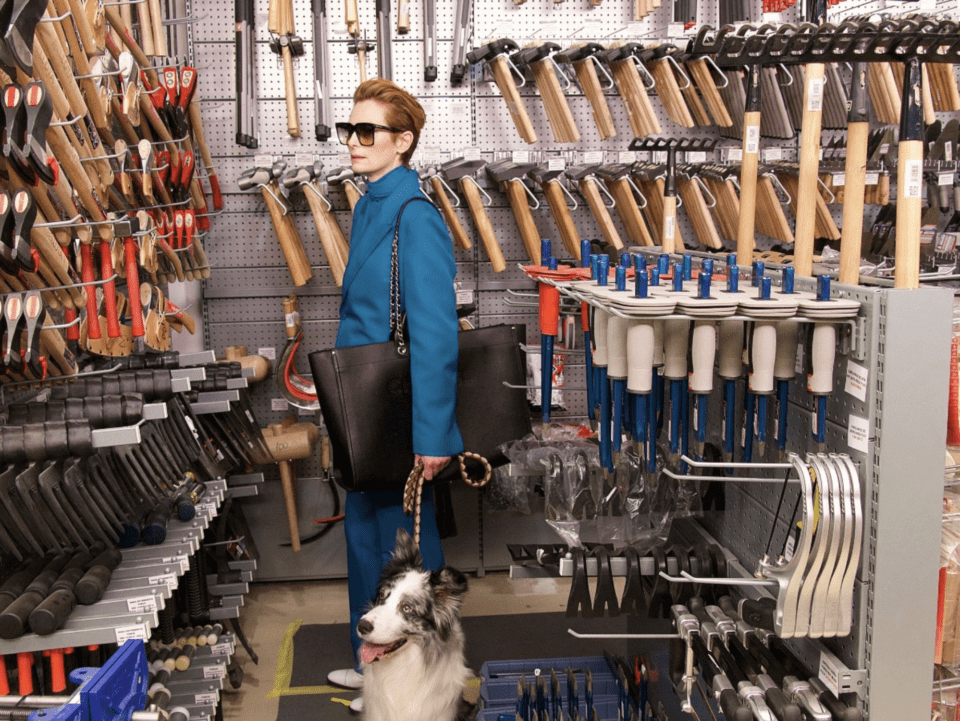
This is most clearly expressed in A Biographical Wardrobe, created with Olivier Saillard. Here, clothing is treated as material archive rather than display object, carrying traces of personal and collective history. Garments drawn from Swinton’s archive – including film costumes, inherited pieces and public appearances – are activated through performance. Saillard’s approach reframes fashion as embodied documentation, where clothing holds temporal and biographical information. Swinton functions as both narrator and participant, activating garments through movement, speech and presence. The result is a work that treats clothing as a record of lived experience rather than aesthetic object.
The exhibition extends into cinema through a weekly open-air programme that activates the surrounding space as a site of shared viewing. Films by Jarmusch, Guadagnino, Hogg, Almodóvar and Weerasethakul are presented alongside the installations. Each screening reactivates connections between works, allowing material to shift between contexts. Short films selected from Eye Filmmuseum and Swinton’s own archive add further layers of reference and association. The boundary between exhibition and cinema is fluid, creating a continuous environment in which moving image operates across multiple formats.
Across its components, Ongoing | Tilda Swinton presents a model of practice based on collaboration, continuity and shared authorship rather than individual production. Works remain open to their environment and to one another, shifting according to placement and context. Onassis Ready functions as a site where cinema, performance and installation exist in parallel without hierarchy. Swinton appears not as singular subject but as a connective presence within a broader network of artistic relationships. The exhibition sustains a structure that is shaped by ongoing exchange rather than a fixed conclusion.
Tilda Swinton – Ongoing is at Onassis Ready, Athens from 17 May – 28 June: onassis.org
Words: Simon Cartwright
Image Credits:
1. Tilda Swinton by Tim Walker.
2. Tilda Swinton photographed by Ruediger Glatz, 2024.
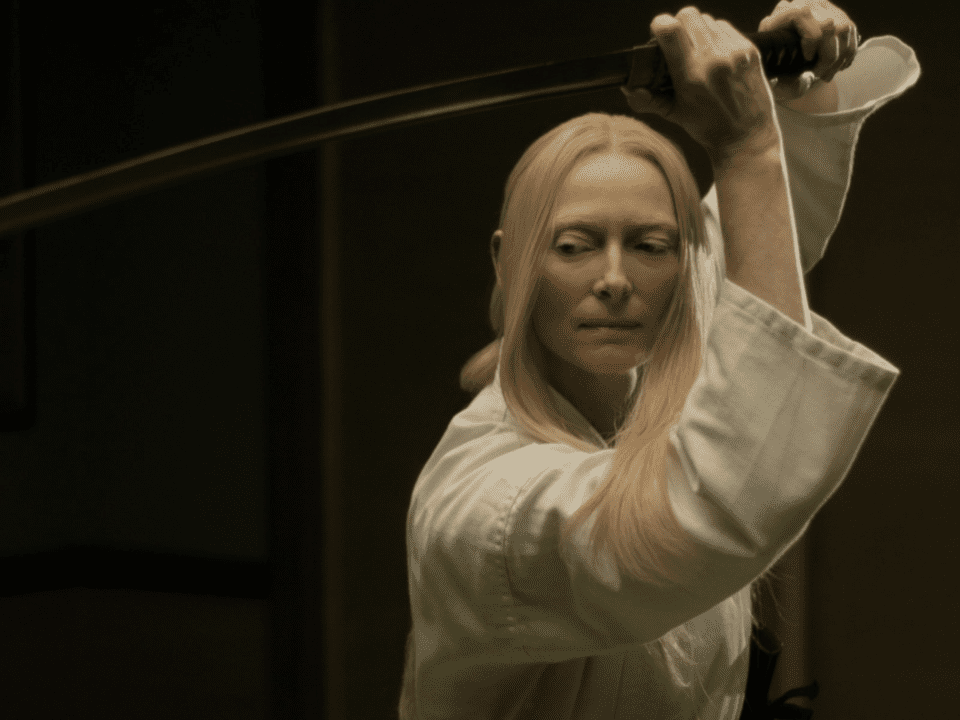
3. Tilda Swinton photographer by Casper Sejersen, 2023.
4. Tilda Swinton on the set of The Human Voice, dir. Pedro Almodóvar, 2020. Photo: Inglesias Mas.
5. Tilda Swinton as Zelda Wilston, The Dead Don’t Die, by Jim Jarmush.