

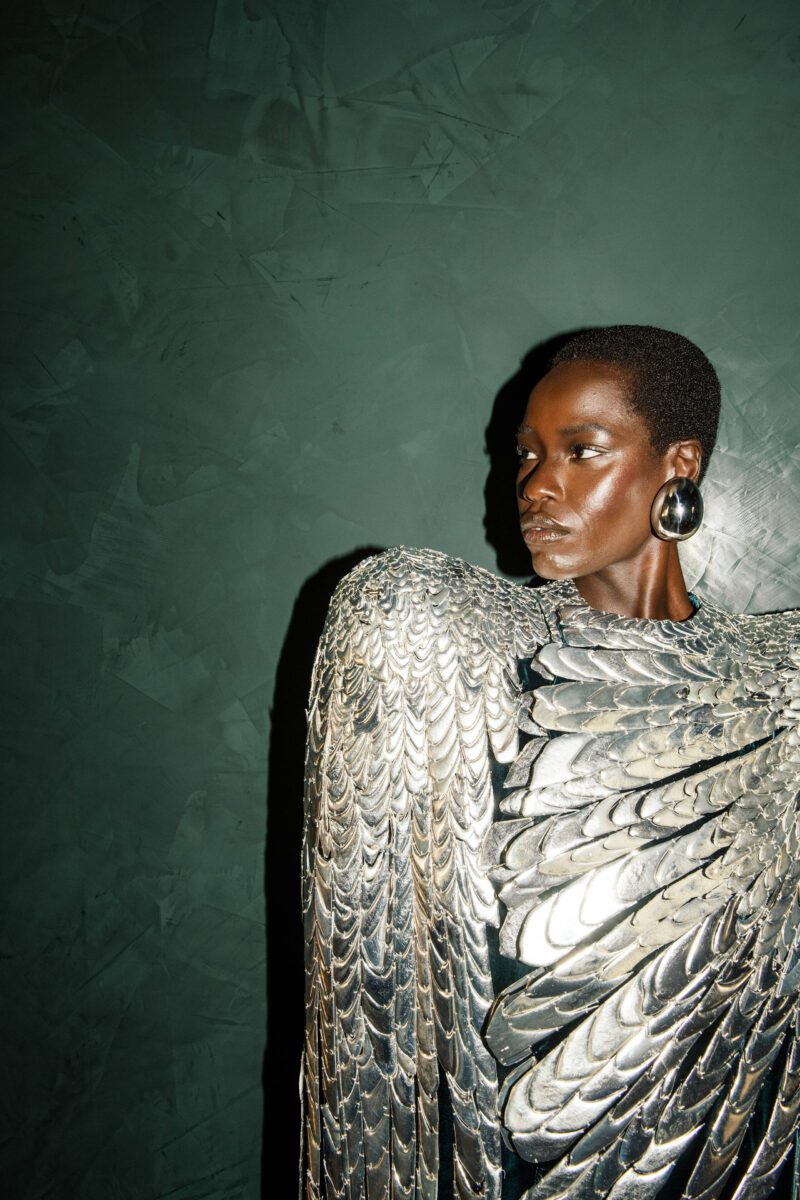
Fashion, at its most daring, becomes an instrument of thought, a compelling medium that negotiates between material, imagination and culture. Schiaparelli: Fashion Becomes Art explores this premise fully, presenting the work of Elsa Schiaparelli as a fusion of couture, Surrealism and performance. The exhibition situates her visionary designs alongside the artworks, stage costumes and collaborations that made the House of Schiaparelli one of the most radical forces of the 20th century. Over 400 objects, including 100 ensembles, 50 artworks, accessories, jewellery and archive material, trace the trajectory from her first Paris boutique to the present-day creations of Daniel Roseberry. “For me, dress designing is not a profession but an art,” Schiaparelli asserted, a principle that underpins every aspect of the show. The exhibition ultimately reframes the role of fashion in both historical and contemporary cultural contexts.
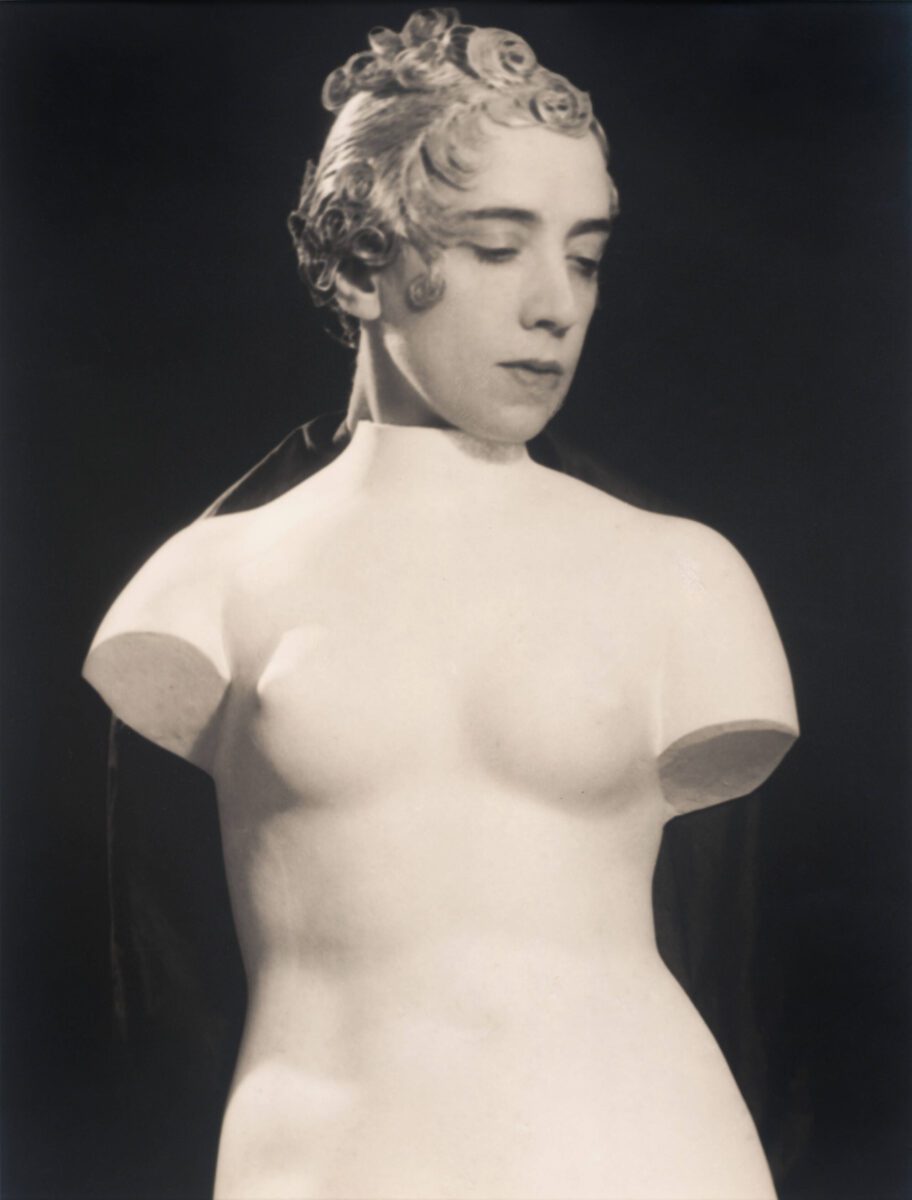
The House of Schiaparelli emerges as a laboratory for creative experimentation, a place where fabric and form converse with art, performance and social commentary. Designing the Modern Wardrobe, the first section, charts Elsa Schiaparelli’s early Paris career, from the boutique Schiaparelli. Pour Le Sport in 1927 to her establishment as a leading couturier by 1934. Early works such as a trompe l’oeil bow-knot sweater illustrate her inventive approach, while tailored skirt suits and trouser ensembles demonstrate her vision for the modern urban woman. Eveningwear from this period, including a gold lamé gown and circus horse appliquéd dinner suit, speaks to the performative aspect of dress. Accessories, from plaited-hair hats to striped shoes, convey her playful inventiveness. Immediately , there is a sense that the House of Schiaparelli’s work is not about simple elegance but a deliberate, audacious rewriting of conventions.
In Creative Constellations, the exhibition highlights the House of Schiaparelli’s enduring and dynamic dialogue with the visual arts, presenting garments alongside works by Salvador Dalí, Pablo Picasso, Jean Cocteau and Man Ray. The 1937 Lobster dress appears next to Dalí’s Lobster Telephone, exemplifying the conversation between Surrealist art and couture. Collaborative works with Cocteau, Alberto Giacometti, Meret Oppenheim and Jean Schlumberger illustrate further the cross-disciplinary energy of the House, reinforcing the notion that fashion is a creative practice which is fully engaged with the avant-garde. Delphine Bellini, CEO of Schiaparelli, says, “This exhibition celebrates her enduring influence through iconic collaborations with 20th century masters and a pioneering fusion of creativity and commerce.” The curatorial approach emphasises process as much as product, revealing how experimentation, innovation and artistic dialogue continually defined the House of Schiaparelli’s distinctive oeuvre.
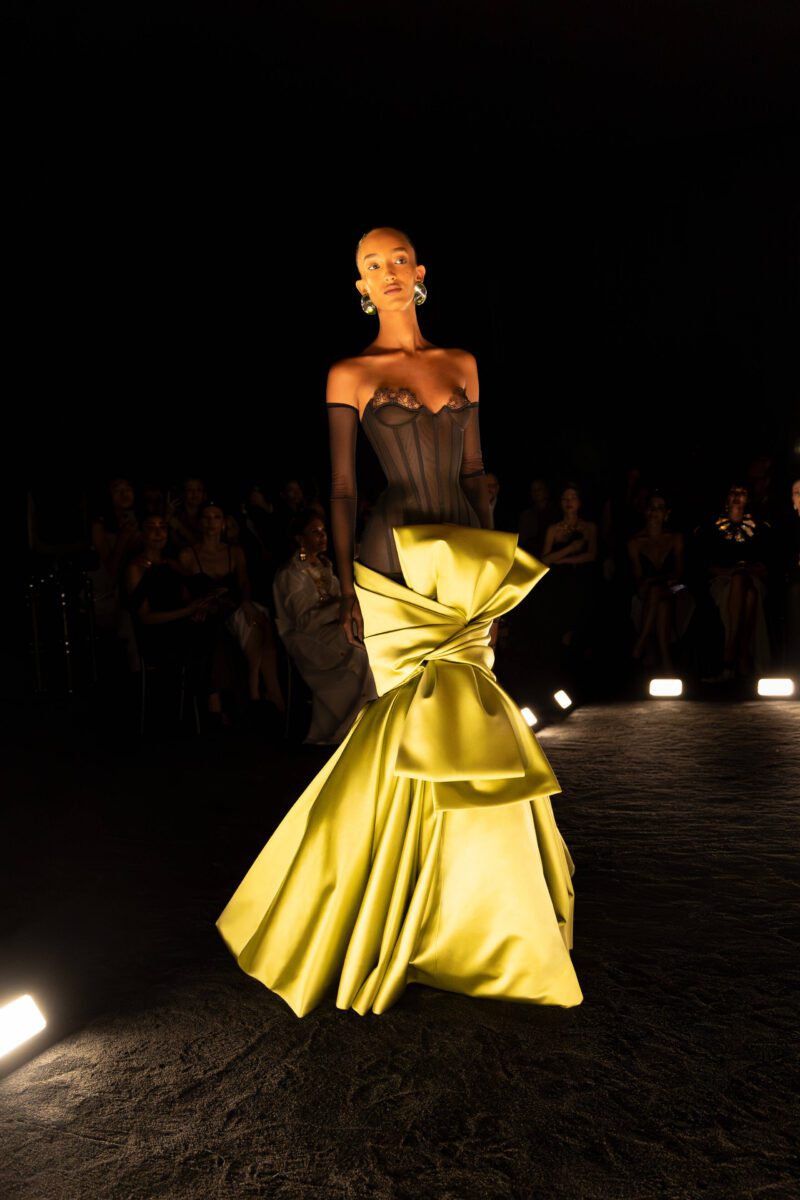
The international reach of the House of Schiaparelli is central to the exhibition’s narrative. Beyond Parisfocuses on the London salon in Mayfair, a site that cemented her global influence and connected her to the British surrealist movement. Rarely seen London garments, including a burgundy velvet suit embroidered in gold and a wedding dress in oyster-coloured crinkled rayon, showcase both her tailoring mastery and her understanding of local taste. Portraits of clients and press materials reveal Schiaparelli’s skill as a self-promoter, positioning her not only as a designer but as a cultural entrepreneur. Stage and screen costumes, including Mae West’s ensembles and Marlene Dietrich’s sharply tailored suits, situate the House at the nexus of fashion, performance, and media. The exhibition demonstrates how the House of Schiaparelli’s creativity operated on multiple levels, simultaneously aesthetic, social, and performative.
A Golden Thread, the final section, brings the story into the present through Daniel Roseberry’s designs. Since 2019, he has interpreted the House of Schiaparelli’s heritage through sculptural silhouettes, bold shapes, and inventive techniques, creating pieces worn by Ariana Grande and Dua Lipa. Draping, embroidery, and intricate embellishment honour Parisian haute couture traditions while reimagining the House’s subversive spirit for a modern audience. The modern Skeleton dress, a nod to the 1938 original, exemplifies the dialogue between past and present, linking historical experimentation with contemporary creativity. Roseberry’s work demonstrates how couture can be both homage and invention, carrying forward Elsa Schiaparelli’s vision while asserting its relevance today. The section underscores the enduring capacity of the House of Schiaparelli to inspire, provoke, and challenge conventional ideas of fashion.
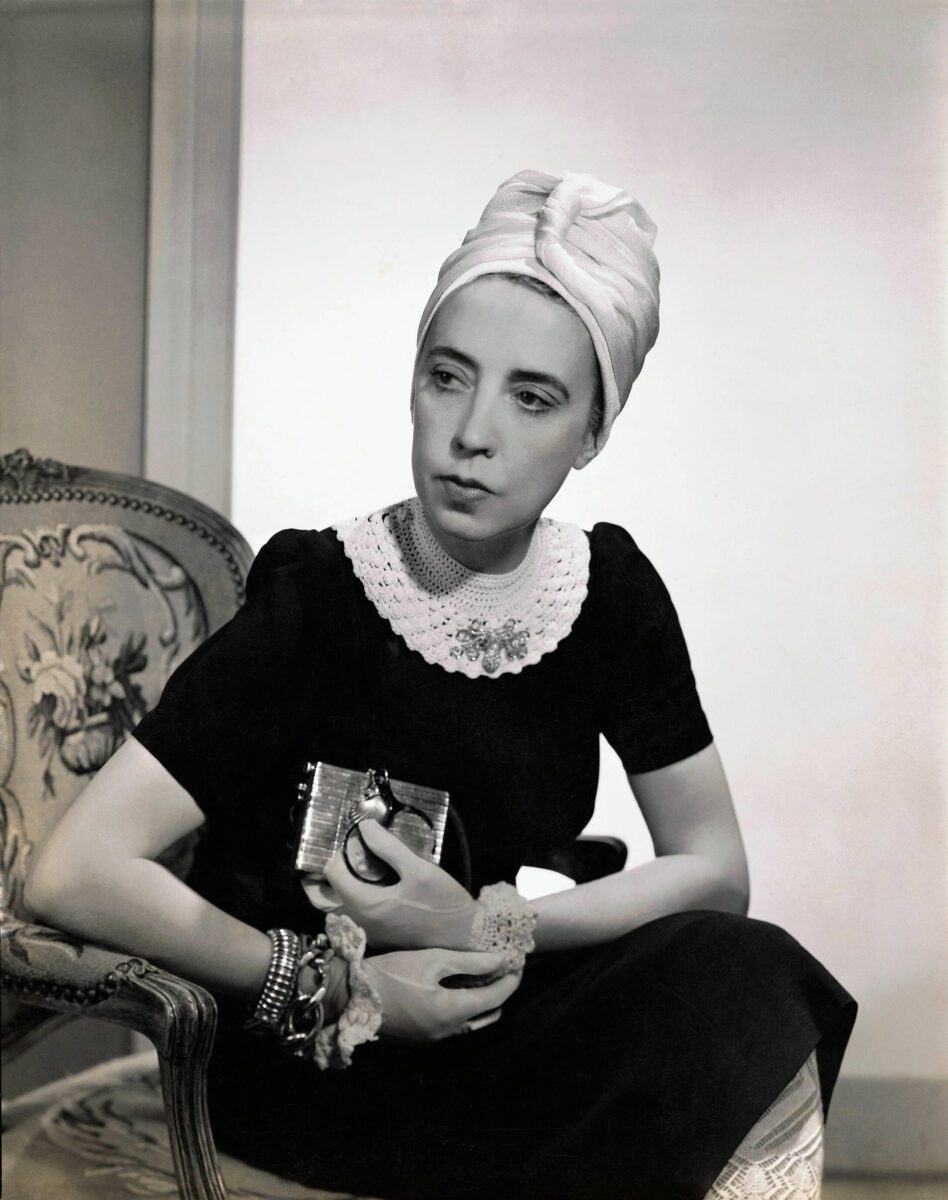
The V&A has a distinguished record of fashion exhibitions that shape the understanding of clothing as cultural and artistic expression. Over the past decade, presentations including Alexander McQueen: Savage Beauty, Christian Dior: Designer of Dreams, Gabrielle Chanel. Fashion Manifesto and The Glamour of Italian Fashion: 1945–2014 have cemented the museum’s position as a global arbiter of sartorial scholarship. Each exhibition combined research, innovative display and immersive environments, positioning designers as both creative practitioners and cultural commentators. Schiaparelli: Fashion Becomes Artextends this trajectory, situating the House of Schiaparelli within the historical canon while emphasising its ongoing relevance. Sir Tristram Hunt, Director of the V&A, says, “Schiaparelli’s collaboration with artists and with the world of performance make the Maison and its founder an ideal subject for a spectacular exhibition at the V&A,” reaffirming the museums commitment to showing fashion in dialogue with culture and history.
At the core of the exhibition is the idea of art as a process, a principle evident in the House of Schiaparelli’s collaborations and Roseberry’s contemporary designs. Man Ray’s portraits, Cocteau’s mirrored motifs and Dalí’s Surrealist interventions show how visual art informed the creative imagination of the House. At the same time, the technical mastery of couture – embroidery, tailoring and millinery – is foregrounded, demonstrating that conceptual innovation and artisanal skill are inseparable. What unfolds in front of you is a better appreciation into the iterative, experimental nature of design, observing how sketches, maquettes and archival material transform into garments that both provoke and delight. In this way, the exhibition challenges conventional distinctions between art and fashion, presenting the House of Schiaparelli as a space where ideas are realised materially, socially and performatively.
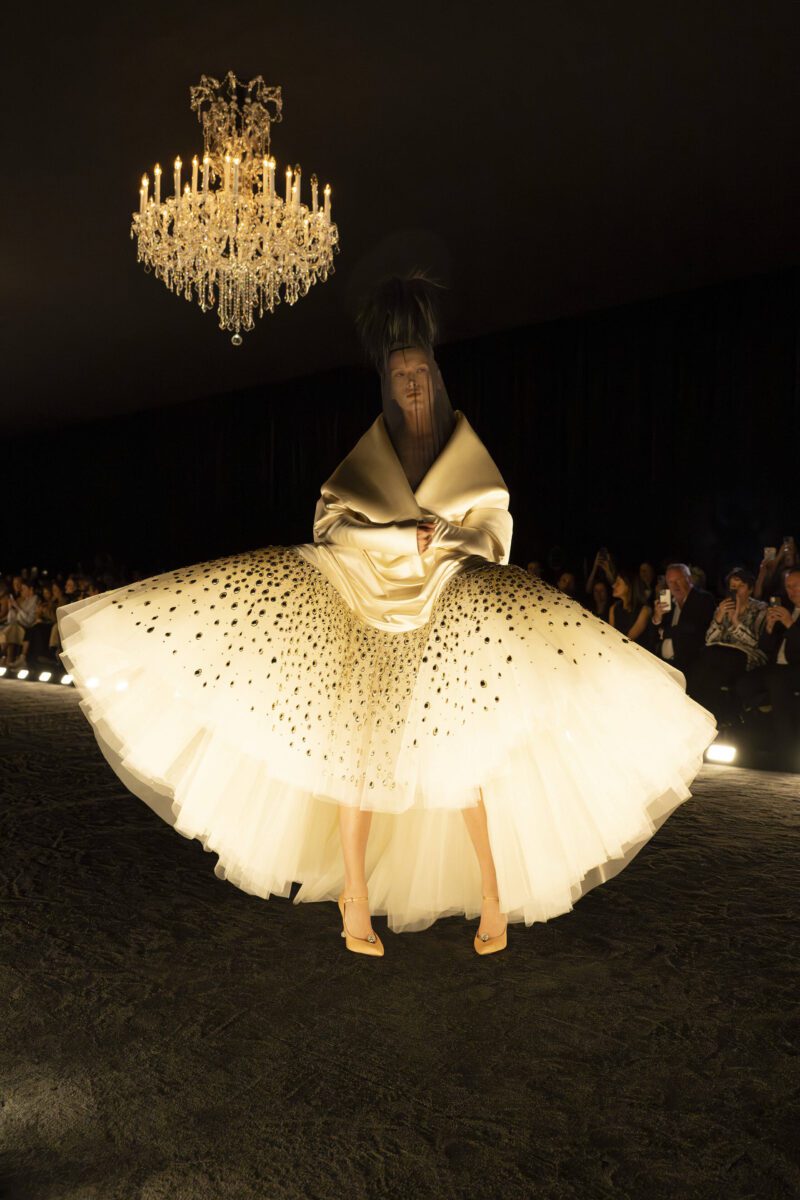
In fashion, as in art, imagination is the engine that propels innovation across time. The House of Schiaparelli embodies this principle, revealing how ideas conceived nearly a century ago continue to resonate in contemporary design. The exhibition traces the evolution of a vision that embraces risk, play and collaboration, showing that couture can be both a material and intellectual medium. There are garments that are at once surreal, sculptural and performative, and each piece is a testament to the dialogue between creativity and craft. By connecting Schiaparelli’s radical experiments with Roseberry’s contemporary reinterpretations, the show illuminates fashion’s capacity to shape culture, provoke thought, and inspire new ways of seeing. The House of Schiaparelli stands as an archive of imagination, a reminder that clothing can transform fabric into a language of ideas and remain alive across generations.
Schiaparelli: Fashion Becomes Art is at V&A, London until 8 November: vam.ac.uk
Words: Anna Müller
Image Credits:
1. Model Awar Odhiang in Schiaparelli haute couture autumn/winter 2024.
2. Portrait of Elsa Schiaparelli, by Man Ray, 1933.
3. Schiaparelli Haute Couture autumn/winter 2024.
4. Designer Elsa Schiaparelli wearing black silk dress with crocheted collar of her own design and a turban, photograph by Fredrich Baker, Vogue, 1940
5. Schiaparelli Haute Couture autumn/winter 2024.


