Has the history of design influenced how we process and recall music? Art of Noise, on view at Cooper Hewitt in New York, explores this question through an array of archival objects, including band posters, album art and interactive vintage equipment. Split between two spaces, the exhibition’s first half showcases gadgets galore, examining the evolving relationship with product design. From early phonographs to Bluetooth speakers, the show traces technological advancements in sound quality, portability and consumer listening choices, alongside shifting aesthetic preferences amongst the public.
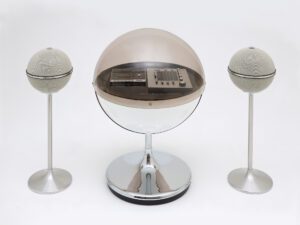
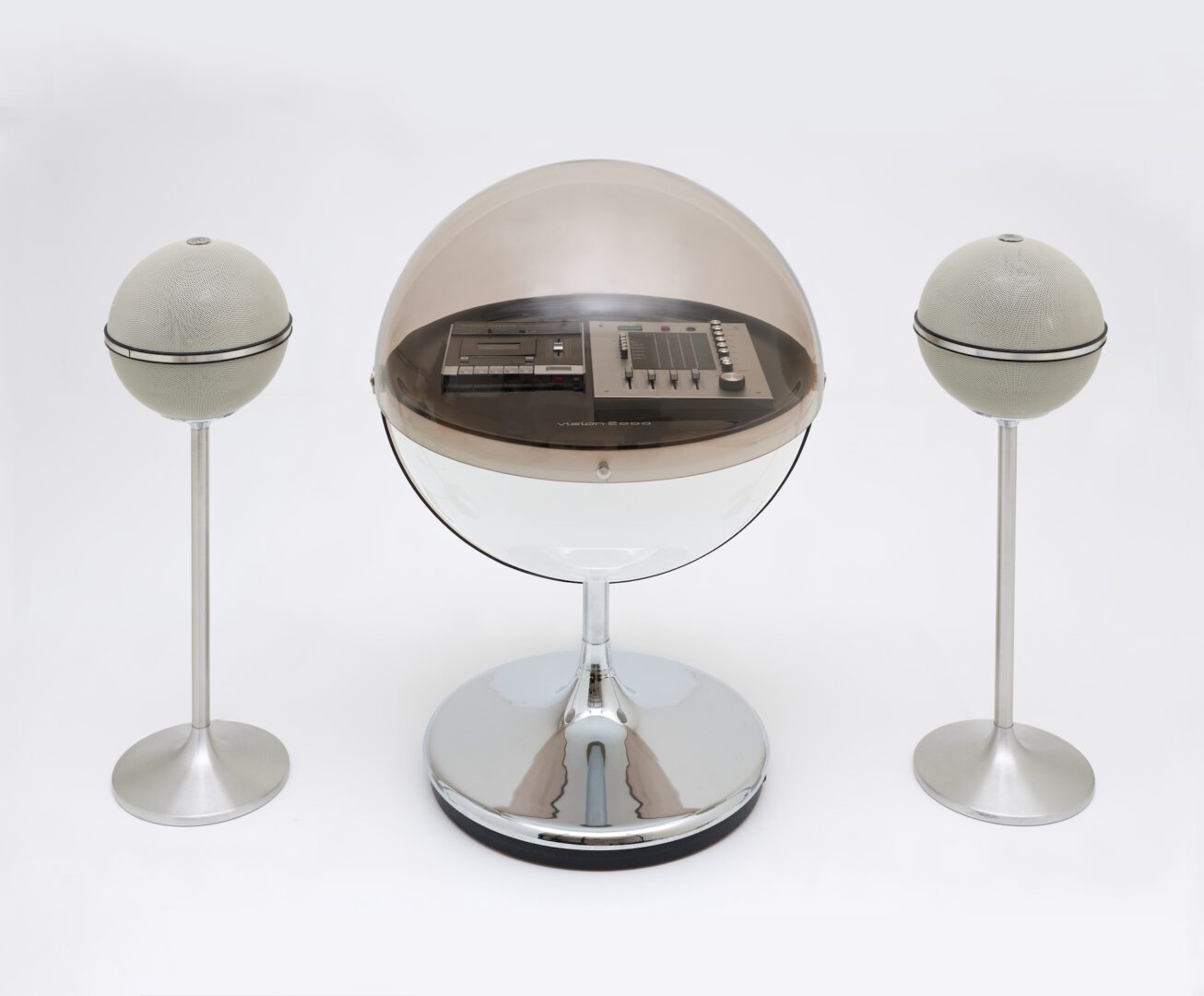
Vision 2000, for example, a cassette player and radio designed by Thilo Oerke in 1971, capitalised on the cultural frenzy surrounding the moon landing, with its domed hood mimicking an astronaut’s helmet. Elsewhere, a 1947 Rock-Ola jukebox, juxtaposed with DJ equipment custom-made for Virgil Abloh’s 2019 Coachella set, demonstrates a transition from bulky to sleek, classic to minimalist. Following the twelve-inch LP’s commercial introduction in 1948, album covers became a new mode of expression for graphic designers such as Reid Miles, Izzy Sanabria and Tibor Kalman, recognised for his work with the Talking Heads. As did concert advertisements – Arnold Skolnick’s 1969 flyer for Woodstock, featuring bold primary colours and a dove symbolising peace, is still embedded in the public imagination 57 years later.
Other featured promotional materials from the 1960s, 1970s and 1980s reflect the glamour of disco-era pamphlets, the futuristic typography of graffiti and hip-hop artists, or the psychedelic rock posters associated with San Francisco’s counterculture. Apple’s iPod silhouette ads, meanwhile, transport us to the early 2000s, when demand for pocketable electronics skyrocketed. Emphasising freedom, the iconic campaign spoke to music-lovers worldwide and now evokes a longing for a simpler time. Art of Noise is steeped in nostalgia, proving music’s unique power to unite us across languages, genres and generations.
Art of Noise is at Cooper Hewitt, New York, until 16 August.
Words: Christina Elia
Image Credits:
1. Thilo Oerke and Rosita Tonmöbel, Rosita Vision 2000, 1971; San Francisco Museum of Modern Art, Accessions Committee purchase, by exchange, through a gift of Michael D. Abrams; photo: Don Ross.
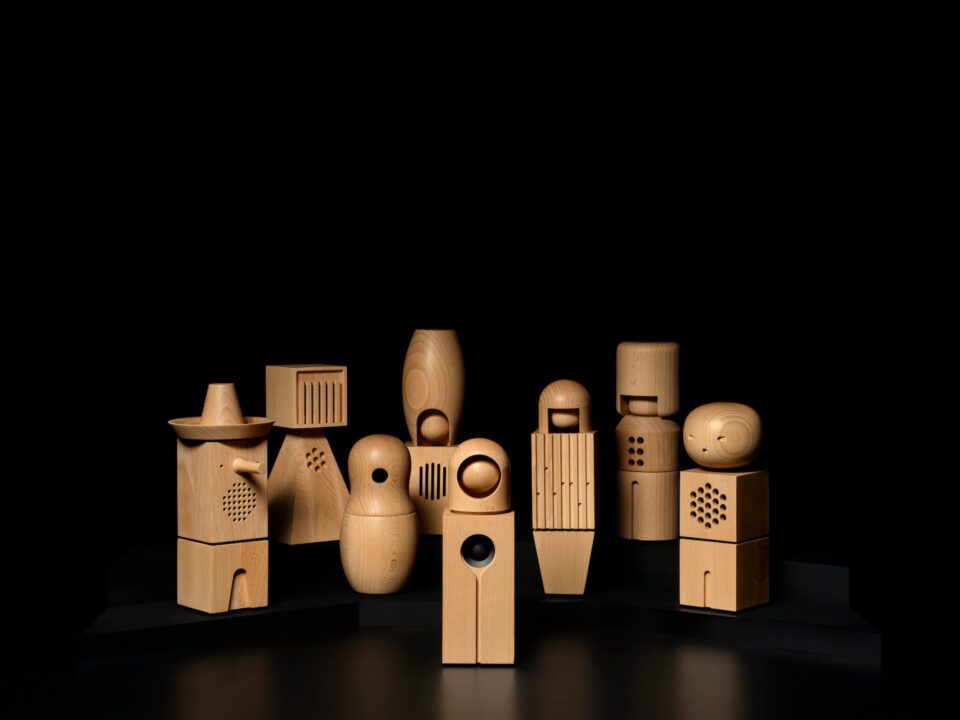
2. teenage engineering, choir, 2022; © teenage engineering.
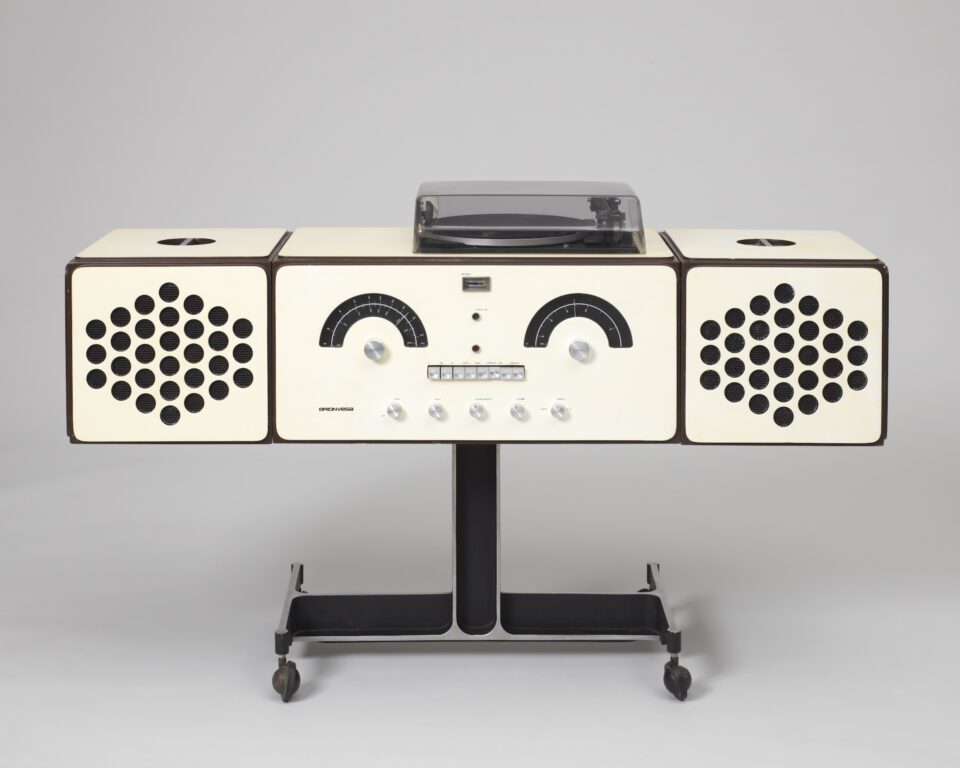
3. RR-126 Radio-Phonograph, 1965; Designed by Achille Castiglioni (1918-2002) and Pier Giacomo Castiglioni (1913-1968); Manufactured by Brionvega, S.p.A; Plywood, plastic, aluminum, polycarbonate, electronic components; H x W x D (speakers on sides): 46.5 × 121 × 36.5 cm (18 5/16 × 47 5/8 × 14 3/8 in.); H x W x D (speakers on top): 92.5 × 61.5 × 36.5 cm (36 7/16 × 24 3/16 × 14 3/8 in.); Cooper Hewitt, Smithsonian Design Museum; Gift of George R. Kravis II, 2018-22-96-a/c; Photo: Matt Flynn.