From the moment Martin Parr’s work gained international attention, it challenged conventional ideas about documentary photography and how audiences engage with the everyday world. Parr turned his lens to the overlooked: seaside holidays, domestic rituals, fast-food wrappers, souvenirs and the subtle routines of daily life. Across his career, he elevated the ordinary into the extraordinary, capturing scenes that were simultaneously humorous, absurd and revealing. The exhibition Very Modern and Rather Ugly at Foam, running from 3 April to 12 August, encapsulates this legacy, bringing together the vibrancy, wit and sharp social observation that defined his practice. Visitors encounter a world that feels instantly recognisable yet newly strange, where the textures of consumer culture and the rituals of leisure are rendered with both affection and critique. In this context, Parr’s work emerges not only as documentation but as a way of seeing – one that continues to shape how contemporary life is understood.
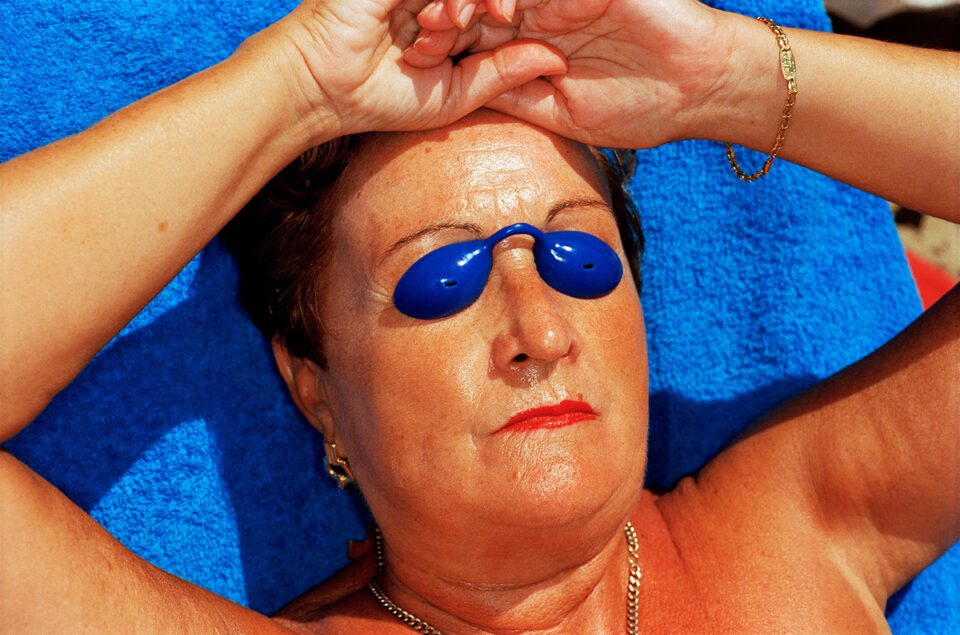
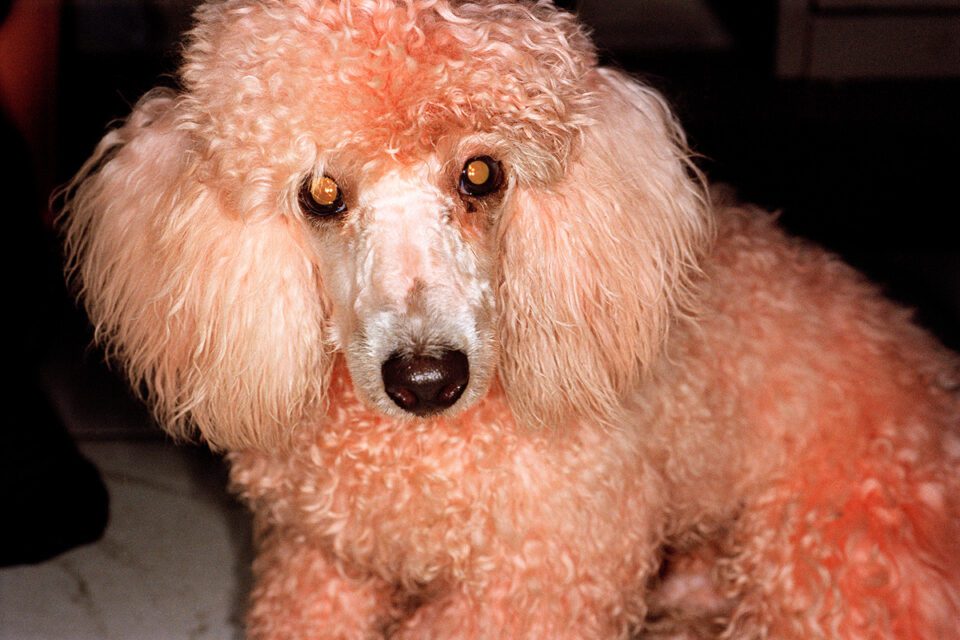
Over the past 20 years Parr presented a series of major exhibitions that traced his evolving vision and reflected cultural shifts, laying the groundwork for the comprehensive presentation now on view in Amsterdam. One of the most celebrated was Common Sense, a vast installation of vividly coloured close-ups depicting consumer habits and global tourism. First conceived as an immersive experience, the work surrounded viewers with images of food, fashion, packaging and bodies, collapsing distinctions between the trivial and the telling. In the current exhibition, selections from Common Sense retain their intensity, drawing attention to the visual overload that defines modern life and inviting viewers to confront the excess and uniformity embedded within it. Earlier, Retrospective: Martin Parr Photoworks 1971–2000, presented at the Barbican in London, offered a sweeping overview of his development, while Parrworld expanded this approach by incorporating objects and ephemera that revealed the broader visual culture informing his work. Later exhibitions such as Only in England and Black Country Stories continued to explore regional identities and social behaviour, reinforcing Parr’s sustained interest in the everyday as both subject and framework. At Foam, these threads converge, offering a distilled yet expansive view of a career defined by curiosity and consistency.
Parr’s exhibitions were never simply about images; they were about context, accumulation and encounter. Common Sense encouraged reflection on consumer patterns, while retrospectives traced social change alongside Parr’s personal trajectory. His long-term projects demonstrated that attention over time reveals nuances that fleeting observation cannot capture. At Foam, this methodology is evident in the careful juxtaposition of series, where images from different decades speak to one another, forming a dialogue across time. The inclusion of a reading room further reinforces Parr’s belief in photography as a living archive, allowing visitors to engage with his extensive publications and to understand how sequencing, editing and circulation shape meaning. Through this layered presentation, the exhibition foregrounds Parr’s role not only as photographer but as editor, collector and cultural commentator.
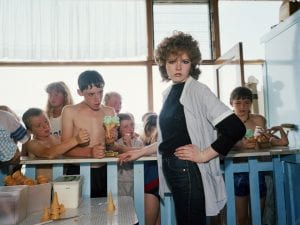
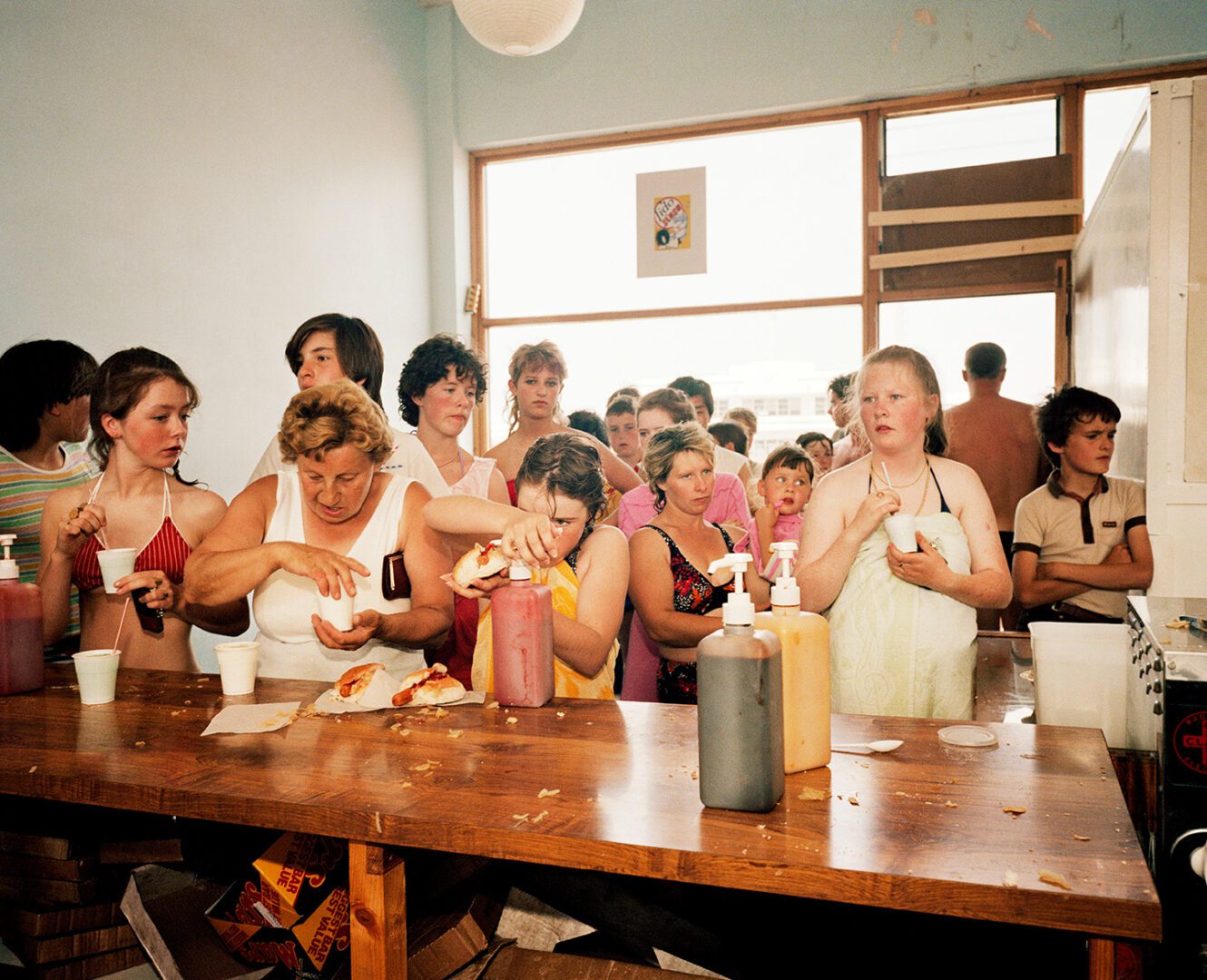
Central to the exhibition is The Last Resort, the series produced between 1983 and 1985 that marked Parr’s decisive turn towards colour. Shot in the seaside town of New Brighton, the images depict families, couples and children navigating spaces of leisure that are at once joyful and chaotic. Ice creams melt, litter gathers, bodies recline under an unforgiving sun. The photographs are saturated, direct and unapologetic, challenging the conventions of documentary photography at the time. The Last Resort resonates as a foundational moment in Parr’s practice, establishing the visual language that would come to define his later work. The series reveals his ability to balance humour with social observation, presenting scenes that are both specific to a place and emblematic of broader cultural conditions.
Alongside this, The Non-Conformists, Parr’s early black-and-white series from the 1970s, offers a striking contrast. Documenting rural communities in the north of England, the images are quieter, more restrained, yet already attentive to ritual, belonging and identity. Shown in dialogue with later colour work, the series demonstrates the continuity of Parr’s concerns even as his aesthetic evolved. The transition from monochrome to colour, from distance to proximity, reflects not a change in subject but a deepening of approach. This juxtaposition allows viewers to trace the development of Parr’s eye, recognising how his early interest in community laid the groundwork for his later explorations of mass culture.
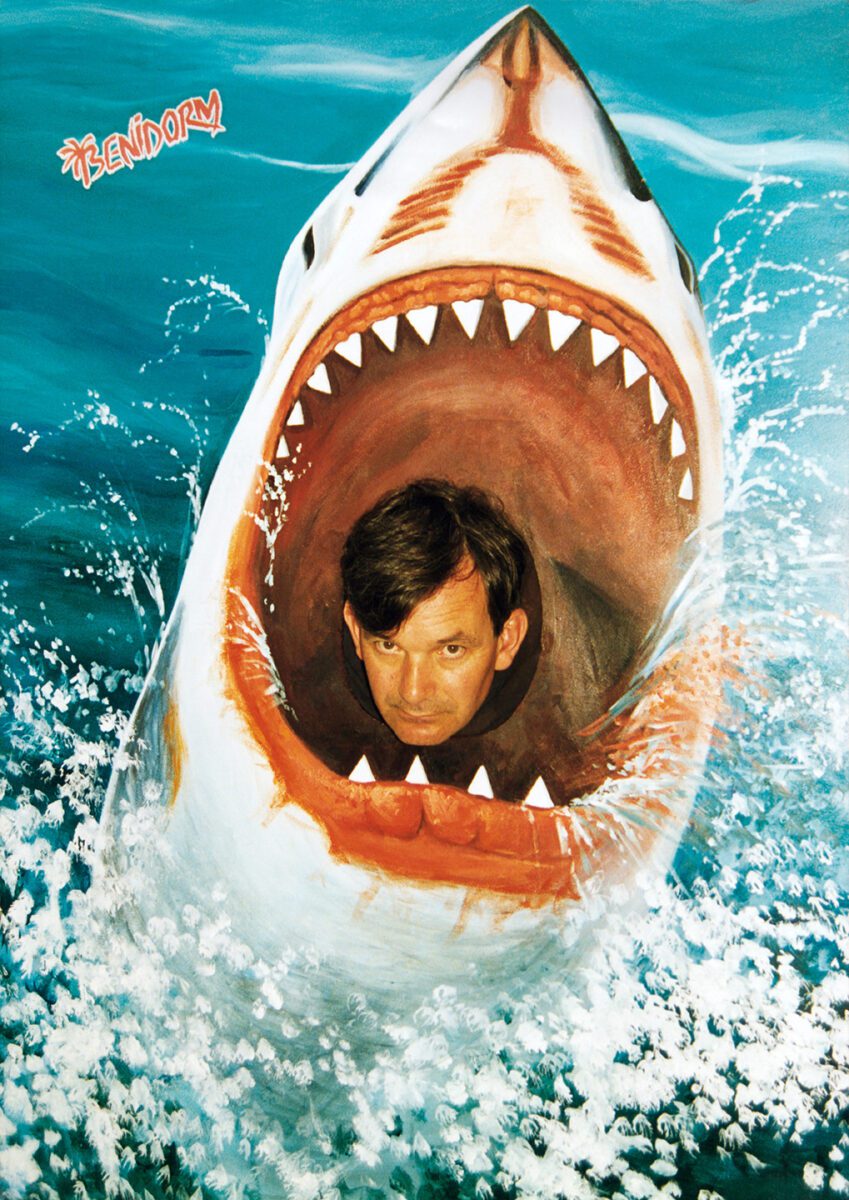
Equally significant is Autoportrait, a long-running project in which Parr invited others to photograph him in studios, photo booths and tourist settings around the world. The resulting images are playful, varied and revealing, offering a fragmented self-portrait constructed through the lenses of others. Autoportrait introduces a reflexive dimension to the exhibition, turning the camera back onto the photographer and questioning notions of authorship, identity and representation. It also underscores Parr’s enduring fascination with photographic traditions, from vernacular portraiture to staged studio imagery, highlighting his engagement with the medium as both practitioner and observer.
A number of contemporary photographers have drawn inspiration from Parr without imitating his style. Ewen Spencer, for example, captures youth culture and street life with immediacy and candour, conveying the rhythms of everyday experience in ways that echo Parr’s commitment to observation. Rosie Marks explores consumption, identity and leisure through vivid compositions that engage with the visual language of contemporary culture. Jamie Hawkesworth is another artist whose work resonates with Parr’s ethos. Born in Ipswich in 1987, Hawkesworth has spent years documenting communities across the UK in projects such as The British Isles, presenting landscapes, interiors and portraits with a quiet, attentive sensibility. Though more contemplative in tone, his work shares Parr’s belief in the value of sustained looking and empathetic engagement. Together, these photographers demonstrate how Parr’s influence operates not as a template but as a point of departure, encouraging new approaches to familiar subjects.
Photographer Charlie Kwai’s work also reflects aspects of Parr’s legacy, combining humour with sensitivity to reveal the subtleties of everyday interactions. Across these diverse practices, Parr’s ideas continue to resonate: that the ordinary can be extraordinary, that humour can coexist with critique, and that photography can illuminate the structures underlying daily life. These principles are made visible through the breadth of work on display, which invites viewers to consider how they are looking.
Parr’s death in 2025, at the age of 73, marked the loss of a photographer whose work fundamentally reshaped perceptions of the everyday. Tributes from across the art world acknowledged his ability to combine humour with insight, to capture fleeting moments while revealing enduring patterns. His images had become part of a shared visual vocabulary, shaping how people understand leisure, consumption and social behaviour. The exhibition at Foam, opening less than a year after his death, carries an added poignancy, functioning as both tribute and reflection. It allows audiences to engage with his work anew, recognising its continued relevance in a rapidly changing visual landscape.
Parr’s influence extends far beyond his photographs. He demonstrated that humour can be a critical tool, that everyday life is rich with meaning, and that the act of looking can itself be transformative. As audiences encounter his work in Amsterdam and beyond, they engage not only with images but with a perspective – one that values curiosity, attentiveness and a willingness to find significance in the seemingly insignificant. Very Modern and Rather Ugly ensures that this perspective endures.
Martin Parr: Very Modern and Rather Ugly is at Foam, Amsterdam until 12 August: foam.org
Words: Shirley Stevenson
Image Credits:
1. New Brighton, England, Great Britain, 1985 © Martin Parr / Magnum Photos.
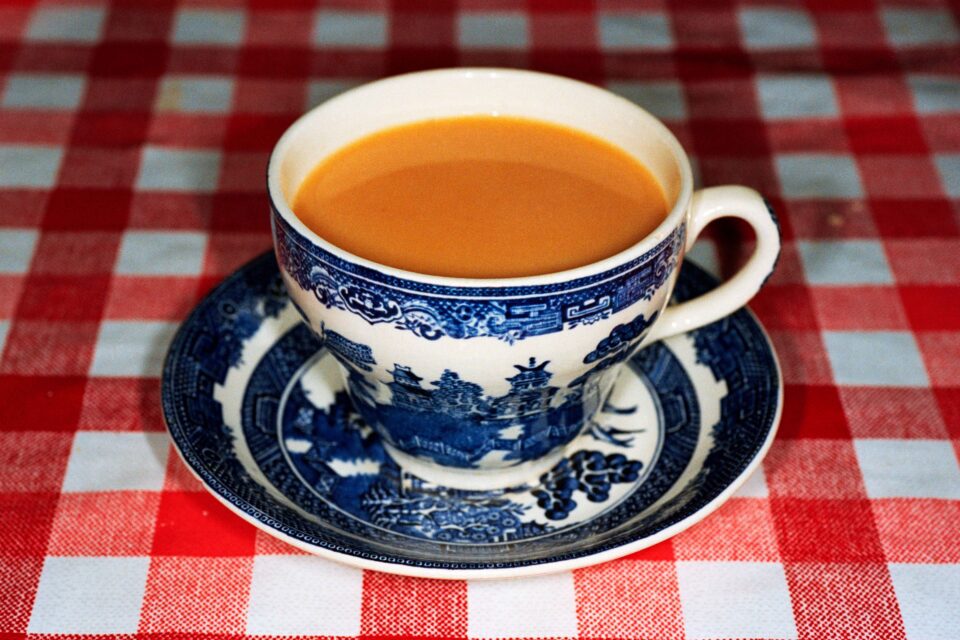
2. Benidorm, Spain, 1997. From ‘Common Sense’ series, 1995-1999 © Martin Parr/Magnum Photos.
3. Bangkok Thailand, 1998. From ‘Common Sense’ series 1995-1999 © Martin Parr Magnum Photos
4. Benidorm, Spain, 1997. From ‘Autoportrait’ series © Collection Martin Parr/Magnum Photos.
5. Sand Bay England, 1997. From Common Sense series 1995-1999 © Martin Parr/Magnum Photos