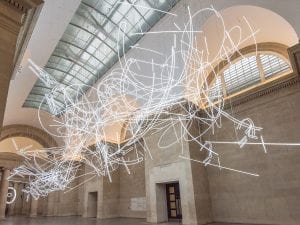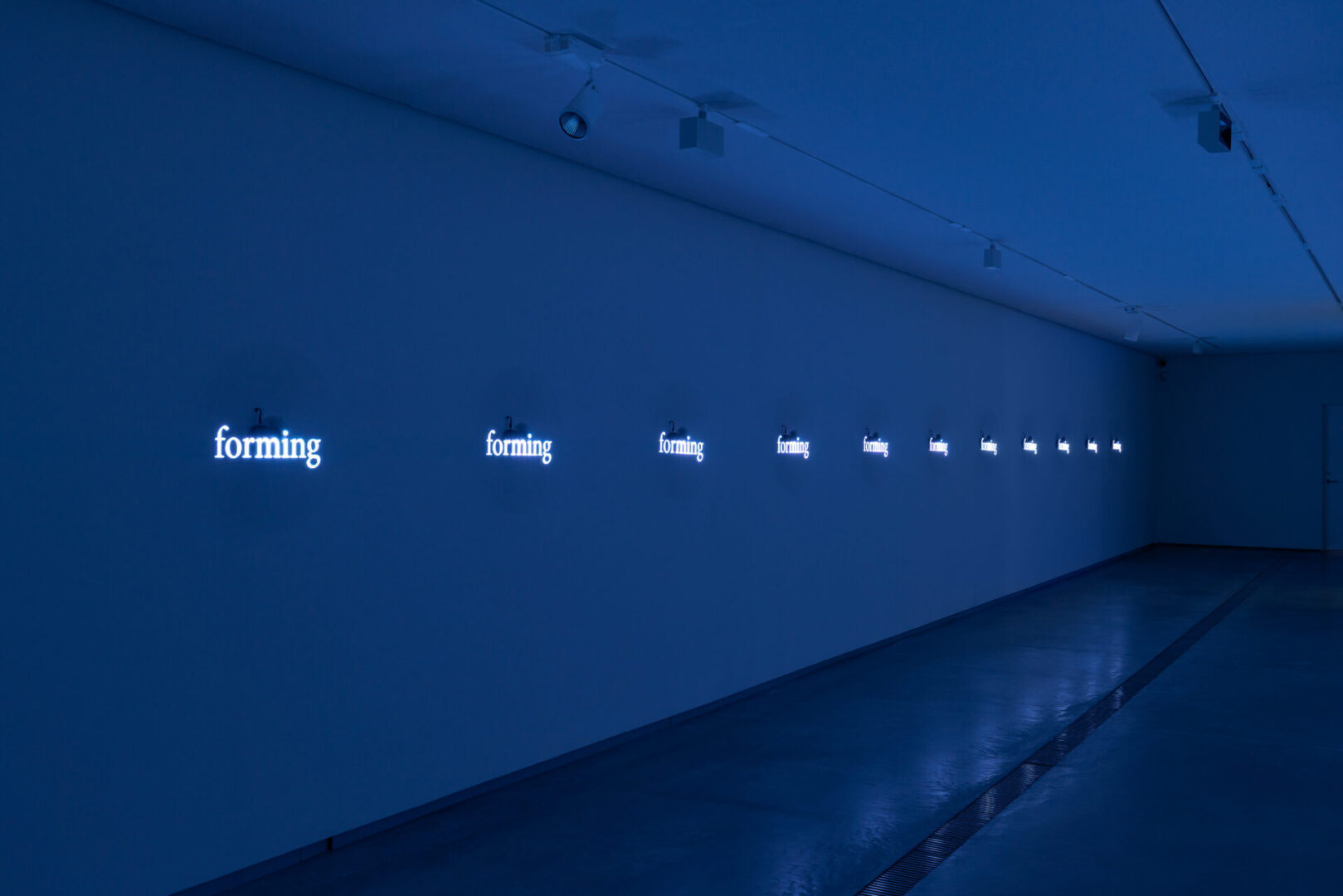
Artists have always concerned themselves with light – how to capture it, how to distill it, how to play with it. World renowned 20th century painter Henri Matisse once told an interviewer “the chief goal of my work is the clarity of light,” whilst Claude Monet wrote that “light is the most important person in the picture.” Yet, it wasn’t until the 1920s, with the advent of mass-produced artificial lighting, that it began to be used as an artistic medium in its own right. This intensified in the 1960s and 1970s by artists associated with minimalism and postminimalism. This was the era of Dan Flavin’s groundbreaking fluorescent tubes, which took the simplicity of light and made it the central point of a piece. Other practitioners followed suit, like Anthony McCall’s Line Describing a Cone (1973), which shone a beam through smoke to trace a cone shape, or James Turrell’s installations that saw entire rooms bathed in colour.
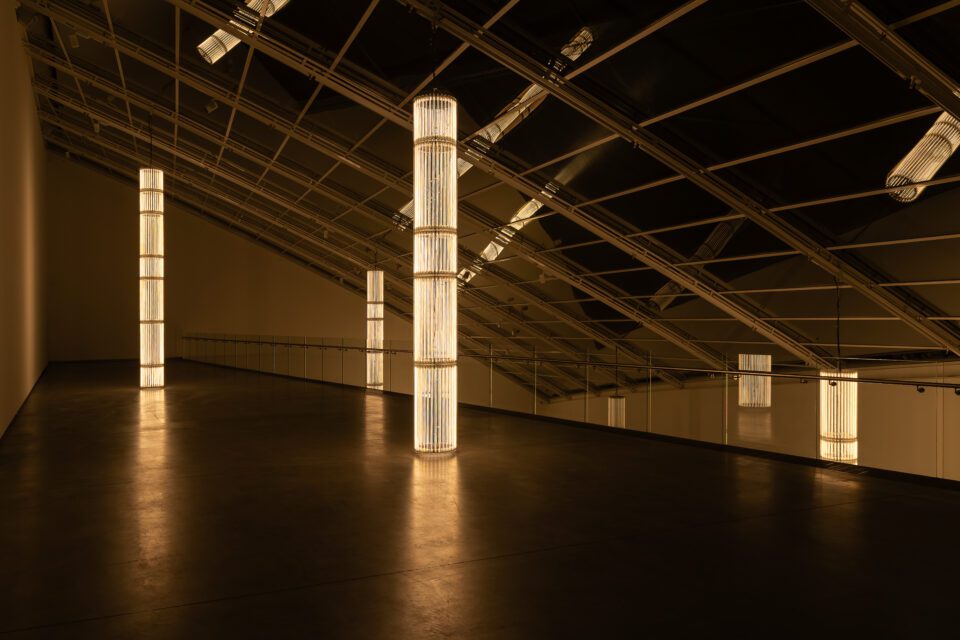
Three contemporary artists have taken this rich tradition and pushed it in new directions. Cerith Wyn Evans, Ann Lislegaard and P. Staff each manipulate artificial light – using technologies such as digital projectors, electrified neon gas and programmable LEDs – to create immersive installations. Grammars of Light at Astrup Fearnley Museet brings the practitioners together in a show that transforms the gallery into a space that invites audiences to be part of the work. Light columns are duplicated in a glass ceiling, crystalline forms consume a modernist building and holographic fans form a corridor of intense luminosity.
Cerith Wynn Evans explores perception, language and systems of communication. His large-scale works, made using neon lights, crystal chandeliers, glass, sound and even morse code, ask audiences how we view the world. At Astrup Fearnley, Evans takes over the space with huge columns of light, which hang from the ceiling. The suspended pillars of StarStarStar/Steer (Transphoton) (2019) are emblematic of Evans’ career, questioning how we inhabit time, move through space and how we allow light and sound to shape our sense of being. The LEDs pulse in a random configuration, glowing and dimming at imperceptible intervals, but manage to affect the viewers’ senses as they move around the space.
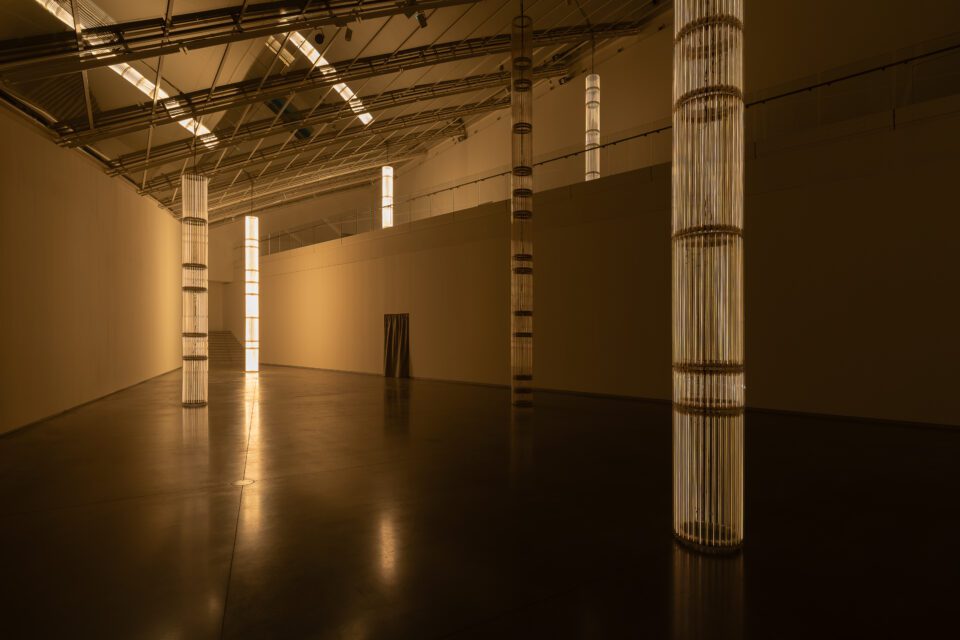
P. Staff’s Hormonal Fog (2026) casts an entire room in orange light. Reviewer and art critic Alessio Avventuroso wrote for Flash Art, “the space is bathed in an artificial orange light, almost too sweet, verging on toxic. Organic compounds are released into the air, substances used in non-western medicinal practices that suppress testosterone by intervening in the endocrine system. The idea that my body might body might be subtly altered simply by breathing fundamentally changed my awareness of the room.” It’s a bold and challenging experience from Staff, an artist noted for creating physically charged and confrontational experiences. Here, ideas around bodily agency and medical bias are brought to the fore.
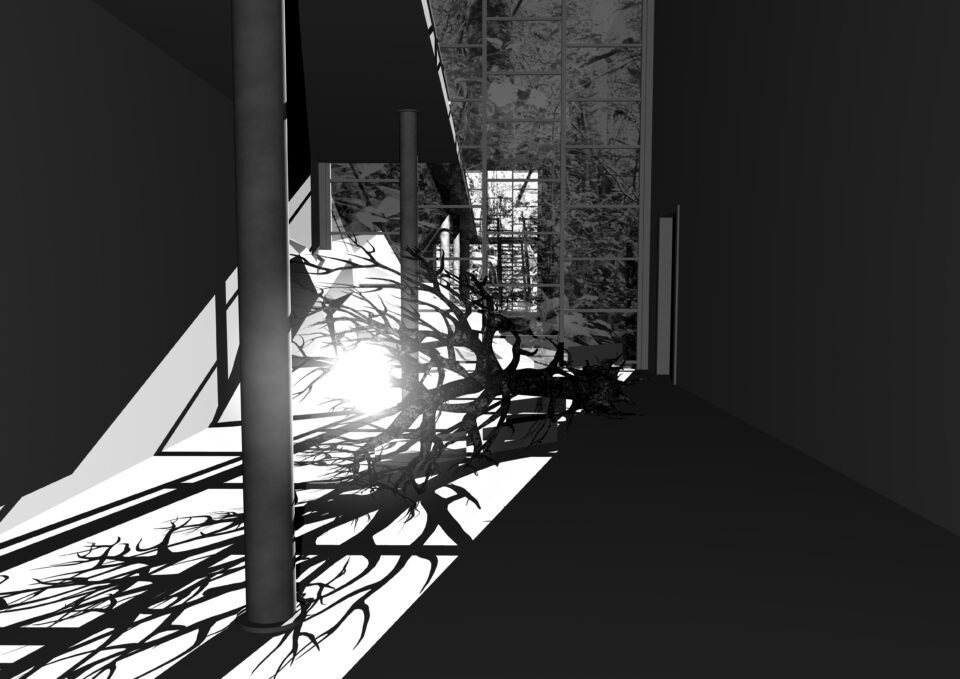
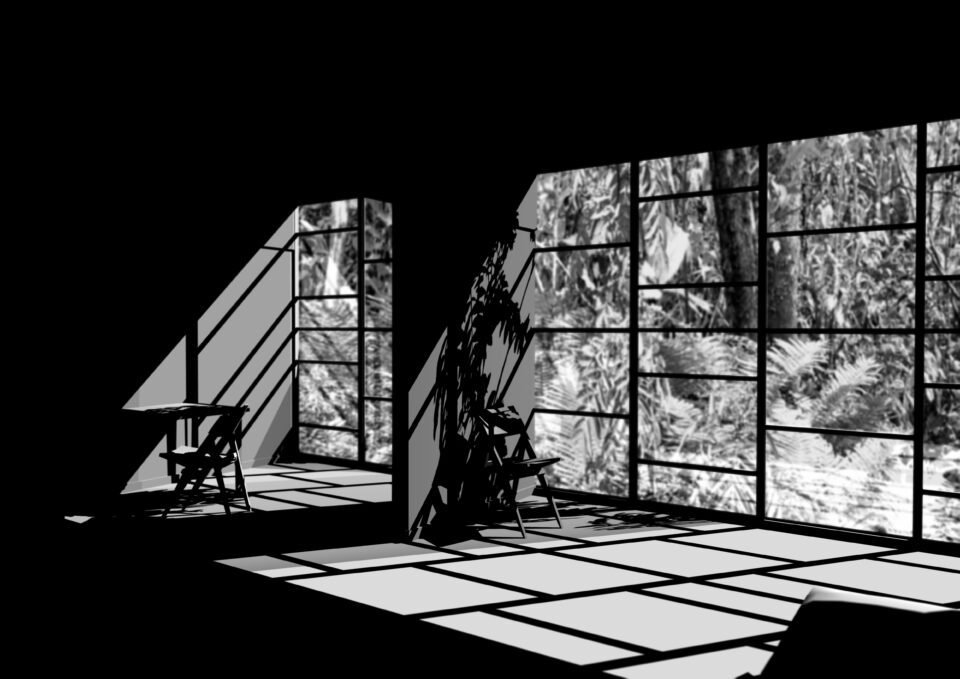
The show closes with Ann Lislegaard’s Crystal World (after J.G. Ballard) (2006). The artist is known for sound-light works that draw from ideas in science fiction. In this piece, she uses J.G. Ballard’s novel The Crystal World as her foundation. The work presents a slowly transforming, computer-generated architectural space that appears to crystallise and freeze over time, accompanied by a disembodied voice. It explores themes of suspended time, psychological dislocation and transformation, mirroring Ballard’s plot, which sees a strange infection begin to alter a West African jungle.
In Grammars of Light, these three artists use light as an instrument with which to interrogate our contemporary world. From Evans’ pulsing columns to Staff’s hormonally charged haze and Lislegaard’s crystallising digital landscapes, light is an active force that challenges what we understand about art. They ask how we look at our surroundings, and whether we’re really paying attention.
Grammars of Light is at Astrup Fearnley Museet, Oslo until 10 May: afmuseet.no
Words: Emma Jacob
Image Credits:
1. P. Staff, Minimum World, 2025. Exhibition view, Grammars of Light. © Astrup Fearnley Museet, 2025. Photo: Christian Øen.
2. Cerith Wyn Evans, StarStarStar/Steer (Transphoton), 2019. Exhibition view, Grammars of Light. © Astrup Fearnley Museet, 2025. Photo: Christian Øen.
3. Ann Lislegaard, Crystal World (after J.G. Ballard), 2006. Still.
4. Cerith Wyn Evans, StarStarStar/Steer (Transphoton), 2019. Exhibition view, Grammars of Light. © Astrup Fearnley Museet, 2025. Photo: Christian Øen.
5. Ann Lislegaard, Crystal World (after J.G. Ballard), 2006. Still.