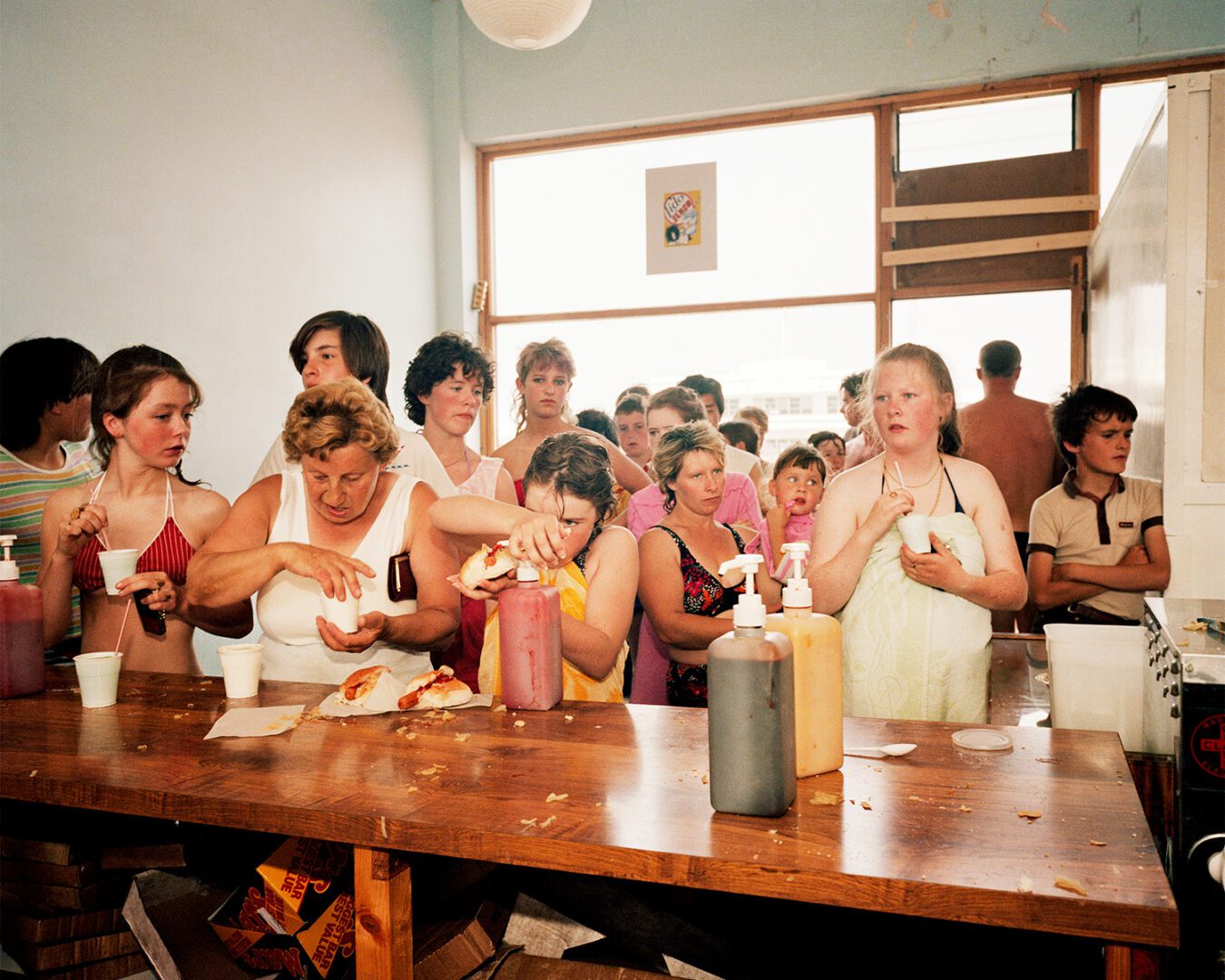
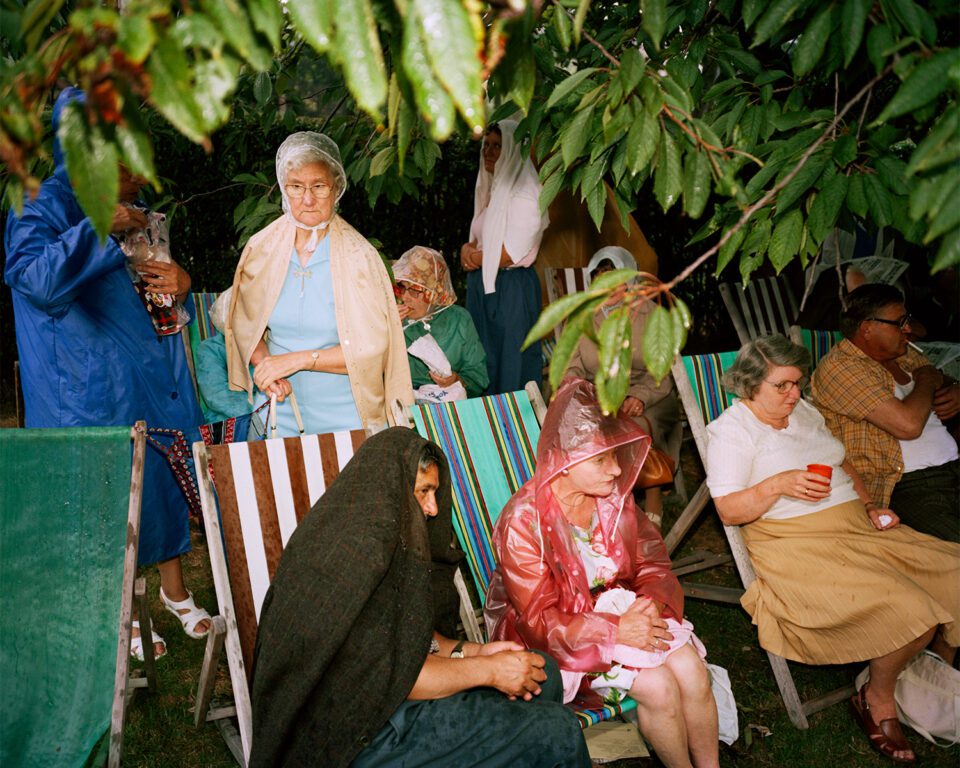
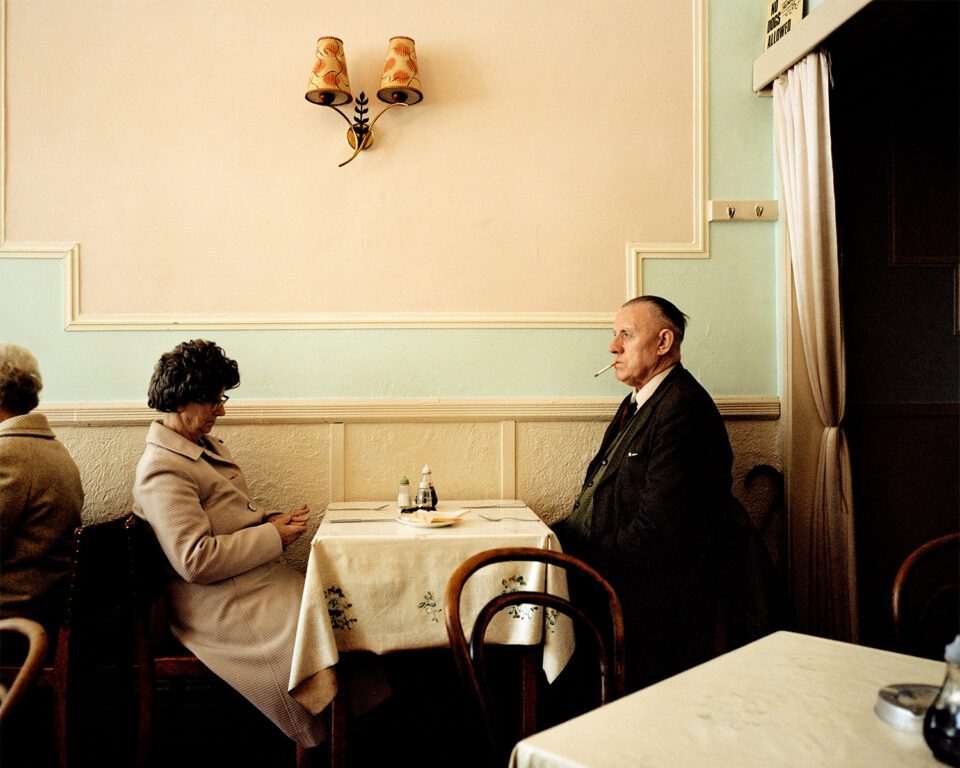
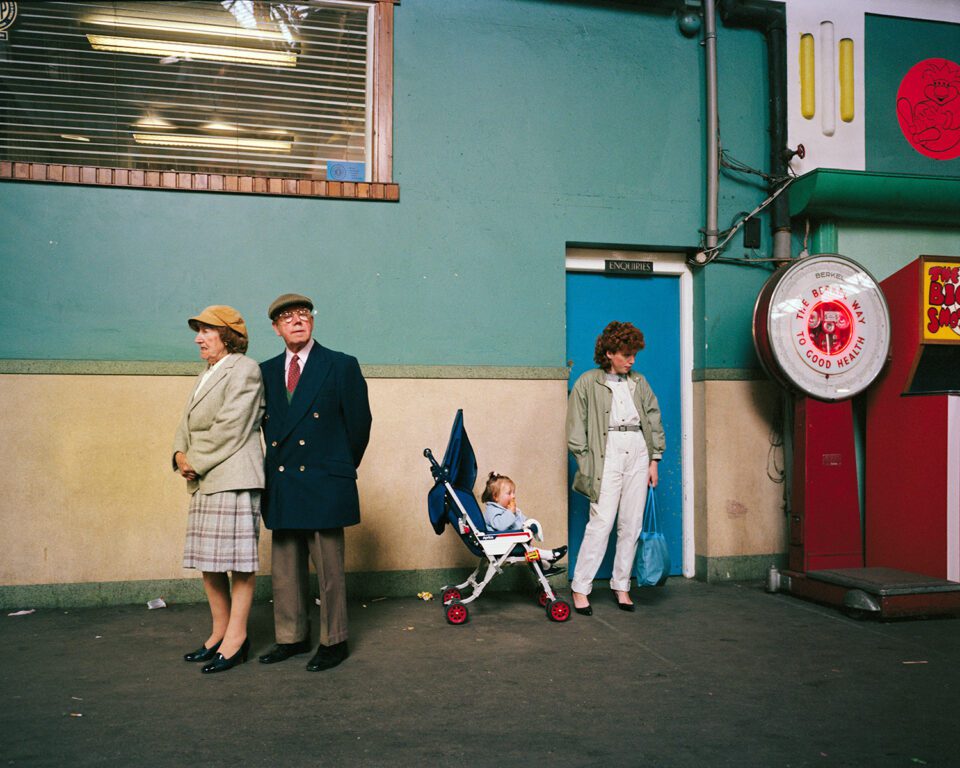
“The pictures from The Last Resort still hold very well. When I get to the Pearly Gates, those are the ones I’d probably get out first.” Martin Parr died at home in Bristol on 6 December 2025. He was an icon of British documentary photography, driving the popularisation of colour images in the mid-20th century and turning an astute and humorous lens on the nation. This spring, the Martin Parr Foundation honours his legacy with an exhibition of his renowned series, The Last Resort. Shot around the English seaside town of New Brighton between 1983 and 1985, the body of work confirmed Parr’s international reputation as a titan of photography. The show includes a full set of images from the original photobook, as well as ephemera including contact sheets and the original Plaubel Makina 67 camera he used to create the works. We caught up with Isaac Blease ahead of the show’s opening to reflect on Parr inimitable career and look ahead to how the Martin Parr Foundation will continue his legacy.
A: Let’s start by talking about Martin Parr himself. Can you sum up the impact he’s had on photography?
IB: It’s a massive and multifaceted question. Martin’s own work has been massively influential, particularly within British photography, but he also had a distinct international impact through various projects he produced over his 50-year career. Not just this, but he made a huge difference in his championing of the photobook as an important artistic medium and a vehicle for new ideas. He supported emerging artists through teaching and lecturing, and more informally, through buying people’s work and introducing them to influential figures in the art world. He was really far-reaching. He presented a clear-sighted vision of the contemporary moment, noticing details about society and how it was changing. Often those were things that were being overlooked within documentary photography, with his contemporaries in Magnum Agency focusing on the more extreme events, but Martin gravitated towards the everyday.
A: What’s your personal relationship to Martin’s work? Do you have a favourite image or memory associated with him?
IB: It’s hard because if you look through his archive, it’s so far reaching and has so many different chapters. I really loved his move into colour images with The Last Resort. I gravitate towards those ordinary and strangely familiar environments and spaces that he was capturing. These everyday events are so integral to our lives and existences that when you draw attention to them, they make for fascinating images and pose many questions. I think my favourite series of Martin’s is Common Sense. I really like the ring flash close-up of this garish, consumerist society building up to the millennium. Another highlight is his work on the middle and upper classes, as the way he observed the rituals of the British class system was fascinating.
A: You’re featuring The Last Resort. Why did you select this series out of his vast archive?
IB: Martin’s death was a shock, it was very sudden. That meant we had to look at the programme and make the right adjustments to it. It made a lot of sense to reopen with something that would honour Martin’s legacy and celebrate his life. The Last Resort was an idea that came from his wife, Susie, and daughter, Ellen. They came to us with the suggestion because in a lot of interviews that Martin gave about his practice, he’d often say that “when I get to the Pearly Gates, the first project I’d get out and show is The Last Resort.” So putting on the show was a link back to that, as well as the fact that the series was a big turning point in his career. It was the moment he went from having acclaim in the UK, to reaching international audiences. The critical response was quite divided at the time, but it generated a lot of interest. It meant people wanted to see and engage with it. Two or three years after this, he joined Magnum Photo Agency and The Last Resort was one of the projects that he would’ve presented, so this really did shape his career.
A: Was there a moment during the installation when the significance of this show really hit you?
IB: It was a really quick turnaround, we had just over a month to work on the show, which is much faster than we’re used to. Obviously, the studio’s very well set up to be able to print Martin’s work, so we had a solid foundation. It was also the 40th anniversary of the book and solo exhibition, so there was the anniversary to consider too. All of this mean going back into the archives and digging into Martin’s personal records and correspondents, as well as old interviews. It’s interesting because he was so clear sighted in the purpose he saw his work having, or the questioned he wanted to raise, as well as the pitfalls of traditional documentary photography at the time. It’s fascinating to go back and read those interviews when he was in his 30s and was a young photographer pushing through and laying forth his vision. It was a meaningful process in terms of learning more about someone you know well. We all worked with Martin for many years, but there’s always so much more to discover about him.
A: We’re 40 years on from when the series was created, and people continue to love and resonate with it. What makes it so appealing, even four decades later?
IB: We’ve all stood in a queue waiting for an ice-cream. There’s something about his images that are familiar, these are comic moments that punctuate all of our lives. But what makes his images really stand out is that alongside the satire, there are the endearing scenes of a young child with their grandparents at the seaside or sitting on a merry-go-round. All of these things are part of our collective memories as a society. Martin always had a good eye for catching those moments that really resonate with us.
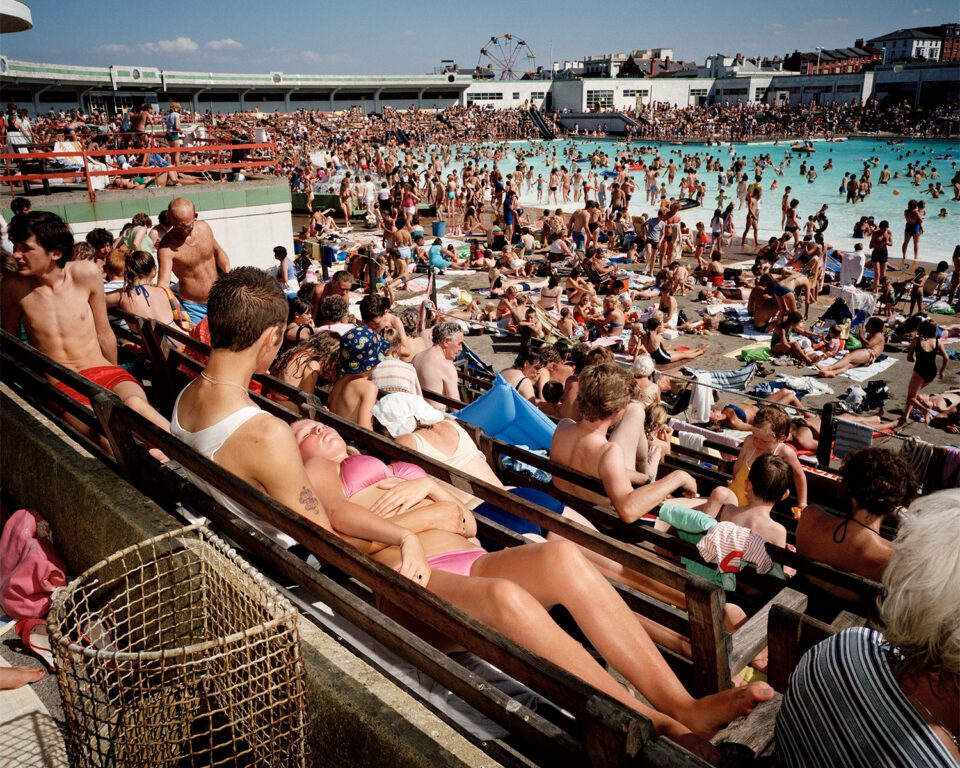
A: The exhibition includes contact sheets, ephemera and even the camera Parr used. Why did you choose to include these?
IB: We came across a lot of these items as we went through the archive. We knew Martin was good at keeping things, but in terms of locating them, it meant digging deeper into the collection here. There were some great “eureka” moments in discovering the objects we were looking for. We also had the personal family scrapbooks that Susie kindly let us look through, and in there were snapshots from the opening of the Open Eye Gallery exhibition, (which was a two-person show with Tom Wood) where everyone dressed up in swimming costumes and there was a Punch and Judy display. So it was lots of fun to explore the archive in that way. We also managed to locate the Plaubel Makina W67 camera Martin used for the project, which was integral to his move from black-and-white to colour photography.
A: Susie Parr has spoken about how differently the work was received in Liverpool compared to London. How do you think questions of class and regional identity play into how this work has been understood?
IB: The socio political background of the 1980s very much looms over the series. In 1983, which is the year Martin started working on the series, Margaret Thatcher had just entered her second term as Prime Minister. The consequences of many of her policies were acutely felt in Northern areas, including Liverpool, so to consider class and region is essential to the reading of the work. Photography itself in the 1980s, was also becoming more politicised as a medium, with more questions being asked about who an artist was in relation to their subject- particularly around class, gender, and race. Much of this contributed to the response at the time, and often centred around Martin being from a middle class background and photographing in a largely working class area. In some ways it could also be said that reactions to the work were often shaped by viewers’ own prejudices and assumptions, which they projected onto the images. That being said, these kinds of reactions are what makes the work so interesting and important. If it didn’t have these trigger points for conversation, the photographs wouldn’t be what they are. It is important to remember that Martin was photographing what was on his doorstep, in a way, and that’s often been the case with lots of his work. Susie and Martin moved to Wallasey in Liverpool when his wife got a job as a speech therapist there. So New Brighton was a stones’ throw from where they lived. Martin also had a fascination with seaside resorts, ever since he was a child. His parents were birdwatchers, so growing up, his family holidays were never to the coast, so there’s this gravitational pull towards New Brighton.
A: This exhibition looks back to the early 1980s, but the Foundation also champions contemporary practice. How do you create a dialogue between Parr’s work and younger generations of photographers?
IB: We have a rolling programme of events and exhibitions and continually stay on the pulse with what’s going on in the world of photography. We’ve got a great community of members and visitors, and we do an annual book festival called BOP, as well as holding an unbelievable collection of over 5,000 prints by other British and Irish photographers that Martin collected, as well as our library of over 6,000 photobooks.In many ways the Foundation is a research hub for photography with a particular focus on Britain and Ireland. We continue to loan to other institutions, and curate from this collection, to make sure that Martin’s support for both overlooked and emerging artists is continued.
A: What’s next for the Martin Parr Foundation? How do you plan on continuing his legacy?
IB: Carry on, and continue to grow. We all worked very closely with Martin across the years, but he also had a lot of trust in us to do our part in making sure the foundation was running as best it can. We’ve got lots of ideas for future shows and talks, and the mission remains the same. We’ll make sure that we keep doing what Martin would have wanted and make sure we can do his legacy proud.
The Last Resort: 40 Years On is at Martin Parr Foundation, Bristol 20 February – 24 May: martinparrfoundation.org
Words: Emma Jacob & Isaac Blease
Image Credits:
All Images The Last Resort, Martin Parr.