In September of last year Tate Modern announced one of the most eagerly awaited exhibitions of 2026. Tracey Emin: A Second Life opens on 27 February and runs until the end of August, offering a sweeping survey of an artist whose voice is instantly recognisable and whose impact on contemporary culture remains profound. This is more than a retrospective; it is a celebration of transformation, mapping personal history onto public consciousness and exploring a career defined by emotional honesty. Excitement is tangible as audiences prepare to witness over 40 years of work across painting, video, neon, textile, sculpture and installation. Emin has always challenged the boundaries of what art can be and this exhibition promises to capture the full force of her vision. It is a moment for reflection and exhilaration.
Tracey Emin needs little introduction. Born in London in 1963 she emerged as a defining figure of the Young British Artists movement in the 1990s, recognised for work that is intimate, confessional and often confrontational. Her art spans media and methods but consistently returns to the personal: love, trauma, desire, loss and survival. Emin’s influence extends beyond galleries and museums; she has shaped conversations about identity, feminism and emotional truth, turning her life into a living canvas. Leaving her hometown of Margate at 15 she returned intermittently before establishing her practice in London, eventually studying at the Royal College of Art. Life experiences, from the loss of her mother to surviving cancer, have only deepened the resonance of her work and the authority of her voice.
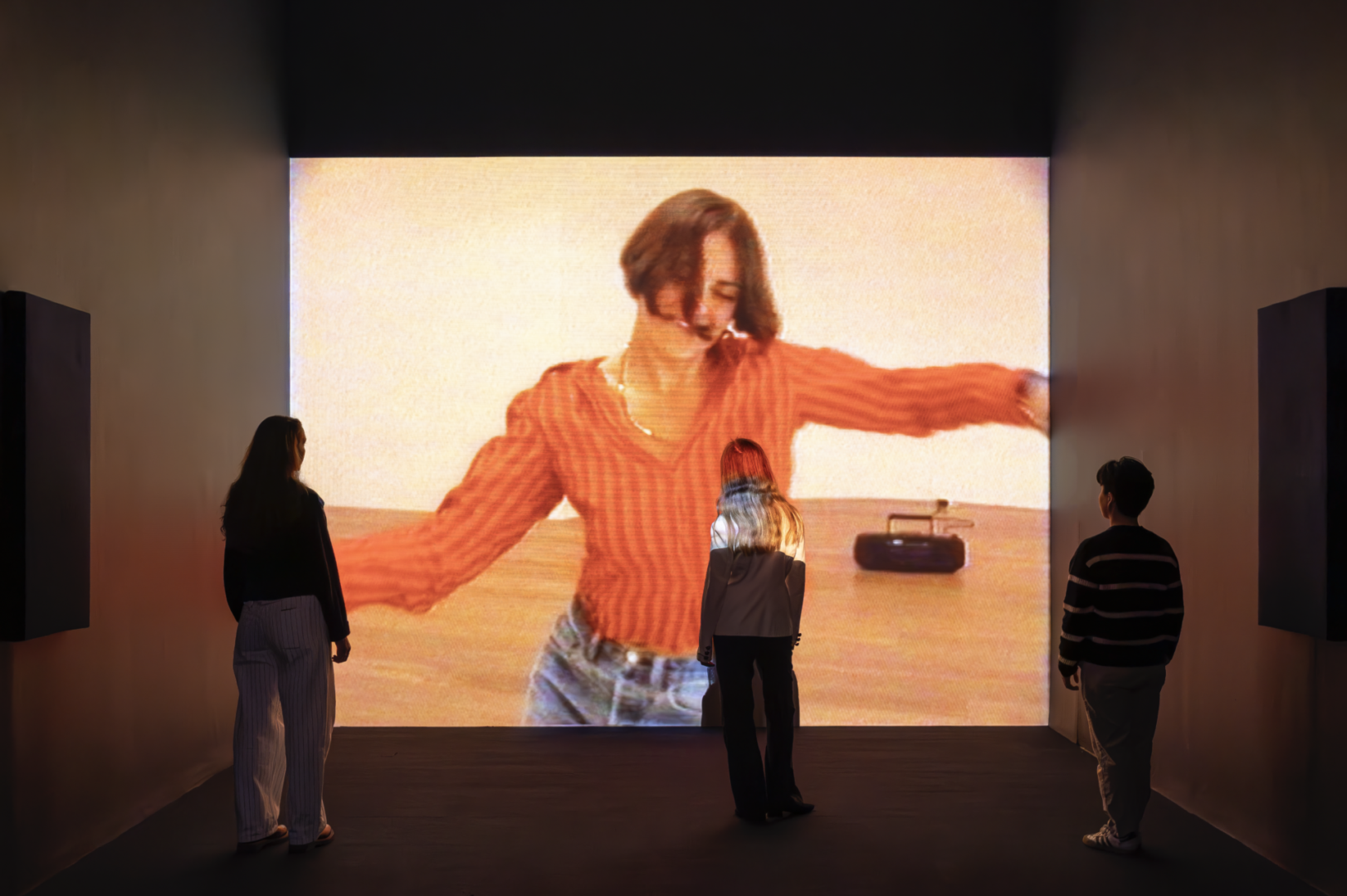
The exhibition itself is unprecedented in scope, presenting over 90 works in close collaboration with Emin, who has shaped the narrative of the show. Spanning destroyed early paintings to recent bronzes and large-scale canvases, it charts the evolution of a practice defined by fearlessness. Emin described it as a benchmark moment, a point to look back and a celebration of living. Works from her first solo exhibition, My Major Retrospective 1982–93, sit alongside Tracey Emin CV 1995 and the video Why I Never Became a Dancer 1995, revealing the confessional voice that became her signature. Early trauma, adolescent longing and emerging artistry converge, offering audiences a window into experiences inform her work. The curatorial approach ensures the emotional throughline of Emin’s life is never lost.
Margate remains a central presence in Emin’s story, its streets and seaside etched into memory and material. Pieces such as Mad Tracey From Margate: Everybody’s Been There 1997 and It’s Not the Way I Want to Die 2005 transform personal history into collective resonance, drawing on the amusement park Dreamland and her formative experiences. Her work here is both intimate and cinematic, mapping vulnerability and anxiety onto physical spaces imbued with nostalgia. Emin’s return to Margate following illness and loss underscores cycles of departure and return, of reckoning and renewal. The exhibition captures these moments with tenderness, making the personal historical and the historical deeply personal. Margate becomes a stage, a character and a repository for the artist’s memory.
Trauma, loss and bodily experience are central to Emin’s practice, often rendered in works that refuse to hide pain or shame. Neon pieces such as I could have Loved my Innocence 2007, the embroidered calico Is This a Joke 2009 and How It Feels 1996 confront experiences of sexual assault, abortion and misogyny with unflinching candour. The quilt The Last of the Gold 2002, shown publicly for the first time, offers both guidance and reflection, an emblem of her commitment to sharing experiences often left unspoken. Emin’s art is intimate and social, transforming private suffering into communal understanding. Visitors encounter resilience alongside vulnerability. In doing so, Emin establishes a dialogue that is empathetic and radical.
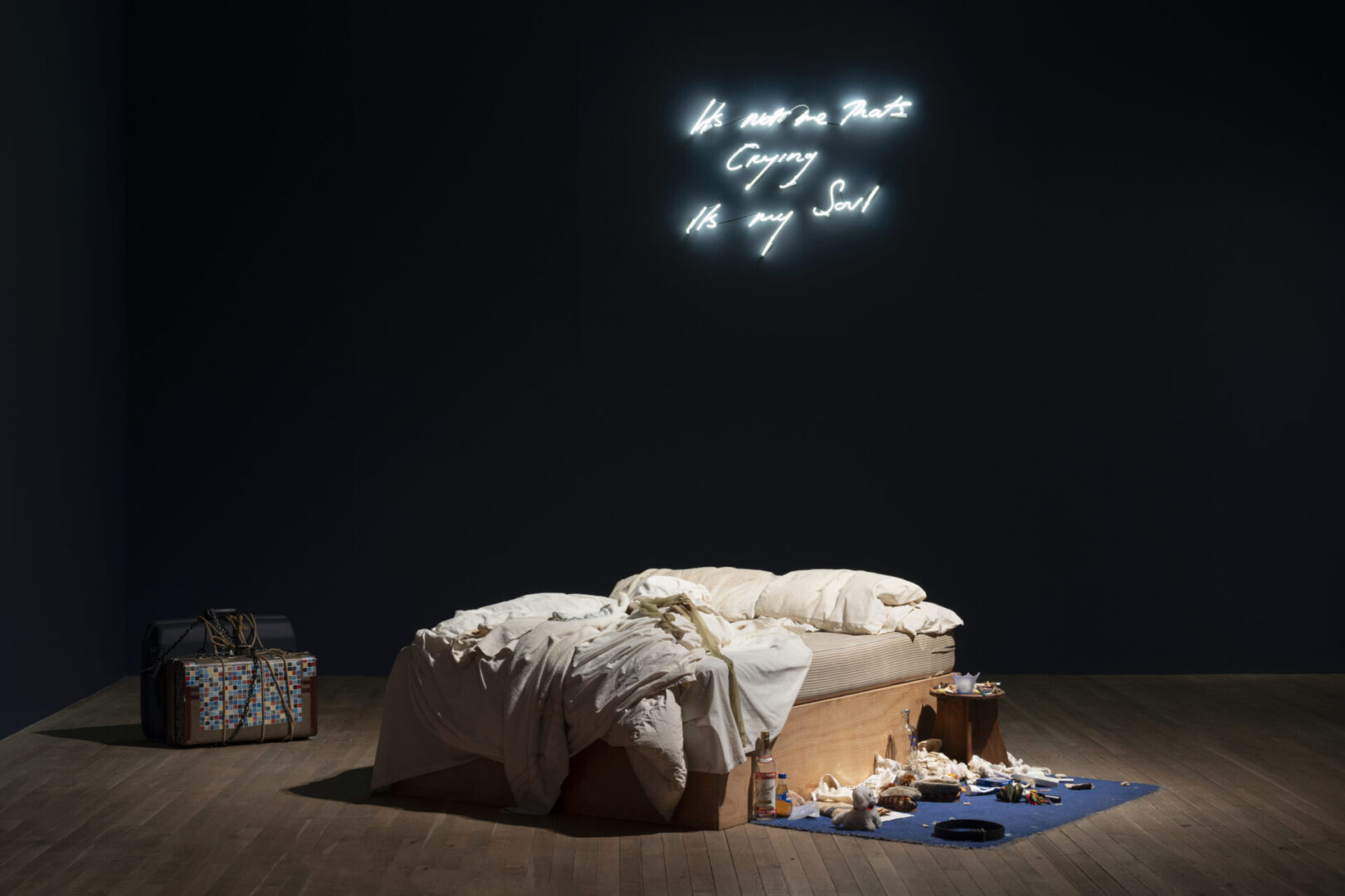
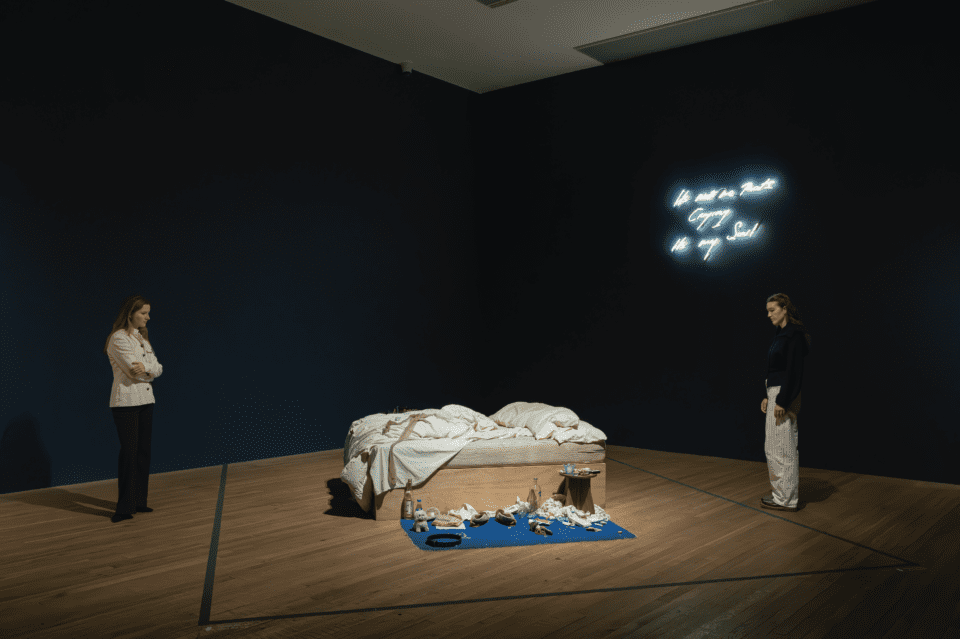
At the centre of the exhibition are two iconic installations: Exorcism of the Last Painting I Ever Made 1996 and My Bed 1998. The first documents a period in Stockholm where Emin locked herself away to confront her abandoned relationship with painting, while the latter captures the aftermath of an alcohol-fuelled breakdown. Both works are seminal for emotional immediacy, mapping the transition from her first life to her second. They exemplify fearless engagement with vulnerability, allowing audiences to witness a life shattered and resilient. The retrospective situates these works as points where personal narrative intersects with cultural history. Each installation reveals art’s capacity to confront, heal and provoke.
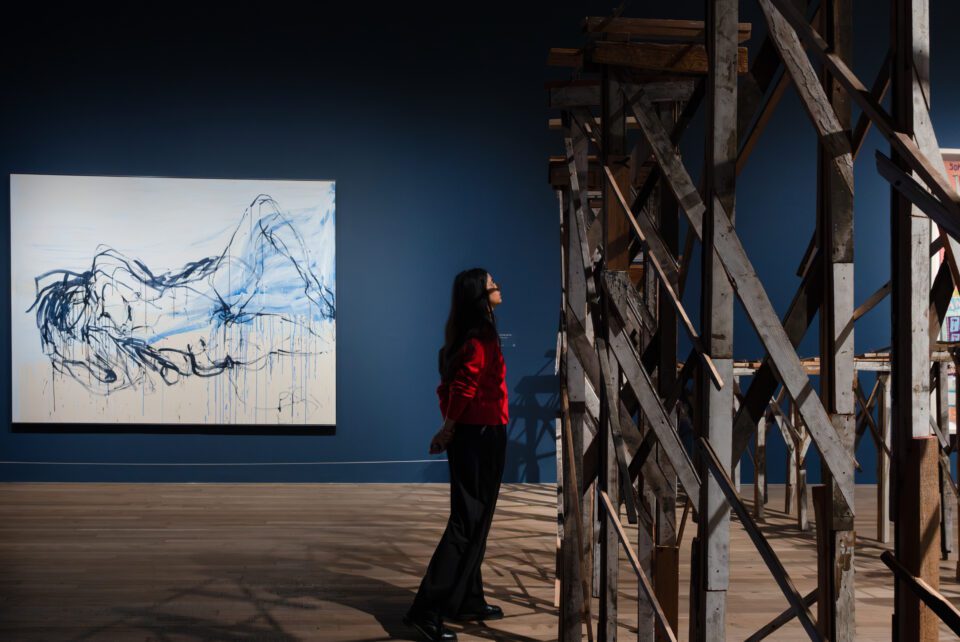
Emin’s recent work expands the conversation, addressing her body, illness and mortality without reticence. The bronze sculpture Ascension 2024 and photographs depicting her stoma reveal ongoing engagement with physicality and identity following cancer treatment. Large-scale paintings from this period radiate a spiritual quality, affirming presence and vitality despite adversity. The exhibition refuses to separate private experience from public display, challenging audiences to inhabit the artist’s perspective fully. It is this integration of life, body and art that sets Emin apart, offering a model for contemporary practice.
Her influence on subsequent generations is unmistakable and reverberates across contemporary practice. Turner Prize-winning Laure Prouvost uses self-revelatory video and found objects to create narratives that, like Emin’s, blur autobiography and imagination, transforming personal experience into poetic spectacle. Phoebe Boswell engages with immersive installations and intimate storytelling to explore identity, belonging and the body, resonating with Emin’s introspective approach and commitment to emotional honesty. Even within her own generation, figures such as Sarah Lucas and Rachel Whiteread embody the disruptive spirit of the Young British Artists, foregrounding lived experience and the materiality of everyday life as central to art. These artists demonstrate how Emin’s confessional courage and exploration of trauma, desire and survival have opened pathways for self-expression in contemporary art. A Second Life highlights Emin’s enduring influence and the evolving conversation about vulnerability, embodiment and the role of personal truth in creative practice.
A Second Life is distinguishable because of how it reframes the notion of a retrospective. Rather than a linear survey, it moves fluidly between periods and media, connecting early confessional works with later paintings and sculptures suffused with spiritual energy. The exhibition emphasises conversation over chronology, layering memory, trauma and transcendence in ways that feel immediate and immersive. Visitors are guided through a life rather than a catalogue, encouraged to reflect on the intersections of intimacy, vulnerability and resilience. The monumental bronze I Followed You Until The End 2023, displayed outside Tate Modern, extends this dialogue into the public sphere. The show reframes what it means to survey a career, reminding audiences that retrospectives can be living, breathing experiences.
Tracey Emin: A Second Life is both celebration and reckoning. It honours a career defined by risk, honesty and relentless inquiry while pushing viewers to reconsider the possibilities of contemporary art. Emin’s confessional courage, emotional precision and formal inventiveness continue to resonate in new and unexpected ways. This exhibition promises to be one of 2026’s defining cultural events, a rare opportunity to witness a life and practice in full scope. Emin remains as vital, provocative and inspiring as ever, reminding us that art is at its most powerful when it confronts the real, the lived and the necessary. In tracing her journey, we celebrate not only a remarkable artist but a remarkable life.
Tracey Emin: A Second Life is at Tate Modern, London 26 February – 31 August: tate.org
Words: Anna Müller
Image Credits:
1. Tracey Emin: A Second Life Tate Modern installation view with My Bed 1998 and It’s Not me That’s Crying its my Soul 2001. Photo © Tate (Jai Monaghan).
2. Tracey Emin: A Second Life, Tate Modern installation view with My Bed 1998 and It’s Not me That’s Crying its my Soul 2001. Photo © Tate (YiliLiu).
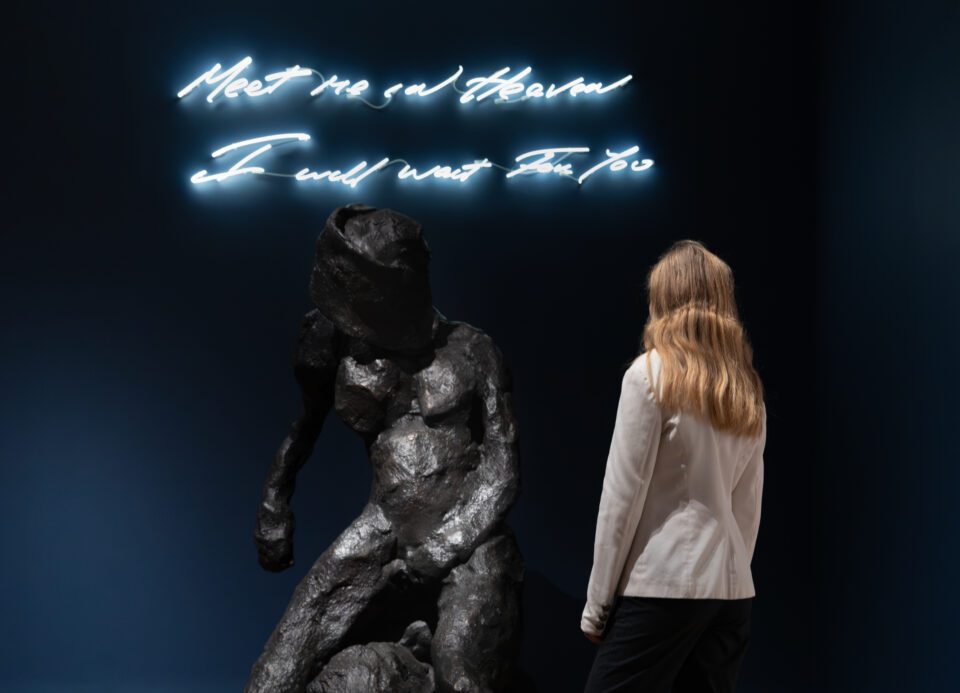
3. Tracey Emin: A Second Life Tate Modern installation view with I Will not Be Alone 2025 and Meet Me In Heaven, I Will Wait For You 2004. © Tracey Emin. Photo © Tate (Sonal Bakrania).
4. Tracey Emin: A Second Life Tate Modern.© Tracey Emin with It’s Not the Way I Want to Die 2005 and I needed you to love Me 2023. Photo ©Tate (Sonal Bakrania).
5. Tracey Emin A Second Life Tate Modern installation view with Why I Never Became a Dancer 1995. Photo © Tate (Yili Liu).