

Born in 1984 in the quiet Dutch village of Wamel, Iris van Herpen has long been recognised as one of the most pioneering figures in contemporary fashion. Her fascination with the transformative possibilities of clothing began in her grandmother’s attic, a trove of garments and costumes from past eras that revealed the potential for clothing to tell stories and evoke emotion. After completing her studies at ArtEZ University of the Arts in Arnhem, she honed her craft under the tutelage of Alexander McQueen in London and Claudy Jongstra in Amsterdam. By 2007, Van Herpen had launched her own label, presenting her first collection during Amsterdam Fashion Week, a debut that heralded a new era in haute couture. Her early work drew attention for its fluid interplay between traditional craftsmanship and avant-garde experimentation and in 2011, at just 27, she joined the Chambre Syndicale de la Haute Couture in Paris. Her creations are held in collections at the V&A in London and The Metropolitan Museum of Art in New York, affirming her status as both an innovator and a custodian of sartorial tradition.
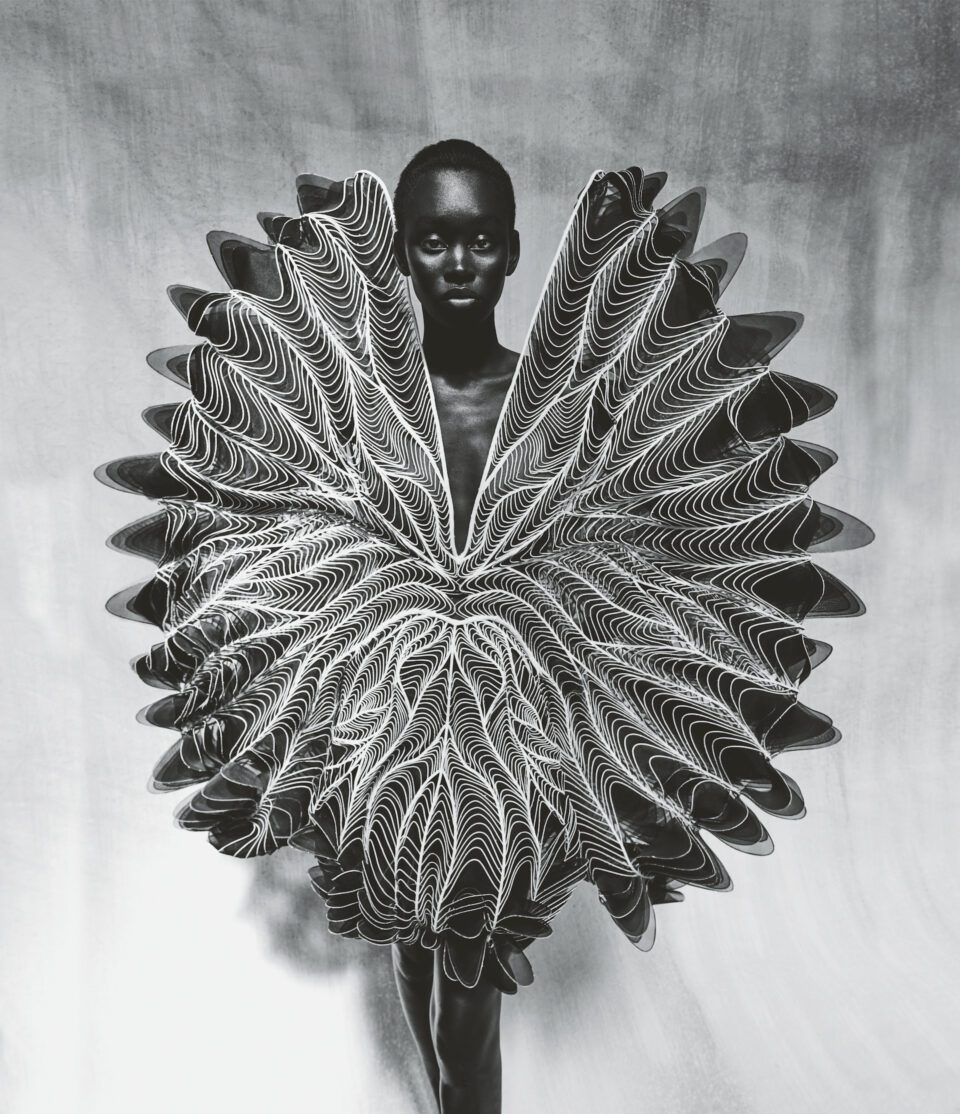
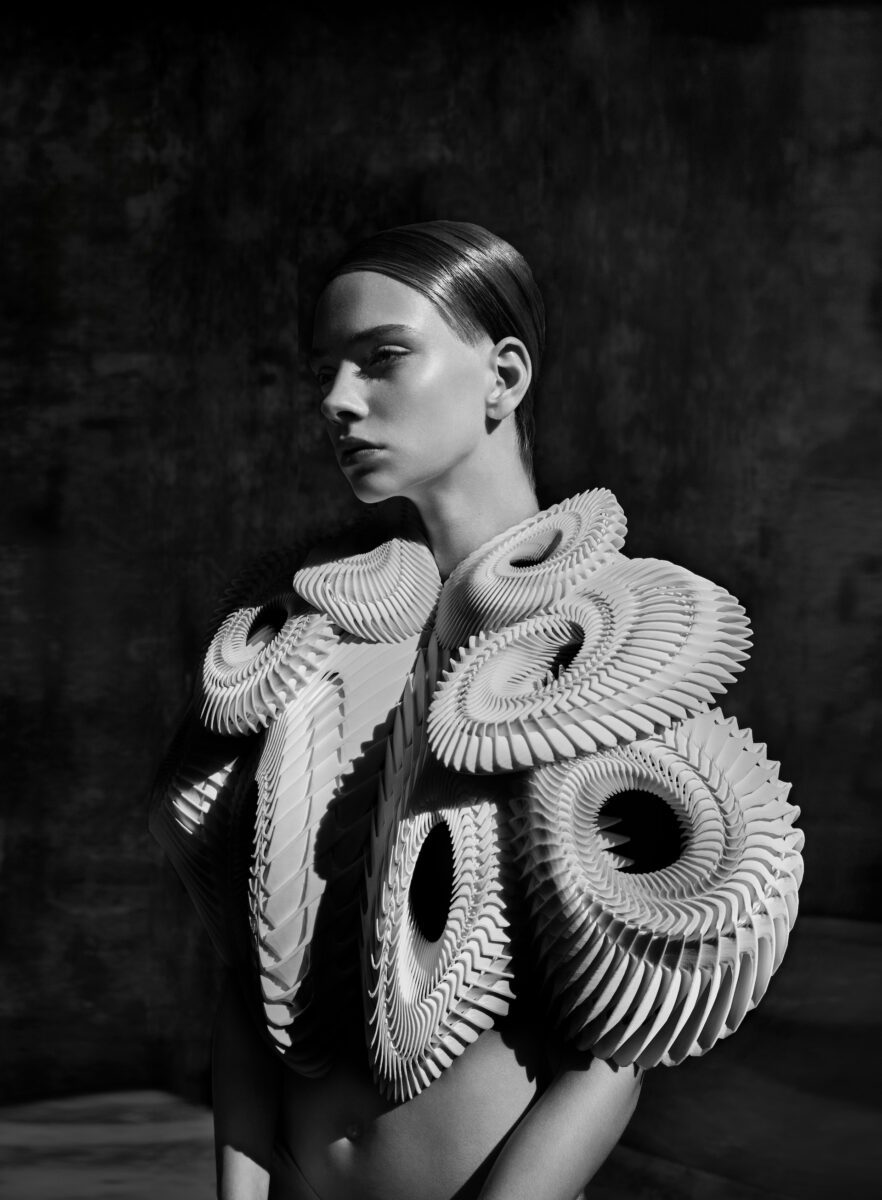
Her career has been defined by an unceasing desire to expand the vocabulary of fashion. Unlike many designers who adhere to conventional silhouettes and techniques, Van Herpen approaches each collection as a multidisciplinary exploration, weaving together elements of science, architecture and technology. Collaborations with architects, engineers and scientists are central to her practice, allowing her to translate the intangible forces of nature into wearable art and blurring the boundaries between garment and sculpture. Whether through 3D printing, laser cutting or handblown glass, her creations challenge perceptions of the body, the material and the very definition of couture.
Kunsthal Rotterdam has devoted its largest hall to a retrospective that encapsulates this extraordinary career. Sculpting the Senses presents over one hundred iconic creations, offering an immersive experience that engages visitors on multiple sensory levels. The exhibition is structured across nine thematic zones, a 21st-century cabinet of curiosities and a meticulous recreation of the designer’s Amsterdam atelier. A bespoke soundscape by Salvador Breed accompanies the visitor, heightening the interplay between fashion, art and science while the layout encourages contemplation of the body in space, the interaction between garments and environment and the future of human form in a rapidly shifting world.
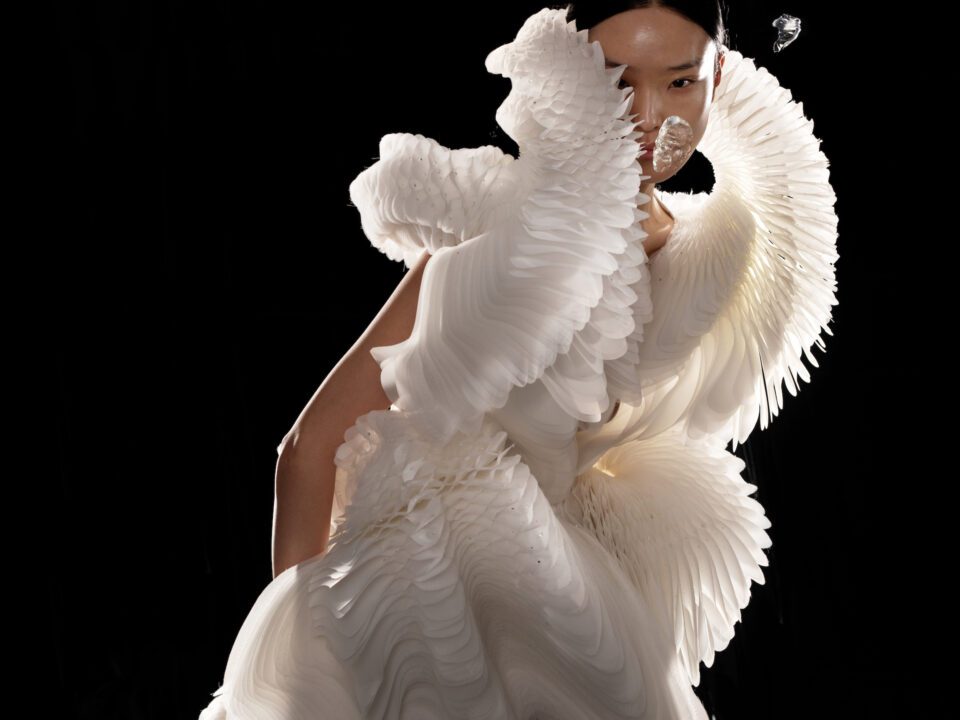
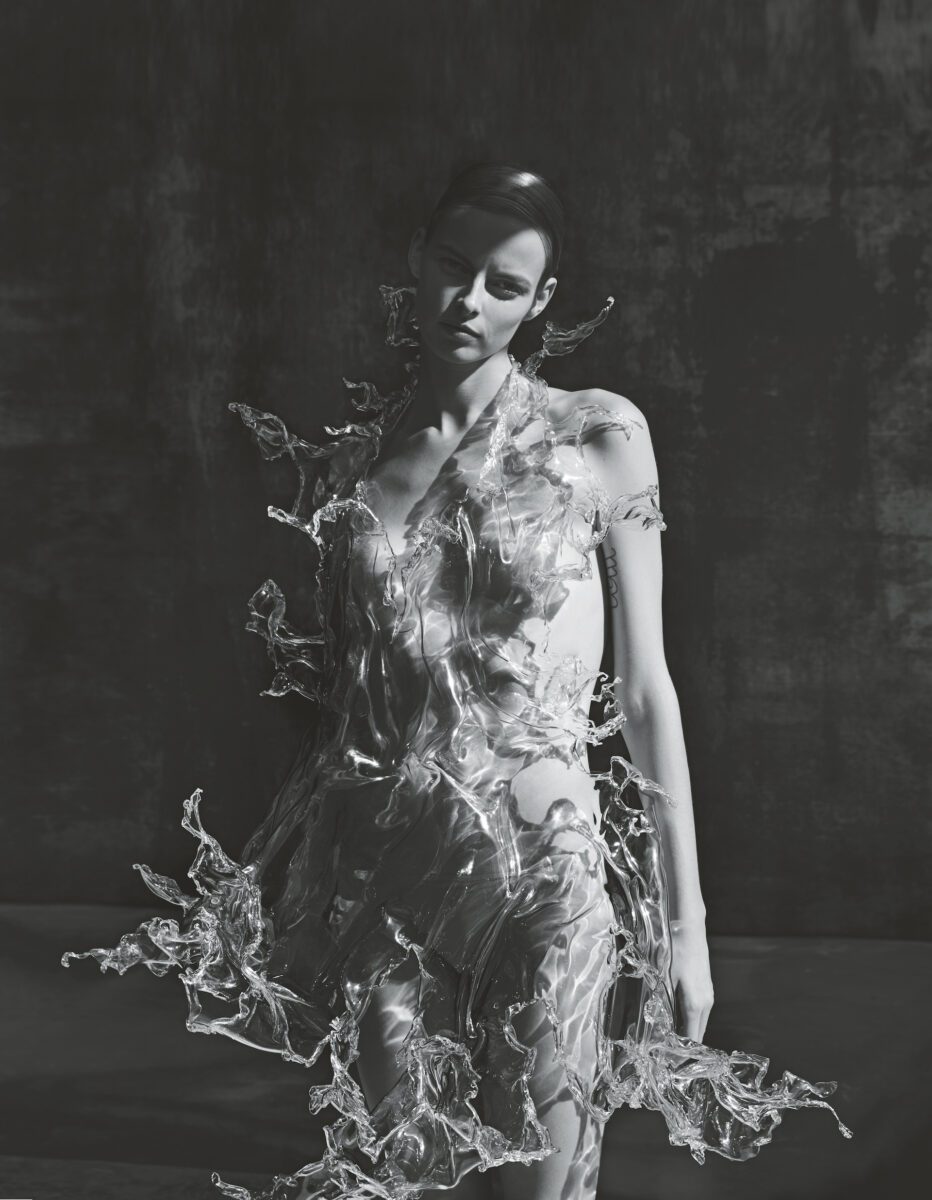
At the core of her work is a deep connection to nature. The Crystallization collection captures water in its liquid, frozen and vapourous states, a motif that evokes both fragility and force. It includes her first 3D printed garment, marking a pivotal moment in the intersection of technology and couture. In the Sensory Seas collection, the human nervous system is likened to the currents and structures of the ocean. Through delicate layering of translucent fabrics, the creations evoke the graceful ebb and flow of subaquatic life, a poetic meditation on the interconnection between life forms. Fascination with natural forces extends beyond the ocean. In Earth Rise, garments incorporate upcycled plastics, transforming waste into beauty and reflecting a commitment to sustainability. Explorations of growth systems beneath the earth are expressed through translucent lace layers and sculptural structures, suggesting the hidden complexity of natural ecosystems and creating a dialogue between the visible and unseen worlds.
Architecture and anatomical studies are further pillars of Van Herpen’s practice. Gothic cathedrals, with their rib vaults and buttresses, inform pieces in which structural logic merges with sculptural elegance. Synaesthesia and multisensory experience play a central role. In the Hypnosis dress, laser-cut patterns refract movement and light, creating an optical effect that transforms the perception of the body itself. Her creations become a second skin, simultaneously scientific study and artistic projection, inviting the audience to reconsider the corporeal form. The work is also suffused with a sense of mythology and the fantastical. Growing up near the home of Hieronymus Bosch, Van Herpen absorbed a world in which alchemy, mysticism and surreal allegory intermingle. Symbolist and surrealist literature alongside studies of historical cabinets of curiosities inform her imaginative approach. Her collections explore the fluid boundaries between reality and imagination, elevating fashion into a medium for narrative and metaphor.
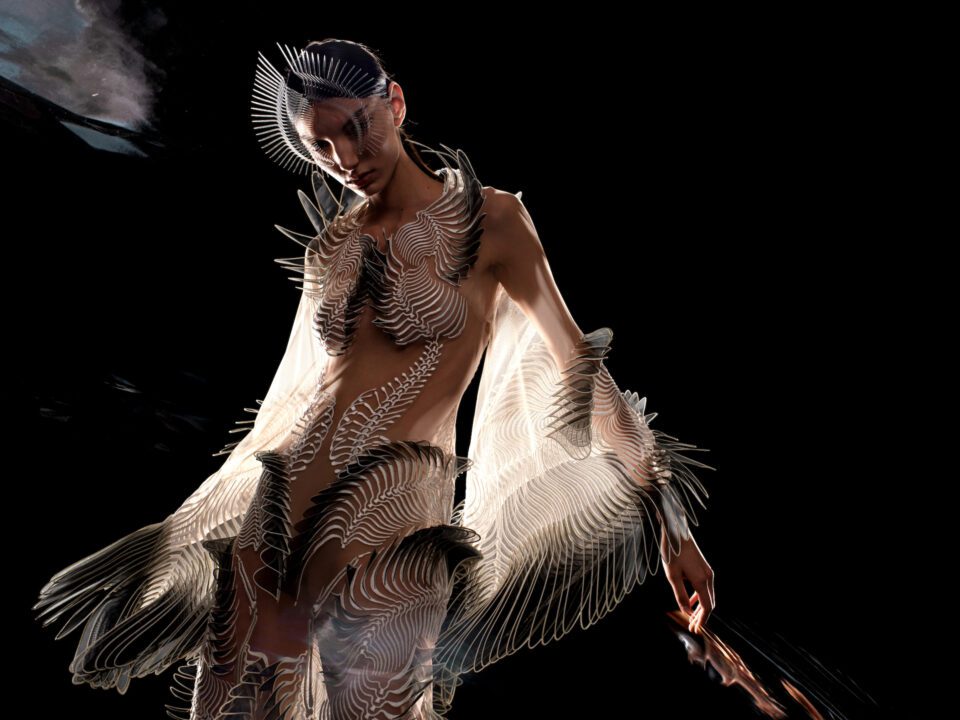
Her practice resonates with contemporaries who occupy similar interdisciplinary spaces, such as Neri Oxman, whose architectural and biological experiments echo her integration of science into design and Philip Beesley, whose responsive architectural installations parallel the kinetic fluidity of her garments. Unlike many avant-garde designers who lean exclusively on conceptual or technological experimentation, Van Herpen maintains a dialogue with the rich lineage of couture, combining technical mastery with visionary artistry, ensuring her work retains both emotional resonance and precision. In collections that explore the intersection of technology and life sciences, the body is transformed into hybrid forms that appear futuristic yet intimately connected to the natural world. Fascination with the cosmos, often informed by scientific imagery from NASA alongside ethereal artistic references, positions these designs as both scientific and poetic investigations. The exhibition’s finale, with dresses appearing to float through space, captures this synthesis, offering a spectacle that is immersive, contemplative and transcendent.
Sculpting the Senses is an invitation to experience fashion as an evolving multisensory phenomenon. Creations engage with materiality, movement, mythology and science, questioning the limits of clothing and the role of the designer in contemporary culture. The legacy of this work is significant not only in fashion but in art, architecture and design, establishing a model for interdisciplinary practice that is rigorous, poetic and socially engaged. By navigating the intersections of traditional craftsmanship and cutting-edge technology, couture becomes a space for experimentation, reflection and dialogue about our relationship to nature, technology and the body. The collaboration behind this exhibition underscores its ambition. Organised by Kunsthal Rotterdam with Musée des Arts Décoratifs in Paris and Maison Iris van Herpen, the presentation is based on the original exhibition design by the Parisian institution. Visitors can anticipate a meticulously curated journey punctuated by multisensory installations, sculptural garments and dialogues with contemporary artists and designers. These conversations highlight her work’s position at the nexus of contemporary practice, where fashion, art and science intersect.
Iris van Herpen’s journey from a small Dutch village to the pinnacle of global haute couture is a testament to the power of curiosity, collaboration and innovation. Sculpting the Senses offers not only a reflection on an extraordinary career but also a vision of fashion’s future: one in which the boundaries between disciplines dissolve and the body becomes a canvas for exploration, transformation and imagination. In an era defined by rapid technological change and ecological uncertainty, this work embodies a rare synthesis of beauty, intellect and ethical consciousness, demonstrating that the act of dressing can be both art and inquiry, spectacle and meditation, an invitation to inhabit a world where imagination and reality converge.
Sculpting Senses is at Kunsthal Rotterdam until 1 March 2026.
Words: Anna Müller
Image Credits:
1. Iris van Herpen. ‘Crystallization’ top, Crystallization collection, Haute Couture, 2010. Utilising selective laser-sintering 3D printing technologies, made from polyamide Photo by Sølve Sundsbø Model: Kyona van Santen.
2.Iris van Herpen. Syntopia collection, Haute Couture fall/winter 2018-19. Bird soundwave patterns, laser cut of stainless steel Photo by Sølve Sundsbø Model: Sabah Koj Photo by David Uzochukwu Model: Cynthia Arrebola.
3. Iris van Herpen. Morphogenesis dress, Sensory Seas collection, Haute Couture spring/summer White screen-printing mesh layers, in collaboration with Phillip Beesley Photo by David Uzochukwu Model: Yue Han.
4. Iris van Herpen. Crystallization collection, Haute Couture 2010. Transparent PetG heat molded into a motion capture of splashing water Photo by Sølve Sundsbø Model: Elza Matiz.
5. Iris van Herpen. Labyrinthine kimono dress, Sensory Seas collection, Haute Couture spring/summer 2020. 3D laser cut silk dendrites heat bonded to leaves of black transparent glass- organza. Photo by David Uzochukwu. Model: Cynthia Arrebola.
6.Iris van Herpen. ‘Crystallization’ top, Crystallization collection, Haute Couture, 2010. Utilising selective laser-sintering 3D printing technologies, made from polyamide Photo by Sølve Sundsbø Model: Kyona van Santen.


