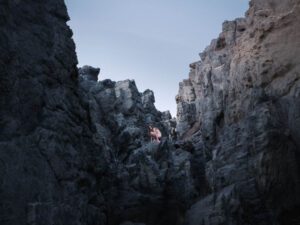
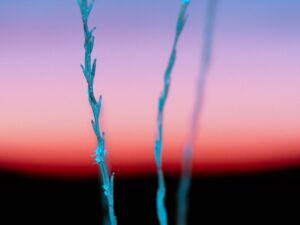
We live in a world saturated by images. It’s estimated that five billion new photographs are taken every day, with AI generating millions more. What does it mean to “see differently” when we’re constantly looking? ScanLAB Projects is an artist-led, London-based studio that explores this question through machine vision technologies. Founded in 2010 by Matt Shaw (b. 1983) and William Trossell (b. 1985), they are renowned for using 3D scanning to reflect on society and the natural world, offering perspectives that reach beyond the capabilities of the human eye and traditional camera lenses. Their work, which includes precise digital replicas of buildings, landscapes and objects, has been exhibited internationally, from LACMA, Tribeca and the Venice Biennale, to the Barbican, Royal Academy, Science Museum and The Photographers’ Gallery. Dreamlife of Driverless Cars (2016) offered a glimpse of a future documented by autonomous vehicles, whilst Eternal Return (2019) explored the future of memory. Now, the latest project, FRAMERATE: Desert Pulse, expands these concepts further. It charts a year in the life of the Sonoran Desert, and is developed in collaboration with the Desert Botanical Garden in Phoenix, Arizona, a 140-acre site that is home to 50,000 plants. Using time-lapse 3D scanning, LiDAR and photogrammetry, the studio documented the surrounding ecosystem over 12 months, building an extraordinary archive of images and billions of data points. This material has been transformed into a multisensory, site-specific exhibition that bears witness to environmental change whilst illuminating the desert landscape’s beauty and fragility. We sat down with Shaw and Trossell to learn about the display.
A: Can you tell us about the origins of ScanLAB Projects?
MS & WT: In 2011, as recent architecture graduates, we organised a week of experimentation with emerging machine vision technologies. We were trying to scan the unscannable: weather, mist, rainbows, controlled explosions and distortions caused by huge flexible mirrors. We called that brief period “ScanLAB” – our scanning laboratory. In 3D scanning technologies, we found a tool that could observe the world in a way that is undeniably real, photographic and believable, whilst also having all the playful, malleable possibilities of 3D design. We believe in the creative power of intimately knowing your tools and working with them at their breaking point; that’s how you discover new ways of seeing. Quite quickly we turned that skillset towards topics that matter to us; we scanned melting arctic ice, documented former concentration camps and witnessed the plight of refugees in Lesvos.
A: How does the technology work, and what is it used for?
MS & WT: The core technique we use is called LiDAR. Instead of recording light like traditional photography, it documents space – shooting out millions of infrared laser pulses and measuring how long they take to bounce back, building incredibly precise 3D maps of everything it “sees.” It is incorporated into lots of devices these days: mobile phones, cars, robotics, CCTV – anything which needs to make decisions based on the physical dimension of space. They are the cartographers of the future. For ScanLAB, it is a core mission to reveal and critique the way these machines are seeing and documenting our world. The raw material collected from LiDAR is called a pointcloud – millions, sometimes billions, of precisely measured, beautifully coloured points in space. These are our medium. We see this as an evolution of photography and believe in a future where most image-making will happen in 3D, with our children expecting to be able to explore a photograph from many angles. Post-lenticular Landscapes (2017) is one of several projects, which looks at our tools’ place in the history of photography. We revisited the exact locations in Yosemite Valley, California, that Adams, Muybridge, Watkins and Weed used to create seminal images that defined the American landscape for an entire generation.
A: What is Desert Pulse about, and how did it come to be?
MS & WT: It is a portrait of the Sonoran Desert and Phoenix, America’s hottest city. It is our record, response and invitation to deeply observe this landscape, and to the natural and human processes that challenge and sustain life here. Since 2019, we’ve added the element of time into our process through a series of works we call FRAMERATE. By scanning locations every single day – often for an entire year – we document shifts in the surface of the earth caused by natural processes and human intervention. In 2022, our multichannel, spatial video installation Pulse of the Earth premiered at Venice Biennale and came to the attention of curators at the Desert Botanical Garden in Phoenix, Arizona. Up until Venice, the series had predominantly observed settings that were familiar to our studio: the British countryside, woodlands, erosion along UK coastlines and the impact of quarrying, construction and recycling. The new commission afforded us the opportunity to observe an entirely new place and ecosystem.
A: Can you give us a glimpse of the processes involved?
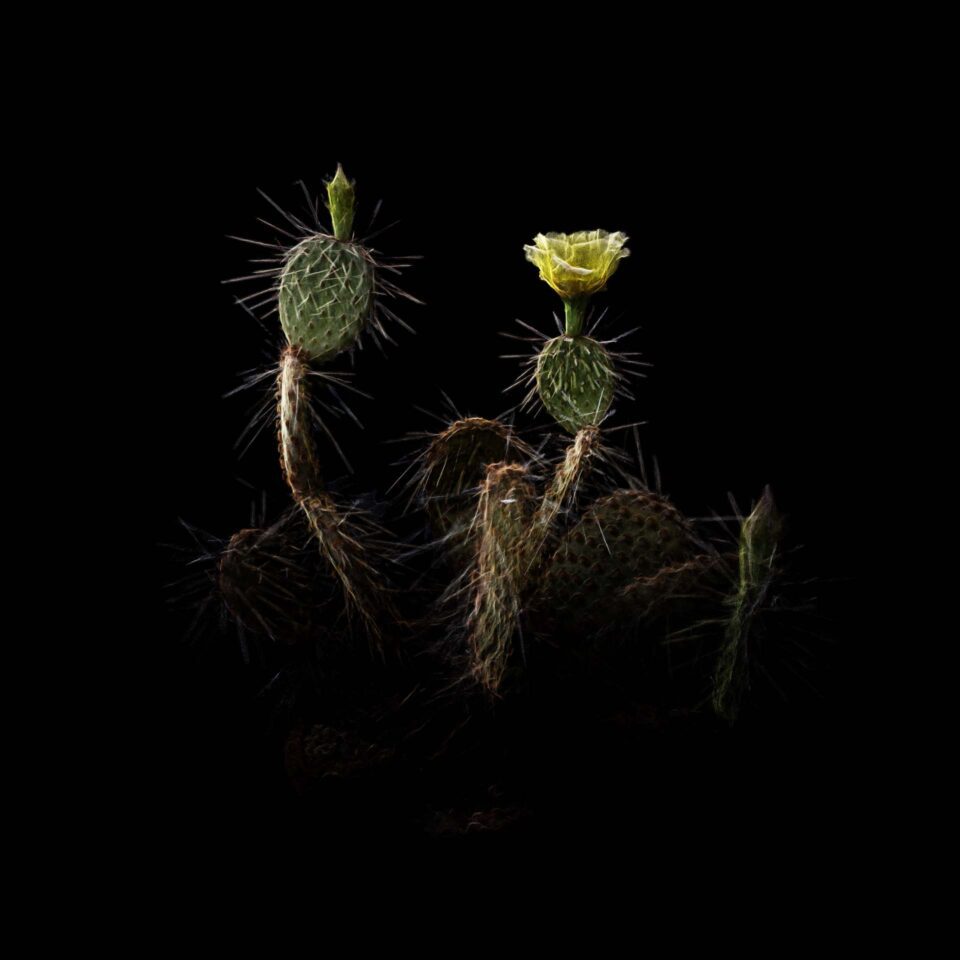
MS & WT: The journey is almost three years in the making. It spanned early research into heat, water access and land rights, which are focal points for the work. The stage we are in right now is putting the final touches on a series of giant, bespoke LED screens nestled within the garden. Local wisdom from scientists, farmers and conservationists shaped our explorations and informed the 34 sites we scanned. Five dedicated Phoenix-based photographers joined our team, scanning every day for an entire year. Simultaneously, in London, botanists trusted us with their knowledge and specimens so we could watch time unfold on a different scale: that of an individual cacti bloom. We built robotic camera rigs in climate-controlled chambers, tracing every flowering petal and spine with precision. These cacti became our personal tether to the desert. The soundscape by long term collaborator Pascal Wyse incorporates Sonoran field recordings and the internal bioelectrical sounds discovered by mic’ing cacti. The result is terabytes of data that we’ve invented new ways to explore.
A: Did you learn anything surprising about the region?
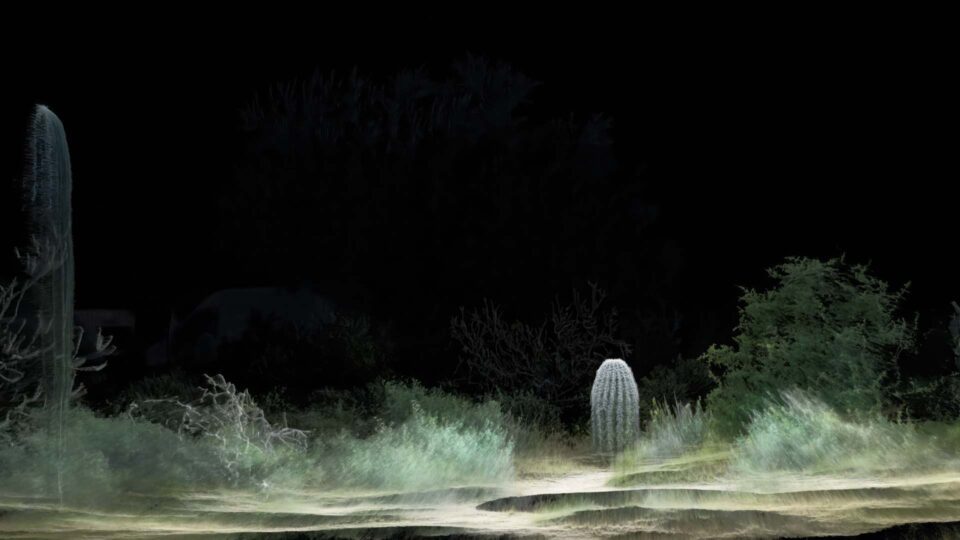
MS & WT: At one location, we observed the growth of Saguaros – those iconic multi-limbed desert cacti that can grow to over 13 metres and live for over 175 years. Our scans reveal the incredible way these stoic forms hydrate, expand, store and conserve water before bursting forth in an accordion-like fountain of spiney growth at their tip. We watched one specimen at the end of its life; it perilously leans and then falls to the ground and decays. It was lost in a phenomenon that is reportedly happening with worrying regularity in hotter, longer summers. Elsewhere, we see a 3,448,489,241 ft³ hole in the ground, which was created by three generations of gravel extraction. The mined materials were used in the development of many iconic Phoenix sights. Over one year, we watched as that same hole was refilled with fragments of the city that are no longer needed, including some of those very same landmarks. Plus, the breathing, rippling joy of watching petals dance as single points of light has been extraordinary.
A: What can visitors expect when visiting the exhibition?
MS & WT: Audiences will experience the Sonoran Desert anew – seeing time unfold in ways impossible with traditional cameras or the naked eye. You’ll witness the surprising movement of cacti: Saguaros swelling and shooting upward, Cholla dancing, and the breathtaking moment-by-moment unfurling of desert blooms. The artwork is embedded throughout the garden, with high-fidelity LED screens nestled among the cacti. There’s an incredible dialogue between digital and physical. The experience is designed to encourage movement and stillness, letting you discover at your own pace. It culminates in a gallery show, where multichannel videos act as portals onto a topography that is shifting as time passes.
A: How does Desert Pulse connect with your wider work?
MS & WT: It shares many of the same ambitions and motivations – inviting a moment to pause, think and hope, whilst operating as both mirror and microscope. We see repeating human issues that unfold in all our FRAMERATE works. Yet Desert Pulse sets itself apart in a few crucial ways. It directly connects with the landscape – digital versions of cacti sit metres from their living, growing muses. Phoenix is 2,000 miles from home, and we are increasingly aware this is not our landscape to tell stories about. Taking a respectful, collaborative approach has been even more crucial than before.
A: What role does collaboration play in your practice?
MS & WT: Our London-based team brings together architects, craftspeople, photographers, engineers, documentary filmmakers and software developers. We regularly work together with choreographers, climate scientists, musicians, researchers, technologists and writers. This depth of backgrounds and perspectives enables us to make work that meaningfully holds the multiplicity of truths that often exists around the complex subjects we cover. What we do is technically complicated. We often engineer the physical way that artwork will meet its audience – be that as a hologram, sculpture or piece of ice. We have to operate like an R&D laboratory as well as an art studio to achieve the aesthetic and level of precision that we value so highly. It’s also a purposeful choice to extend the studio’s impact beyond the gallery – via climate activism, journalism, performance, as well as scientific papers.
A: Looking ahead, what’s next for ScanLAB Projects?
MS & WT: Our studio’s core themes remain the same, telling stories around environmental or social justice, and looking at the societal impacts of emerging vision technologies. FRAMERATE doesn’t stop in the desert; there are many destinations around the world where we hope to make work. We’re fundraising for a project called HARVEST, which takes a darkly comedic approach to surveillance capitalism, as told through the LiDAR eyes of a robotic vacuum cleaner.
FRAMERATE: Desert Pulse is at Desert Botanical Garden, Phoenix from 11 October: dbg.org
Words: Eleanor Sutherland
Image Credits:
1. ScanLAB Projects, FRAMERATE: Desert Pulse, Echinopsis Bourne Mischief, (2025). Pointcloud animation still. Image courtesy of the artist.
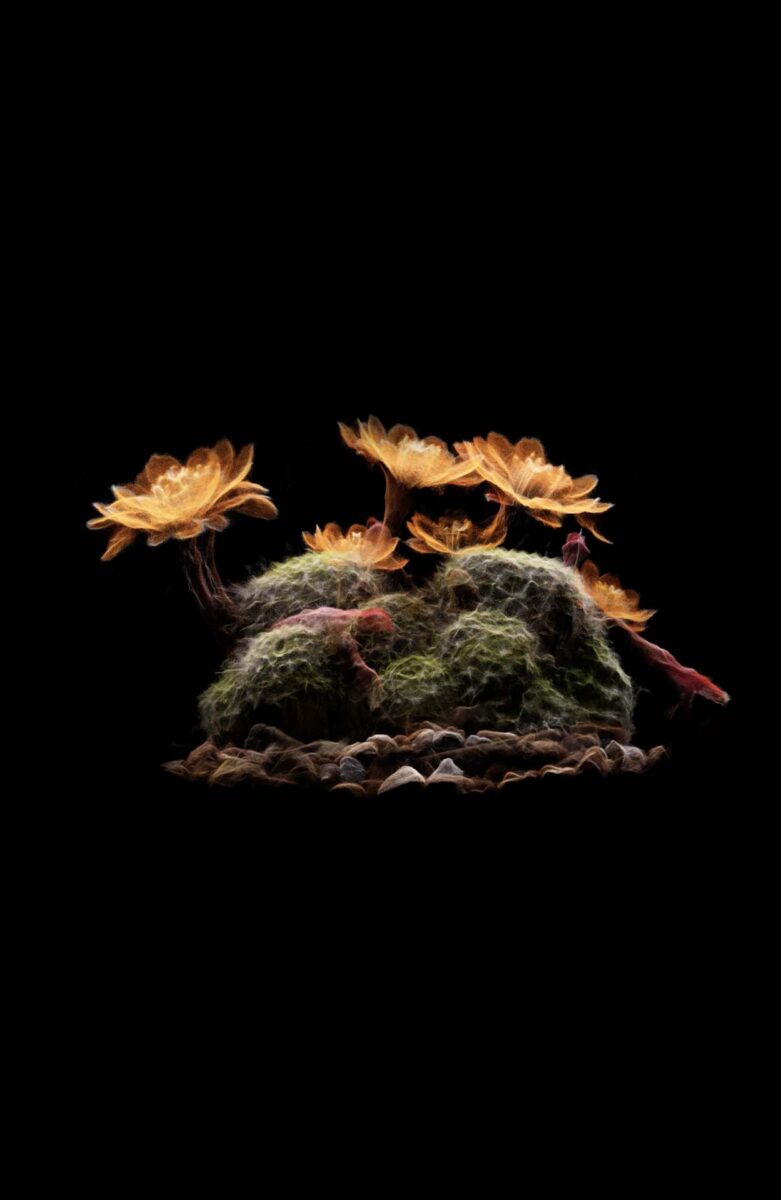
2. Desert Pulse, Aylostera Pulchella, (2025). Pointcloud animation still. Image courtesy of the artist.
3. ScanLAB Projects, FRAMERATE: Desert Pulse, Ottosen Dancing Opuntias (colour), (2025). Pointcloud animation still. Courtesy of the artist.
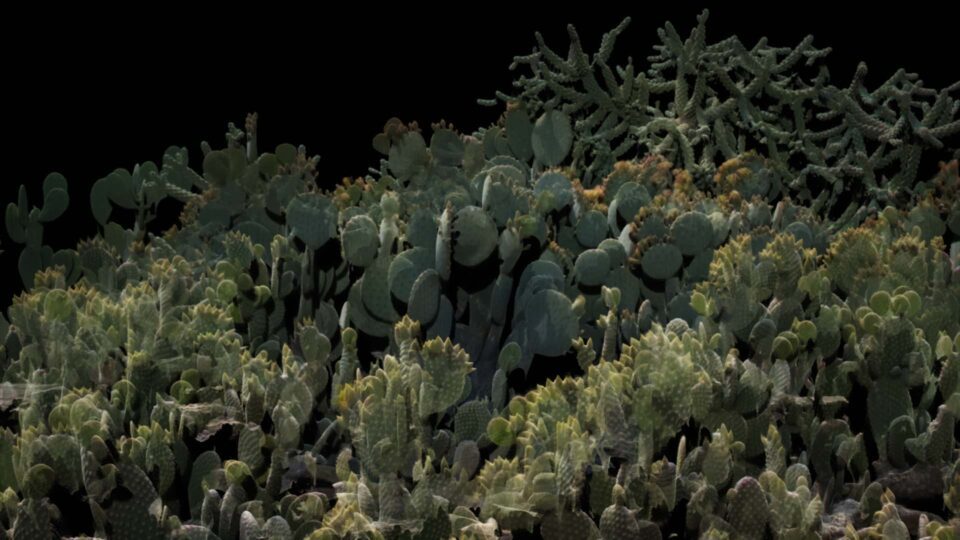
4. ScanLAB Projects, FRAMERATE: Desert Pulse, Opuntia Macrocentra, (2025). Pointcloud animation still. Image courtesy of the artist.
5. ScanLAB Projects, FRAMERATE: Desert Pulse, Saguaro Monitoring Site, (2025). Pointcloud animation still. Courtesy of the artist.