

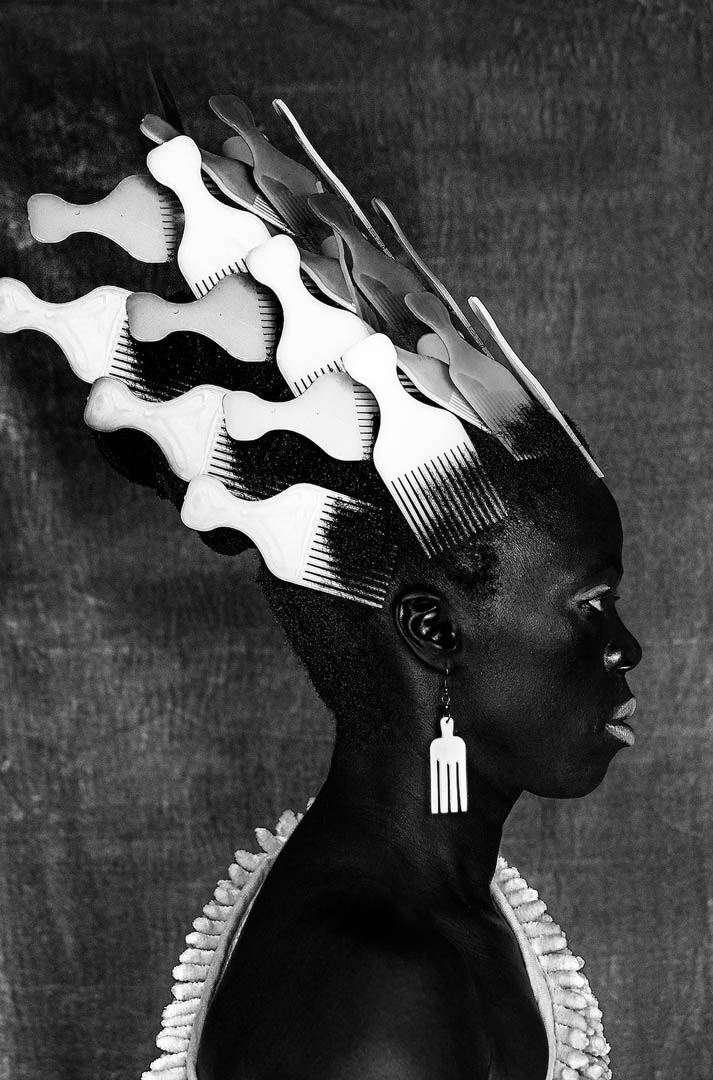
“We are here.” It’s a simple statement, but it can also be a powerful assertion of presence. Such is its function in the title of Zanele Muholi’s (b. 1972) latest exhibition at Foto Arsenal Wien. For more than twenty years, the artist – who describes themselves as a visual activist – has dedicated their practice to making Black lesbian, gay, bisexual, transgender, queer and intersex people visible in South Africa and all around the world, through powerful portraits. The show is the artist’s first in Austria, and follows major presentations at Tate, London; Gropius Bau, Berlin; and the San Francisco Museum of Modern Art. We Are Here includes more than 120 photographs, as well as video and archival material spanning two decades.
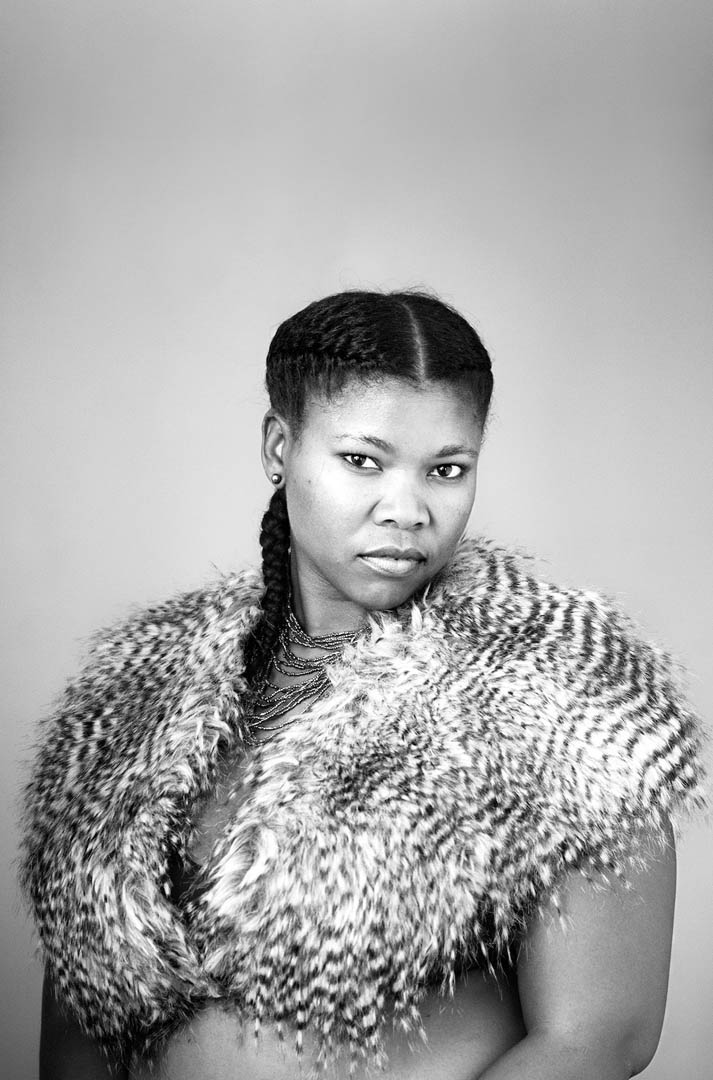
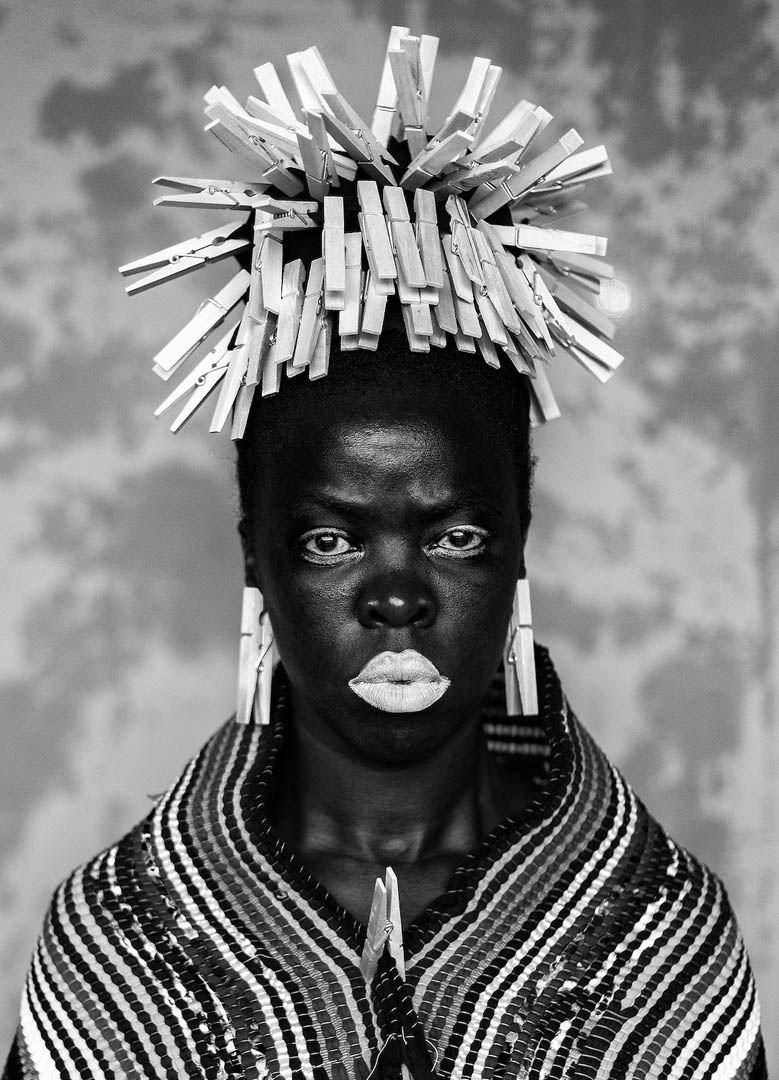
Although South Africa was the first country in the world to guarantee the equality of people regardless of their sexual orientation in its constitution, queer people still face discrimination, exclusion and severe violence there every day. As Curator Marit Lena Herrmann says, Muholi’s work: “is about revealing inequality and simultaneously about change. Muholi’s images tell positive visual stories and show the power of togetherness and the healing that comes from this sense of community.” Indeed, Muholi’s images are testament to a deep bond cultivated between the artist and the individuals in the frame.
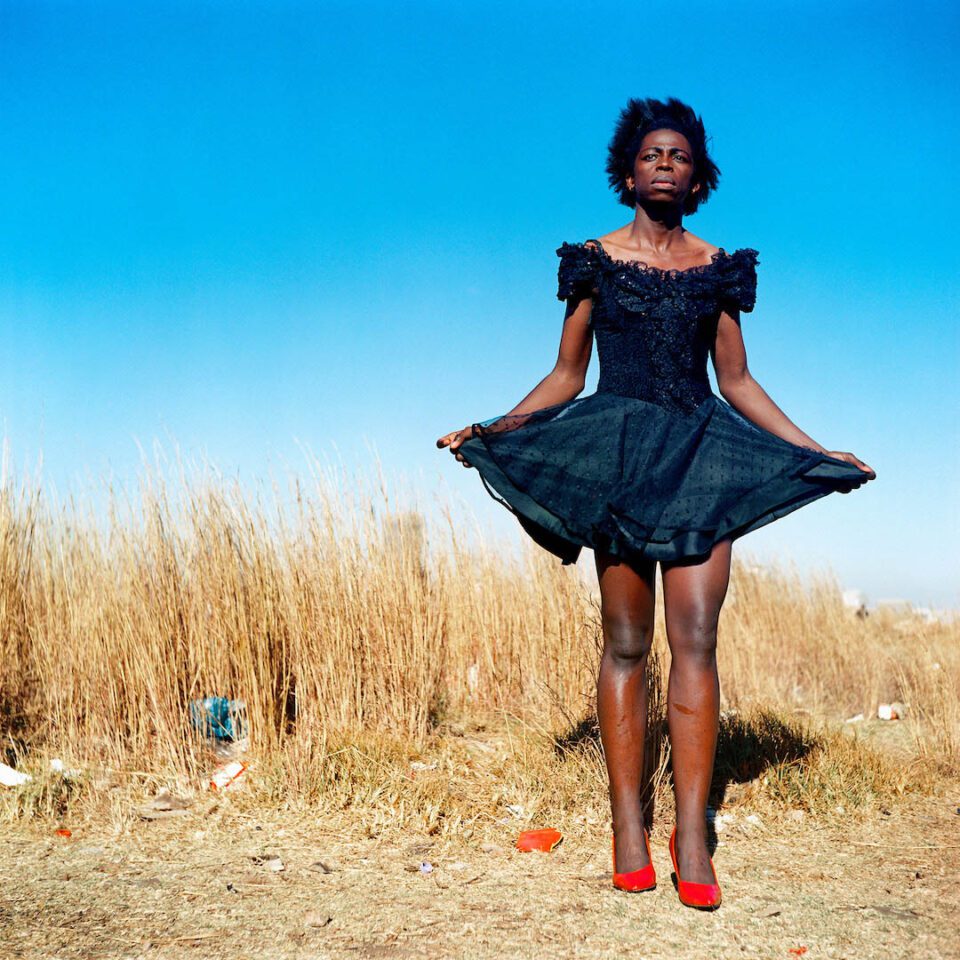
We Are Here brings together key series from different phases of the artist’s career. One project is Being (2006), which focuses on intimate lesbian relationships. The photographs depict love, trust and everyday life. Muholi observes: “Despite the fact that, in contrast to most other African states, our South African bill of rights guarantees us legal protections against homophobia, there are still no loving, intimate photographs of Black lesbians. As a visual artist, one is always confronted with the politics of representation. I have the choice to portray my community in a manner that will turn us once again into a commodity to be consumed by the outside world, or to create a body of meaning that is welcomed by us as a community of queer Black women. I choose the latter path, because it is through capturing the visual pleasures and erotica of my community that our being comes into focus, into national consciousness.”
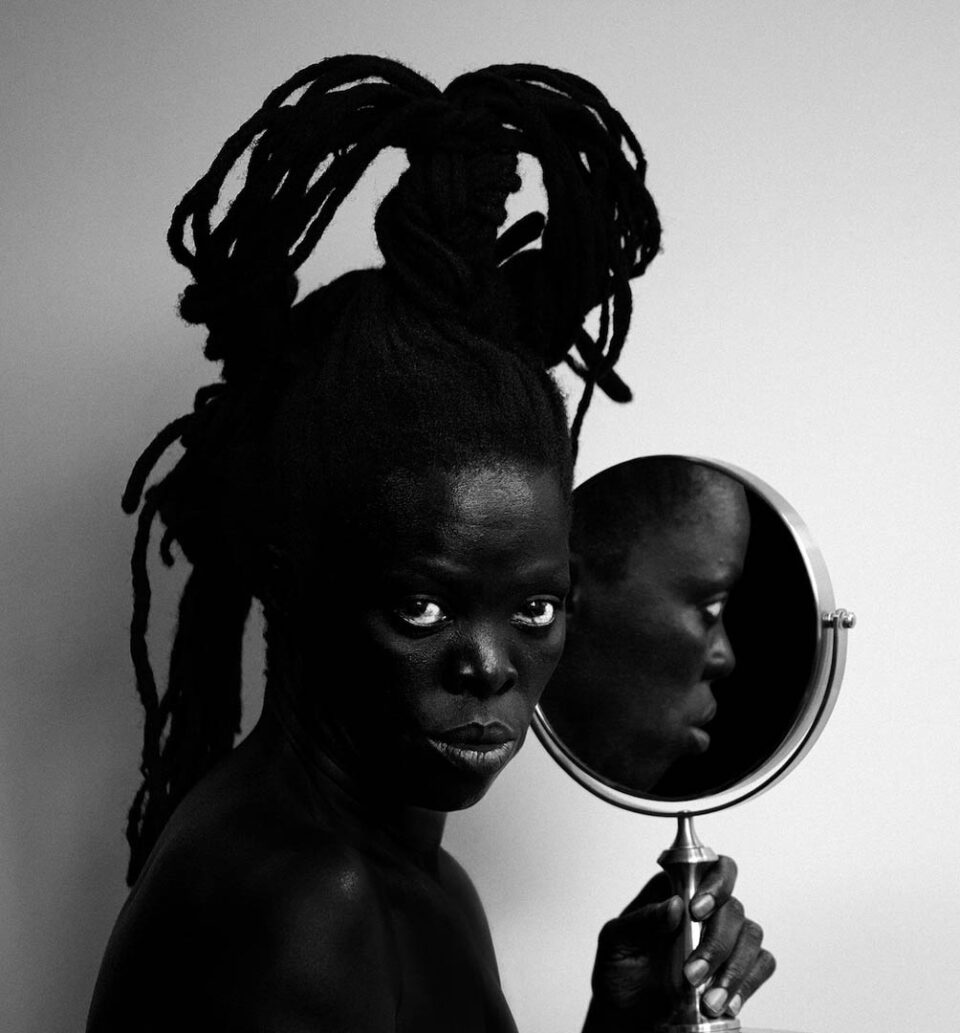
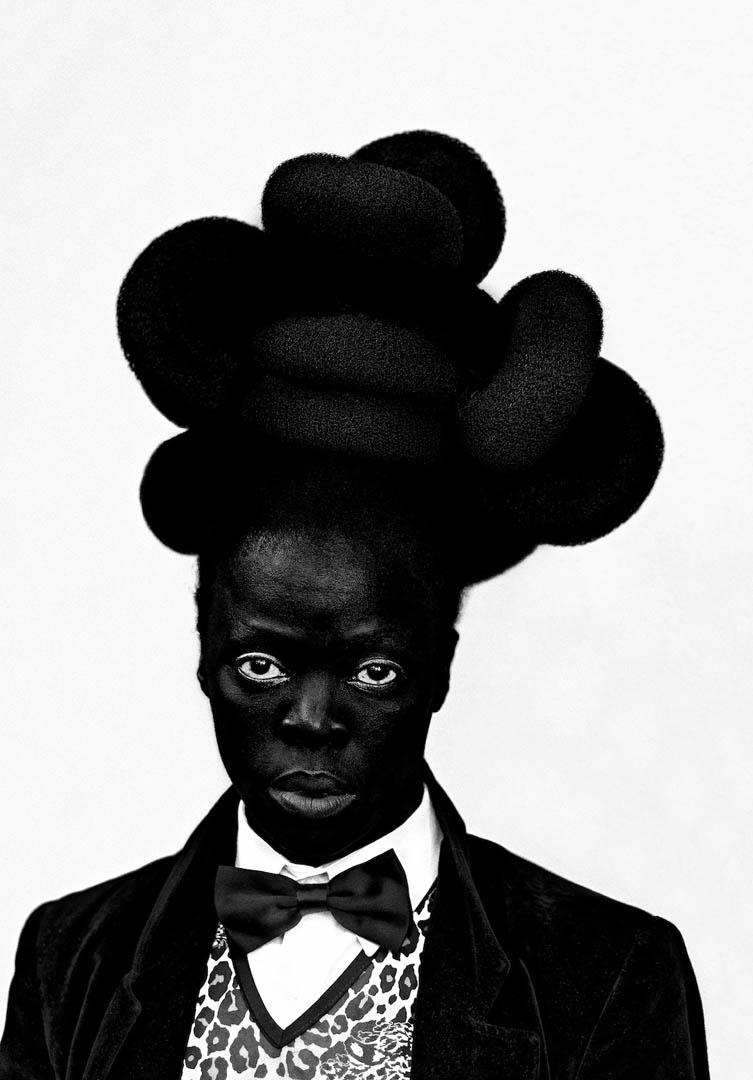
Another focus is the ongoing Faces and Phases (2006–). The archive, which now contains several hundred black-and-white shots, is a collaborative project that brings together Black LGBTQIA+ people and includes personal testimonies. There are also images from the groundbreaking Somnyama Ngonyama (Hail the Dark Lioness) (2018), an ongoing and instantly recognisable series of self-portraits that harnesses the visual languages of classical portraiture and fashion, as well as ethnographic tropes, to challenge stereotypes and historic representations of Black bodies in visual culture. This seminal body of work joins Only Half the Picture (2006), documenting lesbian lives and hate crime survivors, and Miss Lesbian (2009) in which Muholi wears beauty pageant-inspired attire, to challenge idealised, heteronormative standards of beauty.
Muholi is one of the most important artists working today, making a vital contribution to a visual history that has too long been repressed. Beyond major retrospectives, they are also the 2026 recipient of the internationally acclaimed Hasselblad Award, and Faces and Phases is soon to be published by MACK. These milestones speak to the enduring significance of Muholi’s practice, which continues to build an expansive record of Black LGBTQIA+ lives. Their practice is, above all, an insistence of visibility: We Are Here.
Zanele Muholi: We Are Here is at Foto Arsenal Wien from 19 September – 10 January.
Words: Eleanor Sutherland
Image Credits:
1. Zanele Muholi, Qiniso, The Sails, Durban, 2019, from the series Somnyama Nyonyama. © Zanele Muholi. Courtesy of the artist, Yancey Richardson, New York, and Southern Guild, Cape Town
2. Zanele Muholi, Charmain Carrol, Parktown, Johannesburg, 2013, from the series Faces and Phases. © Zanele Muholi. Courtesy of the artist, Yancey Richardson, New York, and Southern Guild, Cape Town
3. Zanele Muholi, Bester I, Mayotte, 2015, from the series Somnyama Nyonyama. © Zanele Muholi. Courtesy of the artist, Yancey Richardson, New York, and Southern Guild, Cape Town
4. Zanele Muholi, Miss D‘vine II, 2007. © Zanele Muholi. Courtesy of the artist, Yancey Richardson, New York, and Southern Guild, Cape Town
5. Zanele Muholi, Zazi II, Boston, 2019, from the series Somnyama Nyonyama. © Zanele Muholi. Courtesy of the artist, Yancey Richardson, New York, and Southern Guild, Cape Town
6. Zanele Muholi, Phaphama, Cassilhaus, Chapel Hill, North Carolina, 2016, from the series Somnyama Nyonyama. © Zanele Muholi. Courtesy of the artist, Yancey Richardson, New York, and Southern Guild, Cape Town


