

Since 1977, Yorkshire Sculpture Park (YSP) has grown from a bold experiment in presenting contemporary art in the open air into one of Europe’s most influential cultural institutions. Over the past four decades it has become a vital site where art and landscape converge, offering a platform for some of the world’s most ambitious artists while shaping a national and international dialogue around contemporary practice. This winter, YSP once again presents a programme that balances historic engagement with innovation.
The recent presentation of William Kentridge’s The Pull of Gravity exemplifies this approach, drawing audiences into the South African artist’s intricate kinetic projections and drawings that examine memory, history and the human condition. Its success underscores YSP’s ability to present work that is visually arresting and intellectually rigorous, attracting audiences from across the UK and abroad. Complementing Kentridge, indoor exhibitions including Marshmallow Laser Feast’s Of the Oak, Andrew Waddington’s Betwixt and Between, The Poetry of Landscape and Jordy Kerwick’s One to Give. One to Take Away demonstrate the Park’s breadth, confirming its role not merely as a sculpture park but as a laboratory of ideas where narrative, medium and environment are in constant conversation.
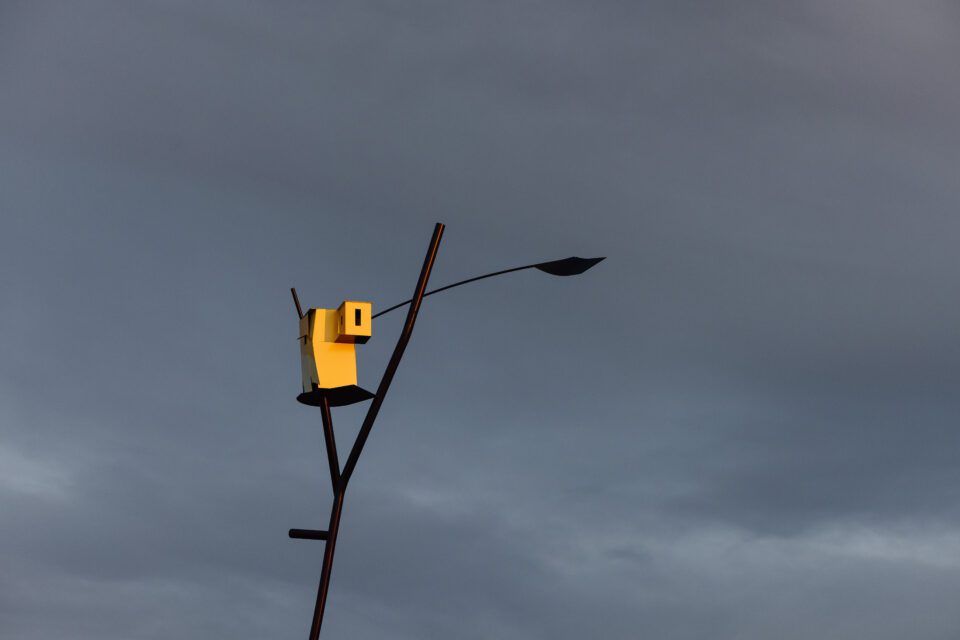
Amidst this dynamic winter programme, three new outdoor sculptures – Vanessa da Silva’s Muamba Posy, Auke de Vries’ The Watchtower and Damien Hirst’s The Martyr – Saint Bartholomew – take their place within the 500 acres of parkland, woodland, lakes and heritage sites, joining over ninety works by some of the most influential contemporary artists working today. As Dr. Alex Hodby, Head of Programmes at YSP, says:“These three exceptional works exemplify the ambition and international vision that define Yorkshire Sculpture Park. De Vries brings a profound sensitivity to place and memory; da Silva animates the landscape with vibrant reflections on time, ecology and identity and Hirst compels us to engage with questions of belief, suffering and the human form. Together, these sculptures invite our audiences to wander, reflect and rediscover the dynamic conversation between art, and the natural world.”
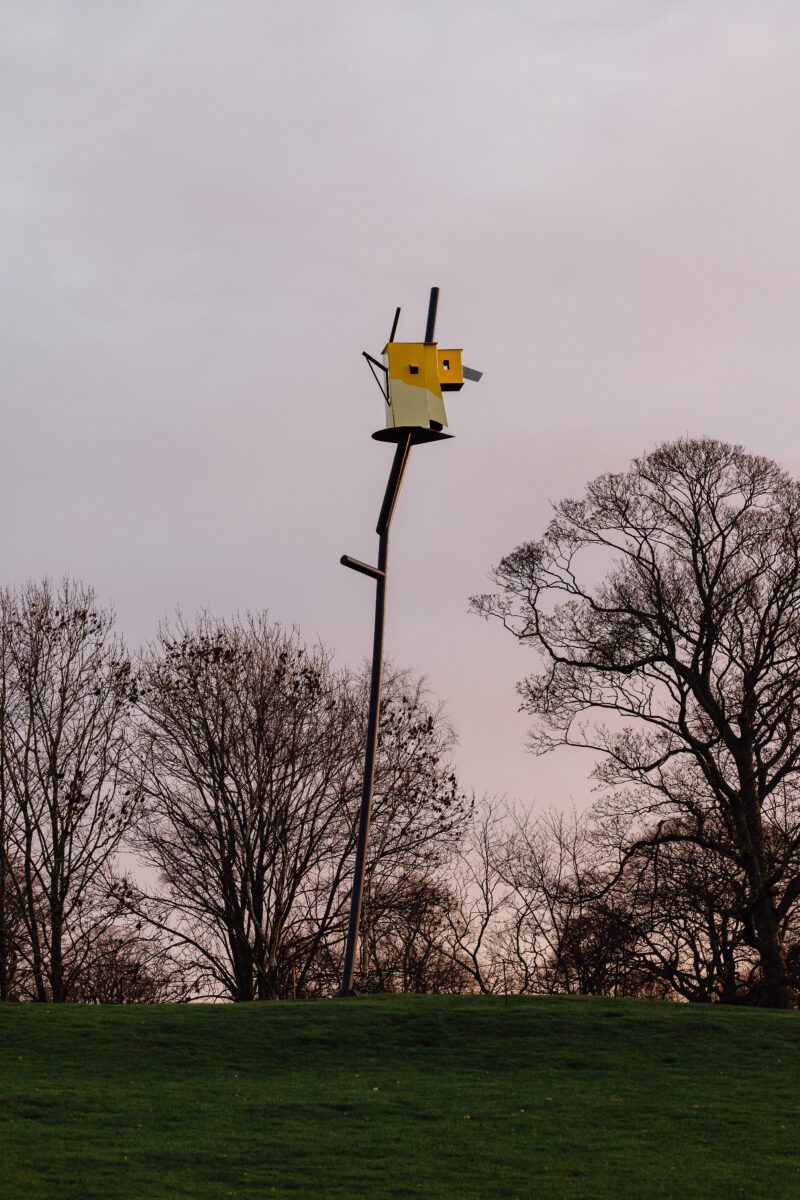
De Vries’ The Watchtower is rooted in a longstanding relationship with YSP, conceived after the artist spent a year immersed in the grounds for the 2000–2001 exhibition Living in Trees. His acute observation of movement, light and the geometry of trees translates into a sculpture that hovers elegantly between drawing and architecture. Traditionally, the watchtower evokes surveillance and control, but de Vries transforms it into an instrument of reflection, curiosity and empathy. Its slender stem rises like a tree trunk, and a geometric canopy at its summit frames views of the surrounding landscape. In its inaccessibility, it encourages visitors to reconsider how they move through and perceive the world around them, engaging with the park as a space for attentive observation and contemplative immersion.
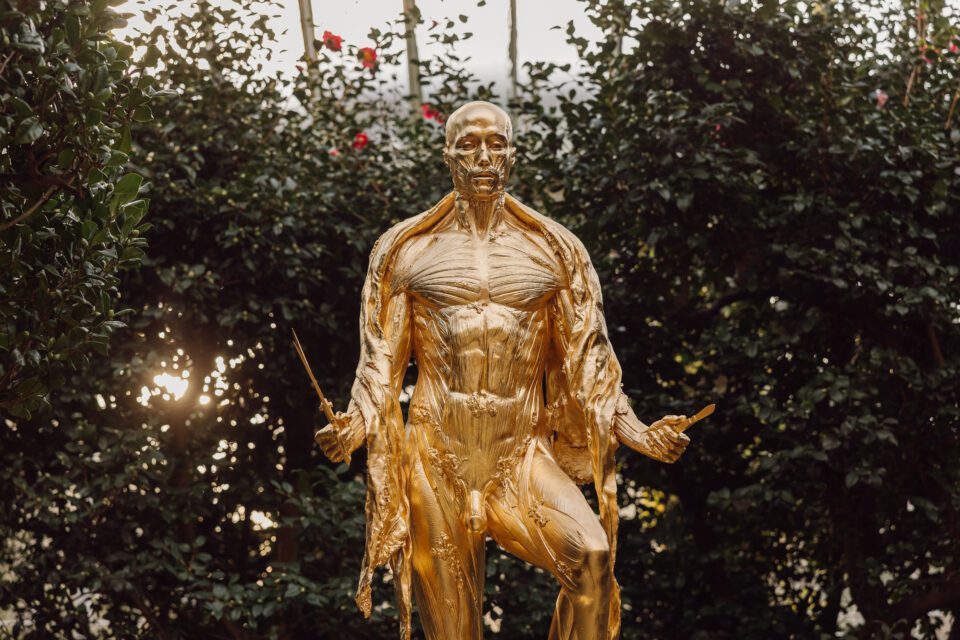
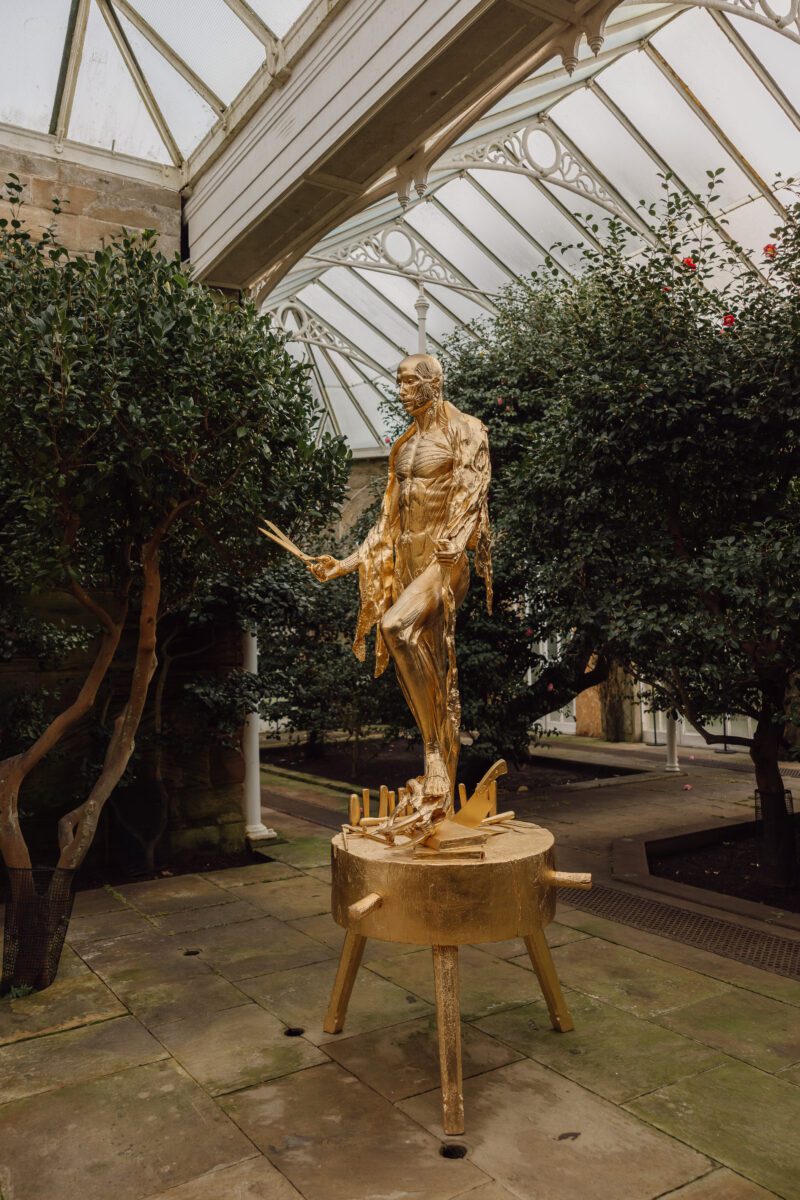
In contrast, Hirst’s The Martyr – Saint Bartholomew, sited within the Camellia House, interrogates belief, mortality and corporeal vulnerability. Inspired by Marco d’Agrate’s 16th-century flayed saint, Hirst reimagines the figure holding scissors and a scalpel, merging ritualistic imagery with contemporary sensibilities. “I like the confusion you get between science and religion,” Hirst explains. “That’s where belief lies, and art as well.” The sculpture is informed by Hirst’s formative experiences – raised in a Catholic household in Leeds, he sketched corpses in mortuaries as a student, observing the intersection of fear, beauty and ritual. Within YSP’s Chapel, dedicated to St Bartholomew, the work resonates historically and spiritually, adding a layered complexity to the landscape. Alongside Hirst’s earlier works on site, it constructs a narrative exploring endurance, suffering and the human form, providing both a psychological and aesthetic encounter that is unflinching yet profoundly compelling.
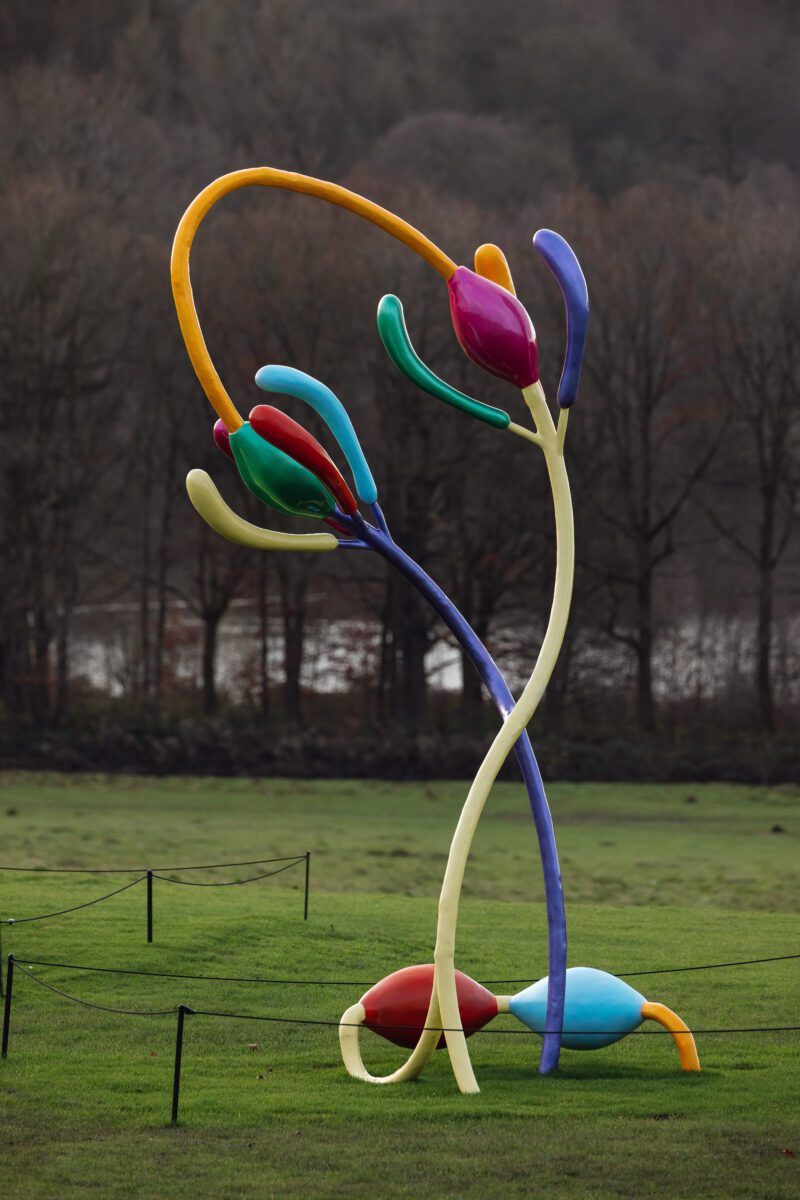
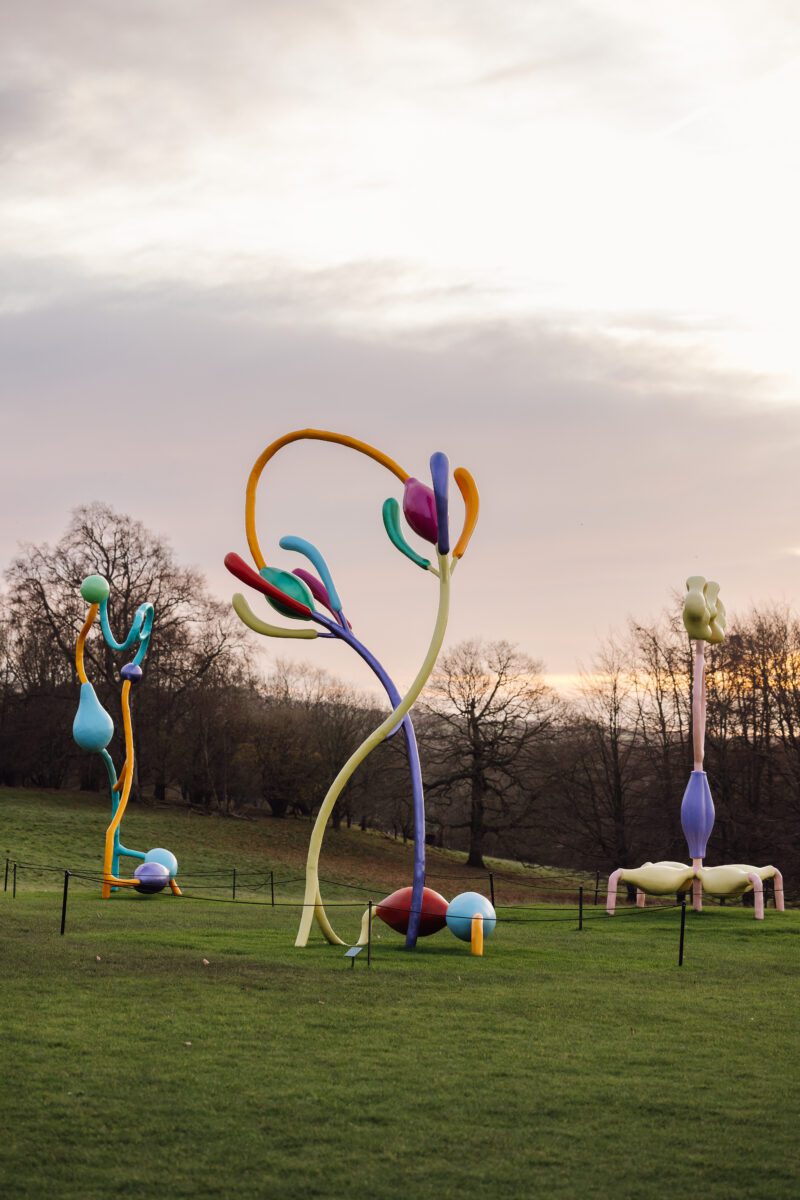
Vanessa da Silva’s Muamba Posy offers a more organic, vibrant counterpoint to these contemplative and confrontational works. Commissioned by Bradford 2025 UK City of Culture, the sculpture draws inspiration from the moors of Penistone Hill, the Carboniferous forests that once covered West Yorkshire and the contemporary flora that continues to thrive. Metallic tones suggest mineral-rich soils, while the flowing biomorphic forms echo movement, transformation and ecological resilience. da Silva’s work also reflects her experience as a Brazilian living in the UK, exploring identity, migration and cultural negotiation. The title, blending Muamba, a term for smuggling goods across borders, and Posy, a small bouquet, hints at both playfulness and the layered complexities of cultural exchange. Visitors are invited to engage physically and emotionally with the work, pausing to reflect, wander and connect.
Together, these three sculptures generate a dialogue across history, geography and philosophy. De Vries’ contemplative attentiveness to place complements da Silva’s vibrant ecological and cultural reflections, while Hirst introduces tension and moral inquiry, encouraging visitors to confront mortality, faith and corporeality. The works engage with one another across the landscape, creating an experience that is both immersive and intellectually rigorous. Sculpture at YSP is not a static encounter but a lived one, shaped by light, movement and the visitor’s own engagement.
YSP’s ongoing success, nationally and internationally, is testament to its ability to balance site-specific, historically informed commissions with exhibitions that push the boundaries of contemporary art. Indoor shows like Kentridge’s The Pull of Gravity, Marshmallow Laser Feast’s Of the Oak, Waddington’s Betwixt and Between and Kerwick’s One to Give. One to Take Away extend the conversation, bridging interior and exterior spaces and reinforcing the Park’s role as a dynamic site of experimentation, education and reflection. It is a place where the imagination is invited to roam freely across centuries and continents.
In these new works, Yorkshire Sculpture Park confirms why it remains indispensable: de Vries transforms the act of observation into empathy, da Silva animates land and identity with colour and form, and Hirst confronts the viewer with questions of belief, suffering and the human body. Together, they invite curiosity, dialogue and contemplation, positioning YSP not merely as a destination for sculpture but as a living ecosystem of ideas, experiences and connections. Within a landscape shaped by centuries of history, these sculptures affirm that art is not only enduring but evolving, capable of challenging, inspiring and linking the natural, cultural and human worlds in ways that remain urgent, relevant and profoundly beautiful.
Find out more about Yorkshire Sculpture Park’s winter programme: ysp.org.uk
Words: Simon Cartwright
Image Credits:
1&7. Auke de Vries, Watchtower, 2000. Photo © India Hobson, courtesy of YSP.
2. Auke de Vries, Watchtower, 2000. Photo © India Hobson, courtesy of YSP.
3. Vanessa da Silva, Muamba Posy, 2025. Commissioned by Bradford 2025 UK City of Culture. Photo © India Hobson, courtesy of YSP.
4. Vanessa da Silva, Muamba Posy, 2025. Commissioned by Bradford 2025 UK City of Culture. Photo © India Hobson, courtesy of YSP.
5. Damien Hirst, The Martyr – Saint Bartholomew, 2019. © Science Ltd. All rights reserved DACS, 2025. Photo © India Hobson, courtesy of YSP.
6. Damien Hirst, The Martyr – Saint Bartholomew, 2019. © Science Ltd. All rights reserved DACS, 2025. Photo © India Hobson, courtesy of YSP.


