Geological time spans Earth’s 4.54 billion-year history – a scale so large that it’s difficult to imagine. Measured against the brevity of a human being’s 73-year-on-average lifespan, it’s a number that can feel almost impossible to grasp. Glasgow-based artist Ilana Halperin (b. 1973) is hoping to change that. Her exhibition What Is Us and What Is Earth, opening at Fruitmarket in Edinburgh, “seeks to map the incomprehensible vastness of geological time” through sculpture, drawing and photography.
When Halperin turned 30, the artist realised she shared her birthday with the Eldfell volcano, which formed off the coast of Iceland during a surprise eruption on 23 January 1973. The coincidence sparked a body of work that maps the timeline of her life with that of the volcano. She has since celebrated her 40th, 50th and 51st birthdays alongside it, making art with material “given” to her by Eldfell: crystals, a pair of agates and a lava bomb. Watercolours, drawings, texts and sculptures from the series will be on view, bridging the distance between individual human experience and the sublime forces of nature.
The earliest work in the display, Boiling Milk Solfataras (1999), shows the artist heating milk in a small saucepan amidst an Icelandic hot sulphur spring. Halperin has described the process as “waiting for all the layers of geological time and activity to make their way up to the surface, to the point where it’s humanly viable to connect with it.” She found this was a way to “speed up deep time,” and the experience of making the piece led Halperin to investigate the concept of “fast geology” further. Halperin would later expand this practice by “growing” sculptures using the calcifying springs of Fontaines Pétrifiantes de Saint-Nectaire in France. What Is Us and What Is Earth includes the earliest cave casts she made at this location.
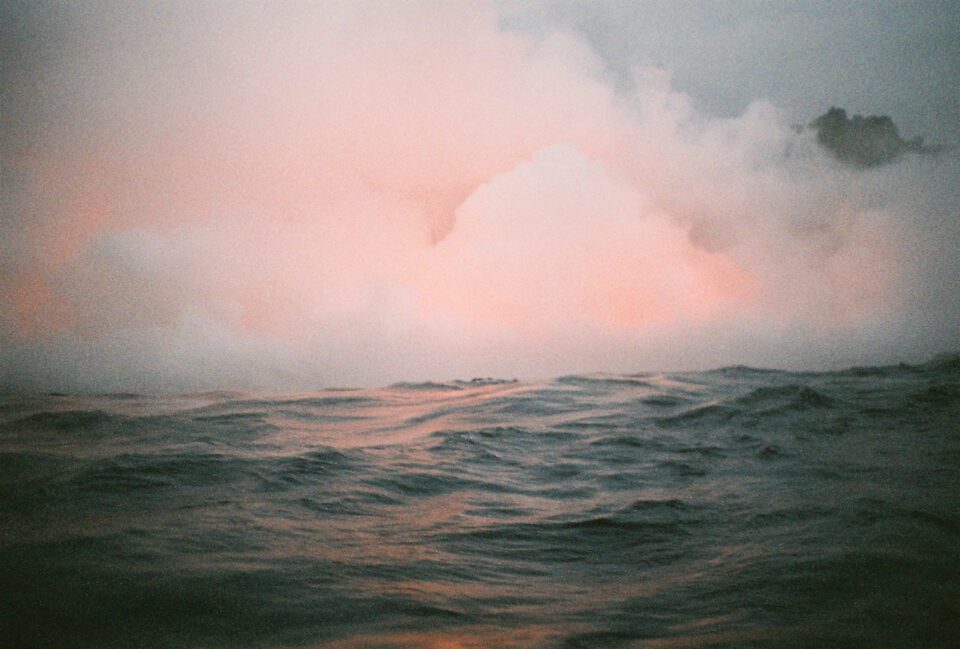
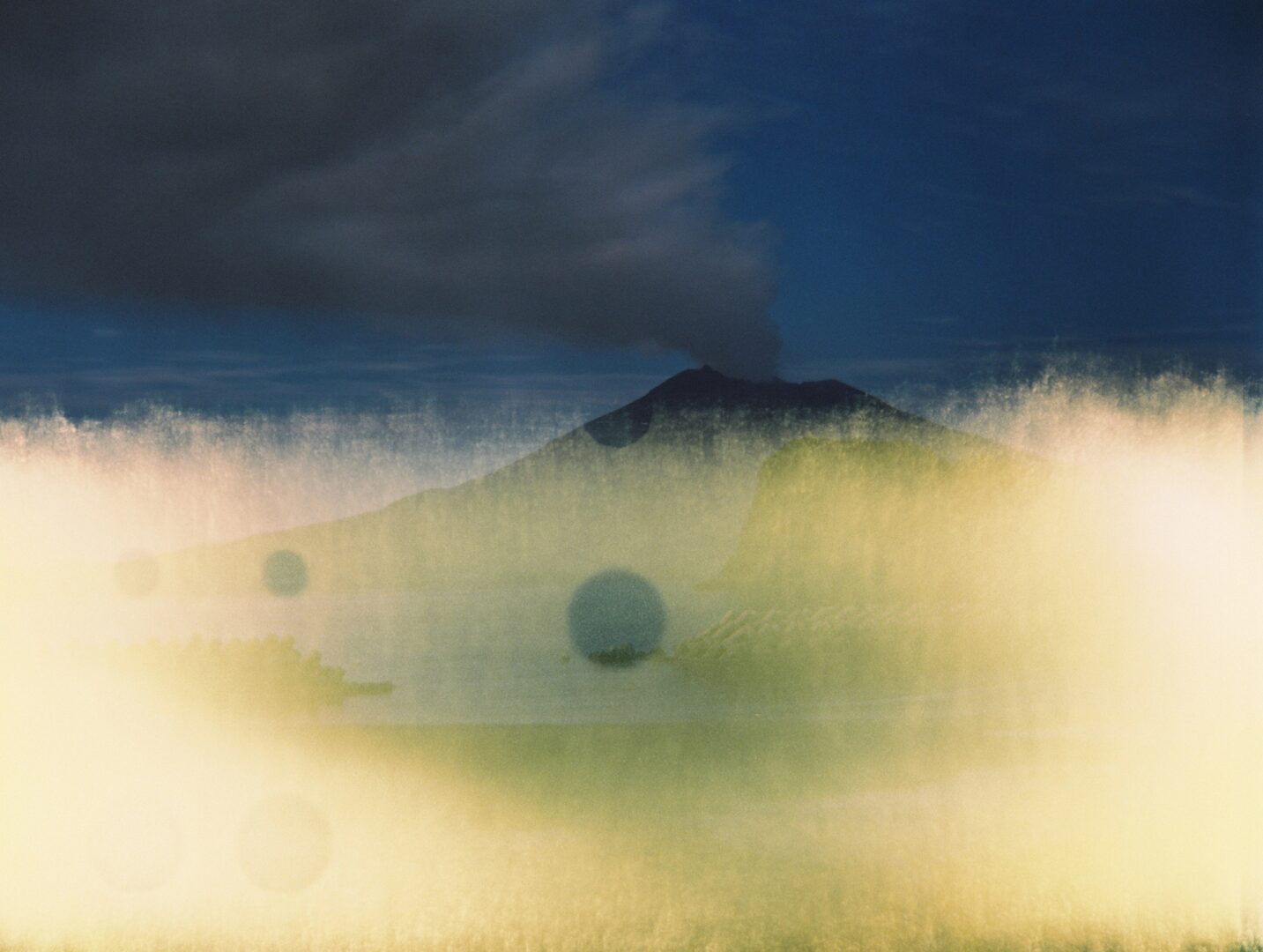
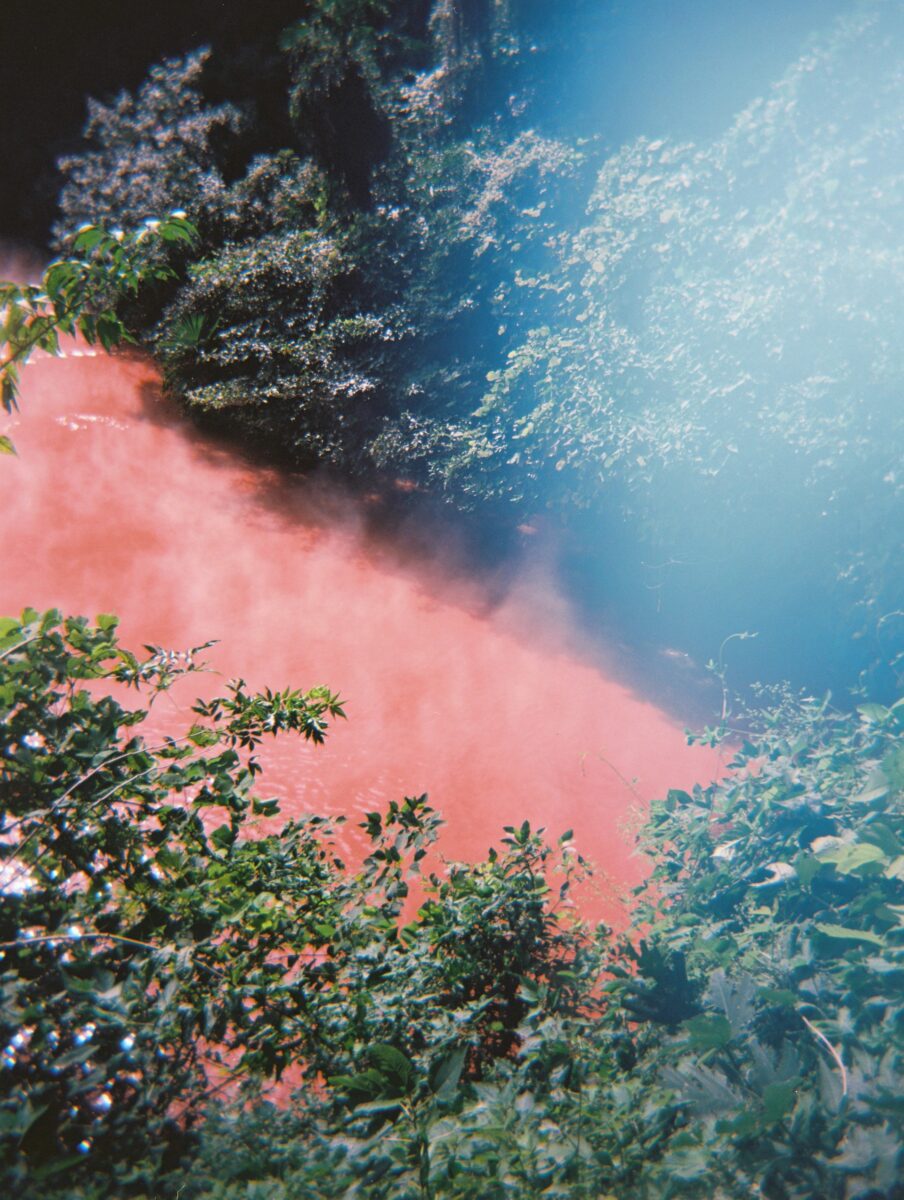
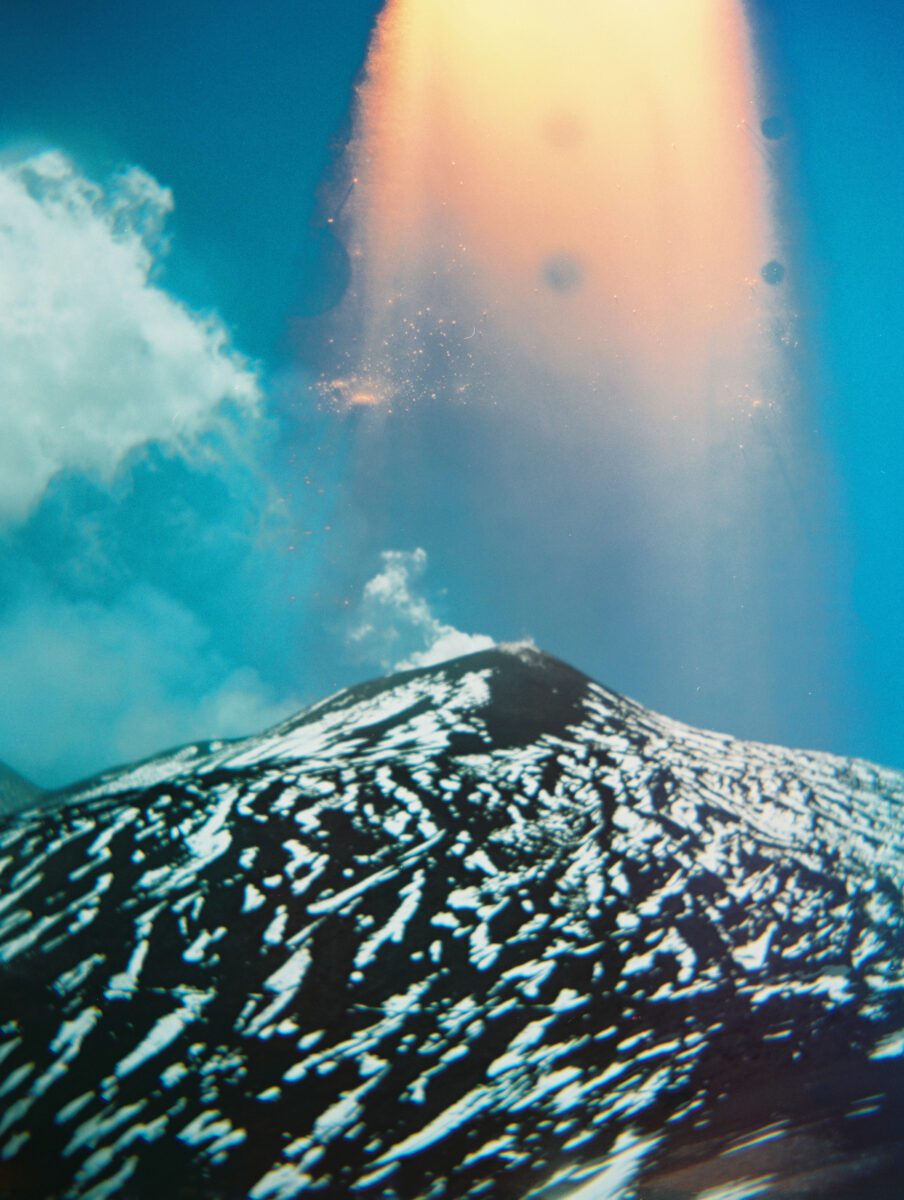
A standout of the show is Halperin’s “field study” photography. These images offer impressions of stunning locations around the world, including volcanic regions such as Big Island, Hawaii; Sakurajima, Japan; and Mount Etna, Sicily. Made with an analogue Holga medium format camera, they carry the unpredictability of film: light bleeding in from the edges of the frame, layers of unexpected colour and a grainy, tactile texture. The ephemeral nature of the medium echoes the themes of the exhibition, inviting viewers to pause and reflect on a singular, fleeting moment within the vast history of the landscape. For the first time, 36 of these photographs, taken over 25 years, will be on display at Fruitmarket.
Ultimately, Halperin shows us that deep time is not as distant as it seems. Instead, it is something to which we are contributing, inhabiting and actively shaping. At a time when environmental consciousness is more important than ever before, this is a crucial message for audiences to take away. As Fiona Bradley, gallery Director and Curator of What is Us, says: “In bringing together a host of works that seek to locate the personal in the geological, the exhibition helps us to begin to understand spans of time that are far beyond human imagining, and to come to terms with the reality that our place on earth is only temporary.”
Ilana Halperin: What Is Us and What Is Earth is at Fruitmarket, Edinburgh, from 27 February – 17 May.
Words: Eleanor Sutherland
Image Credits:
1. Sakurajima (October 31st), Japan, (2019). Ilana Halperin, Field Encounters, (1999–). Fuji Crystal Archive matte. Courtesy the artist and Patricia Fleming Project.
2. After 19 Years of Waiting, I Have Now Met Bloody Pond Hell, Beppu, Japan, (2014). Ilana Halperin, Field Encounters, (1999–). Fuji Crystal Archive matte. Courtesy the artist and Patricia Fleming Project.
3. Etna in June, Catania, Sicily, (2001). Ilana Halperin, Field Encounters, (1999–). Fuji Crystal Archive matte. Courtesy the artist and Patricia Fleming Project.
4. Physical Geology (new landmass/fast time), Big Island, Hawaii, (2009). Ilana Halperin, Field Encounters, (1999–). Fuji Crystal Archive matte. Courtesy the artist and Patricia Fleming Project.